Dublin coffee culture
Dublin: 2.5-hour fabulous food tasting trail
Duration: 2.5h
- Free cancellation
- Instant confirmation
Is the coffee good in Dublin?
Yes — Dublin has a genuinely strong specialty coffee scene, led by independent roasters like 3fe, Alchemy, and Cloud Picker. Avoid chain café culture and the tourist-area spots; head to Rathmines, Ranelagh, Stoneybatter, or the docklands for the best cups.
The specialty coffee scene that Dublin built quietly
Ireland is a tea-drinking nation by history and cultural instinct — the tea break is as embedded in Irish working life as the pint in Irish pub culture. But over the last fifteen years, Dublin has developed a specialty coffee scene that now ranks among the strongest in the UK and Ireland, driven by independent roasters and cafés that have built a serious counter-culture to the chain-café dominance.
| Best neighbourhoods | Portobello, Rathmines, Ranelagh, Stoneybatter |
| Top roasters | 3fe, Alchemy, Cloud Picker |
| Typical price | Around €3.50–4.50 for a flat white |
| Avoid | Chain cafés on Grafton Street |
| Classic order | Irish coffee, done properly with fresh cream |
The important distinction: the Starbucks and Costa branches on Grafton St. tell you nothing about Dublin coffee. The independent scene is geographically concentrated in the residential neighbourhoods south and west of the city centre, and finding it rewards a short walk off the tourist circuit.
The roasters you should know
3fe (Third Floor Espresso) is the most influential name in Irish specialty coffee. Founded in 2009 by Colin Harmon, 3fe went from a coffee stall on South William St. to a roastery on Grand Canal St. that supplies some of the best cafés in Ireland. The Grand Canal St. café is a destination in its own right: a serious, focused room that prioritises the coffee above aesthetics. Order the flat white or a filter. The 3fe house blend shifts seasonally; the single-origin filter options are as interesting as in any major European specialty roaster.
Alchemy Coffee (Rathmines and Ringsend) is the challenger that many Dublin coffee drinkers now cite as their preferred roaster. The Rathmines café has a warm, neighbourhood feel that 3fe’s more clinical Grand Canal St. room lacks; the coffee is equally serious.
Cloud Picker (IFSC, Grand Canal Dock area) roasts ethically sourced beans with a transparency about origin that is genuinely informative. The café in the IFSC area is one of the better options for that part of the city, which is otherwise underserved for quality coffee.
Two Pups (Portobello) is a neighbourhood café phenomenon that has become one of the city’s most-discussed breakfasting spots, with exceptional filter coffee and a food menu that takes breakfast seriously without overcomplicating it.
Neighbourhood by neighbourhood
City centre
The city centre is the weakest area for specialty coffee, largely dominated by chains. Exceptions:
Clement and Pekoe (South William St.) is the longest-established specialty coffee and tea retailer in central Dublin, with serious leaf tea alongside the espresso. Good for mid-afternoon if you are near George’s Street Arcade.
Brother Hubbard (Capel St., north side) is primarily brunch-focused but serves one of the more thoughtful coffee menus in the area. Good single-origin filter options.
Portobello and Rathmines
This is Dublin’s coffee heartland, with concentration of independent cafés that reflects the neighbourhood’s younger, food-interested demographic.
Kaph (Drury St., technically city-centre adjacent but worth including): consistently among the best espresso bars in Dublin, with serious baristas and single-origin options that rival any European city.
Vice Coffee (Dame St. vicinity): multiple Dublin locations, all reliable for specialty espresso. The daytime café format is clean and focused.
Fumbally Café (Fumbally Lane, the Liberties) is as much a social and cultural space as a café — a huge, airy converted warehouse that serves excellent coffee, produces food with integrity, and tends to have interesting people in it. A good stop on any Dublin whiskey trail day.
Stoneybatter and Smithfield
The neighbourhood just north of the Liffey around Stoneybatter has developed a strong independent café culture:
Vice Coffee (Smithfield, near the Jameson Distillery) is conveniently placed for combining with a Jameson Distillery visit.
Ranelagh
Coffee Society (Ranelagh village): the best café in the neighbourhood and popular with Dubliners on weekend mornings. Filter options change weekly; pastries sourced from independent bakers.
Irish coffee — the classic and the controversial
Irish coffee — black coffee, Irish whiskey, and lightly whipped cream floated on top — was invented at Shannon Airport in 1943 by a barman named Joe Sheridan who added whiskey to coffee for American passengers delayed by bad weather. The original recipe specifies Tullamore D.E.W. whiskey (though most Dublin bars use Jameson), strong filter coffee, brown sugar, and a specific technique for the cream that makes it float rather than sink.
The quality of Irish coffee in Dublin ranges enormously. The worst versions are made with poor instant coffee, too much sugar, and squirty cream. The best are still made correctly: strong fresh coffee, good whiskey, one teaspoon of brown sugar, and fresh cream lightly whipped and spooned over the back of a teaspoon so it sits as a separate layer.
You can learn the technique at the Irish coffee masterclass at the Irish Whiskey Museum (~€30). The session covers the history, the correct recipe, and you make and consume two Irish coffees.
The tea question
Tea remains Ireland’s most consumed hot drink by volume, and the default in pubs and homes is Barry’s Tea (a Cork brand) or Lyons (a Dublin brand), brewed strong with full-fat milk. This is Ireland’s tea culture: no frills, strongly brewed, served in a large mug.
The specialty tea scene exists at Clement and Pekoe and a few independent shops, but it is much smaller than the coffee scene. If you want the authentic Irish experience, ask for “a cup of tea” in any pub or café and drink what comes.
Where to find the best coffee on a standard tourist day
If you are following a typical Dublin tourist itinerary and want a good coffee stop:
- Before Trinity College: Clement and Pekoe, South William St.
- Near the Guinness Storehouse: Fumbally Café, Fumbally Lane (10-minute walk)
- In the docklands: Cloud Picker, IFSC
- Near Jameson Distillery: Vice Coffee, Smithfield
A 2.5-hour fabulous food tasting trail covers the city’s food culture including coffee as part of a broader tasting experience.
For the full picture of Dublin’s food and drink scene, the best restaurants in Dublin, Dublin markets and street food, and traditional Irish food guides fill out what eating and drinking well in Dublin actually means.
Building coffee into your days
The easiest way to enjoy Dublin’s coffee scene is to stop treating it as a separate mission. A good café works best as the pause between two other plans: a flat white before a morning at Trinity College, a filter coffee after a distillery visit, a slow second cup while the rain passes. Because the best rooms sit a short walk from the main sights rather than on them, a coffee stop also doubles as a way to see streets that most visitors never enter.
If this is your first visit, the first-time visitor guide will help you decide which sights deserve your limited hours, and you can then slot a café into the gaps. On a tighter schedule, the one-day itinerary leaves very little room, so pick a single café that sits on your route instead of detouring for several. With more time, the three-day itinerary gives you the space to cross the river or head south for a proper sit-down.
Travellers who plan their trips around eating well will find the weekend foodie itinerary a natural companion to this guide, with coffee as one thread among many.
Rain, weather and the café as shelter
Dublin’s weather is part of why café culture matters here. A good café is one of the most pleasant places to wait out a shower, and the specialty rooms tend to be happy for you to sit with a single cup and a book. If the forecast turns grey, the rainy day guide pairs well with a list of cafés: choose one close to your indoor plans so you are never far from shelter or a warm drink. Packing advice for the same conditions is in the weather and what to pack guide.
Getting between cafés
Most of the cafés in this guide are reachable on foot from one another or from the main sights, and walking is part of the pleasure: the residential streets of the south side reward slow exploration. For the longer hops, such as heading out to Ranelagh or the docklands, the getting around Dublin guide explains your options, and the DART and Luas guide covers the rail and tram routes that connect the neighbourhoods. If you enjoy discovering a city on foot, the self-guided Dublin walk is an easy frame for a coffee crawl, since you can stop wherever the mood takes you.
Choosing a base for coffee lovers
If good coffee matters to you, it is worth thinking about it when you choose where to sleep. The neighbourhoods named in this guide are residential, quieter than the centre, and full of the kind of independent cafés you will want for a slow morning. Staying near one means your first coffee of the day is a ten-minute stroll rather than a trek. The guide to where to stay in Dublin compares the areas, and it is worth reading with the coffee map in mind. The Liberties, home to Fumbally Café, is a particularly rewarding area to explore, with plenty of history on the doorstep.
Coffee, whiskey and the rest of the drinking day
Dublin’s drinks scene is wide, and coffee fits into it more naturally than you might expect. Many visitors begin the day with a serious flat white and end it in a pub, and the two experiences complement each other: the café for quiet conversation, the pub for noise and music. The Irish coffee sits right on the border between the two, which is why the masterclass at the Irish Whiskey Museum is a good way to bridge them. If you want to go deeper into the spirit side, the whiskey tasting guide for beginners is a gentle place to start.
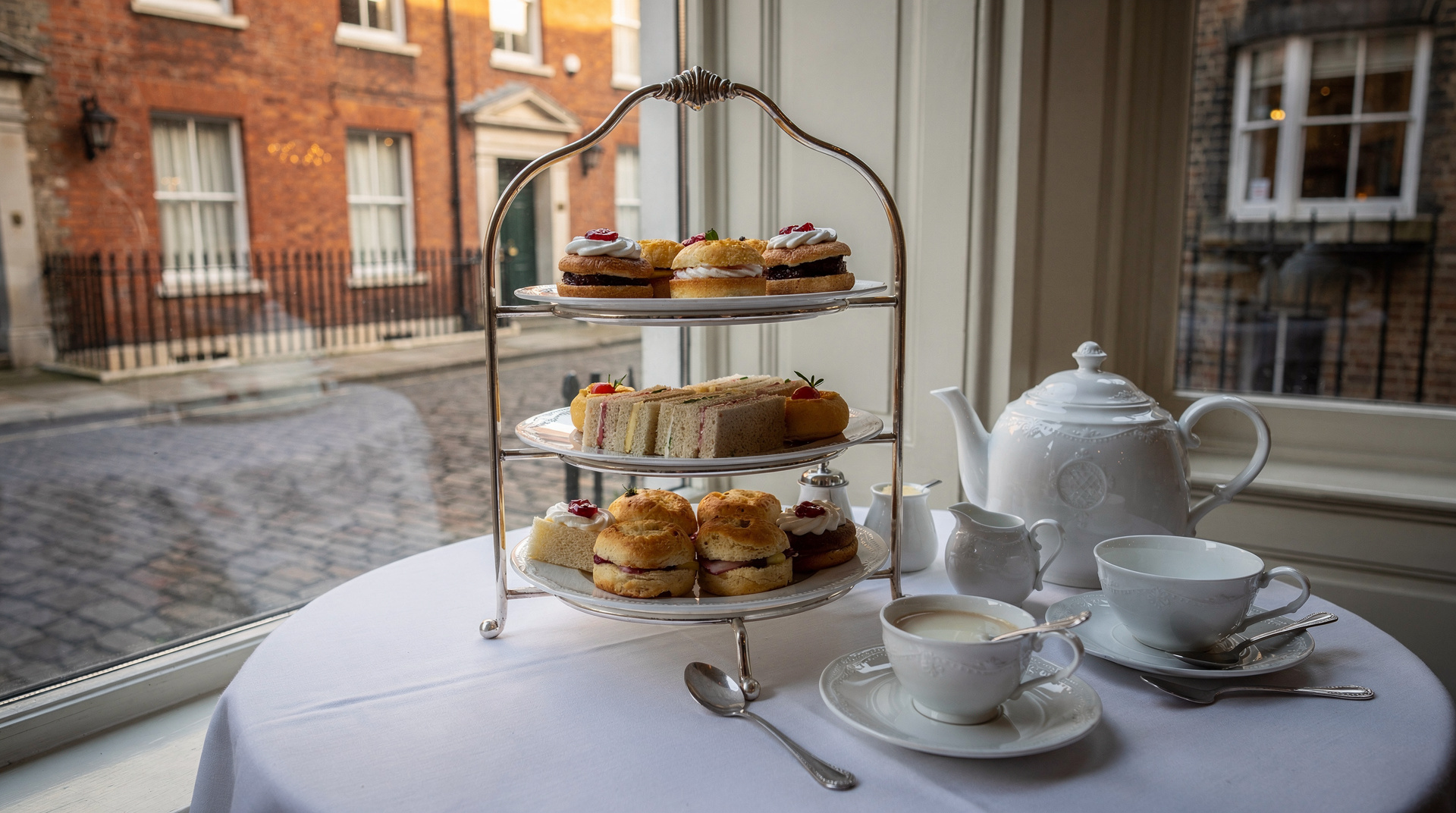
For the afternoon, the afternoon tea guide offers a more formal alternative to a café stop, and it is a good answer for anyone who prefers tea to coffee. If you prefer your food with a guide, the Dublin food tours guide compares the options and shows where coffee tends to fit in.
Making the most of a café visit
A few small habits make a difference. Go at a quiet moment if you can: mid-morning on a weekday is usually calmer than a weekend morning, when the best rooms fill with locals. Ask the barista what they are enjoying at the moment; the people behind the counter at serious specialty cafés are usually glad to talk about the beans and will steer you toward something you would not have chosen. If you are unsure, order a filter and a small pastry and let the room set the pace.
Treat the café the way locals do: as somewhere to linger rather than a place to grab and go. There is rarely any pressure to leave, and a long, unhurried cup is part of the experience. Keep an eye out for the cafés that roast their own beans or share clear information about where the coffee comes from, which is often a sign of a team that cares about the details.
On a budget
Specialty coffee is a small luxury, but it is an affordable one compared with most of what you will spend on a trip. A single good café visit each day gives you the flavour of the scene without straining the budget. For wider cost planning, the Dublin on a budget guide shows where it makes sense to spend and where to save, and the best time to visit Dublin guide helps you decide when the city is at its most comfortable for café-hopping.
What to order and what to skip
At a serious specialty café, a flat white or a filter coffee is the best way to judge quality — both show off the bean and the roaster’s skill more clearly than a milk-heavy latte. Single-origin filter options, when offered, are worth the extra couple of euro if you want to taste what the roaster is actually proud of. Skip flavoured syrups entirely; none of Dublin’s specialty roasters build their reputation on them, and ordering one signals a chain-café mindset in a room that takes the coffee seriously. If you’re also interested in Dublin’s wider drinking culture, the where to drink Guinness guide and gin and craft beer guide cover the other side of it.
Frequently asked questions about Dublin coffee culture
Where can I get good coffee near Dublin's main tourist sites?
Clement and Pekoe on South William Street is closest to Trinity College and Grafton Street, Fumbally Café is a short walk from the Guinness Storehouse, and Vice Coffee in Smithfield is convenient after the Jameson Distillery. All three are genuine specialty options rather than tourist-area chains.Is Irish coffee served everywhere in Dublin worth trying?
No — quality varies enormously. Many bars use poor instant coffee, too much sugar and squirty cream. The best versions use strong fresh coffee, good whiskey and lightly whipped fresh cream floated as a separate layer; a masterclass at the Irish Whiskey Museum is a reliable way to taste it done properly.
Top experiences
Bookable activities with verified prices and instant confirmation on GetYourGuide.

Dublin: 2.5-hour fabulous food tasting trail
- Free cancellation
- Instant confirmation

Dublin: delicious walking food tour
- Free cancellation
- Instant confirmation

Dublin: walking tour for foodies with tastings
- Free cancellation
- Instant confirmation

Dublin: walking food tour with local chef (7 stops or more)
- Free cancellation
- Instant confirmation