Cliffs of Moher
The Cliffs of Moher rise 214 m above the Atlantic on Ireland's west coast. From Dublin it is a 13-hour round trip — here is how to make it worthwhile.
From Dublin: Cliffs of Moher full-day tour
Duration: 12h
- Free cancellation
- Instant confirmation
Quick facts
- Distance from Dublin
- 280 km via M18 motorway
- By tour
- 12–13 h round trip from Dublin; depart 7–8 am
- Admission
- €8 adults; covers Cliffs of Moher Experience visitor centre
- Height
- Up to 214 m at the highest point (Knockardakin)
- Length
- 8 km of cliff face walkable on the Coastal Walk
An honest assessment of Ireland’s most visited natural site
The Cliffs of Moher are magnificent. They are also, on a busy summer Saturday, exceptionally crowded. The admission charge is real (about €8), the visitor centre is large and commercially minded, and the 280-kilometre journey from Dublin takes most of your day before you arrive. This guide explains what you actually see, how to get the most out of it, and whether the 13-hour round trip from Dublin is the right choice for your trip.
| Where | County Clare, ~280 km from Dublin via the M18 |
| Cost | Around €8 admission, includes parking |
| Time needed | Full day — 12–14 hrs round trip by tour from Dublin |
| Getting there | Organised day tour, or self-drive ~3 hrs via M7/M18 |
| Best time | May to September; June–July for long daylight and seabirds |
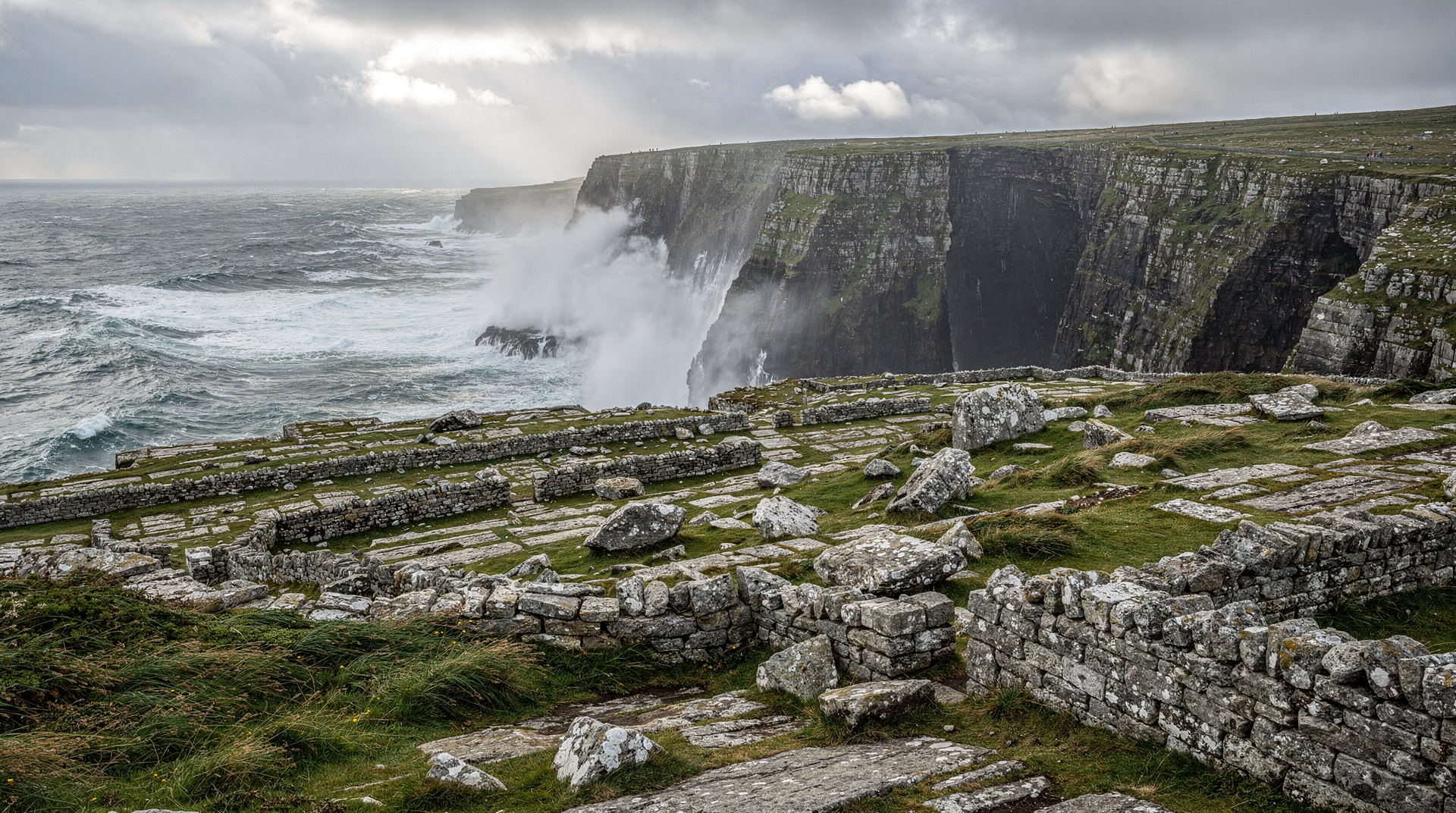
The honest answer: yes, if this is your one chance to see the Atlantic coast of Ireland, and no, if you are prioritising value and proximity. Glendalough is an hour from Dublin and profoundly moving; the Cliffs of Moher are three times as far and, in the peak of summer, share the O’Brien’s Tower area with hundreds of other visitors. But they are on the Wild Atlantic Way for a reason: the cliff face that rises vertically 214 metres from the sea, the sound of the Atlantic wind and the gannets and razorbills on the ledges below — this is genuinely extraordinary landscape, and nothing in the east of Ireland comes close to it.
The journey from Dublin
Organised tour from Dublin is the standard approach for those without a car. Tours depart central Dublin at 7–8 am and return by 8–9 pm, making a day of 12–14 hours. The Cliffs of Moher full-day tour from Dublin is the benchmark option — it includes coach travel both ways, entry to the cliffs, typically a stop in the Burren, and often a brief stop in Galway or Ennis. The tour handles the logistics efficiently and provides a guide for the journey if not always a dedicated guided walk at the cliffs themselves.
For those who want a smaller group and more time at the cliffs, the small-group version from Dublin limits numbers and is worth the extra cost if crowd avoidance is a priority.
By car, the M7 and M18 south-west from Dublin reach the cliffs in approximately 3 hours. Parking costs are included in the admission fee. Driving gives you the flexibility of timing but costs you the guide narrative across the Burren and Shannon region, which is where context is most valuable.
The cliffs of moher day trip guide has a full breakdown of timing, which tour to choose and what you actually need to book in advance.
Choosing between a coach, a small group and a car
The right way to reach the cliffs depends on how you like to travel rather than on which option is objectively best. A full coach is the simplest: you sit down in Dublin, you are delivered to the cliffs, and you are brought back without thinking about a single junction. A small group trades a little extra cost for a more flexible pace and a better chance of reaching the platform before the busiest part of the day. Driving yourself gives you control over every stop, but it also means you are the one watching the clock on the long road home.
If you do not drive, day trips without a car from Dublin explains how the organised options compare across the whole country. If you are tempted to hire a car, read driving in Ireland from Dublin first, because narrow roads and driving on the left catch out many first-time visitors. For a direct comparison of the departures on offer, which Cliffs of Moher tour to book goes through the trade-offs, and best day trips from Dublin puts the cliffs next to the alternatives so you can see what you are giving up by choosing the west.
At the cliffs
The visitor centre — the Cliffs of Moher Experience — is built underground into the hillside above the cliffs, which reduces its visual intrusion from the cliff edge. Inside are geological and ecological exhibits about the cliffs and the Atlantic seabird colonies. It is worth 30 minutes. The admission charge also covers parking.
From the visitor centre, a paved path leads to the main viewing platform and O’Brien’s Tower, an 18th-century folly at the highest point of the public area. The tower can be climbed for a small additional fee and gives a longer view of the cliff face in both directions. The view north toward Aill na Searrach and south toward Hag’s Head on a clear day is the classic postcard image: sheer cliff face, green plateau on top, Atlantic below.
The path continues north along the cliff edge — signed as the Coastal Walk and extending for about 8 kilometres in total. The further you walk from the main platform, the fewer other visitors you will encounter. Even 20 minutes of walking in either direction reduces the crowd significantly. The cliff edge is unfenced for much of the Coastal Walk; exercise proper caution and do not approach the edge in wet or windy conditions.
Pacing your time on the clifftop
Most tours give you a fixed window at the cliffs, so decide before you step off the coach what you want from it. A sensible order is to walk out first while your energy is high, take your photographs from the main platform and the tower, and leave the visitor centre for the end, when you are cold, windswept and glad of a roof. Doing it the other way round means you spend your best light indoors.
Bring layers even in summer. The Atlantic wind at the edge feels very different from the sheltered car park, and a clear morning can turn to mist quickly, which hides the cliff face entirely. If the view is blank when you arrive, wait a little before giving up; the cloud often lifts. For a fuller account of what to expect on the ground, the Cliffs of Moher guide covers the paths and viewpoints, and the blog post on the Cliffs of Moher without the crowds is a first-hand take on avoiding the worst of the rush. What to wear is covered in what to pack for Dublin weather, and the same advice holds on the west coast.
The seabirds
The Cliffs of Moher hold one of Ireland’s most important seabird colonies. Between April and August, puffins, razorbills, guillemots, kittiwakes and fulmars nest on the ledges. Peregrine falcons use the cliff face year-round. From the viewing platforms or the Coastal Walk path, you can watch birds at close range with binoculars (the puffins in particular are reliable from late April through July). This aspect of the cliffs is underplayed in most tour descriptions and genuinely elevates the experience beyond purely scenic viewing.
Combining with Galway and the Burren
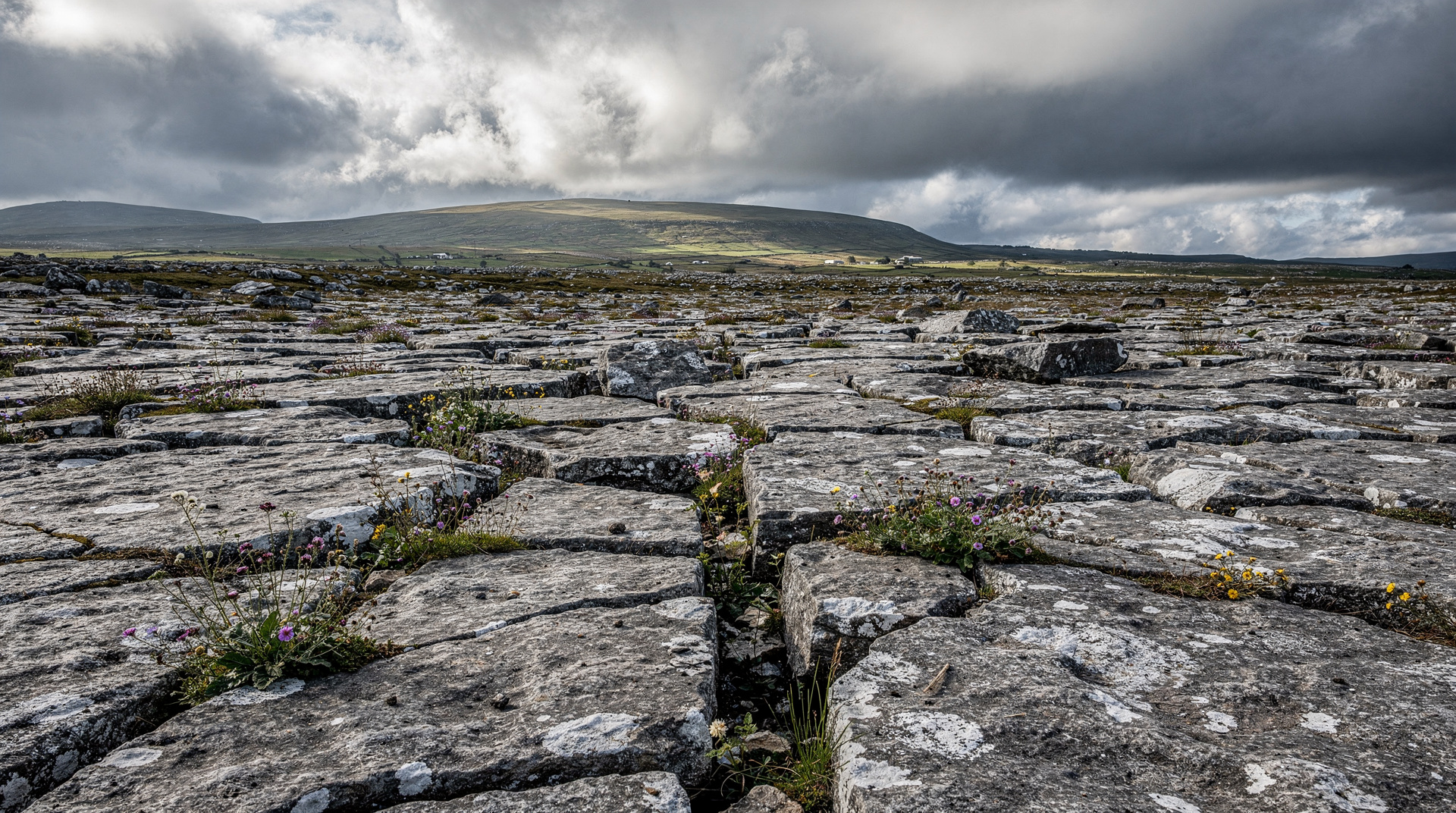
Most organised tours from Dublin combine the cliffs with either Galway city or the Burren — a limestone plateau southeast of the cliffs notable for its unusual flora and karst geology. Adding Galway City makes for a longer but more diverse day; adding the Burren is scenically complementary but less distinct as a combination.
If you are spending two or three days in the west of Ireland rather than on a single day trip, combining the Cliffs of Moher with Connemara, the Aran Islands and Galway City gives you the full Atlantic coast experience — see the Dublin to the Wild Atlantic itinerary for a worked example.
What the Burren and Galway add to the day
The Burren is easy to underrate from the coach window. Its pale, fractured limestone looks bare at first, but it is one of the more unusual landscapes you will pass through on the trip, and a stop here gives context for the geology that shapes the cliffs themselves. Our page on the Burren explains why it rewards a closer look if your schedule allows one.
Galway is the livelier add-on. If you want to know whether a short visit is enough, the Galway day trip guide sets out what can realistically be seen in the time a tour allows, and the blog post a weekend in Galway from Dublin shows what is possible if you stay longer. Many travellers find that staying overnight in the west turns a tiring day into a relaxed one, because you reach the cliffs without having crossed the country first.
Cliffs of Moher or the north
Visitors who are weighing the west against the north often ask which cliff-and-coast experience is the stronger. Giants Causeway versus Cliffs of Moher is the place to settle that question: the two offer very different scenery, and the right choice depends on whether you prefer sheer Atlantic drops or geometric rock formations and a coastal road. If you only have time for one long day out of Dublin, that comparison is worth reading before you book anything.
Fitting the cliffs into your itinerary
A long coach day sits awkwardly in the middle of a busy city break, so place it deliberately. The Dublin four days with a day trip itinerary shows one way to balance a big excursion against time in the city, and when to visit Dublin helps you choose the season that suits both the capital and the coast. Leave the morning after your cliffs day free, since an early start and a late return leave most people ready for a slow breakfast rather than another timetable.
Practical habits for a long day out
A few small habits make the day easier. Book ahead in busy months rather than hoping for a seat; booking attractions in advance in Dublin explains which things sell out and which do not. Work the cost of food and extras into your plan using the Dublin trip cost and budget guide, because a day on the road still needs meals and small purchases beyond the tour price.
Travelling with children needs a little more planning, and family day trips from Dublin discusses how long journeys suit different ages. If anyone in your group has limited mobility, check Dublin accessibility for general advice and confirm with the operator what the paths and facilities at the cliffs are like before you commit, since the Coastal Walk is uneven and exposed in places.
Is it worth the 13-hour day trip?
This depends almost entirely on what else you are doing in Ireland. If you are spending more than 5 days in Dublin and the country, the Cliffs of Moher is a destination you should plan for. If you are in Dublin for 2–3 days and your priorities are history and culture, Glendalough or Newgrange are closer and equally distinctive.
The comparison is made more explicitly in our which day trip from Dublin guide. The honest view: go if the west coast scenery is important to you. Do not go expecting an uncrowded natural experience — it exists, but you have to work for it by walking the Coastal Walk beyond the main platform.
When to go
| Season | Crowds | Weather | Notes |
|---|---|---|---|
| June–early July | Busy but manageable | Long daylight, generally settled | Best overall balance; seabirds active |
| August | Peak crowds | Warm, can be hazy | Book an early small-group departure |
| Sept–October | Thinning out | Increasingly changeable | Good light, fewer coaches |
| Nov–March | Quiet | Harsh Atlantic weather | No seabirds; cliffs still dramatic |
May through September is the main window. June and early July are ideal — long days mean you arrive in decent morning light and the evening light on the return is good from the coach window. August is the most crowded month; if you must visit in August, book an early-departing small-group tour to reach the cliffs before 11 am. November through March is quieter but the Atlantic weather is harsher and the seabird colonies are absent.
Boat cruise option
For a genuinely different perspective, some tours add a boat cruise beneath the cliffs, looking up at the 214-metre rock face from sea level rather than down from the platform above. This is weather-dependent and does not run in rough seas, but on a calm day it shows the scale of the cliffs in a way the clifftop paths cannot. The Cliffs of Moher tour with boat cruise combines the standard clifftop visit with this option in a single day from Dublin.
Top experiences
Bookable activities with verified prices and instant confirmation on GetYourGuide.

From Dublin: Cliffs of Moher full-day tour
- Free cancellation
- Instant confirmation

From Dublin: Cliffs of Moher, Burren & Galway City day tour
- Free cancellation
- Instant confirmation

From Dublin: Cliffs of Moher & Galway small group tour
- Free cancellation
- Instant confirmation

From Dublin: Cliffs of Moher small group tour
- Free cancellation
- Instant confirmation

Cliffs of Moher tour from Dublin with boat cruise
- Free cancellation
- Instant confirmation