Dublin whiskey trail
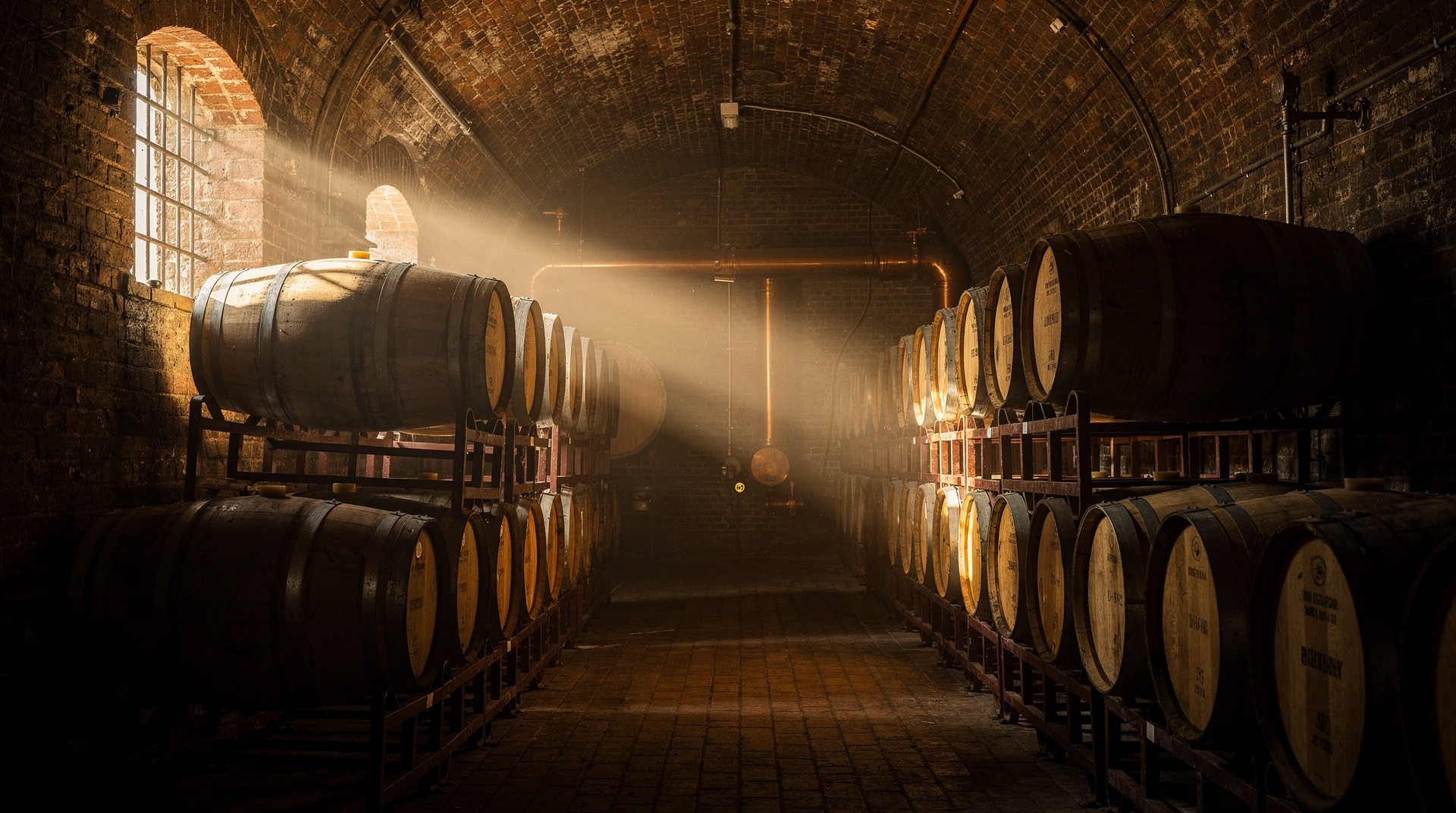
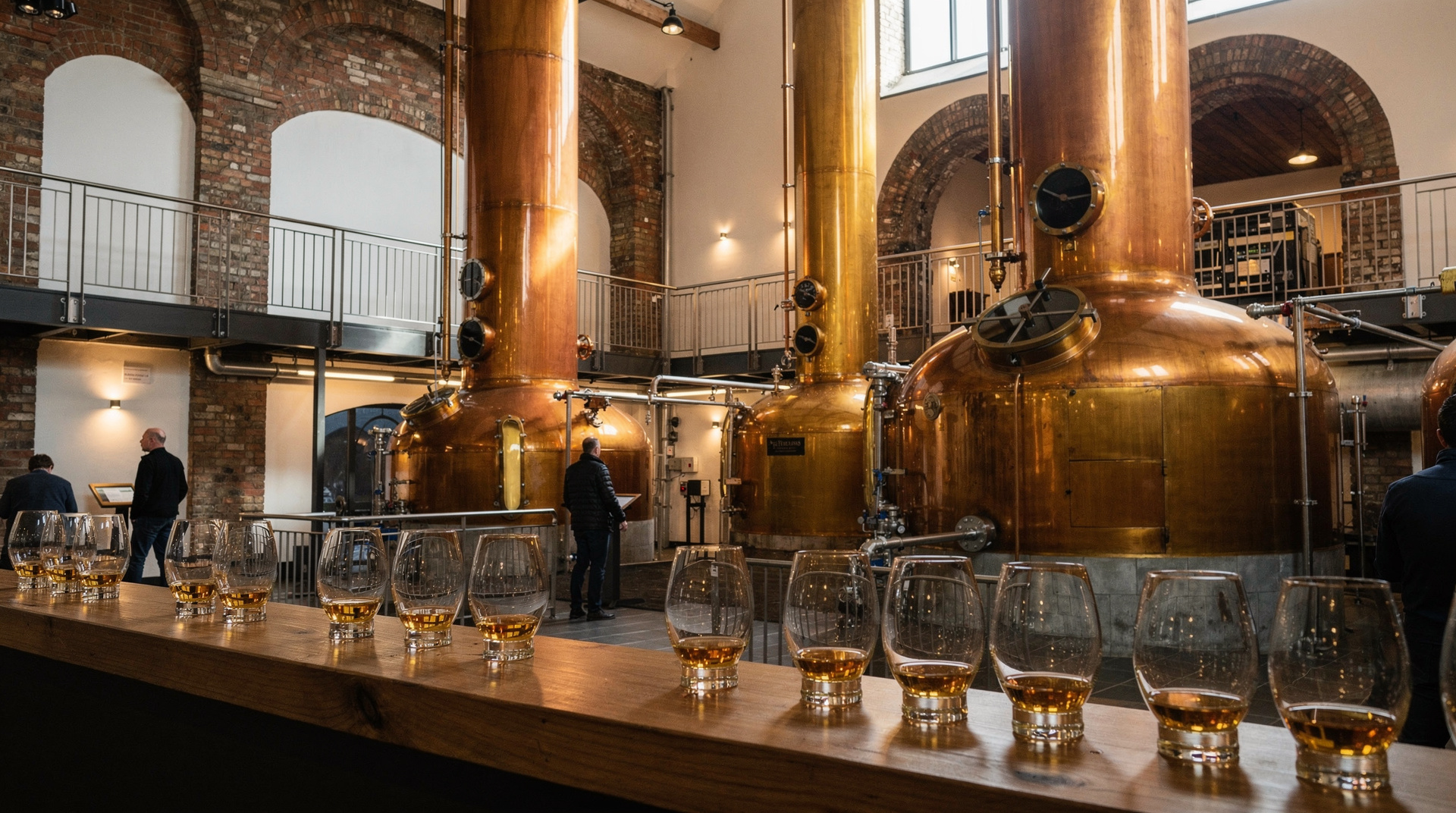
Dublin: private distillery trail with Irish whiskey tasting
Duration: 5h
- Free cancellation
- Instant confirmation
How do I plan a Dublin whiskey trail?
Start at the Irish Whiskey Museum on Grafton St. for historical context, then cross the city to the Liberties for Jameson Bow St., Teeling, Roe & Co, and Pearse Lyons. Two or three distilleries plus the museum is a full day. Book each in advance; all are within a 20-minute walk of each other in the Liberties.
| Where | The Liberties, plus the Irish Whiskey Museum on Grafton St. |
| Cost | Around €20–35 per distillery entry with tasting |
| Time needed | A full day for 2–3 stops plus the museum |
| Getting there | Walkable between stops, about 4km total |
| Booking | Advance booking essential, especially summer weekends |
Route at a glance
| Stop | Location | Time to allow | Note |
|---|---|---|---|
| Irish Whiskey Museum | Grafton St. | ~60 min | Historical context, start here |
| Jameson Distillery | Bow St., Smithfield | 60–90 min | The polished, beginner-friendly anchor |
| Roe & Co | Thomas St. | 60–90 min | Converted 1904 Guinness Power Station |
| Pearse Lyons | James’s St. | 45–60 min | Housed in an 1864 church |
| Teeling | Newmarket | 60–90 min | Craft highlight, distillery-exclusive bottlings |
Why Dublin is the world’s best city for whiskey tourism
Ireland is the fastest-growing premium spirits category in the world, and Dublin sits at its centre. The city has five major whiskey visitor experiences within a 30-minute walk of each other — the Irish Whiskey Museum, Jameson Bow St., Teeling, Roe & Co, and Pearse Lyons — and the entire Liberties quarter that houses most of them is itself a living piece of brewing and distilling history.
This is not new-build whiskey tourism grafted onto a city with no connection to the industry. The Liberties was the beating heart of Dublin’s industrial production for two centuries. Whiskey distilleries and the Guinness brewery occupied most of the neighbourhood. Their decline in the twentieth century left scars that are still visible; the current renaissance is a genuine revival of something that was nearly lost. Walking the trail is more interesting for knowing that.
Reading the Liberties as you walk
The trail works best if you treat the walking as part of the experience rather than the gap between tastings. The streets around Thomas St. and James’s St. still carry the scale of the old industrial city: tall brick walls, chimneys, church towers and warehouses that once served the distilleries and the brewery. Pause at a few corners and look up. The Liberties destination page explains how the area grew and why it remained its own world for so long, and the hidden corners of the Liberties post is a good companion if you want to wander off the direct route.
If you enjoy this kind of layered history, the viking and medieval Dublin guide and the St Patrick’s Cathedral guide cover older chapters of the same neighbourhood, and both sit close to the trail.
The five stops
Irish Whiskey Museum — Grafton St.
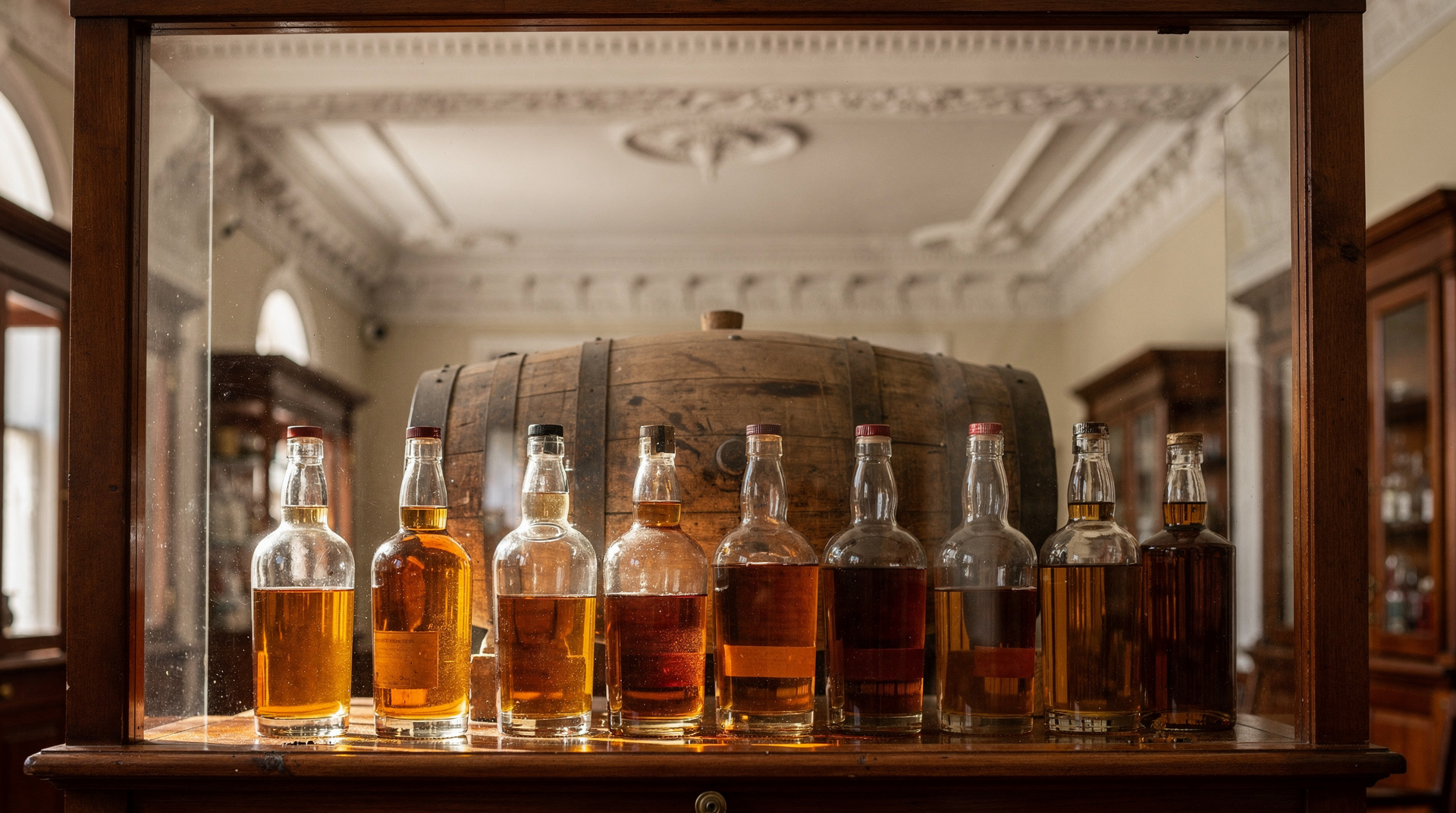
Start here, even though it is geographically separate from the Liberties cluster. The Irish Whiskey Museum covers four centuries of the industry — the golden age, the collapse, and the revival — in 60 minutes. It is the best available preparation for the distillery visits that follow. The Irish Whiskey Museum tour and tasting costs ~€25 and is worth it.
Jameson Distillery — Bow St., Smithfield
The Jameson Distillery at Bow St. is the anchor of the trail for most visitors. It is the most polished experience, the best for beginners, and the building — the original 1780 distillery — is impressive. The Jameson whiskey distillery tour with tastings includes a comparative tasting that will recalibrate how you think about Irish whiskey’s texture.
From Jameson, head south through Smithfield and down to the Liberties proper. The walk takes about 20 minutes and passes through one of Dublin’s most historically layered neighbourhoods.
Roe & Co — Thomas St.
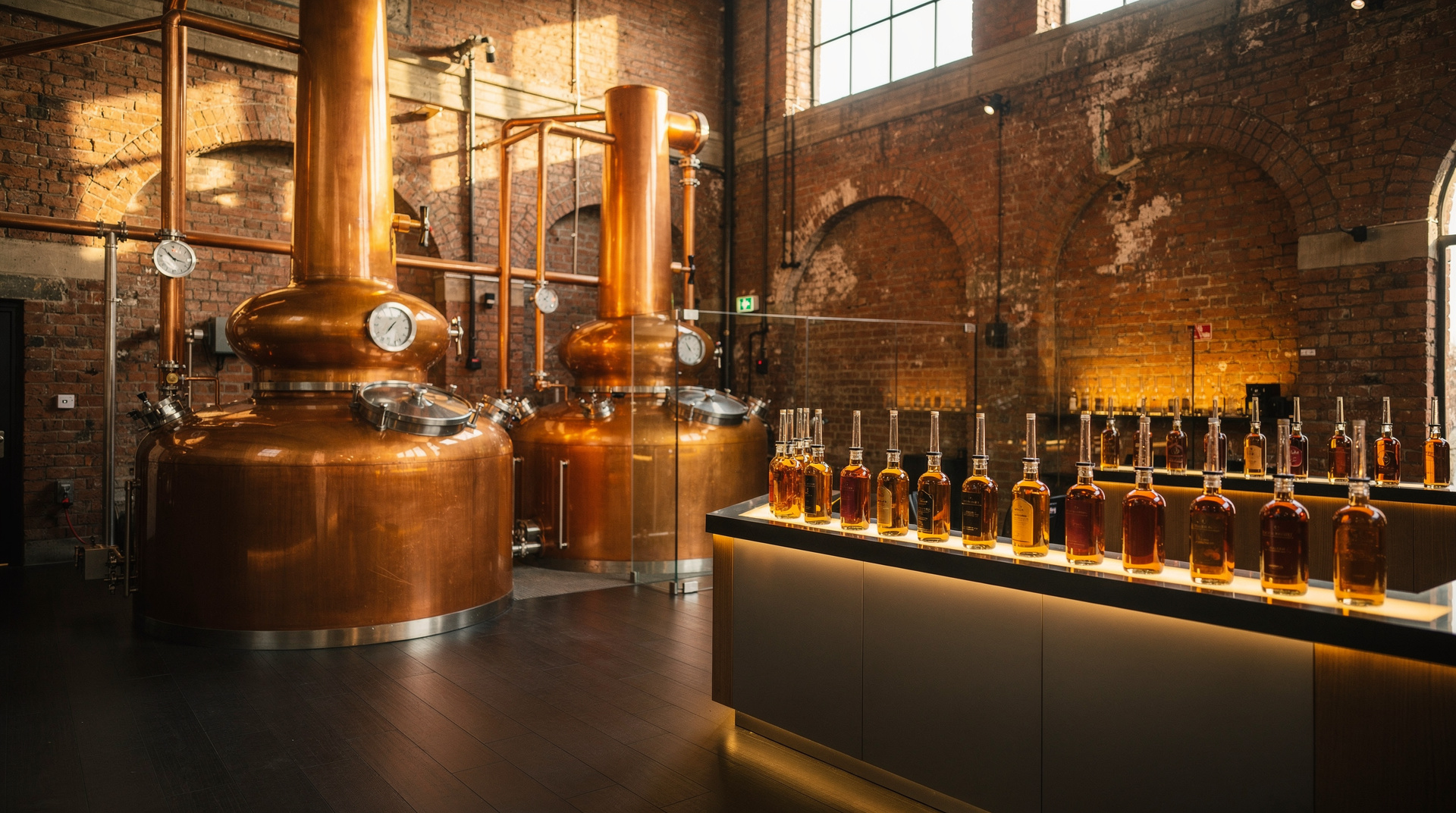
The Roe & Co Distillery in the converted 1904 Guinness Power Station is one of the most visually dramatic spaces on the trail. The Roe & Co Distillery Powerhouse tour and tasting (~€35) leans into the cocktail culture of the spirit as much as the heritage, which gives it a slightly different feel from the more education-focused experiences elsewhere.
Pearse Lyons — James’s St.
From Roe & Co it is a 5-minute walk to the Pearse Lyons Distillery, housed in the 1864 St James’s Church. Even if you are running low on tasting capacity by this point, the building alone is worth a look.
Teeling — Newmarket
The Teeling Distillery on Newmarket is the trail’s craft highlight — a working distillery since 2015 with some of Ireland’s most interesting whiskey. The exclusive bottlings available only at the distillery make the visit commercially worthwhile as well as educationally.
Choosing between the stops
Not everyone wants every stop, and each place has a different personality. A quick way to decide:
- Want context first? The museum is the gentlest introduction and suits anyone who has never tasted Irish whiskey. The whiskey tasting for beginners guide pairs well with it.
- Want the classic big-name experience? Jameson is the obvious pick, and the Jameson vs Teeling vs Pearse comparison helps if you are weighing it against the smaller producers.
- Want to see whiskey actually being made? Teeling and Pearse Lyons are the ones to prioritise, and Roe & Co adds a bar-led, cocktail-friendly take.
- Short on time or energy? Choose the museum and one distillery, and spend the rest of the day on a slow wander through the neighbourhood.
There is no wrong combination. The trail is a menu, not an exam, and a relaxed two-stop day is often more memorable than a rushed five.
How to pace yourself
The fundamental challenge of the Dublin whiskey trail is that each venue offers 2–4 tastings, and doing all five stops means consuming somewhere between 10 and 20 measures of spirits in a day. The practical limits are:
- Palate fatigue sets in after 6–8 samples; the flavour differences between later drams become harder to assess
- Physical state is obviously relevant; drink water consistently and eat before and during
- Budget: at roughly €20–35 per distillery entry plus tastings, five stops in a day costs €100–150 before food
The sweet spot for most people is two or three distillery visits plus the museum. If you have two days, split the trail: museum and Jameson on day one, Teeling and one craft distillery on day two, with the Guinness Storehouse as a beer counterpoint on either day.
Getting more from each tasting
A few habits make the samples count. Take a moment to smell the whiskey before sipping, add a little water if the spirit feels sharp, and ask the guide what they notice rather than trying to name flavours on your own. Staff at these venues are used to beginners and enjoy questions. Sip slowly, rinse your palate with water between drams, and do not feel obliged to finish every measure; leaving one half-finished is perfectly acceptable, and it is better than ending the day unable to taste anything.
If you are heading on to a pub afterwards, the Irish whiskey and pub guides suggest places where you can sit down and keep the evening gentle, and the Dublin whiskey renaissance post gives a personal view of how the scene has changed.
Organised versus self-guided
If logistics feel complex, the private distillery trail with Irish whiskey tasting (~€120) handles transport and booking across multiple venues in a single booking. This is particularly useful for groups, couples celebrating something, or visitors with very limited time who cannot afford to wait for a sold-out time slot.
The self-guided option is cheaper and more flexible, but requires booking each venue separately at least 24–48 hours in advance.
| Self-guided | Private trail tour | |
|---|---|---|
| Cost | €20–35 per stop, pay individually | Around €120, most included |
| Booking effort | Book each venue separately | One booking covers the day |
| Flexibility | Choose your own stops and pace | Fixed route, guided pace |
| Best for | Budget-conscious, flexible schedules | Groups, celebrations, limited time |
Whiskey trail with kids or non-drinkers
Distillery tours are not built for children, and most require visitors to be 18 or over for the tasting element, though some allow supervised entry without tasting — check each venue’s policy before booking if travelling with family. If part of your group doesn’t drink whiskey, the Irish Whiskey Museum works well as a shared stop since the historical content stands on its own, and most distilleries offer a non-alcoholic tasting alternative on request. For a family day that doesn’t centre on whiskey at all, the Dublin with kids guide has better-suited alternatives nearby.
Weather, seasons and timing
Dublin rain is a fact of life, but the trail copes well with it. Most of the experiences are indoors, and the walks between them are short enough that a good jacket is all you need. On a wet day the trail is arguably at its best, because there is little else you would rather be doing than standing in a warm tasting room. Our rainy day in Dublin guide has more ideas if the weather changes your plans, and the best time to visit Dublin guide explains how the seasons shape crowds.
In winter the city is quieter and the distilleries feel more intimate; the Dublin in winter guide covers what else to fit in. In summer the long daylight lets you start late and still finish before dark, but book earlier, as the Dublin in summer guide explains.
Turning the trail into a longer stay
The trail slots neatly into a wider visit. On a first trip, the Dublin first-time guide and the how many days in Dublin page help you decide where a whiskey day belongs. If you are building a longer plan, the Dublin 2-day itinerary and the weekend foodie itinerary both leave room for a distillery stop, and the Dublin on a budget guide shows how to balance paid tastings against free sights.
Getting around is simple: the getting around Dublin guide and the Luas and DART guide explain the options if you would rather ride between the museum and the Liberties than walk the whole way. Staying nearby makes a late finish easier, and the where to stay in Dublin neighbourhoods guide compares the areas.
Food on the trail
Eating is important on any whiskey trail, and the Liberties has good options. For lunch or dinner context, see the traditional Irish food and best restaurants Dublin guides for recommendations near the trail. The Fallon & Byrne delicatessen on Exchequer St. is a good grazing stop before you cross into the Liberties; Fumbally Café on Fumbally Lane, minutes from Teeling, is one of Dublin’s best daytime cafés.
Combining with the Guinness Storehouse
Many visitors combine the whiskey trail with the Guinness Storehouse on the same day. This works best if you do whiskey in the morning and the Storehouse in the afternoon, ending with your pint in the Gravity Bar. The Storehouse is a 10-minute walk from Pearse Lyons and 15 minutes from Teeling — the geography works well.
Check whether the Dublin Pass is worth it before booking individual tickets; the pass includes some distillery options and covers the Storehouse.
Finishing the day well
A good trail ends with something savoury and a seat. Many people finish with a proper pub meal and a pint, and the where to drink Guinness in Dublin guide and the traditional music pubs guide point to places where the evening can wind down with live music. If you would like to try other local drinks afterwards, the gin and craft beer guide covers what else the city pours. For a quieter finish, the Dublin trad session etiquette guide will help you settle into a session without feeling out of place.
Who the trail suits best
The whiskey trail rewards curiosity more than expertise. Couples and friends who like to share a flight and compare notes tend to enjoy it most, and solo travellers often find the guided tastings a friendly way to chat with strangers; the Dublin solo travel guide has more on that. Anyone who prefers a more structured day out may like the Dublin food tours guide as an alternative, since it offers a similar mix of walking, eating and local stories. Whichever way you go, leave some slack in the schedule so that a good conversation with a guide or a bartender never has to be cut short to catch the next booking.
Practical planning
Book all distilleries in advance — especially for summer weekends. The most popular slots (late morning, early afternoon) fill quickly.
Wear comfortable shoes — the walking route between all five stops covers about 4 km.
Go on a weekday — all venues are quieter Monday–Thursday; weekend afternoons in July–August can be very busy.
Eat a proper meal first — not a light snack. Twelve measures of whiskey across a day hit differently on an empty stomach.
Read whiskey tasting in Dublin for beginners before you go if any of this is new to you, and use our Dublin 3-day itinerary to see how the trail fits into a broader visit. If you’d rather compare Irish whiskey against stout on a single evening, the Guinness vs other stout guide pairs well with a whiskey-first day.
Frequently asked questions about Dublin whiskey trail
How many distilleries can I visit in one day in Dublin?
Realistically two or three, plus the Irish Whiskey Museum. Each distillery tour runs 60–90 minutes including tasting. Doing four in a single day is possible but rushed — your palate and your head will both thank you for limiting to three.Do I need to book ahead for the Dublin whiskey distilleries?
Yes — all four main distilleries (Jameson, Teeling, Roe & Co, Pearse Lyons) and the Irish Whiskey Museum require advance booking. Walk-in slots exist but are not guaranteed, and the most popular time slots sell out days or weeks in advance in summer.What is the best order to visit Dublin's whiskey distilleries?
For historical flow: Irish Whiskey Museum first (context), then Jameson Bow St. (the big name), then Teeling or Roe & Co (craft producers). Pearse Lyons fits naturally between Roe & Co and the Guinness Storehouse. For geography, the Liberties distilleries are all within a short walk — start at the top of the cluster and walk down.Is there a free Dublin whiskey trail route?
The walking route between distilleries is free; entry to each requires a ticket (€20–€35 each). You can design a self-guided walk using the addresses: Irish Whiskey Museum (Grafton St.), Jameson (Bow St. Smithfield), then walk south to Thomas St. for Roe & Co, James's St. for Pearse Lyons, and Newmarket for Teeling.Which Dublin distillery makes whiskey on-site?
Teeling and Pearse Lyons both distil on-site in the Liberties. Roe & Co also distils in their Thomas St. building. Jameson Bow St. is a visitor centre — the whiskey is made at Midleton, County Cork. The Irish Whiskey Museum is a museum only.
Top experiences
Bookable activities with verified prices and instant confirmation on GetYourGuide.

Dublin: private distillery trail with Irish whiskey tasting
- Free cancellation
- Instant confirmation

Dublin: Jameson whiskey distillery tour with tastings
- Free cancellation
- Instant confirmation

Dublin: Teeling Whiskey Distillery tour & tasting
- Free cancellation
- Instant confirmation

Dublin: Roe & Co Distillery powerhouse tour & tasting
- Free cancellation
- Instant confirmation