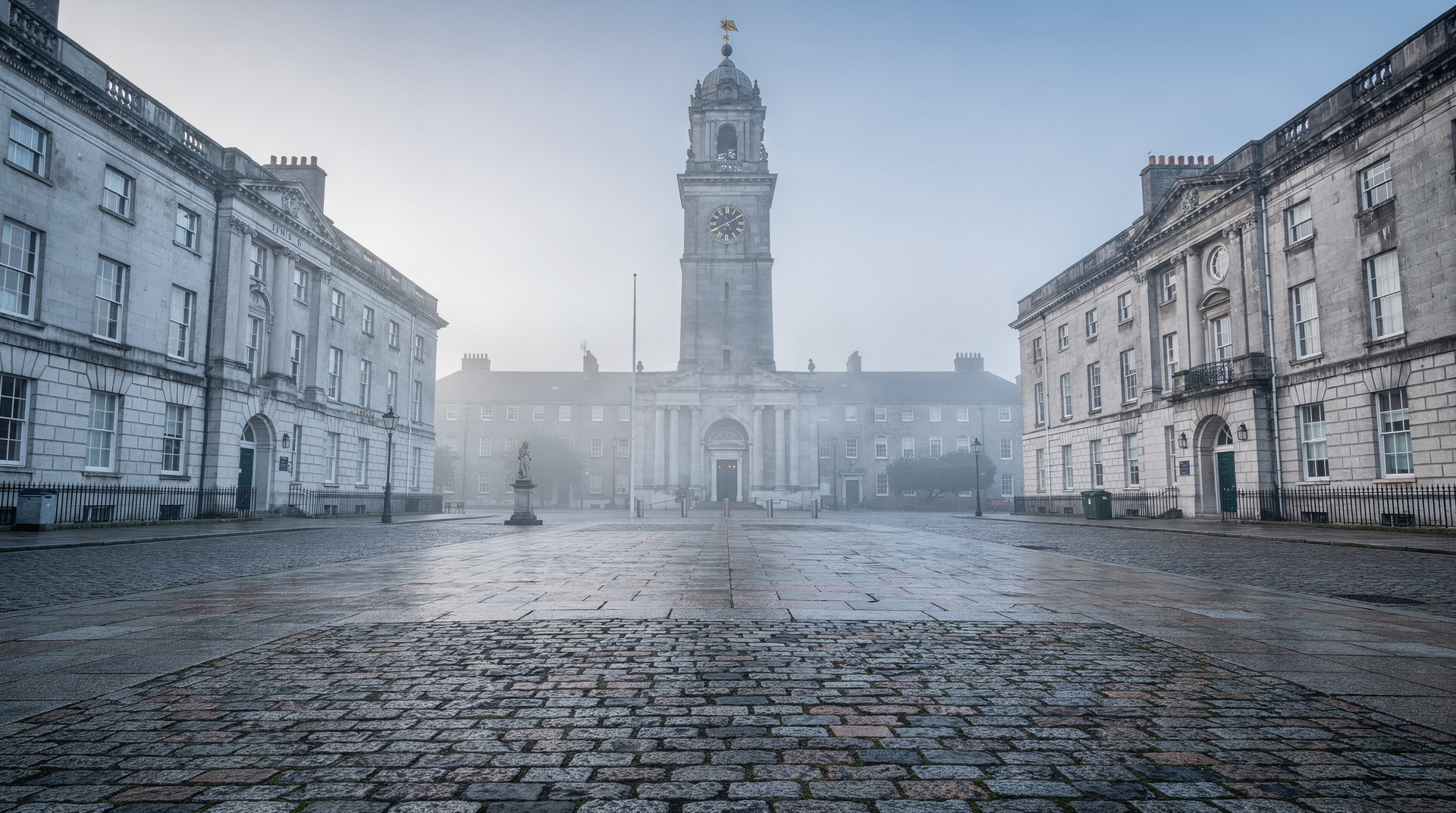
Dublin
An honest guide to Dublin: the attractions worth your time, the ones to skip, where to stay and how to use the city as a base for day trips.
Dublin: the Dublin Pass with tickets to 40+ attractions
Duration: 1-5 days
- Free cancellation
- Instant confirmation
Quick facts
- Airport
- Dublin Airport (DUB), 12 km north
- Getting around
- Walkable core; DART, Luas, buses
- Currency
- Euro (€)
- Language
- English (and Irish)
- Ideal stay
- 2–3 nights, more with day trips
A compact capital that rewards walking
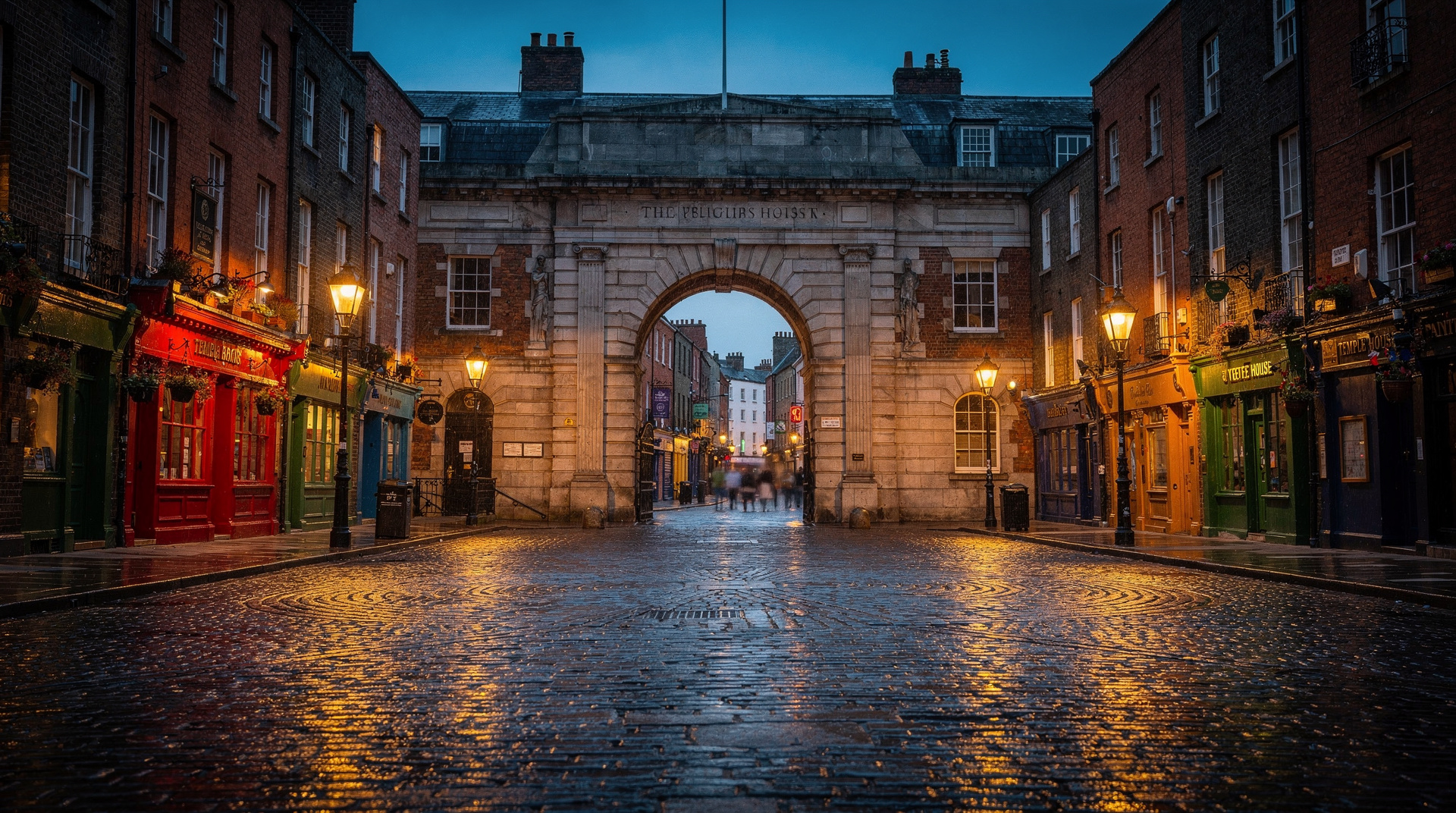
Dublin is small for a capital city, and that is its great advantage. You can cross the historic core on foot in under half an hour, from the cobbles of Temple Bar to the Georgian doorways of Merrion Square, and most of what you came to see sits inside that walkable circle. The River Liffey splits the city north and south, and Dubliners will tell you — half-joking — which side they trust. You do not need to take a position. You do need comfortable shoes and a rain jacket, because the weather changes its mind several times a day.
| Airport | Dublin Airport (DUB), 12 km north |
| Time needed | 2–3 nights, more with day trips |
| Getting around | Walkable core; DART, Luas, buses |
| Currency | Euro (€) |
| Best time | May, June and September |
What makes Dublin worth two or three nights is not a single blockbuster sight. It is the accumulation: the 1,200-year-old illuminated manuscript in the Old Library at Trinity College, a pint poured properly in a back-street pub, the grim corridors of Kilmainham Gaol where the leaders of the 1916 Rising were held, and the city’s bottomless appetite for talk. Dublin produced four Nobel laureates in literature and it still wears that history loudly.
This guide is honest about where to spend your time and where the city sells a version of itself to visitors. Temple Bar after dark is the clearest example — fun once, overpriced always. We will get to that.
How long to spend, and where it fits
Two full days cover the headline sights without rushing: Trinity College and the Book of Kells, Dublin Castle, one cathedral, the Guinness Storehouse, and an evening of music. A third day buys you a museum morning and a half-day escape to the coast at Howth or Dalkey.
Anything beyond three nights is best spent using Dublin as a base for day trips — the Cliffs of Moher, Glendalough, the Boyne Valley, or Belfast and the Giant’s Causeway.
If you are planning the shape of a trip, our 3-day Dublin itinerary and the how many days in Dublin guide lay out the trade-offs in detail.
The sights worth your time
Trinity College and the Old Library are the one unmissable indoor sight. The Book of Kells exhibition can feel brisk, but the Long Room above it — barrel-vaulted, lined with 200,000 antique volumes — is the photograph everyone comes for. Book a timed slot in advance; the queue for walk-ups is real. You can pair it with Dublin Castle on a combined ticket, and the fast-track Book of Kells and Dublin Castle tour does exactly that with a guide.
The Guinness Storehouse is Ireland’s most-visited attraction, and whether it is “worth it” depends on what you want — we weigh that up honestly in is the Guinness Storehouse worth it. The Gravity Bar pint with a 360-degree view is the payoff. For history that stays with you, Kilmainham Gaol is the most powerful 90 minutes in the city; tickets sell out days ahead, so read our Kilmainham Gaol guide before you go.
To orient yourself on arrival, the hop-on hop-off bus is a defensible first-morning move in a city this spread between the Storehouse, the cathedrals and Phoenix Park. Walkers should instead join a guided walking tour — the historical walk covers a millennium in two hours.
Neighbourhoods, briefly
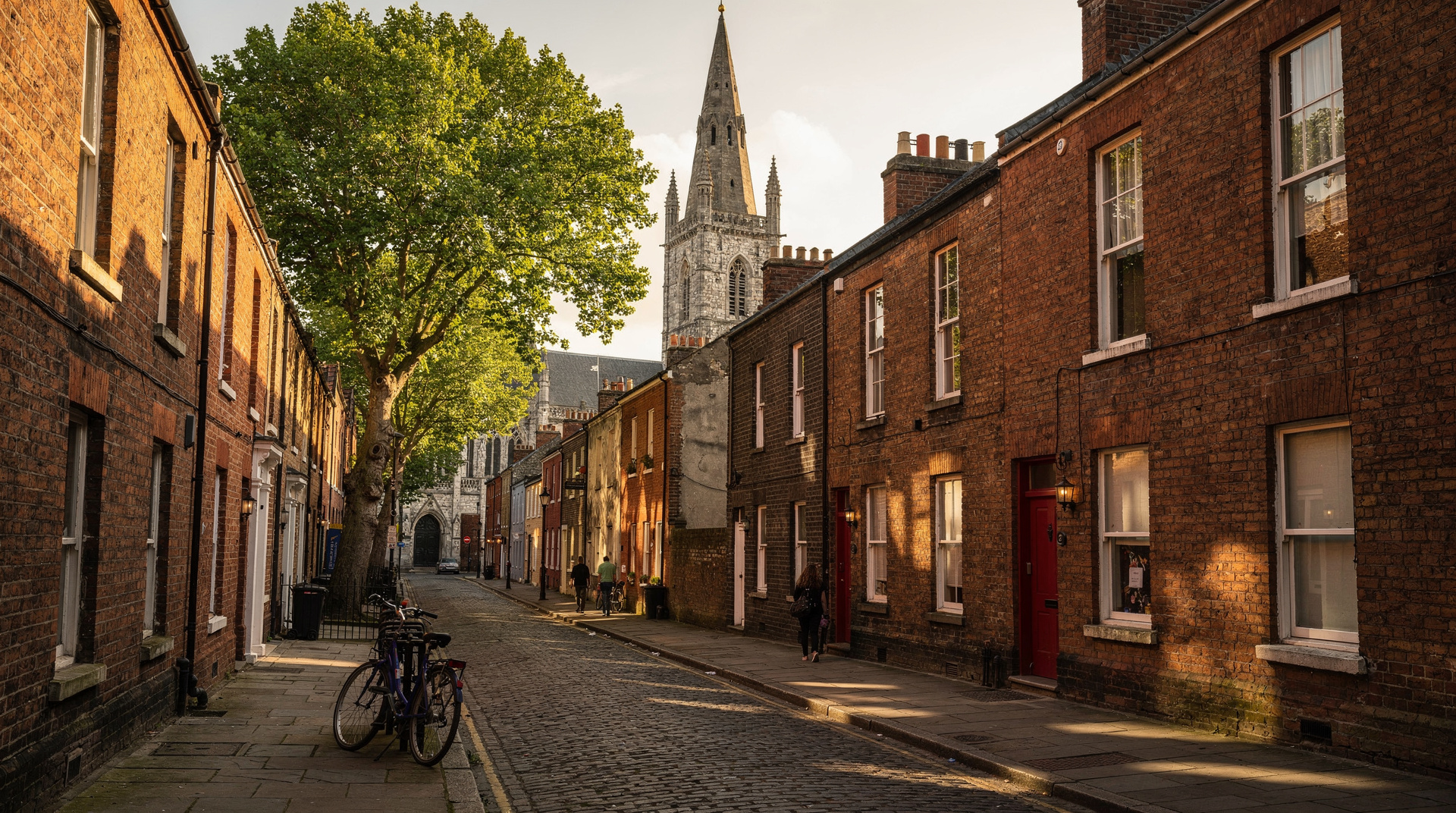
The south city around Grafton Street, Trinity and Georgian Dublin is where most first-timers stay and walk. The Liberties, west of the centre, is the old brewing and distilling quarter — Guinness, Teeling, Roe & Co — and is changing fast. Temple Bar is the cobbled riverside cultural quarter; visit by day for the galleries and the food market, and read the honest Temple Bar guide before you plan a night there. North of the river, O’Connell Street and the northside hold the GPO, the spire and the city’s revolutionary history.
For where to base yourself, the neighbourhoods to stay in guide breaks down the trade-offs between price, noise and walkability.
Layers of history in a small space
Part of Dublin’s charm is how many eras sit within a few streets of each other. The Viking and medieval city lies under and around the cathedral quarter, and Viking and medieval Dublin explains what you can still see and where to find it. Christ Church Cathedral and St Patrick’s Cathedral anchor that older layer, and choosing one rather than trying to do both in the same morning is perfectly reasonable if time is short.
The twentieth century is just as present. The 1916 Easter Rising guide connects the GPO, the prison and the streets in between, and it works well as a thread through a day that also takes in the northside. If the story of the Famine and emigration interests you, the Great Famine in Dublin guide points to the memorials along the river. Most of these sights are close enough that you can build a day around a theme rather than a map, and the result usually feels less rushed than ticking off attractions one by one.
Literature, language and conversation
Dublin’s reputation as a literary city is earned, and you do not need to have read much to enjoy it. The literary Dublin guide sets out the writers, the houses and the places they drank, and literary pubs in Dublin is the easy way to combine reading history with an evening out. Even if the books are not your thing, the habit of talking, joking and telling a story is the real literature of the city, and you will meet it at the bar as readily as in a museum.
A day built around the neighbourhood you chose
Where you stay shapes how Dublin feels. If you sleep near Grafton Street, the city comes to you on foot, and mornings can start with coffee and end with a walk through the Georgian streets. If you prefer something quieter, the northside and the coast give a different rhythm, with the DART doing the work of getting you into the centre. The where to stay in Dublin guide compares the options without pretending any one of them suits everyone, and a first visit usually goes best when you pick the area that lets you walk to the things you care about most.
A simple way to plan is to anchor each day on one major sight and let everything else fit around it. Put the timed booking in the morning, leave the afternoon loose for wandering, and keep the evening for a pub with music rather than a fixed reservation. Dublin rewards unplanned detours, and the compact layout means a wrong turn rarely costs more than a few minutes. The first-time visitor guide turns this approach into a practical checklist if you want something to follow.
Eating and drinking beyond the pint
The food scene has moved well beyond the old stereotype. Best restaurants in Dublin covers places worth booking, while traditional Irish food is the place to start if you want to understand what the classic dishes actually are and where they are done properly. For coffee, a slow breakfast or an afternoon pause, Dublin coffee culture will save you from the first café you walk past. Spirits fans have plenty to work with too: the Dublin whiskey trail links the city’s distilleries into something you can do at your own pace.
If the weather turns, which it will, Dublin copes well. Museums, cafés, distillery tours and covered markets all take the pressure off a wet afternoon, and the rainy day in Dublin guide collects the best indoor options so a downpour becomes a change of plan rather than a ruined day. Travelling with children changes the shape of the trip again, and Dublin with kids covers what actually works for families rather than what simply looks good in a brochure.
Pubs, music and the honest bit
A traditional music session in a real pub is the most Dublin thing you can do, and it is free. The trick is knowing where locals actually drink — our best pubs in Dublin and traditional music pubs guides point you away from the Temple Bar markup and toward Stoneybatter, the Liberties and the lanes off Grafton Street. If you only have one night, a guided traditional pub tour stitches together several good ones with the stories that go with them.
Here is the honest bit: Temple Bar’s headline pubs charge well over €10 a pint and trade on their photogenic frontage. The Guinness is the same as everywhere; the price is not. Spend your money two streets away. We keep a running list of the city’s real tourist traps so you can skip them.
Getting around and getting out
Dublin’s core is walkable, but a Leap Visitor Card covers the DART coastal train, the Luas trams and city buses, and pays for itself quickly. From the airport, Dublin Bus (routes 16, 19 and 41), Dublin Express and Aircoach are the public options — the full breakdown is in Dublin Airport to the city. The DART is your friend for half-day coastal escapes to Howth, Dún Laoghaire and Bray without renting a car; see day trips without a car.
When to come matters more than people expect. May, June and September give you long days and thinner crowds; read the best time to visit Dublin and, because this is Ireland, what to pack for the weather.
Safety, scams and common sense
Dublin is an easy city to visit, and ordinary city habits are enough: keep an eye on bags in crowded places, be wary of anyone who approaches you with an unusually good offer, and check what you are being charged before you agree. The Dublin scams to avoid guide lists the specific tricks aimed at visitors so you can recognise them early. Most of the time the only real hazard is the weather, and a rain jacket solves that.
Planning the rest of your trip
Once you have decided how long to stay, the itineraries do the heavy lifting. The 1-day Dublin itinerary is a realistic option for a stopover, while the 2-day plan suits a long weekend. If you want to add the coast or the north, the coastal itinerary and the Northern Ireland itinerary show how to stretch the trip without losing the thread. Whichever you choose, treat the plan as a skeleton: leave room for the pub you did not expect to love and the street you did not mean to wander down.
What to skip, honestly
Not everything marketed heavily to visitors earns the time it takes. The Temple Bar pub crawl after dark trades on photogenic frontage rather than good beer or genuine atmosphere — go for lunch or an afternoon pint instead, and spend the evening two streets away. Souvenir-shop “Irish experience” dinner shows near the main tourist strip are hit and miss; if you want a proper evening of music and dance, our Irish dance shows guide and traditional music pubs list point to better value. The full rundown of what over- and under-delivers is in overrated and underrated Dublin.
Money-saving basics
The Dublin Pass bundles entry to around 40 attractions and can pay for itself if you are hitting several paid sights in a short visit, but it is not automatically worth it for a slower trip — the Dublin Pass versus individual tickets comparison breaks down when it makes sense. Beyond the pass, Dublin has a genuinely good spread of free museums — the free museums guide covers the National Museum, National Gallery and others that cost nothing to enter. For an overall sense of what a realistic trip costs, see Dublin trip cost and budget.
Day trips from the city
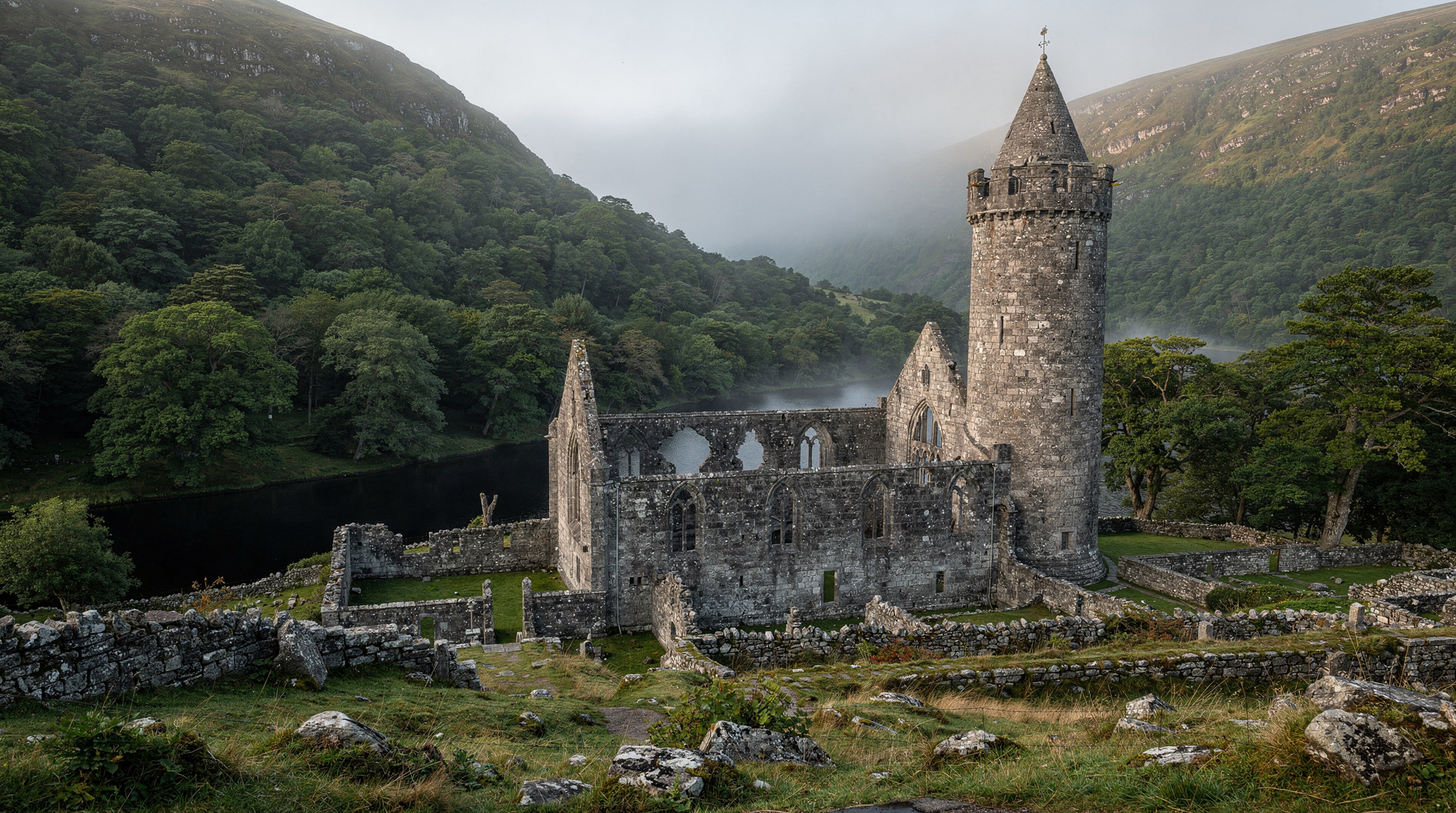
Dublin’s other great strength is how easily it functions as a base. Within roughly an hour you can reach Glendalough in the Wicklow Mountains, Newgrange in the Boyne Valley, or the coastal towns of Howth and Dún Laoghaire by DART without needing a car. Further afield, the Cliffs of Moher, Galway and Belfast and the Giant’s Causeway are realistic single-day tours if you are willing to commit most of a day to travel. The best day trips from Dublin guide ranks them by how much of the day is spent travelling versus arriving, which matters more for enjoyment than distance alone.
Top experiences
Bookable activities with verified prices and instant confirmation on GetYourGuide.

Dublin: Guinness Storehouse entry ticket with free pint
- Free cancellation
- Instant confirmation

Dublin: fast-track Book of Kells ticket & Dublin Castle tour
- Free cancellation
- Instant confirmation

Dublin: the original hop-on hop-off green bus tour
- Free cancellation
- Instant confirmation

Dublin: historical 2-hour guided walking tour
- Free cancellation
- Instant confirmation

Dublin: Gravedigger ghost bus & pub stop
- Free cancellation
- Instant confirmation