Galway City
Galway is Ireland's most vibrant city outside Dublin — medieval streets, live music, gateway to Connemara. A 13-hour round trip from Dublin by tour.
From Dublin: Galway and Cliffs of Moher day tour
Duration: 13h
- Free cancellation
- Instant confirmation
Quick facts
- Distance from Dublin
- 215 km via M6 motorway
- By train
- 2h10–2h30 from Dublin Heuston (Irish Rail)
- By coach
- Bus Eireann and GoBus, 2h30–3h from Dublin
- By tour
- 13 h round trip combined with Cliffs of Moher
- Best time in Galway
- Allow at least 3–4 h for the city itself
Ireland’s other city — and it earns the comparison
Galway is not trying to be Dublin. It is smaller, more compact, louder in its own way, and oriented around the Atlantic rather than a river valley. The medieval core — a compact grid of stone-fronted streets around Shop Street, Quay Street and the Latin Quarter — is genuinely more lively per square metre than almost anywhere in Dublin, and in summer it is in near-continuous festival mode. Traditional music plays in pubs from lunchtime, buskers work the stone archways of Eyre Square, and the Spanish Arch looks across the Corrib to Connemara in a way that reminds you how close the wild west of Ireland is.
| Distance from Dublin | 215 km via M6 motorway |
| By train | 2h10–2h30 from Dublin Heuston |
| By coach | 2h30–3h with Bus Eireann or GoBus |
| By tour | 13 h round trip combined with Cliffs of Moher |
| Time needed | Full day; ideally a train day trip or overnight |
As a day trip from Dublin, Galway is at the absolute limit. The train takes 2 hours 10 minutes from Dublin Heuston, which means a full day in the city is entirely feasible by rail — unlike the Cliffs of Moher, which requires a tour or a car. But most organised tours combine Galway with the Cliffs of Moher in a single 13-hour day, which means you get only 2–3 hours in the city. That is enough to walk the medieval core and have a meal, but not enough to appreciate Galway properly.
The honest advice: if Galway is what you want, take the train and give it a full day. If you want to see both Galway and the Cliffs of Moher, the combined tour works, but you leave each feeling there was more to see.
Getting there from Dublin
By train from Dublin Heuston, the journey to Galway Ceannt Station takes 2 hours 10 minutes to 2 hours 30 minutes. Irish Rail operates regular services, roughly hourly, with fares from about €15–35 return depending on how far ahead you book. The station is a 10-minute walk from the Latin Quarter.
GoBus and Bus Eireann both run express coach services from Dublin city centre to Galway, taking 2 hours 30 minutes to 3 hours; these are slightly cheaper than the train and drop you at Galway Coach Station, also close to the centre.
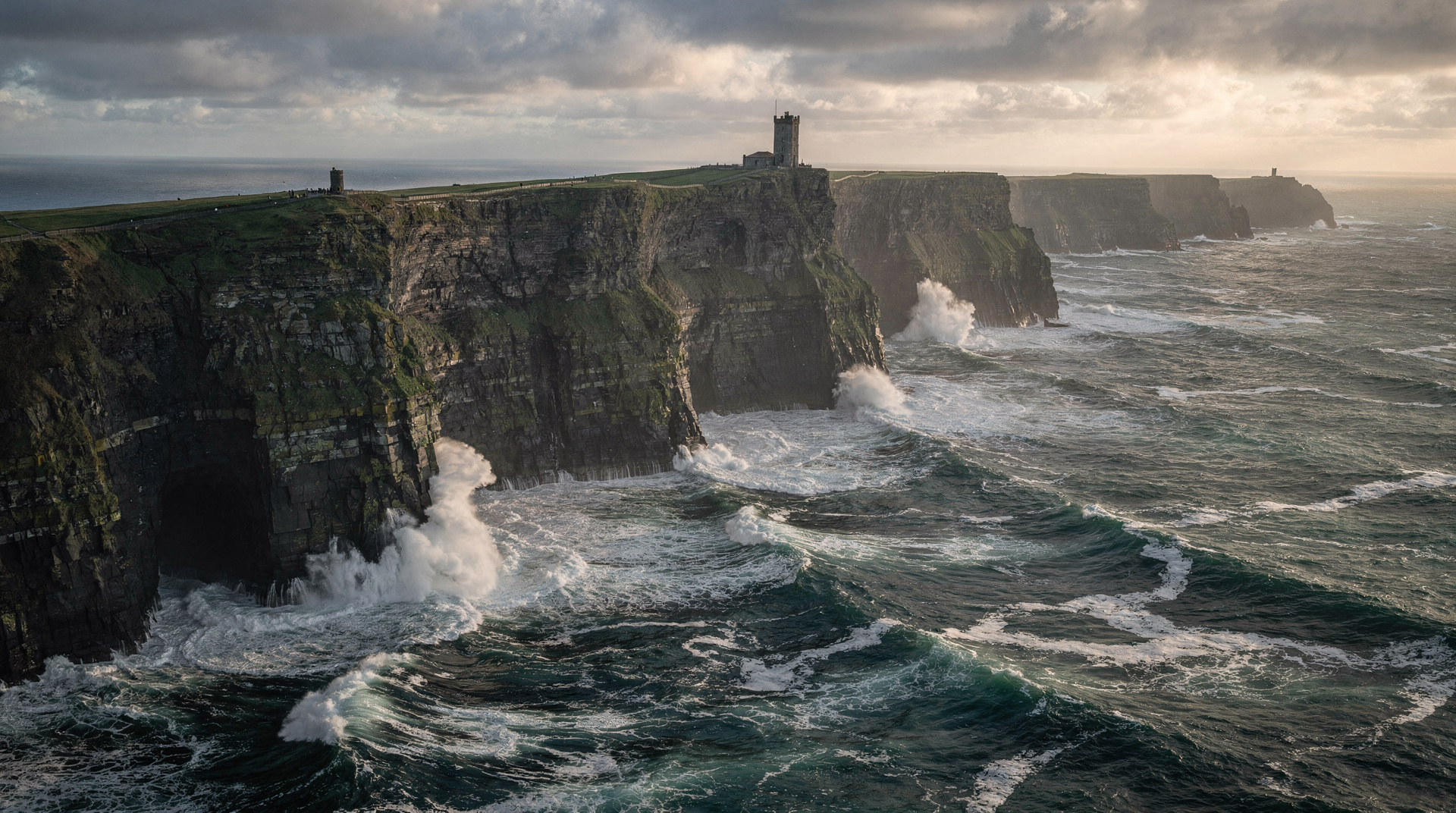
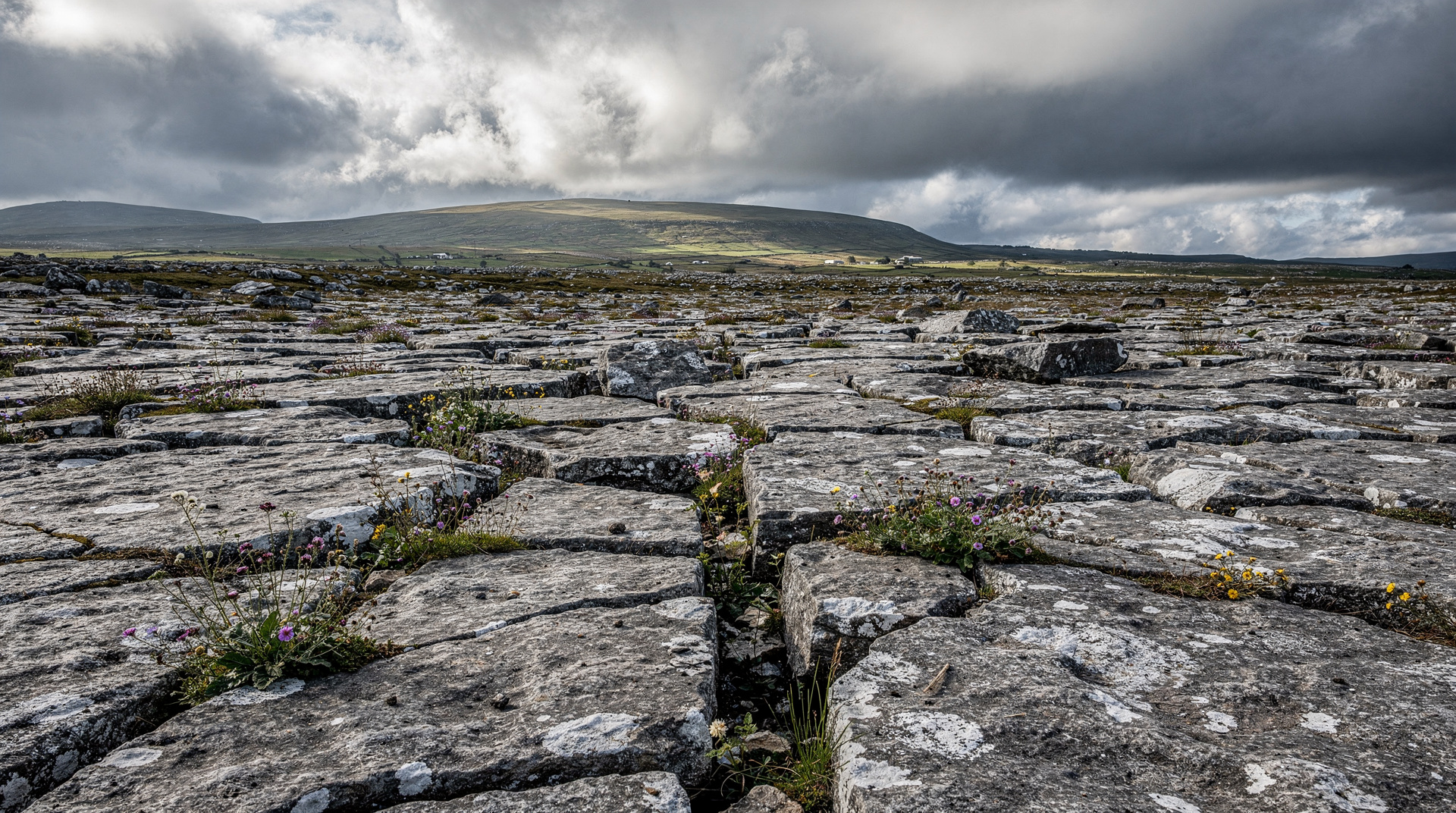
For the combined Galway and Cliffs of Moher day tour, the Galway and Cliffs of Moher day tour from Dublin covers both in a single organised day departing Dublin early morning. This handles the logistics of the long distance and gives you a guide for the Burren and Cliffs section; time in Galway itself is typically 2–3 hours of free time to explore independently. The galway day trip guide explains which version of this tour works best for different priorities.
The medieval city
Galway’s historic core is walkable in 90 minutes if you are disciplined, or half a day if you stop properly. The main axis runs from Eyre Square through Shop Street to Quay Street and the Spanish Arch — about 600 metres of the most concentrated street life in Ireland.
Lynch’s Castle on Shop Street is a remarkable survival: a 15th-century merchant’s townhouse, still standing to its full height, now a bank. It is the finest medieval urban building in Connacht. St Nicholas’ Collegiate Church (1320) is the largest medieval parish church in Ireland still in active use; inside are carved Norman fonts, medieval grave slabs and a tradition that Columbus prayed here before his 1492 voyage (unprovable but persistently told).
The Spanish Arch — a remnant of the 16th-century city walls that once protected the docking area — looks out over the Corrib River mouth to the Connemara coast. The view across the water on a clear afternoon, with the mountains of Connemara dimly visible, is one of the most characteristic Galway images.
How to shape a day on foot
The medieval core rewards a loose plan rather than a strict one. Start at Eyre Square, drift down Shop Street without ducking into the first café, and let the street performers set your pace. Cross to the Spanish Arch and the river mouth when you want a pause, then double back through the lanes of the Latin Quarter, where the side streets are quieter and the shopfronts more individual. If you arrive by train, the walk from the station to the square is short enough that you can be in the thick of things within minutes of stepping off.
Weather on the west coast changes quickly, so treat the day as flexible. A shower is usually a reason to step into a church, a shop or a pub rather than abandon the plan, and the compact layout means shelter is never far away. If rain sets in properly, the ideas in our rainy day Dublin guide on pacing an indoor-heavy day translate well to Galway too.
Traditional music
Galway’s traditional music scene is authentic rather than performed-for-tourists. Pubs on Quay Street and Dominick Street host sessions most evenings and weekend lunchtimes, and the standard of musicianship is high. The easiest starting point is the Crane Bar (Sea Road, west of the Latin Quarter), which has a dedicated upstairs music room; Tigh Coili (Mainguard Street) is smaller and more spontaneous. Avoid the most commercial pubs on Eyre Square, which have music but of a more manufactured kind.
The Galway City walking tour provides context for the city’s history and points you toward the best of the medieval city in 2 hours — a good investment if you are arriving by train with a full day and want to orient efficiently before exploring independently.
Food
Galway has an excellent food scene for its size. McCambridge’s on Shop Street is a landmark deli and café good for a quick lunch. The Quay Street Kitchen does consistent bistro food. McDonagh’s fish-and-chip restaurant on Quay Street is the institution for fresh Atlantic fish — often queued out the door at lunchtime, but moves quickly. For a proper sit-down lunch, Ard Bia at Nimmos (beside the Spanish Arch) is the best option in the city centre.
Eating well without wasting time
On a short visit the main risk is losing an hour to indecision. Pick one proper meal and keep the rest light: a deli sandwich eaten on the move, or something from the Saturday market if the day allows. Seafood is the obvious local choice, given the bay on the doorstep, and it is worth asking what came in that day rather than defaulting to the menu’s usual dishes. If you want a pint and a bite together, the pubs that host music at lunchtime often serve simple food, which lets you combine two of the city’s best experiences. For more on what to order once you are back in the capital, see our guide to traditional Irish food.
Salthill and the promenade
Fifteen minutes’ walk (or a short bus ride) west of the city centre, Salthill is Galway’s seafront suburb, built around a two-kilometre promenade along Galway Bay. “Kicking the wall” — tapping the black diving wall at the promenade’s western end and turning around — is a genuine local tradition, not a tourist invention, and the view back across the bay to the Clare hills and the Burren on a clear evening is one of the best free things to do in the city. Salthill also has Leisureland, an aquatic centre with a pool and amusements, and a scatter of decent seafood restaurants along the seafront if you want dinner with a bay view rather than in the medieval core.
Shopping and the market
Saturday morning brings a long-running outdoor market to the area around St Nicholas’ Collegiate Church on Church Lane — stalls selling local produce, crafts, street food and second-hand books, spilling into the surrounding lanes. It has run in some form for centuries and is one of the better free things to do if your visit lands on a Saturday. Shop Street itself has a mix of independent shops, Aran-knitwear outlets and the inevitable tourist-facing gift shops; the more interesting independent boutiques tend to cluster on the smaller side streets off the main drag.
Galway or Dublin: what you are really choosing
Many visitors ask whether Galway is worth leaving Dublin for, and the answer depends on what you value. Dublin offers the big-name sights, the museums and the depth of a capital. Galway offers atmosphere: a small centre where music, food and the sea are all within a short stroll, and where the pace feels noticeably more relaxed. If you have already covered the headline sights in the capital, Galway is a rewarding change of register. If it is your first trip, start with our Dublin first-time guide and treat Galway as the bonus.
It also helps to think about how Galway fits with the rest of a longer trip. A three-day Dublin plan leaves little room for a western detour, whereas the four-day itinerary with a day trip can absorb Galway comfortably if you choose it as your single excursion. Travellers weighing it against other options can compare them in the best day trips from Dublin guide, which sets out how each excursion trades travel time against time on the ground.
Practical habits that make the visit easier
Carry a light waterproof, wear shoes you can walk in on wet stone, and keep your plans for the evening flexible, since the best music sessions start informally and are rarely announced. If you are travelling by public transport, check the return times before you settle into a long dinner so you are not rushing for the last departure. Those who would rather leave the logistics to someone else can read the Galway day trip guide for how the organised options differ.
When to visit: month by month
| Period | Conditions | Notes |
|---|---|---|
| May–June | Good weather, long evenings | Sweet spot: manageable crowds, festivals not yet in full swing |
| July–August | Peak season, busiest | Arts Festival and Galway Races (late July–Aug) push prices up sharply |
| September | Still good weather, thinner crowds | Good balance of weather and space |
| October | Galway Film Fleadh aftermath, cooling | Quieter, food festivals begin |
| November–February | Cold, wet, short days | City still functions fully; pubs and music continue |
Galway as a base for the west
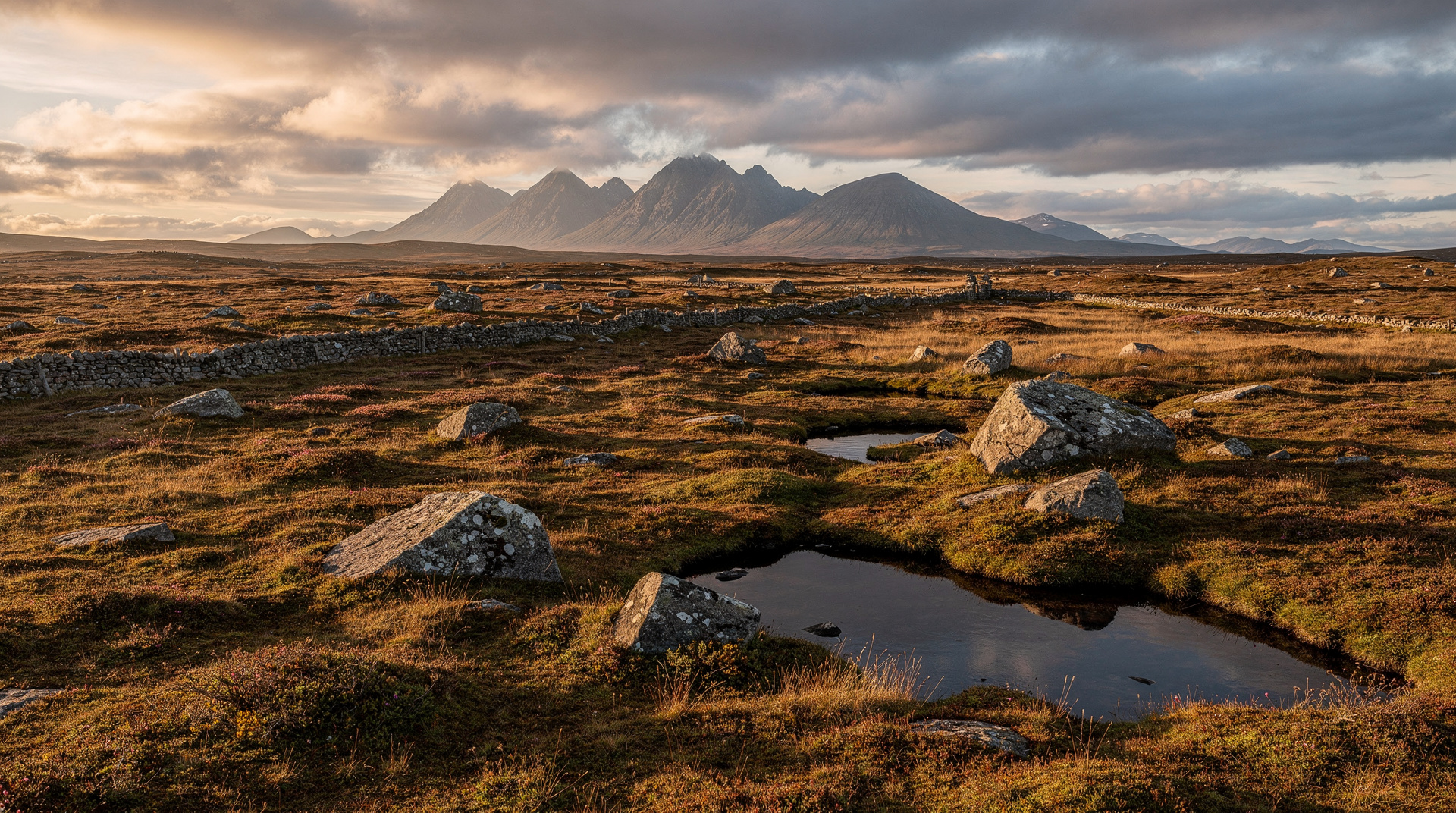
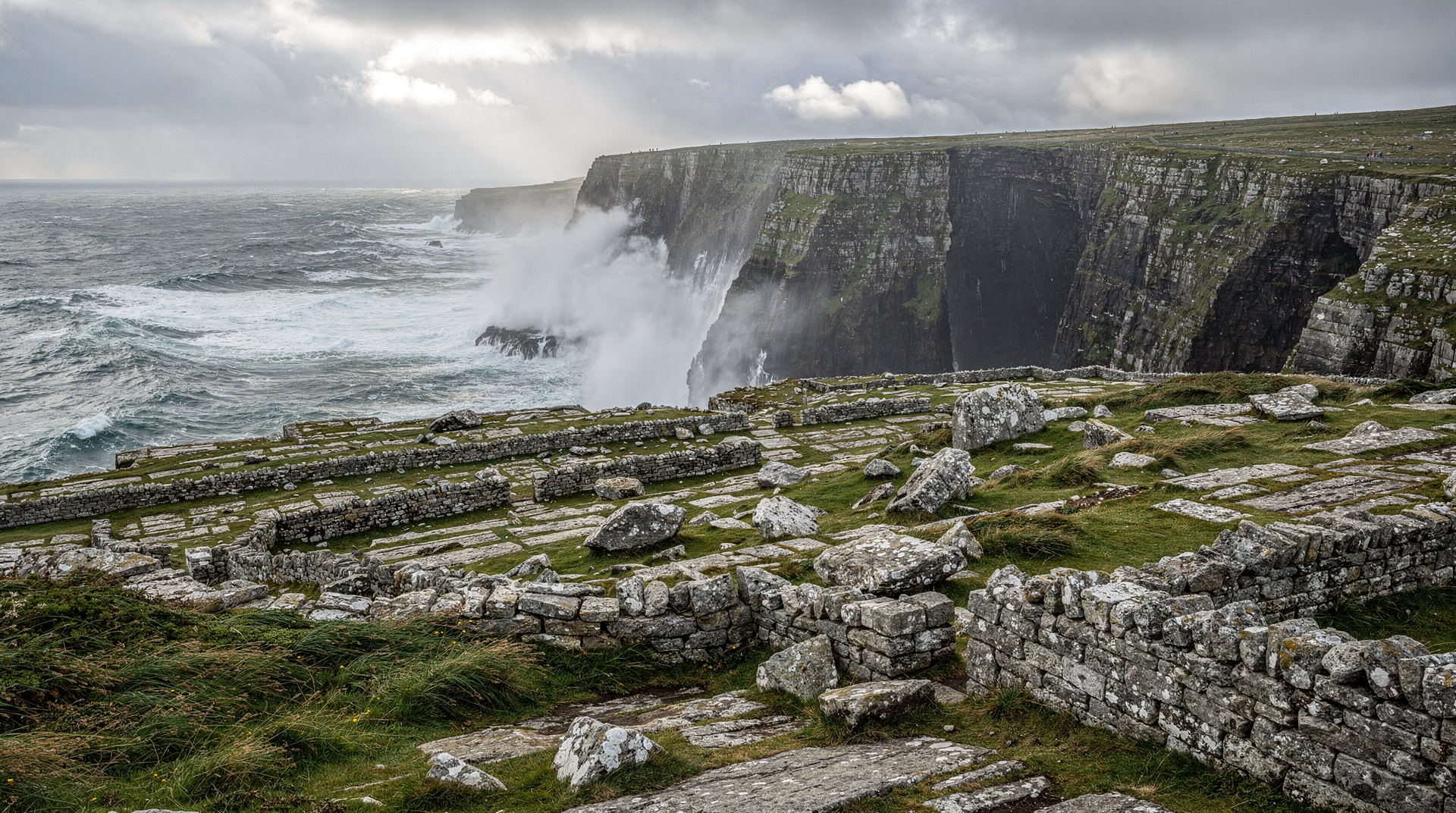
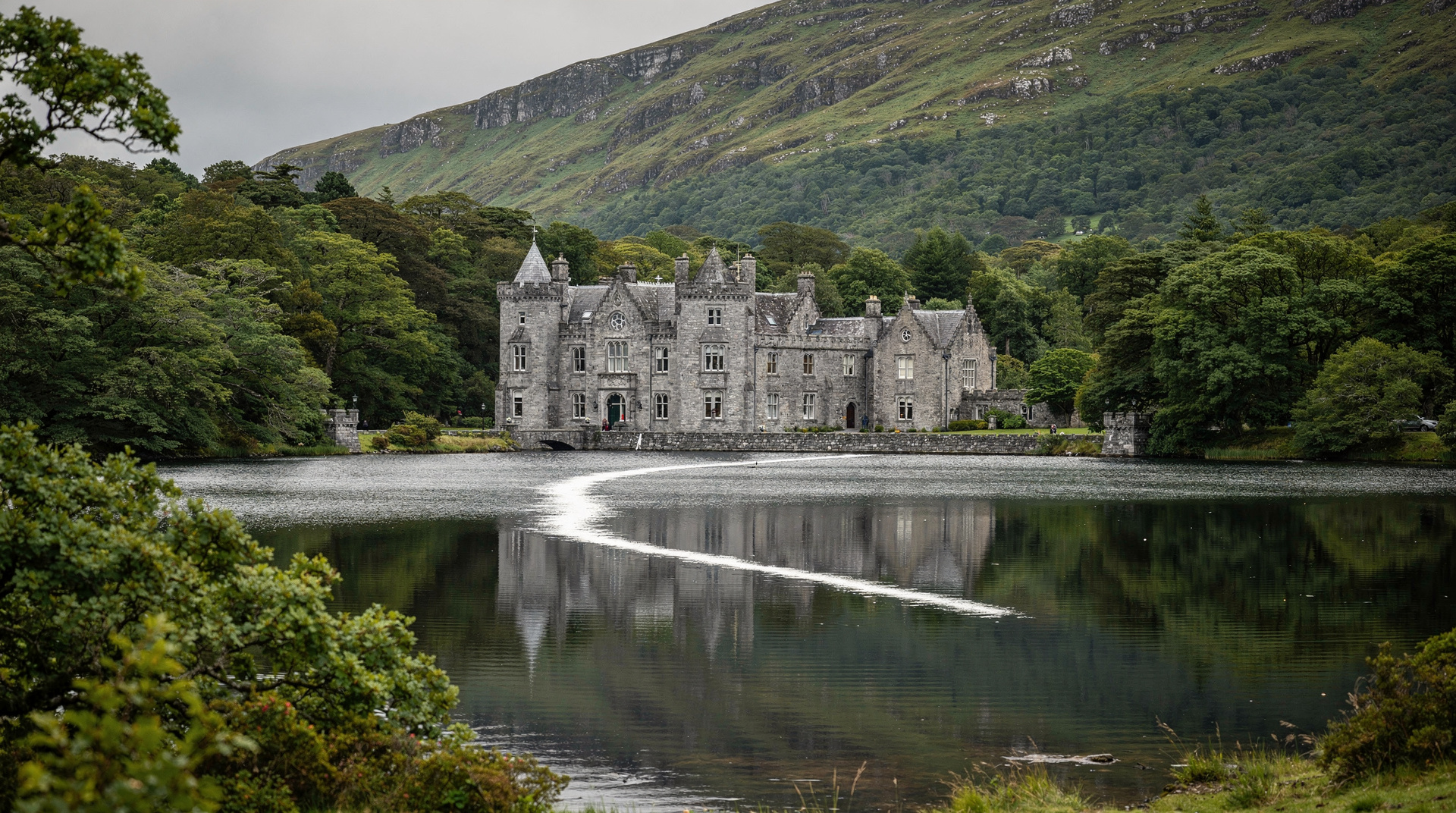
If you are spending more than a day trip in the area, Galway is the most practical base for exploring the west of Ireland. Connemara begins immediately to the west of the city; Kylemore Abbey is 70 kilometres northwest. The Aran Islands ferry departs from Rossaveel, 37 kilometres west of the city. The Cliffs of Moher are 65 kilometres south and easily reached by tour from Galway.
Each of these outings has a different character. Connemara is about open, rugged scenery and long views; the islands are about a slower, older way of life; the Cliffs are about the Atlantic at its most dramatic. For the fuller picture, the Connemara guide and the Aran Islands guide go into more depth than a city page can, and the Burren sits on the road towards the Cliffs and deserves its own time if you have it.
The Dublin to the Wild Atlantic itinerary maps a 5-day west-of-Ireland circuit using Galway as the central base.
When to visit
Galway is an all-season destination in the sense that the city remains alive year-round — the music pubs, cafes and restaurants function in January as well as July. The Galway International Arts Festival (late July) and the Galway Races (late July/early August) are the peak events; the city is extremely busy during these weeks and accommodation prices spike significantly. The Galway Film Fleadh (July) and the Galway food festivals (autumn) are quieter but add cultural value. May, June and September are the sweet spots: good weather, long evenings and manageable crowds.
For winter visits — November through February — the city is quieter but functional. The pubs are warm, the music continues, and the Atlantic coast in winter has a quality that summer photographs do not capture.
Top experiences
Bookable activities with verified prices and instant confirmation on GetYourGuide.

From Dublin: Galway and Cliffs of Moher day tour
- Free cancellation
- Instant confirmation

From Dublin: Cliffs of Moher, Burren & Galway City day tour
- Free cancellation
- Instant confirmation

From Dublin: Cliffs of Moher & Galway small group tour
- Free cancellation
- Instant confirmation

From Dublin: Connemara and Galway full-day tour
- Free cancellation
- Instant confirmation

Galway City: daily walking tours 10am & 2pm
- Free cancellation
- Instant confirmation