Book of Kells and Trinity College guide
Dublin: fast-track Book of Kells ticket & Dublin Castle tour
Duration: 2h45
- Free cancellation
- Instant confirmation
Is the Book of Kells worth visiting in Dublin?
Yes, but manage your expectations. The illuminated manuscript itself is in a dimly lit case and you will spend about 90 seconds actually looking at it. The real reward is the Long Room — a cathedral-like 18th-century library holding 200,000 books that is genuinely awe-inspiring. Book timed entry online to avoid the notoriously long door queue.
Why this 1,200-year-old book draws queues around the block
The Book of Kells is one of the oldest surviving illuminated manuscripts in the world. Created around 800 AD by Celtic monks — probably on the island of Iona before raids forced its relocation to Kells in County Meath — it is a Latin text of the four Gospels decorated with an almost hallucinatory density of interlaced patterns, spirals, animals, and human figures. Since 1661 it has lived at Trinity College Dublin, and since the early 1990s it has been the centrepiece of an experience that consistently ranks as one of Ireland’s most-visited attractions.
| Where | Old Library, Trinity College, off College Green |
| Cost | Around €18–€22 online; door price higher |
| Time needed | 45 minutes to 1 hour; 1.5–2 hours with campus and Science Gallery |
| Getting there | Central; entrance through the main cobbled square |
| Best time | Weekday mornings 08:30–09:30, or after 16:30 |
The honest summary: the manuscript itself is extraordinary but you see very little of it. Two of its four volumes are on display at any time, opened to a single spread, in conditions — low light, glass, crowds leaning in — that make photography difficult and contemplation harder. Give the manuscript the 90 seconds of focused attention it deserves, resist the temptation to keep scrolling your camera, and then walk upstairs to the Long Room.
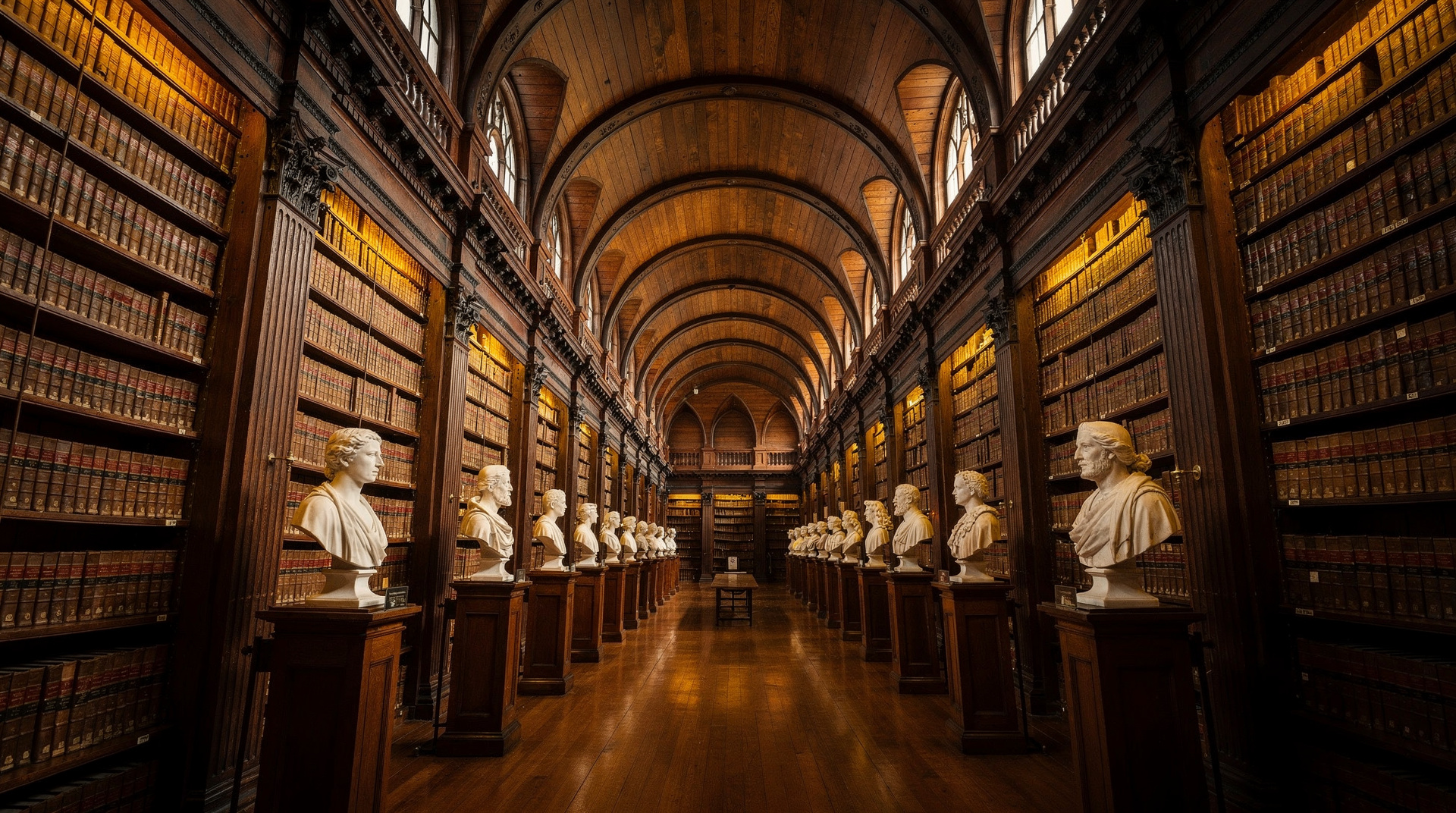
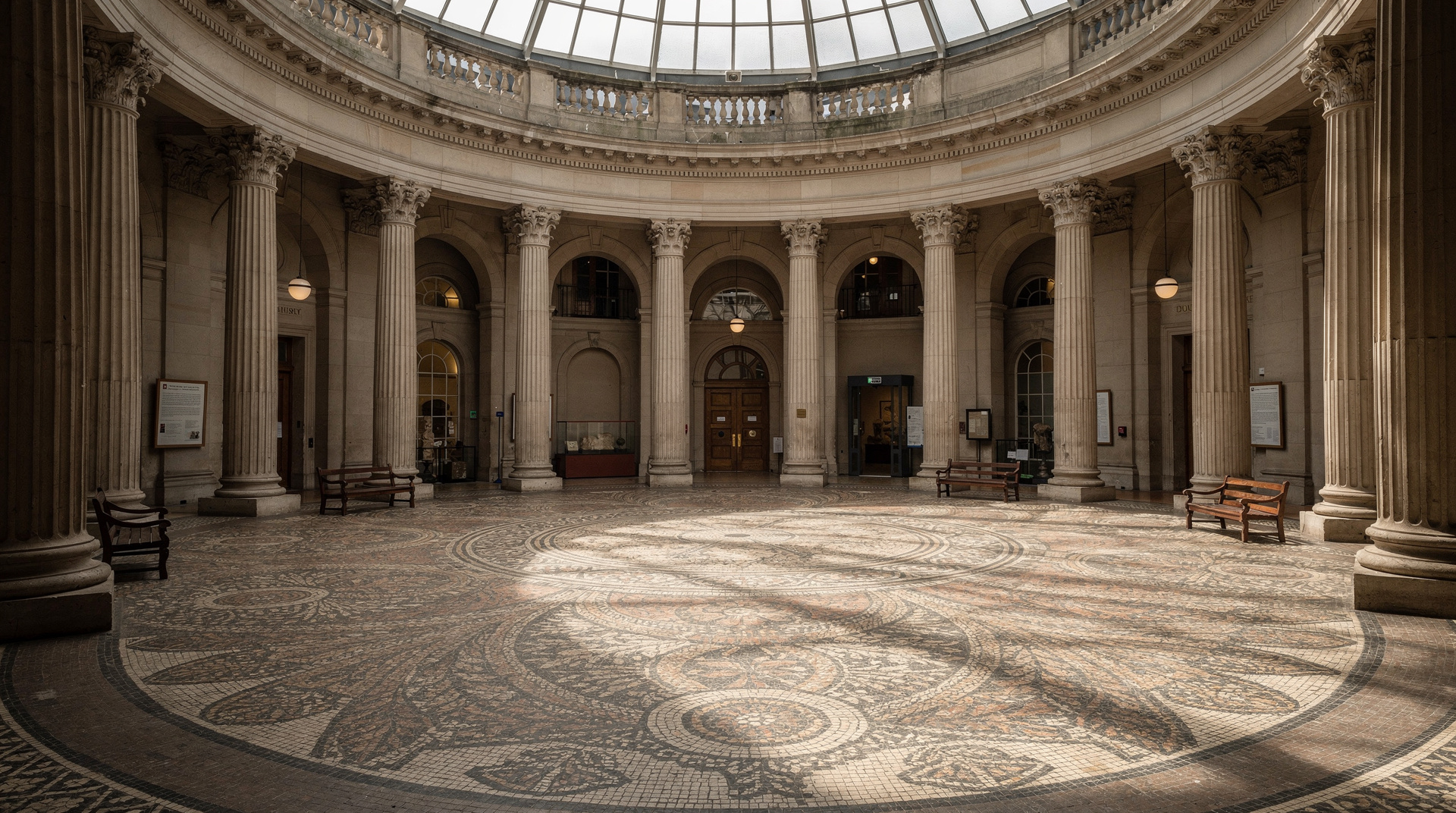
The Long Room is the real revelation. This barrel-vaulted 18th-century library is 65 metres long and lined floor to ceiling with shelves carrying 200,000 books, each one original. Marble busts of philosophers line the central aisle. One of the surviving original copies of the 1916 Proclamation of the Irish Republic is displayed here, alongside one of the oldest harps in Ireland — the Trinity College harp that became the model for the Irish state emblem. Even visitors who feel underwhelmed by the manuscript typically say the Long Room was worth the trip.
How to get in without losing an hour to the queue
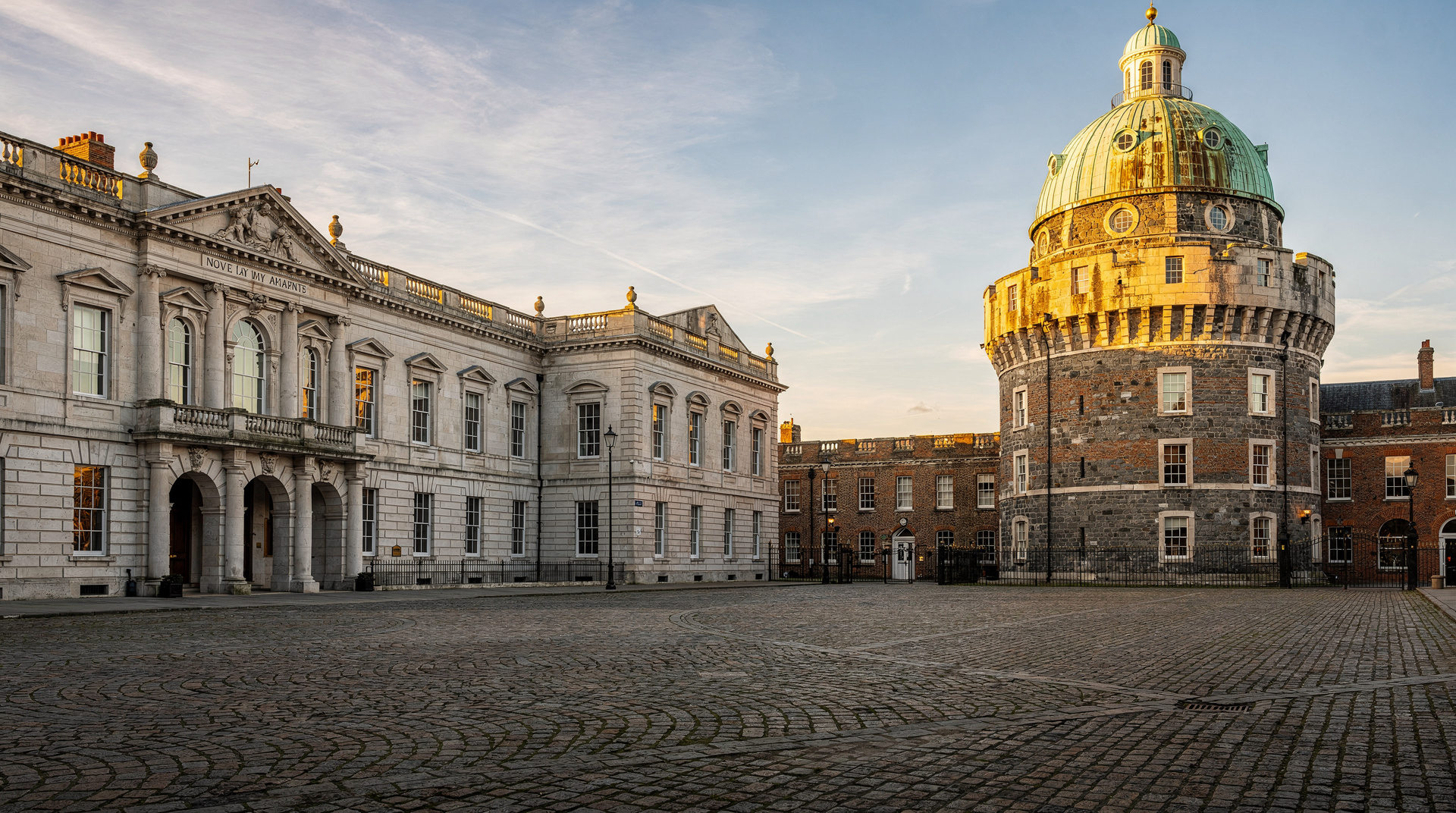
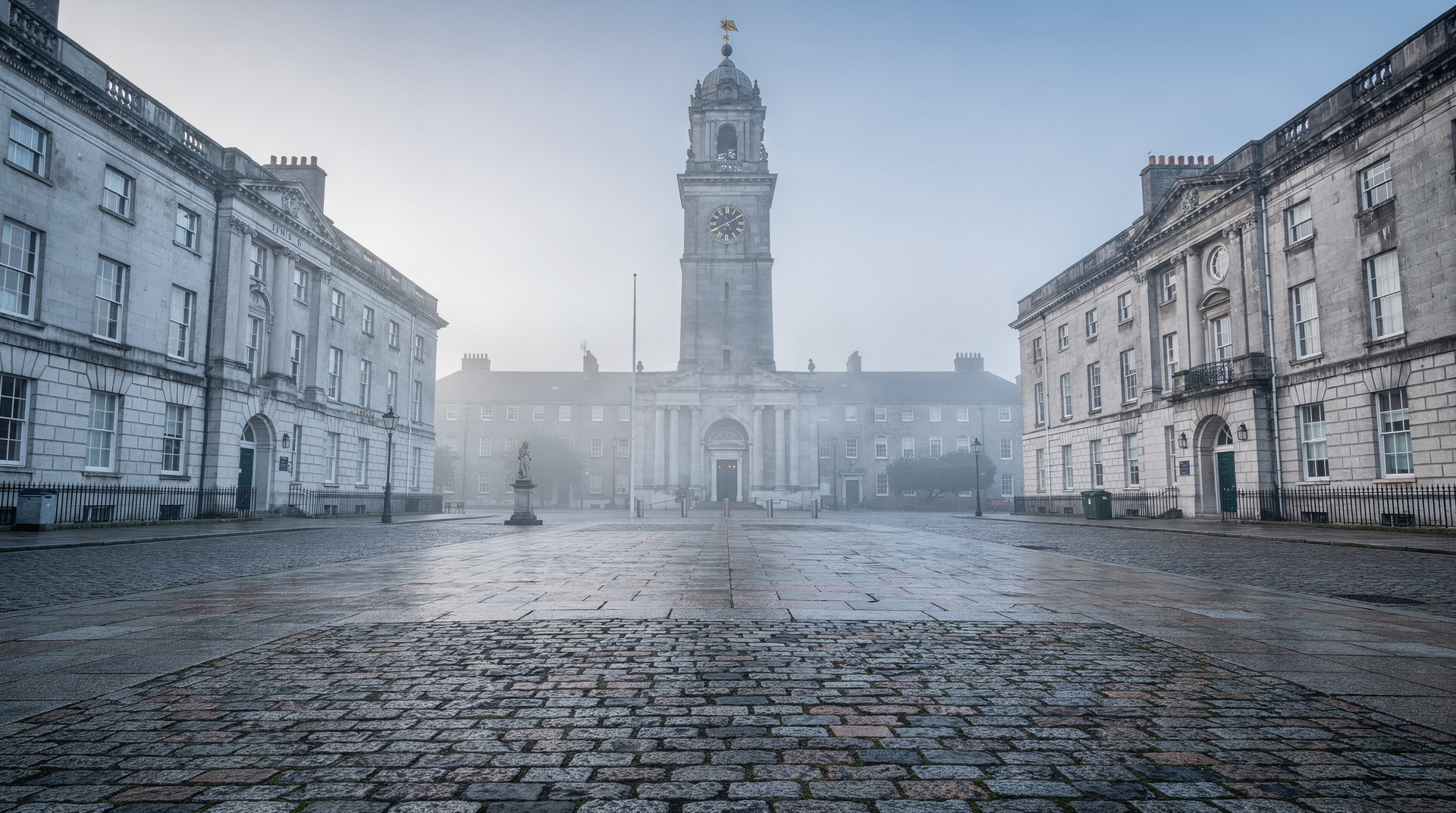
Trinity College is situated off College Green at the heart of the Trinity College and Grafton area. The entrance to the exhibition is in the Old Library, through the main cobbled square. Without a timed ticket, the queue at the entrance desk can run 30–60 minutes in peak season, and if popular slots are sold out you may not get in at all.
The most straightforward option is the fast-track Book of Kells ticket with a Dublin Castle tour, which combines timed entry to the Old Library with a guided tour of Dublin Castle afterwards. It is a natural pairing — the Castle is a ten-minute walk — and both sites are otherwise on most visitors’ lists. If you prefer to go independently, buy a timed self-guided ticket directly through Trinity’s own site. Either way, choose your slot in advance.
For visitors who want a more personal experience, the private skip-the-line Book of Kells and Old Town tour keeps group sizes very small and includes a guide who can explain the manuscript’s symbolism in a way that the exhibition panels do not fully convey.
What to actually look at in the exhibition
The ground-floor exhibition before the manuscript room is called “Turning Darkness Into Light” and runs through the history of the book: the monks of Iona, the materials used (vellum from calf skin, pigments from as far as the Middle East), the script, and the iconography. Spend 15–20 minutes here rather than rushing past — it makes the manuscript itself much more legible.
When you reach the display cases, the two open volumes typically show an illuminated carpet page (pure abstract decoration) and a text page. The most famous image in the book — the Chi Rho monogram, a compressed form of the Greek letters for Christ — appears in the manuscript of Matthew and is shown when that volume is on display. Check the Trinity website before your visit to see which pages are currently open.
Upstairs in the Long Room, look for the Brian Boru harp on the left side near the entrance. This instrument dates to the 14th or 15th century and is the oldest surviving Irish harp; despite the name, it has no direct connection to the high king Brian Boru, who died in 1014. Take time to look up at the barrel vault: the gallery level was added in the 1850s to accommodate growing collections, transforming the original flat ceiling into its current form.
Practical information and pricing
The Old Library is open Monday to Saturday 08:30–17:00 and Sunday 09:30–17:00, with extended summer hours. Entry is by timed ticket only. Standard adult tickets cost approximately €18–€22 online; the door price, if available, is higher. Children under 12 typically enter free with a paying adult.
Weekday mornings from opening until around 10:30 are the quietest periods. Saturdays between 11:00 and 14:00 in summer are the most crowded. If your travel dates give you no choice about timing, go as early as possible and book well in advance.
Photography of the manuscript is not permitted with flash, but the Long Room can be photographed freely. The gift shop has high-quality reproduction prints of illuminated pages for those who want a lasting reminder.
With kids, or with limited mobility
Under-12s typically enter free with a paying adult, and the exhibition is quiet enough that patient children manage it well, though there is little interactive content aimed specifically at them. If you are travelling with a family that needs more hands-on engagement, the Dublinia Viking and medieval museum ten minutes away is generally a stronger fit and pairs naturally with a Book of Kells morning. The Old Library building has step-free access to the ground-floor exhibition and the Long Room via lift; staff at the entrance can advise on the current access route, which occasionally changes for conservation work.
Booking window and seasonal pricing
Prices fluctuate modestly by season and time slot rather than following a fixed calendar, but the pattern is consistent: online booking is always cheaper than the door price where the door is even open to walk-ups, and the tightest slots — weekday mornings in July and August, and any Saturday from Easter through September — sell out fastest. If your dates are flexible, a Tuesday or Wednesday morning outside school-holiday weeks gives the best combination of price and crowd levels. For a trip built around several paid sights, compare the per-attraction cost against whether the Dublin Pass is worth it before buying individual tickets one by one.
Pairing it with the rest of the area
Trinity College sits on the boundary between two very different parts of Dublin. To the south is the Grafton Street shopping quarter, good for coffee and people-watching. To the west and north, a short walk across the river takes you to the medieval core: Dublin Castle, Christ Church Cathedral, and the Dublinia Viking museum all cluster within a 15-minute walk. The Book of Kells, Dublin Castle and Christ Church tour covers all three with a guide and is efficient for time-poor visitors.
If you plan to visit three or more paid attractions, check whether the Dublin Pass is worth it — the Book of Kells is included. An alternative for the culturally inclined is to spend the afternoon at the nearby National Museum of Ireland, which is free and holds the Ardagh Chalice, the Tara Brooch, and other treasures that rival anything in the Long Room for historical significance.
For context on how the site fits into a longer stay, the 3-day Dublin itinerary puts the Book of Kells and Castle on the first morning, leaving the afternoon for the Liberties.
If you only have time for one Trinity attraction
The exhibition and Long Room are the headline draw, but they are not the only thing worth seeing on campus. The Science Gallery runs free contemporary exhibitions and is a good option if the Old Library’s timed slots are sold out for your dates. The Berkeley Library exterior and the cricket pitch make a pleasant 15-minute loop on their own. If you are choosing between the Book of Kells and a full guided walk of the wider Trinity College and Grafton area, the manuscript and Long Room should take priority — nothing else on campus compares, and the Book of Kells: is it worth it? verdict guide goes deeper on who should and shouldn’t bother.
Planning the visit around your own pace
The visit works best when you decide in advance what you want from it. Some travellers come for the manuscript and its story, others for the architecture of the Long Room, and a few simply because it sits so close to everything else. If you are in the first group, read the introductory panels slowly and let the ground-floor exhibition do its work before you reach the case. If you are in the second, treat the manuscript as a short, respectful pause and keep your energy for the library upstairs, where you can stand in the aisle and take in the shelves, the busts and the smell of old paper at your own speed.
It also helps to arrive a little before your slot rather than exactly on it. Bags, coats and umbrellas are easier to deal with when you are not racing a clock, and Dublin weather is unpredictable enough that you will probably be carrying something damp. For a sense of what to bring on a typical day, the Dublin weather and packing guide is a useful companion, and on a wet day this is one of the best indoor plans in the city, which the rainy day in Dublin guide covers alongside other options.
Building a half-day around Trinity
Trinity makes a natural anchor for a relaxed half-day on foot. Start with your timed slot, then step back into the square and let the campus slow you down. From there the Little Museum of Dublin is an easy, characterful follow-up that tells the story of the city through everyday objects, and it suits people who found the Old Library a little solemn. A coffee break fits well in between; the guide to Dublin coffee culture points you towards places that suit a short, unhurried stop.
If your interest is the written word, the visit slots neatly into a wider literary day. The literary Dublin guide connects the college with the writers and streets that shaped the city’s reputation, and the literary pubs guide offers a fitting way to end the afternoon. If instead you would rather follow the thread of the city’s past, the Viking and medieval Dublin guide and the historical walking tour guide explain how the medieval town grew into the capital you are walking through.
For a slower, self-directed approach, the self-guided Dublin walk can be started right at the college gate. If you would rather have someone else do the talking, the guide to Dublin’s best walking tours helps you compare formats before you commit.
Making the most of the Long Room
Most visitors enter the Long Room at the same time, which means the first minute is often a slow shuffle. Move to the side as soon as you can, let the crowd pass, and then look along the full length of the room rather than at the nearest shelf. The effect of the perspective is the point: the shelves recede, the busts mark a rhythm down the aisle, and the vault above gives the whole space its cathedral feeling.
Read the information boards near the cases and railings; they explain how the collection grew and how the books are cared for, which turns the room from a pretty backdrop into something with a story. Be patient with your camera, too. A steady hand and a few unhurried frames produce better results than a burst of quick shots, and stepping aside lets other visitors enjoy the view as well. The room is a working piece of heritage, so keep voices low, keep hands off the barriers and follow the staff when they ask you to move along.
Combining Trinity with the wider city
Because the college sits in the centre, it combines easily with almost any plan. Anyone building a first trip can pair it with the advice in the first-time Dublin guide, and those still deciding on the length of their stay can look at how many days to spend in Dublin. Travellers with a tight schedule might prefer the one-day Dublin itinerary, which treats the college as one of the essential stops. History enthusiasts, on the other hand, may enjoy the history buff’s three-day itinerary, which gives the city’s old buildings and collections more room to breathe.
Getting to and from the area is simple on foot, but for longer hops across town the guide to getting around Dublin explains the options, and the booking attractions in advance guide helps you line up this visit with other timed entries so that your day does not collide with itself.
Honest verdict
Frequently asked questions about Book of Kells and Trinity College guide
How much does the Book of Kells cost in 2026?
Self-guided entry costs around €18–€22 depending on the slot and season. Online booking is cheaper than the door price and guarantees you a specific time window. Guided combo tours that include Dublin Castle tend to run €50–€90.Do I need to book the Book of Kells in advance?
Yes. Timed-entry slots are essential from March through October and on any Saturday or Sunday. Without a booking you may face a 45-minute to one-hour queue at the door and then find that many slots are already sold out. Book at least 48 hours ahead in summer.How long does the Book of Kells take?
Allow 45 minutes to one hour for the exhibition and Long Room together. If you add a campus stroll, the Science Gallery, or a coffee in the quad, plan for 1.5 to 2 hours total.Can children visit the Book of Kells?
Yes. Under-12s typically enter free with a paying adult. The exhibition is quiet and reverential — manageable for patient children, but there is limited interactive content for young kids. Dublin's Viking and medieval site Dublinia, a ten-minute walk away, tends to be more engaging for families.Is there a best time to visit to avoid crowds?
Weekdays at opening (08:30–09:30) or after 16:30 are consistently the least crowded. Midday on Saturdays and during bank holidays is peak chaos. Arriving early also gives you the Long Room when it is quiet and the light through the high windows is at its best.What else is there to see at Trinity College?
Beyond the exhibition, the cobbled campus is free to walk through at any time. The Berkeley Library, the 1937 Reading Room, and the cricket pitch make for an atmospheric 20-minute loop. The Science Gallery, also on campus, hosts free contemporary exhibitions and is worth checking.
Top experiences
Bookable activities with verified prices and instant confirmation on GetYourGuide.

Dublin: fast-track Book of Kells ticket & Dublin Castle tour
- Free cancellation
- Instant confirmation

Dublin: skip-the-line Book of Kells & Old Town private tour
- Free cancellation
- Instant confirmation

Dublin: Book of Kells, Dublin Castle and Christ Church tour
- Free cancellation
- Instant confirmation

Dublin: Trinity College, Castle, Guinness and whiskey tour
- Free cancellation
- Instant confirmation