Dún Laoghaire
Dún Laoghaire is Dublin's Victorian harbour town: sweeping granite piers, a Dublin Bay cruise to Howth, good cafés and 25 minutes on the DART.
Dublin Bay: cruise from city centre to Dún Laoghaire
Duration: 60-70min
- Free cancellation
- Instant confirmation
Quick facts
- Getting there
- DART from city centre, 25 min; €3.80 one way
- Pier walk
- Each granite pier 1.3 km long; flat and paved
- Bay cruise to Howth
- 70 min, €18–22; seasonal
- Currency
- Euro (€)
- Ferry to Holyhead
- Stena Line; 2h 15min by high-speed ferry
The harbour town that faces the Irish Sea
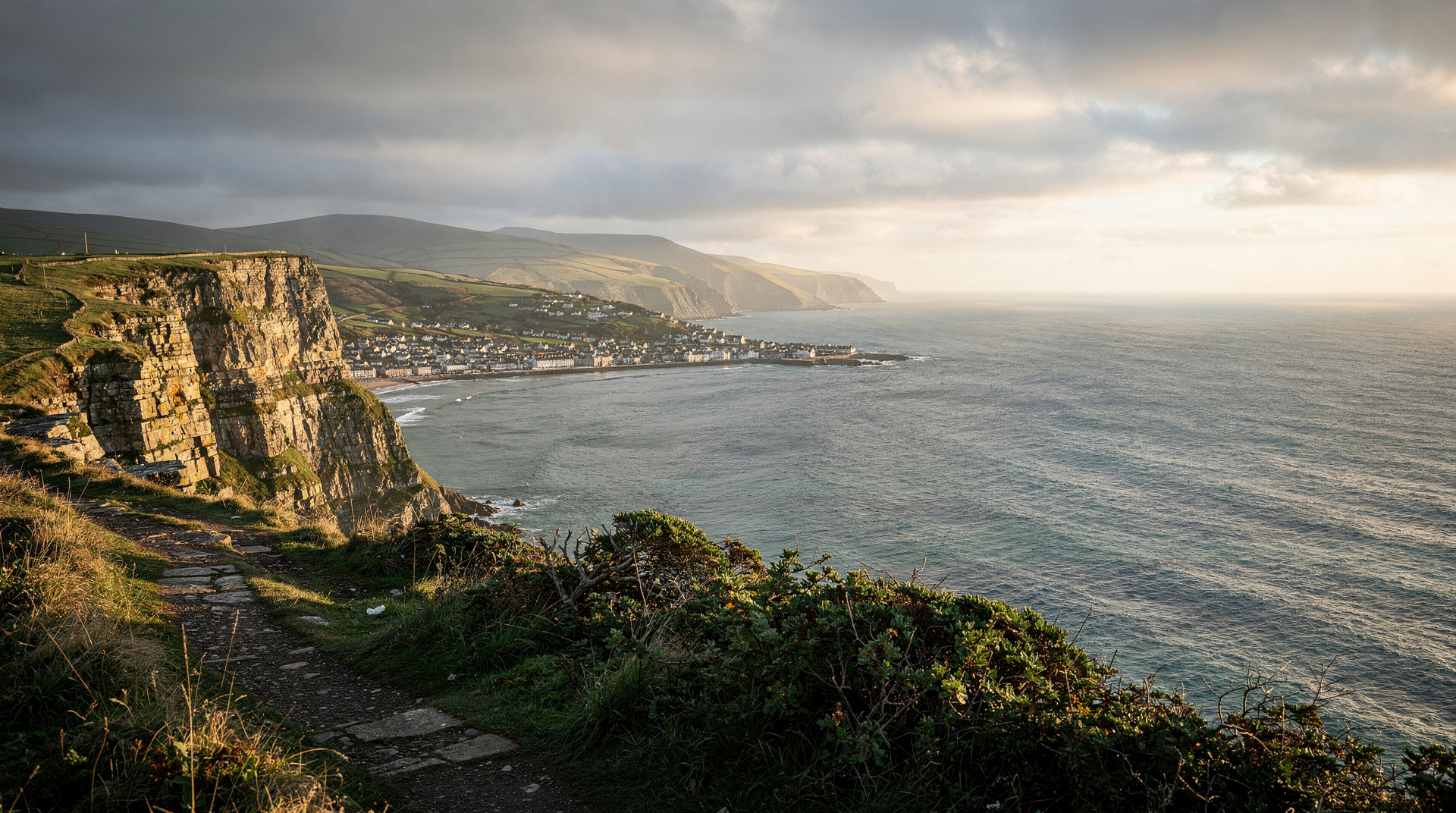
Dún Laoghaire is a Victorian harbour town about twelve kilometres south of Dublin city centre. Its defining feature is the harbour itself — two granite piers built in the early nineteenth century, each 1.3 kilometres long, enclosing a protected anchorage that was once the main mail boat terminus for the crossing to Holyhead in Wales. The mail boat still runs, as the Stena Line ferry, and the piers that took thirty years to build remain in daily use by walkers, joggers and anyone who wants to be close to the Irish Sea without getting wet.
| Getting there | DART from city centre, 25 min; ~€3.80 one way |
| Time needed | Half day |
| Pier walk | 2.6 km return on the East Pier; 30–40 min |
| Bay cruise to Howth | ~70 min, €18–22; seasonal |
| Best time | Year-round; piers best in dry weather |
The town behind the harbour is prosperous, handsome and particular about its quality. Dún Laoghaire has the highest density of independent bookshops in Dublin’s suburbs, a weekly farmers’ market, excellent cafés and restaurants, and the Lexicon library — a recent building that is one of the most architecturally significant public buildings of the past decade in Ireland.
The pier walk
The East Pier is the more popular of the two — it has a bandstand at its midpoint, a café kiosk near the end, and at the very tip, the weather station that has been recording conditions since the 1840s. The walk out to the end and back is about 2.6 kilometres and takes 30–40 minutes at a leisurely pace. The views from the pier end cover the full sweep of Dublin Bay, from Howth Head to the north to Bray Head to the south, with the Wicklow Mountains behind.
The West Pier is quieter, less maintained, and generally preferred by locals who want to avoid weekend crowds. It also has an older lighthouse at its tip and tends to attract birdwatchers — the rocks around the pier base are good for turnstones and purple sandpipers in winter.
A walk out the East Pier, across the short connector to the West Pier near the ferry terminal, and back along the West Pier is about six kilometres and a genuine morning activity, particularly with stops for coffee at the Forty Foot café on the East Pier.
The Forty Foot
The Forty Foot is a sea bathing place at the base of the East Pier, cut into the granite rocks at Sandycove, about ten minutes walk from the town. It has been in use since the eighteenth century and is open year-round. Swimming is free and the water temperature ranges from about 8°C in winter to 17°C in summer — cold by any measure. The Forty Foot appears in the opening pages of James Joyce’s Ulysses, and a plaque commemorates the connection. It is primarily used by cold-water swimming enthusiasts and has an established year-round community of regular bathers.
The nearby Martello Tower at Sandycove, where Joyce briefly stayed in 1904, now houses the James Joyce Museum with a small collection of Joycean artefacts and the rooms as they appeared in that era.
Dublin Bay cruises
The Dublin Bay cruise from the city centre to Dún Laoghaire is one of the underused pleasures of a Dublin visit. It runs seasonally from Sir John Rogerson’s Quay in the city centre, takes about 70 minutes, and crosses the full width of Dublin Bay with views of the coastline from the water. The return journey by DART from Dún Laoghaire back to the city takes 25 minutes — so you can do a pleasant hour-long outward journey by sea and a quick return by train.
The Dublin Bay cruise from city centre to Dún Laoghaire is the standard version. The alternative is the cruise from Dún Laoghaire northward across the bay to Howth, which covers the full sweep of the bay and is a more scenic route if you plan to spend time in Howth rather than return to the city.
If you would rather stay close to the harbour, a boat cruise out towards Dalkey Island shows the coast you would otherwise only glimpse from the DART window. For a trip that starts in the north of the bay, a Dublin Bay cruise running from Howth back to Dún Laoghaire reverses the route, so you finish at the piers and can walk straight into town for a meal. The Dublin Bay boat tours guide compares the options side by side.
The Lexicon Library
The Lexicon is Dún Laoghaire’s public library, opened in 2014 on the harbourfront and designed by Carr Cotter Naessén Architects. It is a striking building — a copper-clad form on multiple levels with sea-facing windows and roof terraces — and is routinely listed among the most impressive contemporary public buildings in Ireland. Entry is free, and the upper reading room with harbour views is one of the quieter places in the Dublin area to sit and think.
Getting to Dún Laoghaire
The DART stops at Dún Laoghaire station, about five minutes walk from the pier entrance. Trains from Connolly Station take 25 minutes; from Pearse Station (south city centre) about 20 minutes. Trains run every 10–15 minutes at peak times. A single fare is around €3.80.
Dún Laoghaire is a natural step on the south coast DART sequence: city centre, Dalkey (two stops south), Dún Laoghaire (two stops back north). The DART coastal day out guide plans the sequence in both directions, with timing for each stop.
Food, markets and independent shops
Dún Laoghaire’s independent bookshop and café scene is genuinely one of the best in the Dublin area — The People’s Park hosts a Sunday farmers’ market (year-round, weather permitting) with local produce, baked goods and street food stalls, and is a pleasant way to combine the pier walk with lunch. George’s Street Upper, the main shopping street running back from the harbour, has a good run of independent cafés and small restaurants rather than chain outlets, reflecting the town’s slightly separate identity from central Dublin. Exchequer Street’s counterpart here would be Monkstown, a short walk or DART stop south, which has a similarly good concentration of restaurants for an evening meal after the pier walk.
Sailing and watersports
The harbour is home to four active yacht and sailing clubs — the Royal St George, the National Yacht Club, the Royal Irish and the Dún Laoghaire Motor Yacht Club — making it one of the busiest sailing harbours in Ireland, particularly visible on summer weekend afternoons when racing fleets fill the water inside the piers. Beginners can book taster sailing sessions through several of the clubs in summer. The harbour’s relatively sheltered water inside the piers also makes it a reasonable spot for stand-up paddleboarding, weather permitting, though the open sea beyond the pier heads is considerably rougher.
Combining with Dalkey and Killiney
Dún Laoghaire, Dalkey and Killiney are three adjacent DART stops and can comfortably be combined in a single coastal day. A natural sequence is: Dún Laoghaire pier walk in the morning, DART to Dalkey for lunch, then a short walk or one more DART stop to Killiney for the hill view in the afternoon. The bray-greystones route extends this further south if you want a full day on the DART south coast.
For a day trip without a car, this coastline is the clearest demonstration of how far the DART extends your range without the need to drive.
How to shape a day here
The easiest way to get the best out of the town is to let the weather choose the order. On a dry, bright morning, go straight to the piers while the light is good and the walkers are few, then retreat into the town for coffee and lunch. On a grey or windy day, reverse it: start with the Lexicon and the shops on the main street, and keep the pier for the moment the cloud lifts. Dublin’s weather changes quickly, so staying flexible works better than a fixed schedule, and the rainy day Dublin guide has ideas for the hours when the sea air turns into proper rain.
Dún Laoghaire suits slow travellers. There is no single must-see ticket here, no queue and no timed entry. What you get is a rhythm: a long walk, a sit-down, another walk, something to eat, and a train home when you are ready. If you are building a wider plan, the Dublin coastal itinerary shows how a harbour morning fits alongside the other seaside stops.
What to bring and how to dress
The piers are exposed, and the breeze at the far end is often noticeably stronger than it is on the street, even on a mild day. A windproof layer is worth carrying all year, and flat, grippy shoes are better than anything smooth-soled because the granite can be slick after rain or spray. Sunglasses help when the sun is low over the water. If you plan to swim at the Forty Foot, bring a towel, something warm to put on straight afterwards, and shoes you can slip on easily. For a longer view of what to pack across the seasons, see the Dublin weather and packing guide.
Walking the harbour at different times of day
Early in the day the piers belong to joggers, dog walkers and the occasional swimmer heading to Sandycove, and the harbour has a calm, almost private feel. Around midday, especially in good weather, the East Pier fills with families, couples and groups with ice cream, and the bandstand area becomes the natural meeting point. In the evening the light across the bay softens, the lights along the coast start to appear, and the walk out to the end becomes the best reason to stay for dinner rather than rushing back to the city.
If you enjoy photography, the pier ends, the lighthouses and the boats moored inside the harbour all make strong subjects, and the view back toward the town shows the long curve of the waterfront and the hills beyond it. Bring patience rather than gear: the best pictures here usually come from waiting for the light to change.
Pairing the town with Dublin’s other sights
Because the DART makes the trip so simple, Dún Laoghaire works well as a counterweight to a heavy city-centre schedule. After a morning at somewhere dense and busy, such as the Guinness Storehouse or the Book of Kells at Trinity College, an afternoon on the piers gives you room to breathe. Travellers who like a mix of culture and fresh air often split a longer stay between the two, and the where to stay in Dublin neighbourhoods guide explains how a base on the south coast compares with sleeping in the centre.
For anyone arriving in Dublin by sea, or considering the ferry across to Wales, the harbour is also a reminder that the city has always been a gateway. The getting around Dublin guide puts the DART, buses and trams in context, so you can see how easily the harbour connects with the rest of your trip.
Travelling with children, older relatives or limited mobility
The piers are flat and paved, which makes them one of the more accessible outdoor walks near Dublin, and the long, even surface suits pushchairs and walkers alike. You can walk as far out as feels comfortable and simply turn around, since the views are good from any point. Benches along the way make it easy to rest, and the café kiosk gives a natural goal for younger walkers. Children usually enjoy watching the boats and the ferry movements, and the open space lets them run about safely away from traffic. For wider planning, the Dublin with kids guide collects family-friendly ideas, and the accessibility guide covers practical questions about getting around the city.
Why people come back
Visitors who spend a half day here tend to say the same thing: it felt like a different country from the city, even though the train ride is short. The combination of working harbour, seaside promenade and a proper town with real shops and cafés is hard to find so close to a capital. Locals treat the piers as an extension of their living room, and by the end of a visit you will probably find yourself doing the same, walking slowly, stopping often and watching the water.
Top experiences
Bookable activities with verified prices and instant confirmation on GetYourGuide.

Dublin Bay: cruise from city centre to Dún Laoghaire
- Free cancellation
- Instant confirmation

Dublin: Dublin Bay cruise from Dún Laoghaire to Howth
- Free cancellation
- Instant confirmation

Dublin: Dún Laoghaire Dalkey Island boat cruise
- Free cancellation
- Instant confirmation

Dublin: history and wildlife boat tour with live commentary
- Free cancellation
- Instant confirmation

Dublin: Dublin Bay cruise from Howth to Dún Laoghaire
- Free cancellation
- Instant confirmation