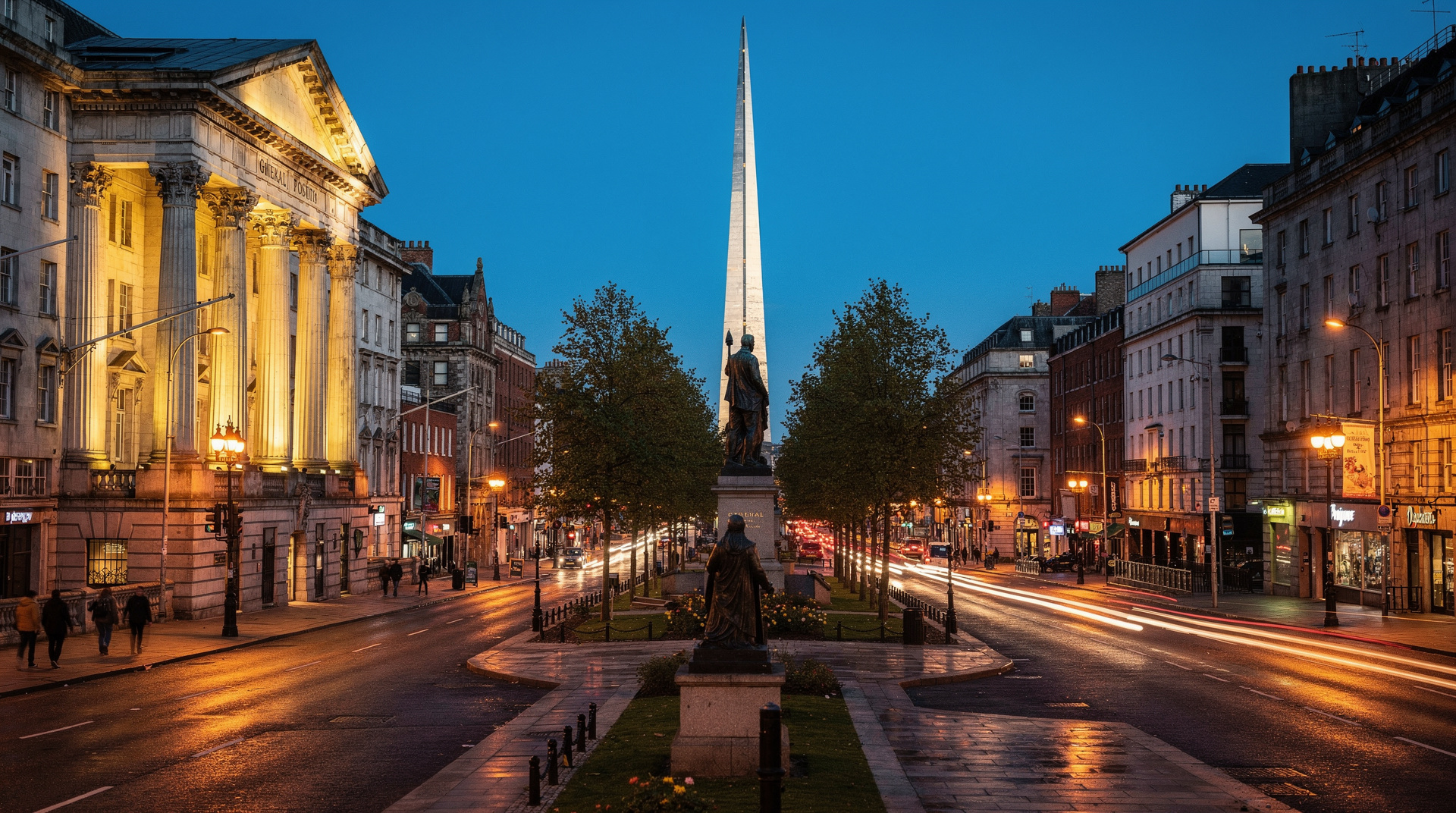
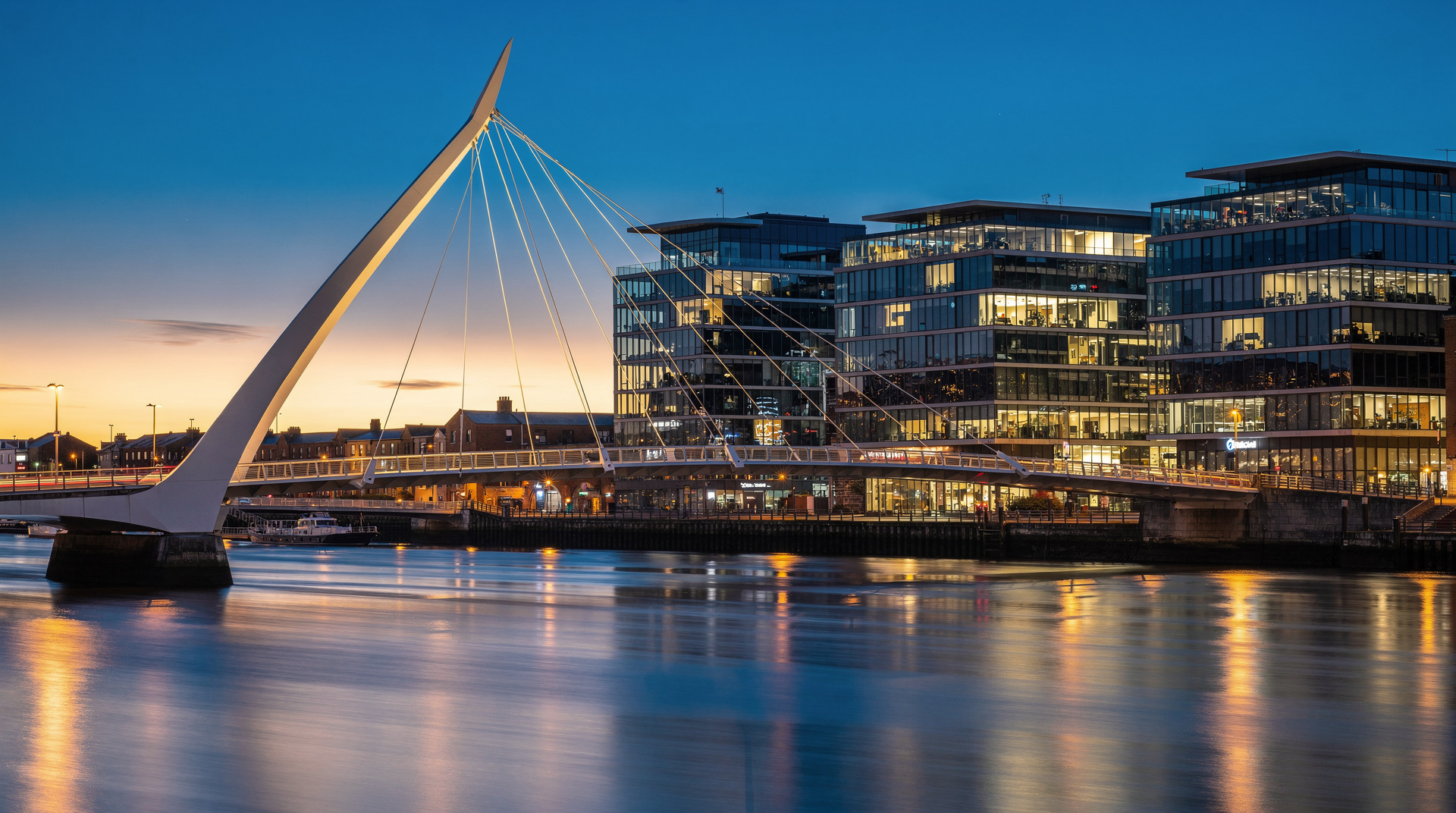
Temple Bar
The real story on Temple Bar: what's genuinely good, what's overpriced, when to visit and how to enjoy the area without getting ripped off.
Dublin: traditional pub walking tour
Duration: 3h
- Free cancellation
- Instant confirmation
Quick facts
- Location
- South bank of the Liffey, city centre
- Getting there
- 10 min walk from Trinity College or Luas Red Line
- Currency
- Euro (€)
- Pint price
- €8–12 (honest warning below)
- Best time
- Sat morning for the food market
The honest picture before you book anything
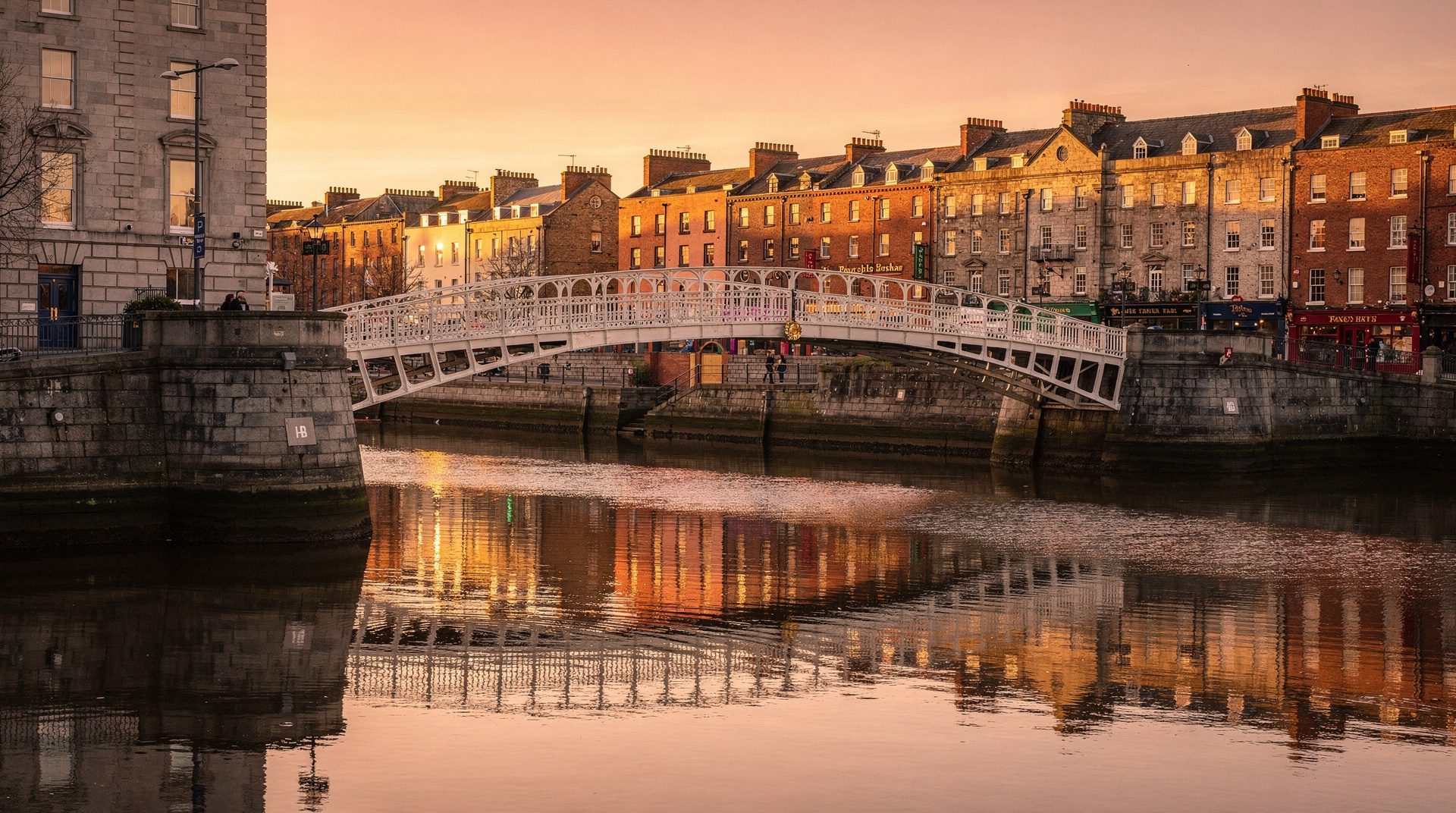
Temple Bar is Dublin’s most photographed neighbourhood and its most misunderstood one. The cobbled lanes and terracotta pub fronts look exactly as advertised. The pints inside those pubs cost €10–12. These two facts coexist, and being clear about them upfront is the kindest thing this guide can do for you.
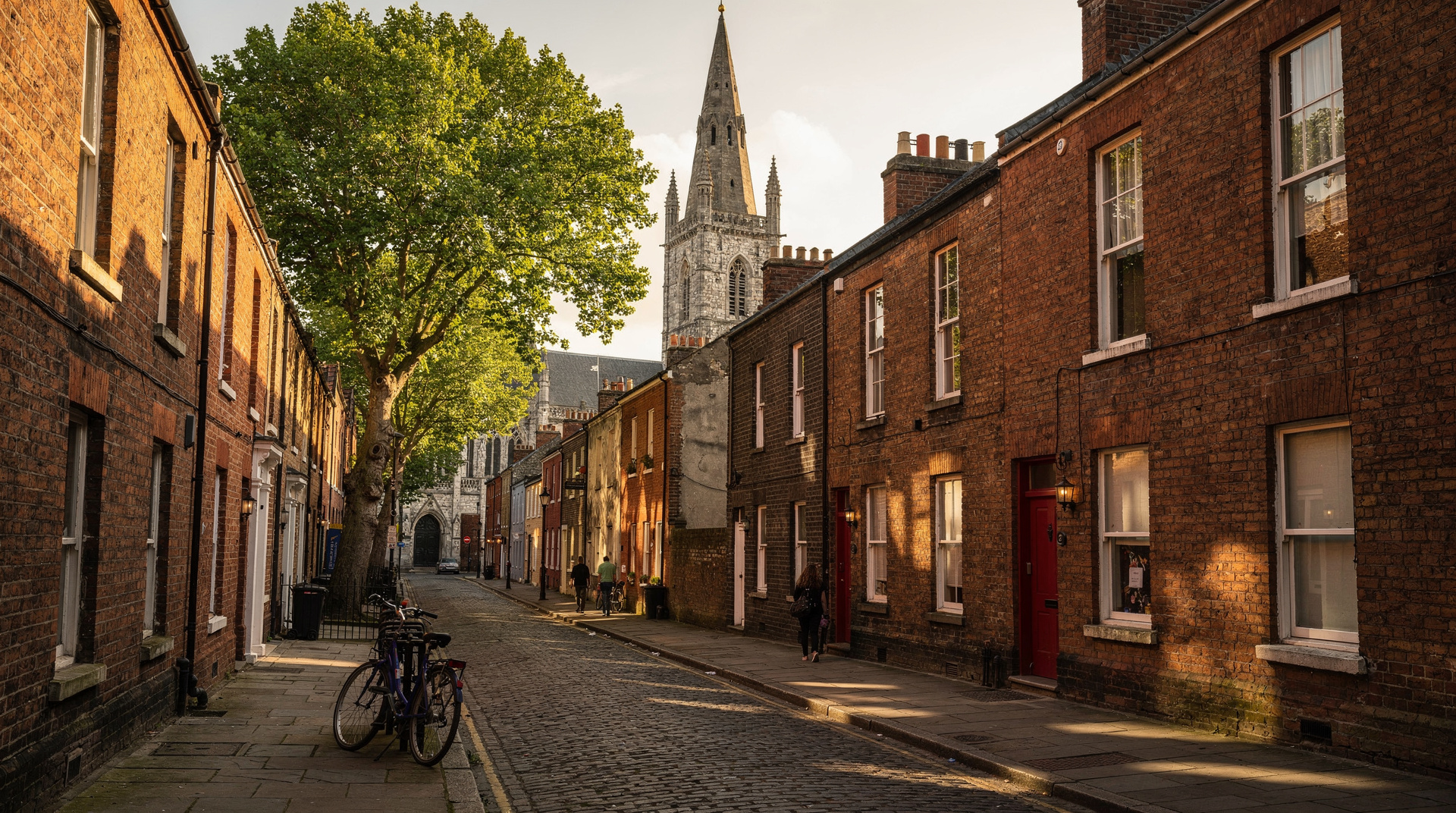
The area sits on a roughly triangular patch between Dame Street to the south, the River Liffey to the north, and Parliament Street to the west. It takes about eight minutes to walk from one end to the other, which means you can see the whole thing in a morning — and that is often the right amount of time.
| Where | South bank of the Liffey, city centre |
| Cost | Free to walk; pints run €8–12 |
| Time needed | A morning for daytime sights; an evening for pubs |
| Getting there | 10 min from Trinity College or Luas Red Line |
| Best time | Weekday mornings and Saturday for the food market |
What Temple Bar does well
The daytime version of Temple Bar is genuinely worthwhile. The Temple Bar Food Market on Meeting House Square runs every Saturday from around 10 am to 4 pm and draws a mix of artisan producers — smoked salmon from Connemara, sourdough from small Dublin bakeries, fresh pasta, local cheeses. It is one of the best outdoor markets in the city. Go hungry.
The Irish Film Institute on Eustace Street is a working repertory cinema with two screens, an excellent bar, and a bookshop that stocks film theory titles you will not find on the main drag. It is free to browse and well worth an hour.
The Project Arts Centre and the Gallery of Photography on Meeting House Square both offer free entry to most exhibitions. The gallery in particular punches above its weight — the quality of shows is consistently high, and it never has a queue.
Cow’s Lane, just across from the main Temple Bar square, has a smaller design market on Saturdays with Irish craft, jewellery and clothing that leans independent rather than tourist. It is quieter than Meeting House Square and all the better for it.
Where the pricing actually stands
| Temple Bar (tourist pubs) | A local pub 2 streets over | |
|---|---|---|
| Pint of Guinness | €10–12 | €6–7 |
| Atmosphere | Loud, busy, live music covers | Quieter, local crowd |
| Weekend nights | Queues, cover charges possible | Walk-in usually fine |
| Daytime | Pleasant, market and galleries | Ordinary neighbourhood pub |
The difference is entirely about location and captive demand, not quality — the beer itself is identical. If a specific pub matters to you for its name or its photographs, that is a reasonable choice; just make it knowingly.
A short history of how Temple Bar became Temple Bar
The name comes from Sir William Temple, a 17th-century provost of Trinity College whose house and gardens once stood on the site. For much of the 20th century the area was earmarked for a central bus depot and left to decay, which — accidentally — is why so many of its narrow Georgian and Victorian buildings survived rather than being redeveloped.
When the bus depot plan was shelved in the late 1980s, the derelict streets had already become a magnet for artists and musicians drawn by cheap rents. The government then formally designated it a cultural quarter in the early 1990s, investing in the galleries, the Film Institute and the public squares that exist today — and, inadvertently, cementing the district’s association with nightlife as bars multiplied to serve the crowds the cultural investment attracted.
The walking tour question
Most visitors consider Temple Bar through the lens of a pub crawl, and a guided option makes more sense here than going solo. Left to your own navigation, you will drift toward the busiest pubs by default, which are also the most expensive and the loudest. A good guide points you toward the older, quieter establishments that remain and explains why the area became what it is — a government-designated cultural quarter from the 1990s that was deliberately planned to anchor Dublin’s creative industries.
The traditional pub walking tour covers Temple Bar and the surrounding lanes, mixing real pub history with the stories of Dublin’s drinking culture, and steers well clear of the most egregious tourist traps. It is the most efficient way to see the area sensibly.
For history rather than pubs, the Dublin historical walking tour passes through Temple Bar as part of a wider circuit that covers Viking Dublin, Dublin Castle and the medieval city walls — context that makes the neighbourhood make more sense.
If you prefer a smaller group and a slower pace, a small group walking tour that includes Temple Bar keeps the quarter as one stop among several rather than the whole evening. For visitors who also want a whiskey stop, the Temple Bar tour paired with a distillery visit combines the two, and the Jameson Distillery guide explains what that side of the day involves.
The best walking tours guide and the Dublin ghost tours guide compare other ways to see the area with a guide, and the self-guided Dublin walk works if you would rather go alone.
The nightlife: honest assessment
On a Friday or Saturday night, Temple Bar is packed. The streets are narrow, the music is loud, and the pricing reflects the captive audience. A pint of Guinness in the most touristy pubs runs €10–12; the same pint costs €6–7 in a local pub two streets east or west. The Guinness is the same. The pub is not.
This is not to say no one should go. Plenty of visitors have a perfectly good time in Temple Bar on a Saturday night and leave happy. But if your evening budget is limited, or you want to drink where Dublin people actually drink, you will have a better time reading the best pubs guide and the traditional music pubs guide before you head out. Stoneybatter, Ranelagh and the streets off Grafton Street all have better value and better atmosphere per euro.
If you want to stay in the area, the Porterhouse on Parliament Street (just on the border of Temple Bar) brews its own beer, prices more fairly than its neighbours, and usually has live music. It is owned by Irish people rather than a hospitality group, and that tends to show.
Getting there and getting around
Temple Bar is a twelve-minute walk from Trinity College along Dame Street. From the northside, cross the Liffey at the Ha’penny Bridge or the Millennium Bridge — both drop you directly into the quarter. The nearest Luas stops are Four Courts on the Red Line (a five-minute walk west) and St Stephen’s Green on the Green Line (ten minutes south-east). There is no useful bus stop inside Temple Bar itself; the area is pedestrianised in its core.
Dublin is compact enough that Temple Bar sits naturally between a morning at Trinity College and an afternoon in Georgian Dublin. You could reasonably do all three in one day if you are an efficient walker and do not stop for a long lunch.
What to skip
The Blarney Woollen Mills and similar souvenir shops that line the outer edges of Temple Bar are the same merchandise available everywhere else in Dublin city centre, often at a slight premium for the location. The Oliver St John Gogarty pub on Fleet Street is photographed constantly and is decent enough, but it is priced accordingly and has a reputation as the first pub bewildered tourists wander into from the main square.
The area also has a cluster of so-called traditional music pubs where the music is performed by hired acts playing the same set every night. This is fine, but it is not a traditional session — those are spontaneous, free-forming jams where musicians turn up and play together without a setlist. If that distinction matters to you, the traditional music pub guide explains where to find the real thing.
How Temple Bar fits a longer Dublin trip
For most visitors, Temple Bar is a morning or an afternoon rather than a destination in its own right. Saturday morning with the food market, followed by a walk along the quays to the Liberties for the Guinness Storehouse, is a classic Dublin half-day that works well. Or use the area as a transitional zone between a Trinity College visit and a crossing of the Ha’penny Bridge to explore the northside around O’Connell Street and the EPIC Museum at Dublin Docklands.
For more on how to fit this into a longer stay, the 3-day Dublin itinerary maps a sensible sequence that keeps the walking manageable and spreads the major sights across the days without doubling back.
If you want to read a thorough dissection of the tourist-trap dynamics, the honest Dublin hub covers Temple Bar specifically alongside the other areas where visitors routinely overpay.
A sensible daytime route through the quarter
Start at the river end and let the lanes lead you inland. Crossing the Ha’penny Bridge puts you at the top of the quarter with the light still low on the water, which is the best moment for photographs of the terracotta pub fronts before the crowds arrive. From there, wander without a fixed plan: the side lanes reward slow walking, and the contrast between a quiet weekday lane and the same lane on a Saturday night is half the story of the place.
If it is a Saturday, head for Meeting House Square early in the session and eat at the market rather than planning a sit-down lunch. If it is a weekday, the Film Institute and the galleries make a calm, dry alternative, and a coffee stop in one of the small cafés along the lanes will tell you more about the area than any pub. The Dublin coffee culture guide lists where the city’s better cups come from, and several sit within a short walk of the quarter.
If the weather turns
Dublin rain does not respect a walking plan, and Temple Bar is compact enough that shelter is never far away. The galleries, the cinema and its bar, and the covered corners of the market area all work as plan B. For a longer wet-weather list that takes you beyond the quarter, the rainy day Dublin guide is the place to start, and the free museums guide covers indoor options that cost nothing.
Safety, scams and common-sense habits
A busy, tourist-heavy quarter attracts the usual opportunists, and the sensible habits are the same as in any capital: keep phones and wallets out of back pockets on crowded nights, be wary of anyone who approaches you with an unusually generous offer, and agree prices before you accept a service.
The Dublin scams to avoid guide and the wider tourist traps guide go through the specific situations visitors report, and the Temple Bar rip-off guide explains how the pricing works in practice. For a fuller opinion piece on the same question, the honest Temple Bar guide and the blog post is Temple Bar really that bad offer two more angles.
Where to go instead for an evening
If the point of your evening is a good pint, a proper conversation and perhaps some music, the better value lies outside the quarter. The where to drink Guinness guide names places chosen for the pint rather than the postcard, and the literary pubs guide turns a drink into a short walk through Dublin’s writing history.
If you would rather have someone else organise it, the Dublin pub crawl guide compares how the crawls differ, and the trad session etiquette guide will help you behave well if you do find a real session. For a first-hand account, the best trad session I stumbled into shows what the genuine article feels like.
Who Temple Bar suits, and who should skip it
Temple Bar suits first-time visitors who want to tick off the famous lanes, photographers, and anyone who enjoys a market and a gallery on a free morning. It also suits people who like a loud, crowded night and know what they are paying for. It suits less well travellers on a tight budget, anyone looking for a quiet drink, and visitors who want to meet locals on an ordinary evening. If you are travelling alone, the solo travel guide has advice on where to feel comfortable at night, and if you are still deciding how much time the city deserves, the first-time visitor guide helps you set priorities. The quarter is best treated as one good morning inside a longer Dublin plan, not as the plan itself.
Frequently asked questions about Temple Bar
Is Temple Bar worth visiting at all, given the prices? Yes, in daylight — the food market, galleries and Film Institute are genuinely good and not overpriced. The pricing issue is specific to the pubs at night, not the neighbourhood as a whole. Visit for the day and drink elsewhere in the evening if budget matters to you.
Which pub in Temple Bar is the least touristy? The Porterhouse on Parliament Street, right on the edge of the area, brews its own beer, is Irish-owned rather than part of a hospitality group, and prices more fairly than the pubs deeper inside the quarter. It is the closest thing to an honest recommendation within Temple Bar itself.
Top experiences
Bookable activities with verified prices and instant confirmation on GetYourGuide.

Dublin: traditional pub walking tour
- Free cancellation
- Instant confirmation

Dublin: small group walking tour including Temple Bar
- Free cancellation
- Instant confirmation

Dublin: Temple Bar tour with Jameson Distillery whiskey tour
- Free cancellation
- Instant confirmation

Dublin: historical 2-hour guided walking tour
- Free cancellation
- Instant confirmation

Dublin: Gravedigger ghost bus & pub stop
- Free cancellation
- Instant confirmation