Dublin Docklands
The docklands are Dublin's most transformed quarter, now home to the EPIC emigration museum, the Jeanie Johnston famine ship and a striking waterfront.
Dublin: EPIC Museum and Jeanie Johnston entry ticket
Duration: 3h
- Free cancellation
- Instant confirmation
Quick facts
- Location
- North Docklands, 20 min walk from O'Connell Street
- Getting there
- DART to Connolly Station (10 min walk) or Luas Red Line
- Currency
- Euro (€)
- EPIC Museum ticket
- €17–20; combo with Jeanie Johnston available
- Jeanie Johnston tour
- €10–14 for guided deck tour
A neighbourhood rebuilt from the water up
Dublin’s docklands is the clearest example in the city of how quickly a formerly derelict area can be transformed. Twenty years ago, the north and south quays east of the Samuel Beckett Bridge were a mix of disused warehouses, bonded stores and underused industrial land. Today the north docklands is home to the European headquarters of Google, Facebook, Twitter and dozens of other technology companies — it is sometimes called “Silicon Docks” — alongside new apartment towers, a park on the site of the old North Docks, and two of Dublin’s most important historical attractions: the EPIC Museum and the Jeanie Johnston famine ship.
The architecture of the docklands is mixed. The Samuel Beckett Bridge itself, designed by Santiago Calatrava and opened in 2009, is the most elegant structure in the area, a cable-stayed bridge shaped like a harp. The surrounding office buildings are of variable quality. But the waterfront walk from the Samuel Beckett Bridge east to the Point Depot is a genuinely pleasant half-hour with views across the Liffey and plenty of activity.
| Where | North Docklands, 20 min walk from O’Connell Street |
| Time needed | Half day for EPIC and Jeanie Johnston together |
| Getting there | DART to Connolly Station or Luas Red Line |
| Cost | EPIC around €17–20; Jeanie Johnston €10–14 |
| Best time | Year-round; book EPIC tickets online in advance |
EPIC: The Irish Emigration Museum
EPIC opened in 2016 in the vaults of a nineteenth-century bonded warehouse called CHQ. It is Ireland’s only museum dedicated entirely to the story of Irish emigration — the millions who left the country over three centuries, driven by famine, poverty, political persecution, and later by ambition and opportunity.
The museum works in a format of themed rooms, each covering a different aspect of the emigration story: the Famine of the 1840s, which killed approximately one million people and sent another million overseas in five years; the waves of emigration that followed through the nineteenth and twentieth centuries; the Irish diaspora’s impact on culture, politics and sport in America, Australia, Britain and elsewhere; and the contemporary story of the 70 million people worldwide who claim Irish heritage.
The production quality is high — immersive media, well-curated objects, accessible narrative — and the emotional content is handled honestly without becoming mawkish. It is the kind of museum where visitors who thought they were just passing through end up staying two hours.
The EPIC Museum and Jeanie Johnston combo ticket is the most efficient way to visit both attractions in sequence, and the combination makes contextual sense — the museum tells the story, the ship shows the physical reality.
The Jeanie Johnston
Moored just outside the CHQ building, the Jeanie Johnston is a full-scale replica of a nineteenth-century sailing ship that carried emigrants from Ireland to North America during and after the Famine. The original ship made sixteen voyages between 1847 and 1858, carrying approximately 2,500 passengers without losing a single life to illness — an extraordinary record for the era, when “coffin ships” routinely lost significant proportions of their passengers to disease.
Guided tours of the ship take about 50 minutes and cover the conditions below deck, the diet, the medical care provided by the ship’s doctor, and the stories of specific passengers drawn from the ship’s records. The guides are knowledgeable and the experience of being below decks in a reconstructed emigrant hold is more affecting than you might expect. Combined with the EPIC Museum visit, it gives a complete and properly grounded understanding of what emigration from Ireland actually meant.
The waterfront and beyond
The area around Custom House Quay and Memorial Road has changed significantly since 2020. The Windmill Lane area (where U2’s first recording sessions took place) is marked by a painted mural wall that has become a photo stop. The Convention Centre Dublin, a glass cylinder by Kevin Roche, anchors the south end of the area.
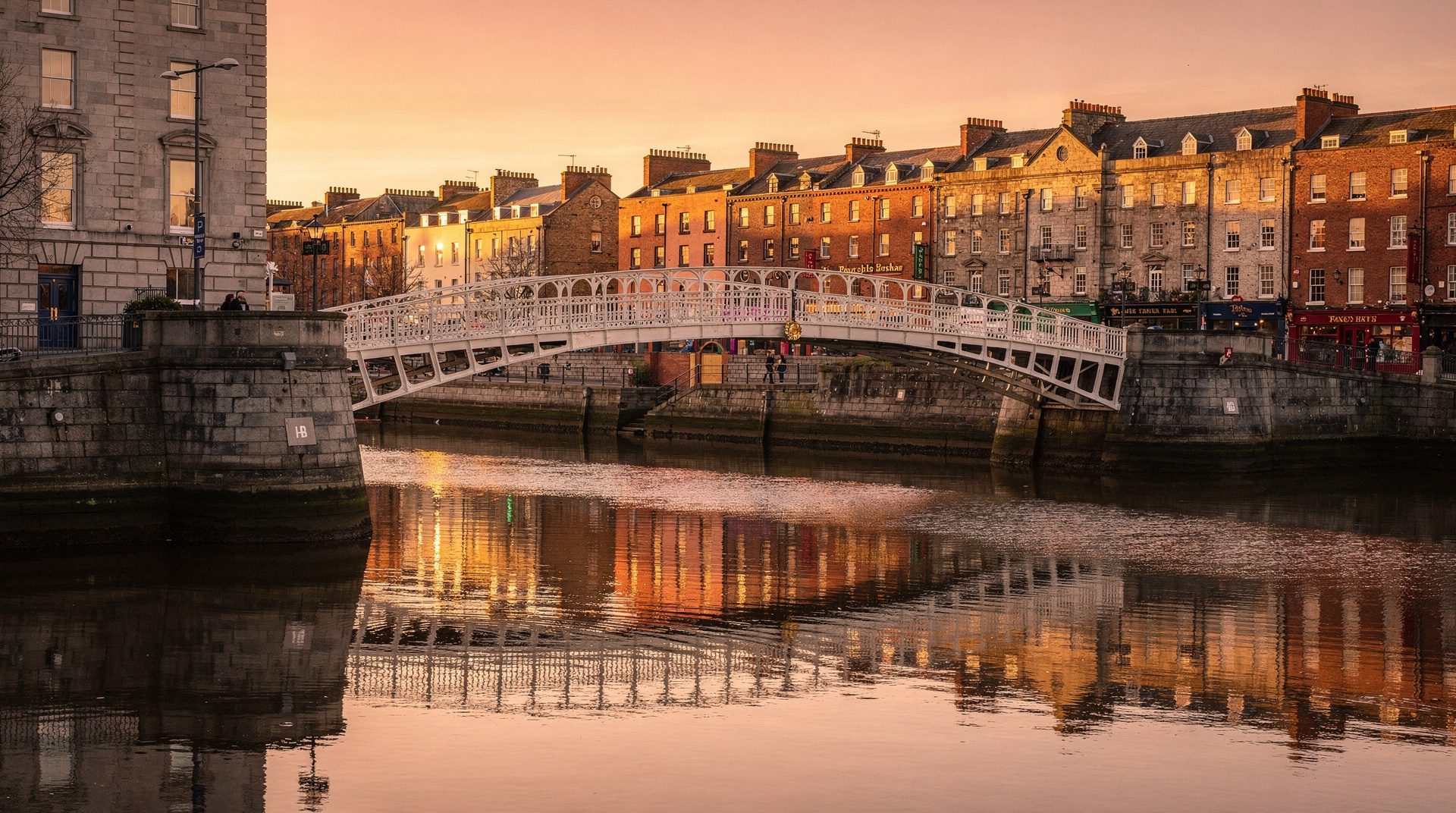
The Liffey River cruise departs from the quays just west of the Ha’penny Bridge and gives a different angle on both the docklands development and the traditional quayside architecture. It runs about 45 minutes and is a relaxed complement to a docklands visit if you want to see the contrast between old and new from the water.
Grand Canal Dock and the south docks
South of the river, Grand Canal Dock has undergone the same transformation as the north docklands, anchored by Google’s European headquarters and the Bord Gáis Energy Theatre, designed by Daniel Libeskind and one of Dublin’s main venues for touring musicals and concerts. The square around the theatre, with its red-and-white striped facade, is a genuine piece of contemporary architecture worth a look even if you are not attending a show. The waterside here is lined with bars and restaurants that get busy after work on weekday evenings, giving the area a different rhythm from the more visitor-focused north docklands. A pedestrian bridge, the Samuel Beckett Bridge to the east, links the two sides for anyone walking a full docklands loop.
The 3Arena and Point Village
Further east, the 3Arena — Dublin’s largest indoor concert venue, originally built as the Point Depot theatre in a converted 19th-century train shed — anchors the Point Village development. It hosts major touring acts and is a useful landmark for orienting yourself at the eastern end of the docklands walk. The surrounding Point Village has shops, a cinema and apartment blocks, and marks the point where the regenerated docklands gives way to the older, still-industrial stretch of the port further downriver.
Getting there and combining with other stops
The docklands is easily reached from the city centre on foot (about twenty minutes from O’Connell Street along the quays) or by DART to Connolly Station (ten minutes walk south-west to CHQ). The Luas Red Line also passes through the area via the Mayor Square and Spencer Dock stops.
A natural pairing is a morning at the EPIC Museum and Jeanie Johnston, followed by lunch at one of the restaurants on Grand Canal Dock on the south side of the river (a ten-minute walk via the Samuel Beckett Bridge), and then an afternoon at Kilmainham or back through Temple Bar and O’Connell Street.
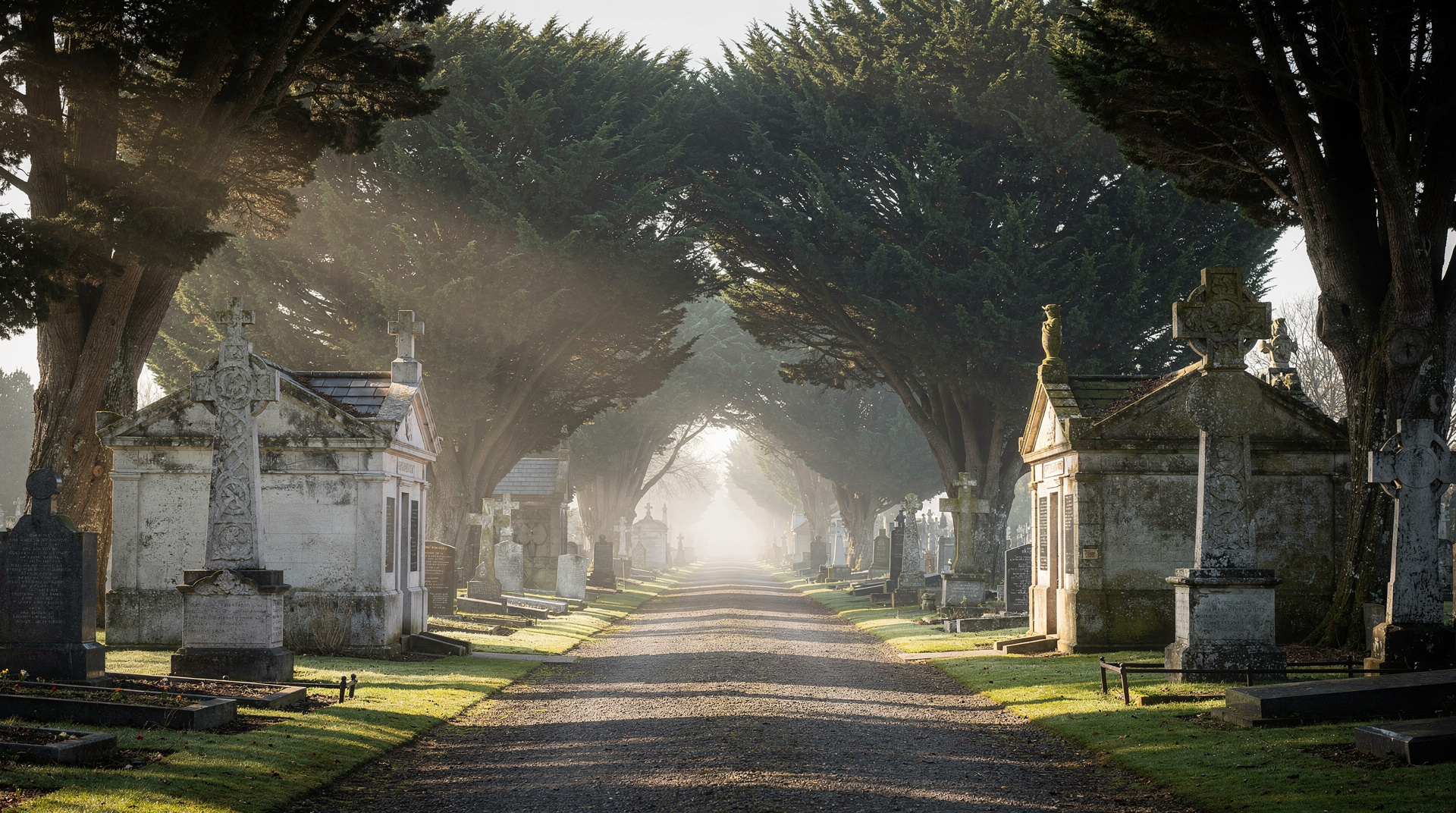
The docklands area also connects northward to Glasnevin Cemetery by bus, linking the EPIC’s emigration narrative to the burial place of the political figures who shaped the country the emigrants left — a thematic pairing worth considering for anyone doing a day focused on Irish history.
How the docklands fits into a wider Dublin plan
The docklands rarely deserves a full day, which is exactly why it works so well as one half of a mixed itinerary. Because EPIC and the Jeanie Johnston sit side by side, you can pair them with a different kind of stop in the same day without spending much time on transport. If this is your first visit to the city, the first-time guide to Dublin will help you decide where a docklands morning slots in, and the one-day Dublin itinerary shows how to keep the main sights compact when time is short.
Travellers with a little more room can place the docklands on the day that already includes the north side of the river. The three-day Dublin plan and the history buff itinerary both make sense of the emigration story when it is set against the wider arc of Irish history, rather than seen in isolation. If you are still weighing how long to stay overall, the guide to how many days in Dublin puts the question in context.
Making the most of EPIC
EPIC rewards a slow, curious pace. The rooms are designed to be explored rather than rushed through, and many visitors find that the interactive elements, including the chance to look into their own family connections, are what they remember most. Arrive with a loose sense of which parts of the story matter to you, whether that is the Famine, the later waves of departure, or the cultural influence of the diaspora, and let yourself linger there.
A few practical habits help. Go early in the day if you can, because the quieter rooms feel more personal when you are not moving with a crowd. Wear comfortable shoes, since the museum is spread across a series of vaulted spaces. Keep a little time free afterwards to sit down and absorb what you have seen, perhaps over a coffee on the quays. If you are planning around a busy period, the advice in booking attractions in advance applies directly here.
Understanding the Famine story in context
Many visitors come to the docklands without much background on the Famine, and the two main attractions work best when you have a little context. The museum covers the broad sweep, while the ship brings it down to the scale of a single vessel and the people on board. For a deeper look at the period within the city itself, the guide to the Great Famine in Dublin points to other places where the story is told, and it makes a natural companion to a morning on the quays.
It also helps to remember that the quays you are walking along were once the point from which many people left. Standing on the waterfront with that in mind changes how the gleaming modern offices look. The contrast between the old port and the new financial and technology district is, in a way, the whole point of the area, and it is worth pausing to notice it rather than treating the walk as simply a route between attractions.
Eating and drinking around the docks
The docklands offers a different dining rhythm from the old city. Around Grand Canal Dock and the quays you will find a mix of cafés, bars and restaurants that cater heavily to office workers, so weekday lunchtimes can be busy and weekends calmer. If you want something more traditional after a morning of history, it is easy to head back towards the centre; the guide to the best restaurants in Dublin and the one on traditional Irish food are good starting points. For a drink at the end of the day, where to drink Guinness in Dublin will steer you towards better pints than a generic waterside bar.
Getting around from the docklands
One advantage of the docklands is how well connected it is. You can walk back along the quays, take the DART or Luas, or use buses to reach the rest of the city. The getting around Dublin guide explains how the different modes fit together, and the DART and Luas guide is especially useful if you are staying outside the centre and coming in for the day. If you plan on making several journeys, the Leap Card guide explains how to pay for them without fuss.
For anyone choosing where to base themselves, the docklands is a convenient and modern area, though it lacks the old-town atmosphere many visitors want. The guide to Dublin neighbourhoods for where to stay compares the options so you can decide whether the waterfront suits your trip.
Choosing between a guided option and going alone
Some visitors prefer to walk into EPIC on their own and set the pace. Others like a framework, especially for a subject as heavy as the Famine. If you fall into the second group, a guided Great Famine tour that includes fast-track entry to the museum gives you a narrator for the history before you step into the vaults. It suits travellers who have only a short window in the city and want the story told in a clear order, and it pairs well with the Great Famine guide if you want to read ahead.
If you would rather see the docklands from the water, a sightseeing cruise on the River Liffey is an easy way to take in the quays without more walking. It works best as a gentle end to a morning of museum time, and it sits comfortably alongside the Dublin Bay boat tours for anyone who enjoys time on the water. The EPIC Emigration Museum guide goes into more detail on what to expect inside, and the Dublin Pass comparison is worth a look if you are weighing a bundle against single tickets.
When the weather turns
Dublin weather changes quickly, and the docklands is open and exposed along the water, so a wet or windy day can make the waterfront walk less appealing. The good news is that the main attractions here are indoors or at least partly sheltered, which makes the area a sensible choice for a damp morning. Pair it with other indoor options from what to do on a rainy day in Dublin and you have a full day that does not depend on the sky. Save the longer riverside stroll for a brighter spell, when the views across the Liffey are at their best.
Who will enjoy the docklands most
Visitors with a genuine interest in history, genealogy or modern urban change will find the most here. Families with older children can get a lot from the ship and the museum, particularly if they are curious about where their own relatives came from, and the guide to Dublin with kids offers ideas for balancing heavier subjects with livelier stops. Those who prefer pubs, music and old streets may want to spend more of their time in the Liberties or around Trinity College, and treat the docklands as a short, focused detour rather than a full outing.
Top experiences
Bookable activities with verified prices and instant confirmation on GetYourGuide.

Dublin: EPIC Museum and Jeanie Johnston entry ticket
- Free cancellation
- Instant confirmation

Dublin: Great Famine tour with fast-track EPIC Museum tickets
- Free cancellation
- Instant confirmation

Dublin: Jeanie Johnston Tall Ship Irish Famine history tour
- Free cancellation
- Instant confirmation

Dublin: EPIC The Irish Emigration Museum entrance ticket
- Free cancellation
- Instant confirmation

Dublin: River Liffey sightseeing cruise
- Free cancellation
- Instant confirmation