Malahide
An 800-year-old castle, walled gardens, a butterfly house and a charming village marina — all 30 minutes from Dublin by DART. Here's how to visit.
From Dublin: Malahide Castle & north coast half-day morning tour
Duration: 4h
- Free cancellation
- Instant confirmation
Quick facts
- Getting there
- DART from city centre to Malahide, 30 min
- Castle ticket
- €12–18 adults; book online
- Gardens
- Free to walk; butterfly house extra
- Currency
- Euro (€)
- Marina
- Free walking; café and restaurants nearby
A medieval castle and a modern coastal village
Malahide is a prosperous coastal town about fifteen kilometres north of Dublin city centre, combining one of Ireland’s most significant medieval castles with a marina, a popular beach, and a village that functions as a genuine community rather than a tourist staging post. The DART runs here in about 30 minutes from the city centre, and the combination of the castle, gardens and waterfront makes it one of the most rewarding half-days on the north coast.
| Where | Malahide, north Dublin coast |
| Cost | Castle €12–18; gardens free; butterfly house extra |
| Time needed | Half day |
| Getting there | DART, about 30 min from the city centre |
| Best time | April to September for gardens and butterfly house |
Malahide Castle is the anchor. It was built in the twelfth century by Richard Talbot, a Norman knight who came to Ireland with Strongbow’s invasion, and it remained in the Talbot family for over 800 years — an almost unbroken succession from 1185 to 1975. That continuity is unusual by any standard and gives the castle an accumulated historical weight that purpose-built visitor attractions cannot replicate.
Malahide Castle: what to expect
The castle itself is a mixture of architectural periods, reflecting 800 years of continuous habitation and modification. The oldest surviving sections are the fifteenth-century tower, with the later great hall, drawing rooms and bedroom chambers added and altered through the Tudor, Stuart and Georgian periods. The interior is furnished with portraits and furniture from the Irish Georgian Society collection that was assembled after the Talbot family sold the estate to Dublin County Council.
Guided tours (60–90 minutes) run throughout the day and cover the castle’s history and the lives of the Talbot family. The Battle of the Boyne connection is significant — the morning of the 1690 battle, fourteen members of the Talbot family breakfasted in the great hall; by the evening, all fourteen were dead. The story is told on the tour and gives the rooms a historical weight that goes beyond furniture and portraits.
The Malahide Castle gardens and butterfly house entry covers the grounds separately from the castle tour and is the better option for families with younger children — the butterfly house is a warm glasshouse of tropical plants and free-flying butterflies, genuinely engaging for children under ten.
The full Malahide Castle guide covers ticket options and what to prioritise on each visit.
The walled gardens
The castle grounds include a walled garden that has been maintained since the seventeenth century, with herbaceous borders, a croquet lawn, and a working kitchen garden section. They are quiet, well-kept and particularly good in May and June when the rose planting is at its peak. Entry to the grounds is free; the butterfly house carries a separate charge of around €6.
The wider estate of 250 acres is open parkland, free to walk and used locally for jogging and dog-walking. It has a quality that feels like a genuine country estate rather than a managed visitor site, even though it is within easy bus or taxi distance of Dublin Airport.
The village and marina
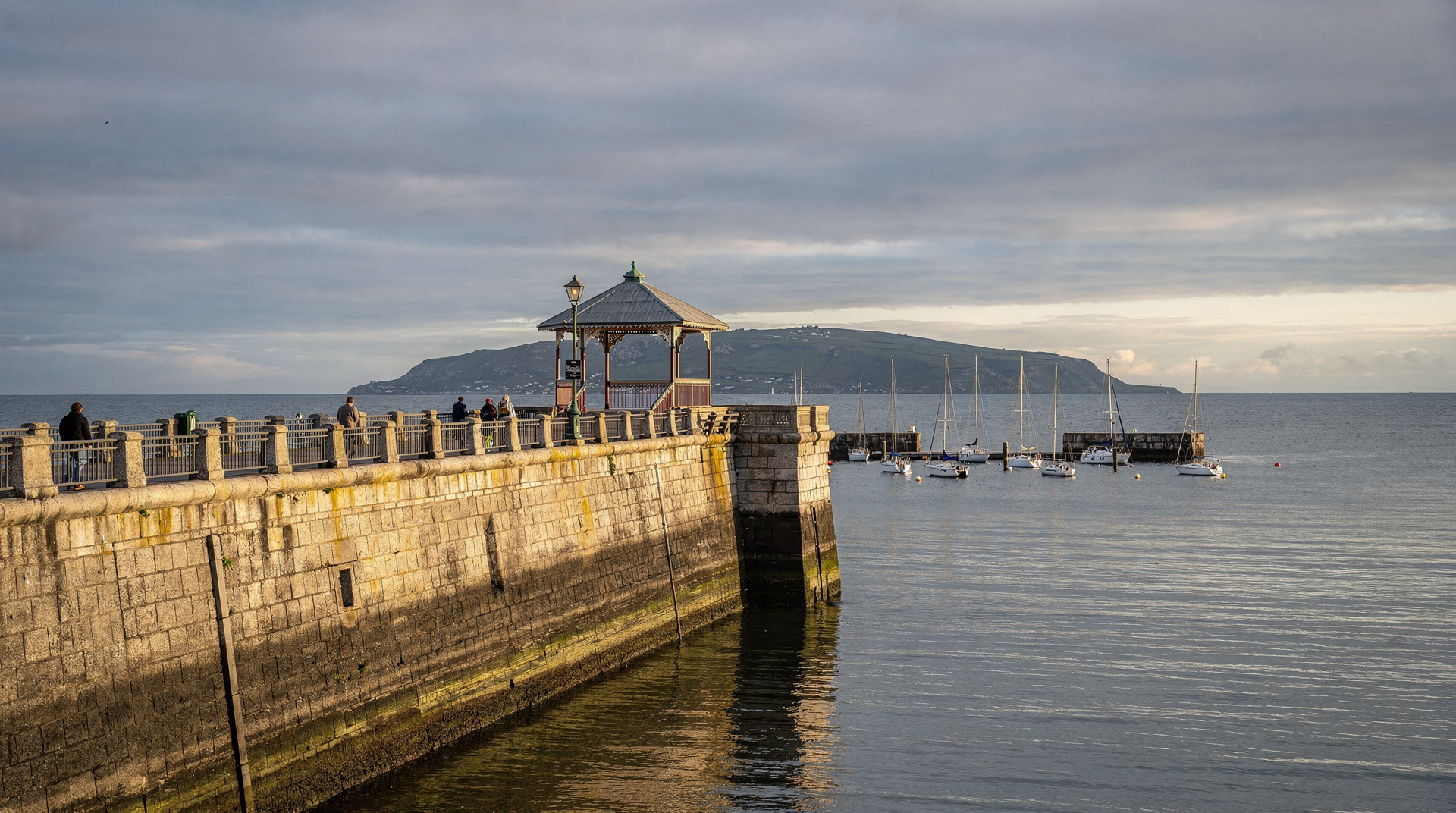
Malahide village is a ten-minute walk from the castle and is worth at least an hour in itself. The main street has a good concentration of independent cafés, wine bars and restaurants — Malahide has a reputation for disproportionately good dining for its size. The marina below the village is a working sailing marina with a café strip and a coastal path that runs south along the estuary.
The estuary at Malahide is a designated bird sanctuary and one of the best birdwatching locations in the Dublin area, particularly in winter when wading birds use the mudflats. In summer the estuary is calmer and the path along it popular with walkers.
Getting there and combining with Howth
Malahide DART station is on the Malahide/Drogheda line, splitting from the main DART coastal route at Clongriffin. Trains from Connolly Station take around 30 minutes. The station is about 20 minutes walk from the castle, or a short taxi/bus ride.
Malahide and Howth are the two most popular north-coast stops from Dublin and are naturally combined. The most efficient version is a guided tour that handles the transport between them — the Malahide Castle and north coast half-day tour covers both villages in a morning with return transport, removing the need to manage bus or taxi connections independently.
If you are combining on your own, take the DART to Howth for the cliff walk and harbour in the morning, then bus from Howth to Malahide (Portmarnock coast road, bus 32 or 102) for the castle in the afternoon. Journey time is about 20 minutes.
Practical notes
The castle can become busy on summer weekends, particularly Saturday afternoons when tour groups and families converge. Morning visits give a calmer experience. The grounds café at the castle is a reasonable option for lunch; the village restaurants are better for dinner.
Malahide is also close to Dublin Airport — it is one stop on the DART from Clongriffin, and the airport bus (Aircoach or Dublin Express) runs nearby. Some visitors make Malahide a final-day stop on the way to the airport, which is a reasonable plan if your flight is in the afternoon. The Dublin airport to city guide has the fuller transport picture if Malahide is a stop on the way in or out.
Malahide versus Howth
Malahide and Howth are the two most-visited north-coast stops, but they suit slightly different visitors:
| Malahide | Howth | |
|---|---|---|
| Best for | Castle, gardens, families | Cliff walk, seafood, scenery |
| Time needed | Half day | Half day to full day |
| Walking required | Minimal; mostly flat grounds | Moderate to strenuous (cliff walk) |
| Weather-dependent | Less so — castle interior is indoors | More so — the coastal walk is the main draw |
On a wet day, Malahide’s castle interior tour is the more reliable plan than Howth’s cliff walk. On a clear day, both work well, and the two can be combined into a single north-coast day using the bus connection via Portmarnock.
Malahide for families
Malahide is one of the easier half-days near Dublin for families with young children. The castle grounds are flat and stroller-friendly, the butterfly house is a warm, engaging stop regardless of weather, and the marina and beach give an easy, unstructured hour to finish the visit. See the Dublin with kids guide and the family day trips from Dublin guide for how Malahide compares with other family-friendly options near the city.
How to shape the day
The simplest plan is castle first, village second. Arrive in the morning, take the guided interior tour while the rooms are quiet, then walk the walled gardens before the grounds fill up. Leave the village for later: the main street is at its best once you are ready to sit down, and a long lunch in one of the independent cafés is part of what Malahide does well. If the weather turns, the order flips easily, because the castle interior and the glasshouse are both indoors and the village has plenty of places to wait out a shower.
If you have children, build the day around the butterfly house and leave the castle tour for a moment when everyone is fresh. Younger visitors tend to enjoy the grounds more than the furniture, so there is no shame in keeping the interior tour short or skipping part of it. Adults travelling without children can reverse the emphasis: spend longer on the history, linger in the walled garden, and use the estuary path as the quiet end to the visit.
Fitting Malahide into a longer trip
Malahide works best as one block inside a wider plan rather than as a stand-alone excursion. On a short first visit, the Dublin first-time guide helps you decide whether the north coast deserves a slot at all, and the one-day itinerary shows how little room a single day leaves for anything outside the centre. With more time, the three-day itinerary and the coastal three-day itinerary both give the north shore a natural place, and Malahide pairs especially well with a morning at Howth.
If your trip is built around the coast, other seaside stops along the same railway are worth knowing about. Skerries lies further up the line and has a quieter, more working-harbour feel, while the south side of the bay offers Dalkey and Dún Laoghaire for a very different kind of seaside afternoon. The DART coastal day out guide explains how to string several of these together without wasting time on connections.
Getting around without a car
Malahide is one of the easiest places near the city to reach without a car. The DART does most of the work, and the walk or short ride from the station to the castle is simple. If you will be using public transport several times during your stay, the Dublin getting around guide and the DART and Luas guide explain how the network fits together, and the Leap Card guide covers the card that makes short hops like this one painless. Check the current rules before you travel, since fares and timetables change and the operators publish the up-to-date versions.
Drivers will find the town perfectly reachable, but parking in a busy village on a sunny weekend is rarely relaxing, and the train removes the problem entirely. The driving in Ireland guide is worth reading if you are hiring a car for other parts of your trip and wondering whether it is worth using for this one. For most visitors, the answer is no.
What the village adds to the visit
It is easy to treat the castle as the whole reason to come and the village as an afterthought, but the village is what makes the half-day feel complete. The marina gives you something to look at while you eat, the café strip suits an unhurried coffee, and the coastal path along the estuary is an easy way to stretch your legs after the guided tour. Visitors who rush straight back to the station after the castle miss the part of Malahide that locals actually use.
The dining scene rewards a little planning. Because the village has a reputation for good food, the better tables can fill on a fine weekend evening, so it is worth thinking about where you want to eat before you arrive rather than deciding at the door. For ideas on what to eat once you are back in the city, the best restaurants in Dublin guide and the traditional Irish food guide are useful companions.
Seasons and weather
The gardens and the butterfly house are the main reasons for the April-to-September recommendation, and the rose planting in the walled garden is a highlight of early summer. Outside those months the castle still works well, and the estuary is arguably at its most interesting in winter, when the wading birds gather on the mudflats. Dublin weather is changeable at any time of year, so a waterproof layer is sensible whatever the forecast says; the weather and packing guide has the longer version, and the best time to visit Dublin guide helps if you are still choosing your dates.
On a grey day, remember that Malahide is one of the better rainy-day choices on the coast. The rainy day Dublin guide lists other options for when the forecast is poor, and the castle tour sits comfortably alongside them.
A few things worth remembering
Wear comfortable shoes. The grounds are mostly flat, but you will walk further than you expect once the castle, gardens, village and marina are all added together. Bring a little patience for summer weekends, when families and tour groups share the same paths. And if you are travelling with someone who has limited mobility, the flat parkland and indoor tour make this one of the gentler outings near the city; the Dublin accessibility guide covers the wider picture across the capital.
Finally, treat the half-day as a half-day. Malahide rewards a relaxed pace, and trying to squeeze in too many stops dilutes the experience. If you want a more strenuous day on the same coast, Howth and its cliff walk are the obvious partner, and the Howth day trip guide lays out how to do it well.
Top experiences
Bookable activities with verified prices and instant confirmation on GetYourGuide.

From Dublin: Malahide Castle & north coast half-day morning tour
- Free cancellation
- Instant confirmation

Dublin: Malahide Castle gardens & butterfly house entry
- Free cancellation
- Instant confirmation

Dublin: full-day Howth and Malahide Castle tour
- Free cancellation
- Instant confirmation

Dublin: Malahide Castle and Howth multilingual full-day tour
- Free cancellation
- Instant confirmation

Dublin to Malahide Castle & Gardens half-day trip by car
- Free cancellation
- Instant confirmation