St Patrick's Cathedral guide
Dublin: St Patrick's Cathedral guided tour, fast-track ticket
- Free cancellation
- Instant confirmation
Is St Patrick's Cathedral worth visiting in Dublin?
Yes, especially if you visit on a guided tour. The cathedral is 800 years old, holds Jonathan Swift's tomb, and has one of the best medieval interiors in the city. Entry costs around €8–€9 for self-guided admission. A fast-track guided option adds worthwhile context about the Reformation, Cromwell's stabling of horses here, and Swift's bitter wit.
Eight centuries of faith, politics, and one very bitter dean
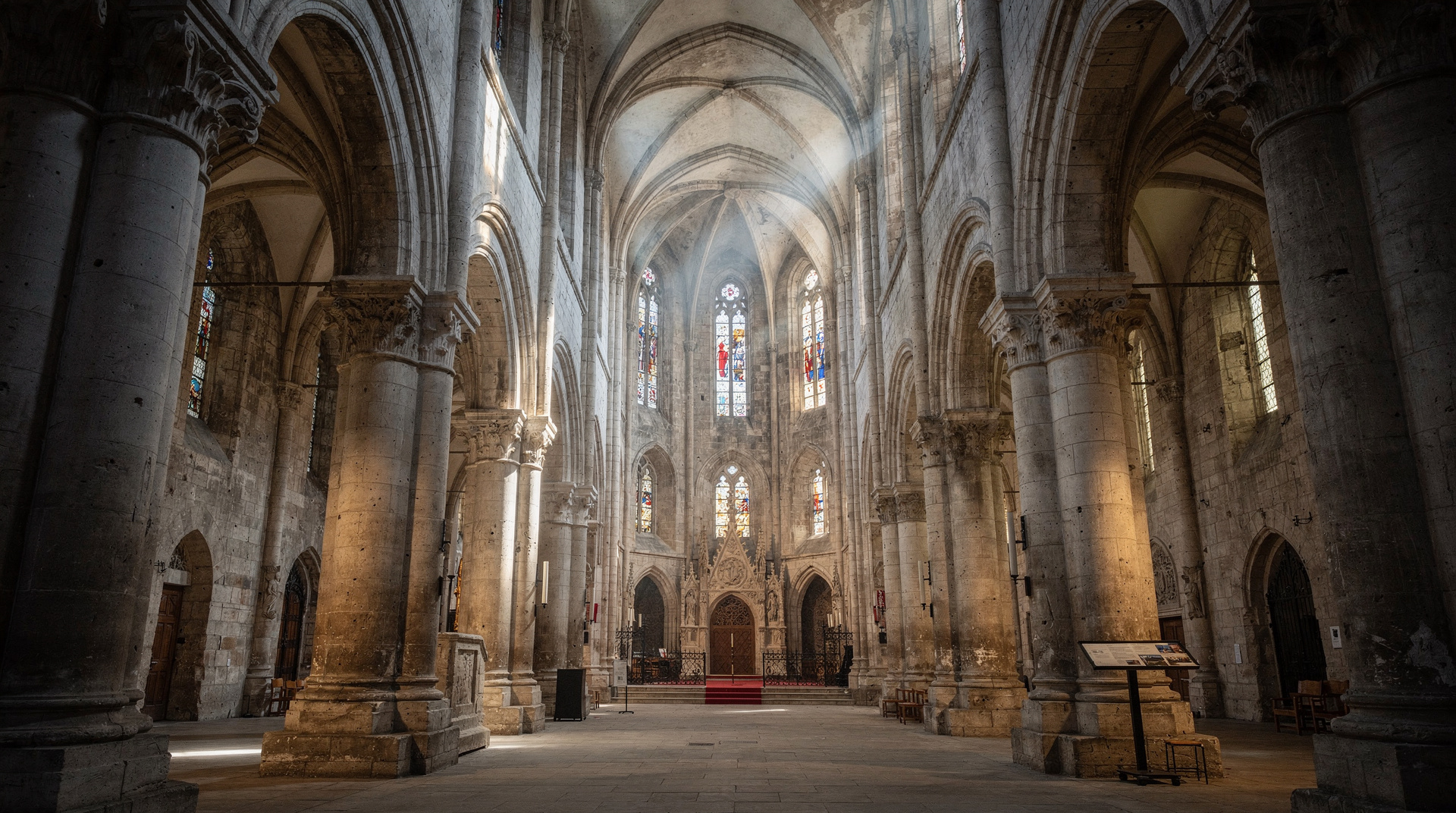
St Patrick’s Cathedral is the largest church in Ireland. It stands on one of the oldest Christian sites in the country — according to tradition, the spot where Patrick baptised converts in a well sometime in the 5th century — though the existing building dates from 1220 and has been substantially altered in every century since. For much of its history it served as the national cathedral of the Church of Ireland, and its interior is layered with the history of Protestant Ireland: heraldic banners, regimental flags, elaborate monuments to the Anglo-Irish ascendancy, and everywhere the presence of its most famous dean.
Jonathan Swift spent 32 years as Dean of St Patrick’s, from 1713 until his death in 1745. The author of Gulliver’s Travels, A Modest Proposal, and some of the most savage satire in the English language, Swift used the cathedral as his base while also championing the poor of Dublin and writing devastating attacks on English economic policy in Ireland. He is buried here, as is his companion Esther Johnson (Stella), and his monument, his death mask, and his walking stick are displayed in the south aisle. His self-written epitaph is considered by W.B. Yeats to be the finest in any language.
| Where | St Patrick’s Close, the Liberties |
| Cost | Around €8–9 self-guided; €15–25 guided fast-track |
| Time needed | 45 min–1 hr |
| Hours | Mon–Fri 09:00–17:00, Sat 09:00–18:00, Sun limited hours |
| Booking | Not required for self-guided entry |
What to see inside
The cathedral is 91 metres long and wide enough to hold a significant choir in the north transept. The approach from the west end gives the strongest impression of scale. Highlights to locate:
The Swift memorial and grave — in the south aisle, near the west entrance. His epitaph is inscribed on the south wall. Stella’s grave is a few metres away. Nearby is a small display cabinet with his writing materials, death mask, and a cast of his skull.
The Boyle Monument — in the south transept, erected in 1632 by Richard Boyle, the first Earl of Cork. It is enormous — rising nearly to the ceiling — and shows three tiers of kneeling family figures. One of the small figures in the lower tier is the young Robert Boyle, who grew up to become the father of modern chemistry. It is the largest monument in any Irish church.
The Door of Reconciliation — not its official name, but the popular name for the carved wooden door in the north transept with a hole hacked through it. In 1492 two feuding earls — Black James Kildare and the Earl of Ormond — were locked in a standoff in the cathedral. Ormond had barricaded himself in the chapter house. Kildare cut a hole in the door and thrust his hand through, inviting Ormond to shake it. Ormond did. The expression “chancing your arm” derives from this moment.
The medieval baptismal font — in the north-west corner, believed to date to the late medieval period. The original well where Patrick baptised converts is said to lie beneath the cathedral, though its exact location is uncertain.
The regimental flags — throughout the north and south aisles, dozens of faded battle colours hang from the walls, remnants of Irish regiments of the British Army. They give the cathedral an atmosphere that is quite different from the spare, whitewashed interiors of many Protestant churches.
How to move through the building
Most visitors head straight for Swift and then drift towards the exit, which is a shame. A better approach is to treat the cathedral as a slow loop. Start at the west end and take in the scale of the nave before you look at any single monument. Then follow the south aisle for the Swift material, cross to the south transept for the Boyle Monument, and finish in the north transept with the Door of Reconciliation and the choir area. Walking it in this order means you never double back, and the building reveals itself in the sequence in which its history unfolds.
Give yourself time to stop and read. The monuments here are not decorative extras; each one says something about who held power in Dublin and how they wished to be remembered. The Boyle Monument is the loudest example, a family statement in stone, while Swift’s modest epitaph sits at the opposite end of the scale. Comparing the two is one of the quiet pleasures of the visit, and it costs nothing beyond a few minutes of attention.
The regimental flags reward a slower look as well. Because they hang high and have faded with age, they are easy to overlook, but standing under them in the aisles gives you a sense of how closely the cathedral was tied to the military and political life of Anglo-Irish Dublin. If you have already visited Dublin Castle, you will notice how the two sites speak to each other.
Why the history matters here
The cathedral is best understood as a place where several Irelands overlap. It is a medieval foundation, a Reformation-era Protestant church, a monument to the Anglo-Irish ascendancy, and a working place of worship today. None of these layers cancels the others, and that is what makes the building more rewarding than a simple list of highlights suggests.
If this kind of layered story appeals to you, the Viking and medieval Dublin guide sets the cathedral in the longer arc of the city, and the Irish revolution history walk picks up the thread in a later and very different era. For a more literary take on the same streets, the blog post on the hidden corners of the Liberties shows how much sits just beyond the cathedral gates.
Swift deserves a note of his own. He is often reduced to Gulliver’s Travels, but the man whose grave you are standing beside spent decades arguing on behalf of Dublin’s poor. Keep that in mind when you read his epitaph: the “savage indignation” is not an affectation but the temperament of someone who watched injustice up close from this very building.
Attending a service
St Patrick’s Cathedral is on St Patrick’s Close in the Liberties, about 500 metres south-west of Dublin Castle and the same distance west of Christ Church Cathedral. The entrance is on the south side of the building.
Opening hours for visitors are typically Monday to Friday 09:00–17:00, Saturday 09:00–18:00, Sunday 09:00–10:30 and 12:30–14:30. The cathedral closes to tourists during services, including evensong on weekday afternoons (usually 17:00–18:00) and Sunday morning services. Check the cathedral’s website for the exact service schedule before visiting, as closures are not always prominently signposted.
Self-guided St Patrick’s Cathedral self-guided admission runs around €8–€9. For those who want commentary on what they are seeing, the guided fast-track tour is worth the premium — the guides explain the Reformation history, Cromwell’s use of the nave as a stable for his cavalry (which permanently damaged many monuments), and the cathedral’s relationship with the colonial administration.
If you plan to see both cathedrals and Dublin Castle, the skip-the-line St Patrick’s Cathedral and gardens tour saves time, and the gardens themselves — a small park on the south side — are worth 15 minutes. Swift campaigned to have them created for the benefit of the surrounding poor neighbourhood and they remain a quiet green space.
Attending a service
Evensong at St Patrick’s is one of the authentic cultural experiences of Dublin and it is free. The choir here has sung for nearly 800 years (though boys today receive a full school education at the attached school, founded by Swift). Performances are announced on the cathedral website. The acoustic in the nave during a choral service is the best argument for the cathedral that no guidebook photo can convey.
Choosing the right kind of visit
Which option suits you depends mostly on how much background you already have. If you know the outline of Irish history and enjoy reading plaques at your own pace, the self-guided route is enough. If you would rather have the stories handed to you, such as the standoff behind the Door of Reconciliation or the damage done to the monuments, a guided option adds a lot. Either way, it helps to read a little beforehand so the names on the walls mean something when you reach them.
Timing also shapes the experience. A quiet weekday morning lets you hear the building, while a busy peak-season afternoon can feel hurried. If you are unsure when to come, the best time to visit Dublin guide explains how the seasons change the city, and the booking attractions in advance guide helps you decide which sights need planning and which do not. Because Dublin weather is changeable, pack accordingly using the weather and what to pack advice; the cathedral also makes a sensible indoor choice, and the rainy day Dublin guide places it among other good wet-weather options.
Visitors who want to save on admission across several sights may be weighing a pass. The Dublin Pass worth it guide runs through the arithmetic, and the Dublin on a budget guide collects other ways to see the city without overspending. For those with mobility needs, the accessibility guide is the place to start before you plan a route through an old building.
Getting there and Swift’s literary Dublin
St Patrick’s is about a 15-minute walk from Trinity College or Dublin Castle, and reachable easily on foot from most city-centre hotels. If you’re coming from further afield, see the getting around Dublin guide for bus options, or the DART and Luas guide if you’re combining the cathedral with a wider day of sightseeing across the city.
For literature-minded visitors, Swift’s connection to St Patrick’s is one thread in a much larger story — the literary Dublin guide covers the wider network of writers’ sites, from Joyce’s Dublin to Wilde’s Merrion Square, that a Swift pilgrimage here naturally connects to.
The cathedral’s own school, founded by Swift to educate choristers, still operates today and is a detail many visitors miss — it is a direct, functioning link between the 18th-century dean and present-day Dublin rather than just a historical footnote. Combined with the working choir, which has sung here for nearly 800 years, St Patrick’s is one of the few Dublin attractions where the “history” on display is not entirely in the past.
Combining with the wider Liberties
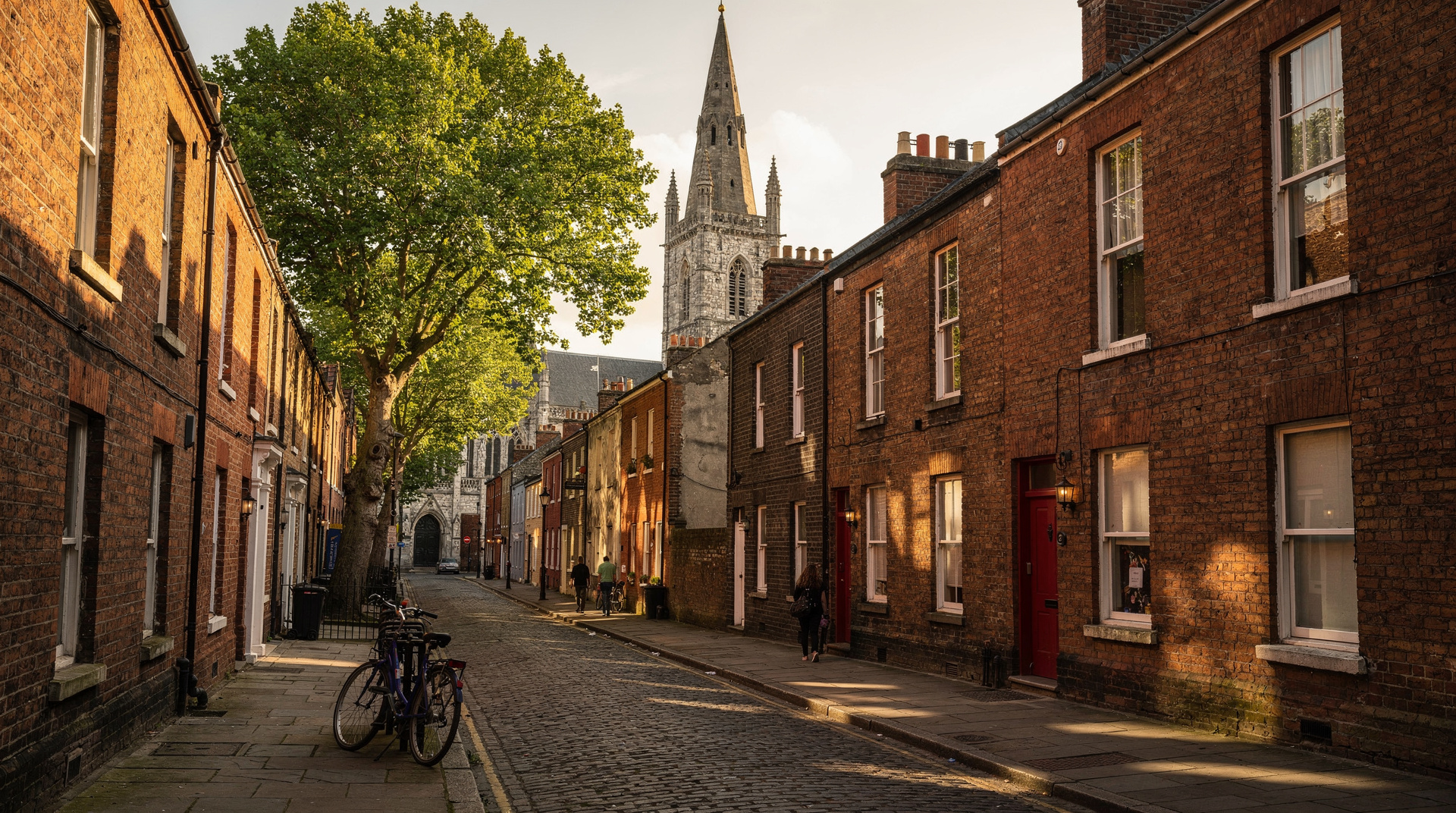
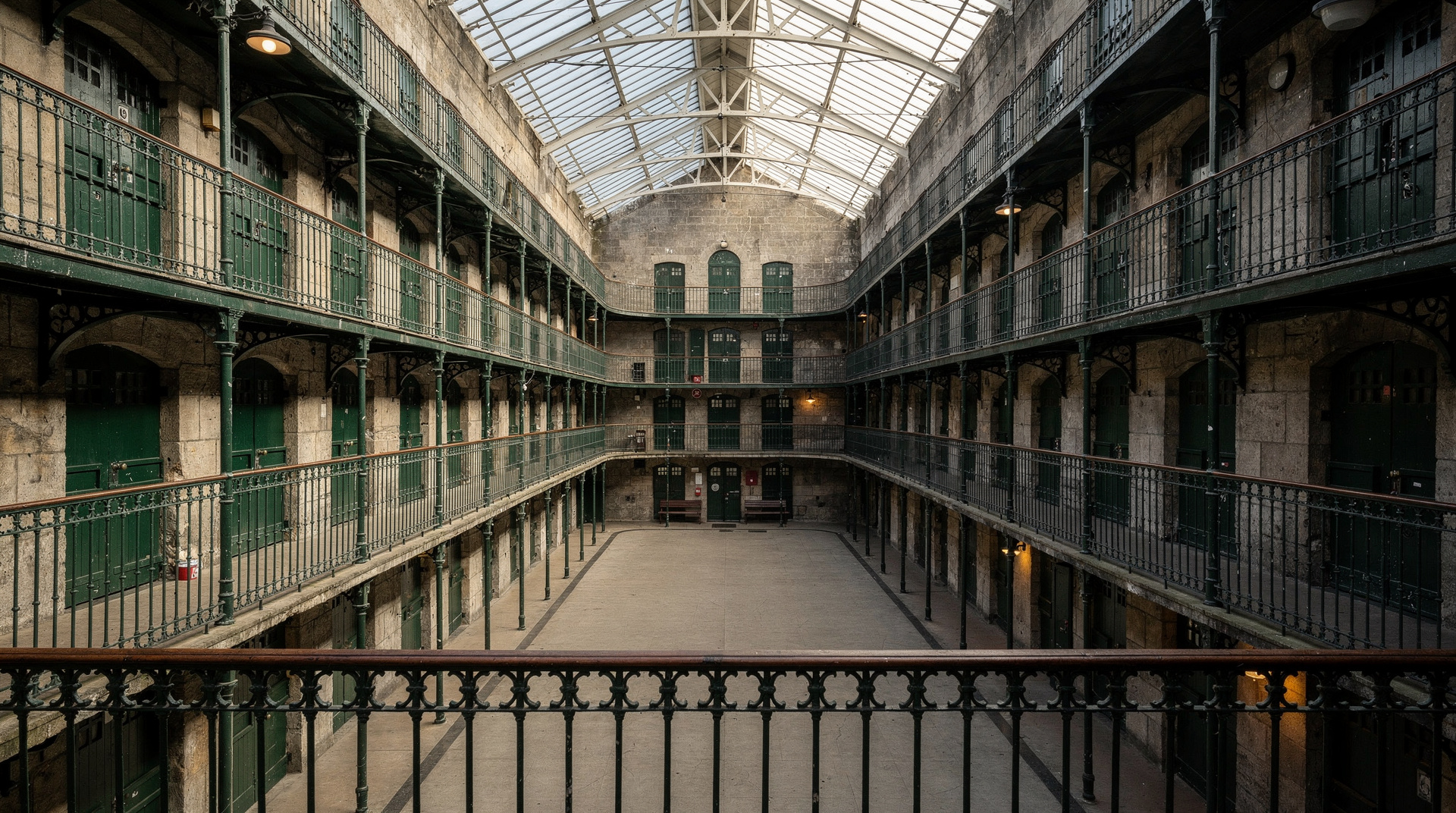
The Liberties is one of Dublin’s most historically interesting neighbourhoods and is currently undergoing a craft drinks renaissance. The Guinness Storehouse is a 10-minute walk north-west, as are the Teeling and Pearse Lyons distilleries on the Dublin whiskey trail. Kilmainham Gaol, where the leaders of the 1916 Rising were executed, is about 30 minutes’ walk west. A half-day covering St Patrick’s, the gardens, and then either the Guinness Storehouse or a distillery makes an efficient and varied programme.
For travelling with kids, note that the cathedral is interesting to older children with a history bent, but for younger ones, Dublinia at Christ Church is better suited — interactive, noisy, and Viking.
The self-guided Dublin walk route includes St Patrick’s as part of the medieval circuit. For a broader view of Dublin’s free cultural offer, the free museums guide lists what is available near the cathedral including the Chester Beatty Library at the castle, which is particularly strong on medieval manuscript culture and costs nothing.
After the cathedral, several genuinely local pubs sit within a short walk in the surrounding Liberties streets rather than the more tourist-facing options closer to Temple Bar — see best pubs in Dublin for the honest shortlist.
Where the cathedral fits in a longer trip
St Patrick’s works well as a fixed point around which to build a day. On a short stay, the one-day Dublin itinerary shows how to fit the main sights together, while the Dublin 3-day planning guide gives more breathing room for the cathedral and the Liberties. History-minded travellers will find the history buff itinerary a natural match, since the cathedral sits comfortably beside the castle, the museums, and the other medieval sites.
If this is your first visit to the city, the first-time Dublin guide gives the wider picture, and the Book of Kells guide covers another heavyweight historic site to pair with this one on a different morning. The National Museum of Ireland guide is a good companion for anyone who wants more context on the objects and eras the cathedral hints at.
Finally, if your visit falls near the national holiday, the St Patrick’s Day in Dublin guide explains how the city changes, and it is worth checking how that affects access to a cathedral that carries the saint’s name. Plan ahead, arrive with some curiosity, and the visit will repay the time you give it.
Frequently asked questions about St Patrick's Cathedral guide
How much does St Patrick's Cathedral cost in 2026?
Self-guided adult admission is approximately €8–€9, with reductions for seniors and students. Children under 12 with a paying adult are free. The guided fast-track option from tour operators typically costs €15–€25 depending on what else is included. The cathedral is closed to visitors during services — check the schedule before you go.What is the best time to visit St Patrick's Cathedral?
Weekday mornings between 09:30 and 11:30 are typically the least crowded. The cathedral closes to tourists during evensong and other services. The choir performs evensong on weekday afternoons and Sunday mornings; if you time your visit to catch a service (free to attend), the acoustic is extraordinary.Where is Jonathan Swift buried at St Patrick's?
Swift — the dean of St Patrick's from 1713 to 1745 and author of Gulliver's Travels — is buried in the cathedral floor near the south entrance. His self-composed Latin epitaph is inscribed on a black tablet on the south wall. W.B. Yeats described it as the finest epitaph in literature: 'He has gone where savage indignation can lacerate his heart no more.'What else is there to see inside the cathedral?
The Boyle Monument (1632) is the largest monument in any Irish church, and the figures include the young Robert Boyle who became the father of modern chemistry. The medieval 'Door of Reconciliation' tells one of Dublin's best stories. The Irish chivalric order of St Patrick displayed its heraldic banners here for centuries. The baptismal font is believed to date to the 5th century, when Patrick himself may have used it.Is St Patrick's Cathedral in a safe area?
The cathedral is in the Liberties, a neighbourhood that has gentrified significantly in recent years. The streets immediately around the cathedral are busy with tourists during the day. The area is entirely safe for visitors, and the cluster of distilleries and the Guinness Storehouse a 10-minute walk away make it a natural half-day zone.What is the difference between St Patrick's and Christ Church cathedrals?
Both are medieval Church of Ireland (Anglican) cathedrals in Dublin, which is unusual — most cities have only one. Christ Church is older (founded c.1030), smaller, and has a better crypt. St Patrick's is larger, holds more famous graves and monuments, and has the better choir. They are about 500 metres apart.
Top experiences
Bookable activities with verified prices and instant confirmation on GetYourGuide.

Dublin: St Patrick's Cathedral guided tour, fast-track ticket
- Free cancellation
- Instant confirmation

Dublin: St Patrick's Cathedral self-guided admission
- Free cancellation
- Instant confirmation

Dublin: skip-the-line St Patrick's Cathedral & gardens tour
- Free cancellation
- Instant confirmation

Dublin: skip-the-line St Patrick's Cathedral and city tour
- Free cancellation
- Instant confirmation