Dublin Castle guide
Dublin: private tour with skip-the-line Dublin Castle tickets
- Free cancellation
- Instant confirmation
Is Dublin Castle worth visiting?
Yes, for the State Apartments and medieval undercroft — but only on a guided tour. The self-guided option is thin. A guided tour takes you through lavishly restored Georgian rooms, a Viking-era excavation under the castle, and the Chapel Royal. Allow 1.5 hours and book in advance to guarantee your slot.
Seven centuries of power in the middle of the city
Dublin Castle is not the romantic, turreted stronghold that the word “castle” might suggest. It is a large, mostly 18th-century building on a medieval footprint, and for 718 years it was the administrative and military nerve centre of British rule over Ireland. That history — the trials, the imprisonments, the uprisings put down and finally the 1922 handover to Michael Collins — gives it a weight that purely decorative castles lack.
| Where | Dame Street, 5 min walk from Temple Bar |
| Cost | Around €14 adults, €6 children; grounds & Chester Beatty free |
| Time needed | 1.5–2 hours including Chester Beatty |
| Getting there | Walk from Trinity College or Temple Bar |
| Booking | Recommended in summer and on bank holidays |
Today it serves as a conference centre, an events venue for EU Presidency summits and presidential inaugurations, and a tourist attraction. Most of the complex is visitable, and the mix of free-entry areas and paid guided sections makes it accessible at almost any budget.
What you can see for free
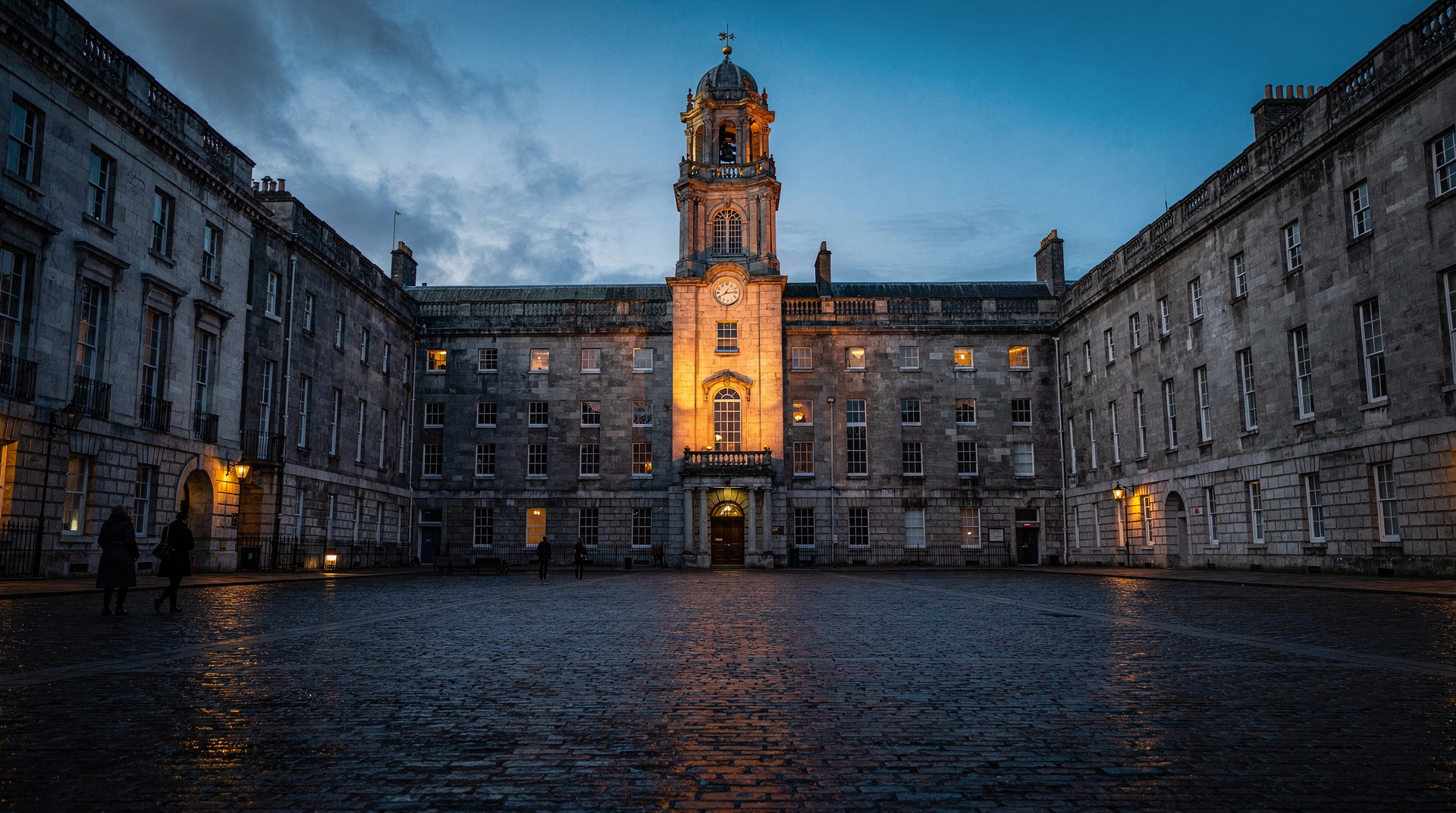
The cobbled Upper Yard is open to the public without a ticket. This is the historic heart of the castle, surrounded by Georgian ranges including the State Apartments block, the Chapel Royal, and the Bedford Tower. The figure of Justice on top of the Record Tower faces inward toward the yard rather than outward to the city — a detail Dubliners noted with some irony during the years of colonial administration.
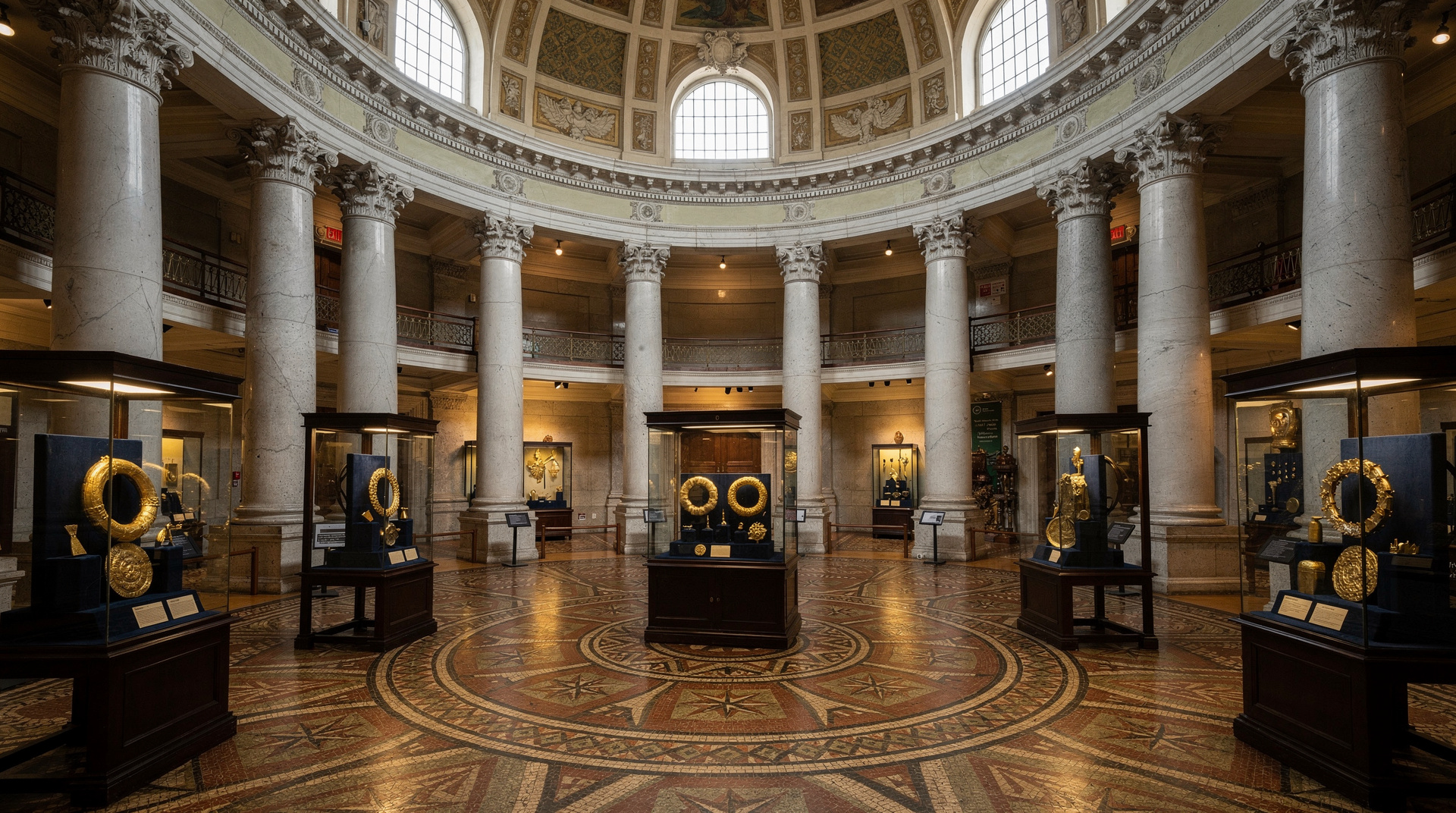
In the south-western corner of the complex, the Chester Beatty Library is housed in the Clock Tower building and is completely free. This is genuinely world-class: the collection includes Egyptian papyri (some predating the birth of Christ), Islamic Korans, Chinese jade books, Japanese woodblock prints, and European illuminated manuscripts. Allow at least an hour. It consistently ranks among the top museums in Europe and is almost always less crowded than the paid areas of the castle. If you are visiting the Book of Kells across the road at Trinity College, add the Chester Beatty the same morning.
The castle gardens behind the Garda offices are a quiet green space with architectural fragments and a pleasant café. Free to enter.
What requires a paid guided tour
The State Apartments are the main draw for the ticket price. These Georgian rooms — St Patrick’s Hall, the Throne Room, the Picture Gallery, the Wedgwood Room — were restored to extraordinary richness following a fire in 1941. St Patrick’s Hall in particular, with its painted ceiling depicting the history of Ireland and its British heraldic banners, is the grandest interior in Dublin. Since 1938 it has been used for the inauguration of Irish presidents.
The Underground Excavations (Undercroft) are accessed during the same guided tour. Below the castle’s South Courtyard, archaeologists uncovered a stretch of the original 13th-century Norman castle walls, portions of the Viking-era defensive ditch, and a section of the River Poddle, which once fed the castle’s moat. Standing at ground level from the 13th century while a Georgian palace rises above you is an evocative piece of living history.
The Chapel Royal (now called the Church of the Most Holy Trinity) is included in the guided tour and also sometimes open independently. Its plasterwork ceiling and carved oak gallery are among the finest Gothic Revival interiors in Ireland.
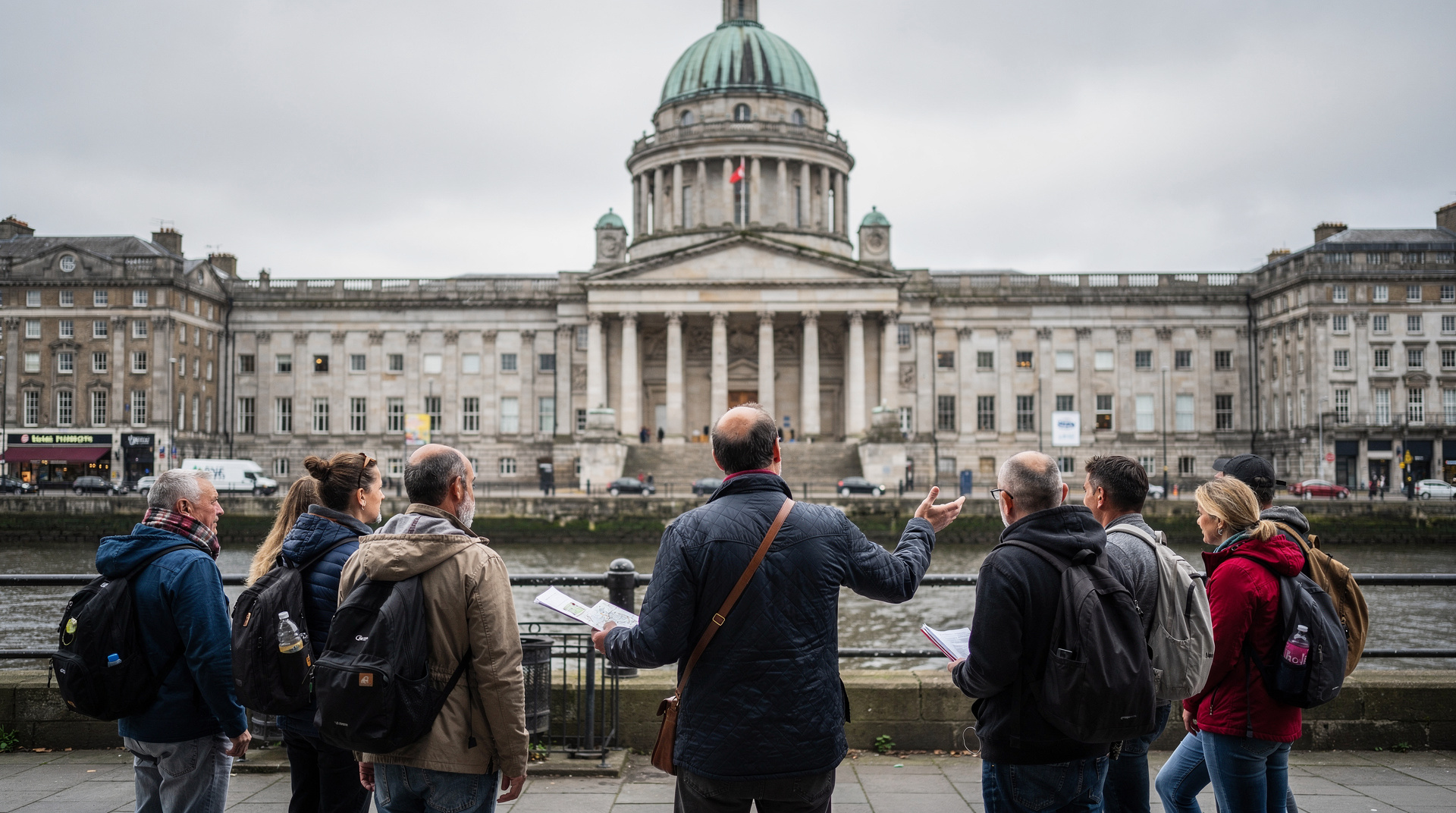
Guided tours run approximately every 20–30 minutes during opening hours. The private skip-the-line Dublin Castle tour is worth considering on busy days and allows you to move at your own pace with a dedicated guide.
Booking and practical details
Dublin Castle is on Dame Street, a five-minute walk from the Temple Bar area. Opening hours for guided tours are approximately 09:00–17:45 Monday to Sunday, with last admission around 17:15. The castle is closed on some state occasions — check the official site before visiting, as EU Presidency weeks can close sections without much notice.
Adult guided tour tickets run around €14; children’s tickets around €6. Under-12s accompanied by an adult are typically free. Online booking through the OPW (Office of Public Works) is marginally cheaper and guarantees your slot.
A popular combination is the fast-track Book of Kells ticket with Dublin Castle guided tour, which pairs the two most historically significant interiors in the city centre into a coherent half-day. Start at Trinity with the Long Room and manuscript, then walk west to the castle for the afternoon tour. The Book of Kells, Dublin Castle and Christ Church tour adds the medieval cathedral if you want the full medieval circuit in a single day.
For history enthusiasts, the 1916 Easter Rising guide and the national museum guide pair naturally with a castle visit to build a picture of Irish history from the Normans through to independence.
Connecting the medieval core
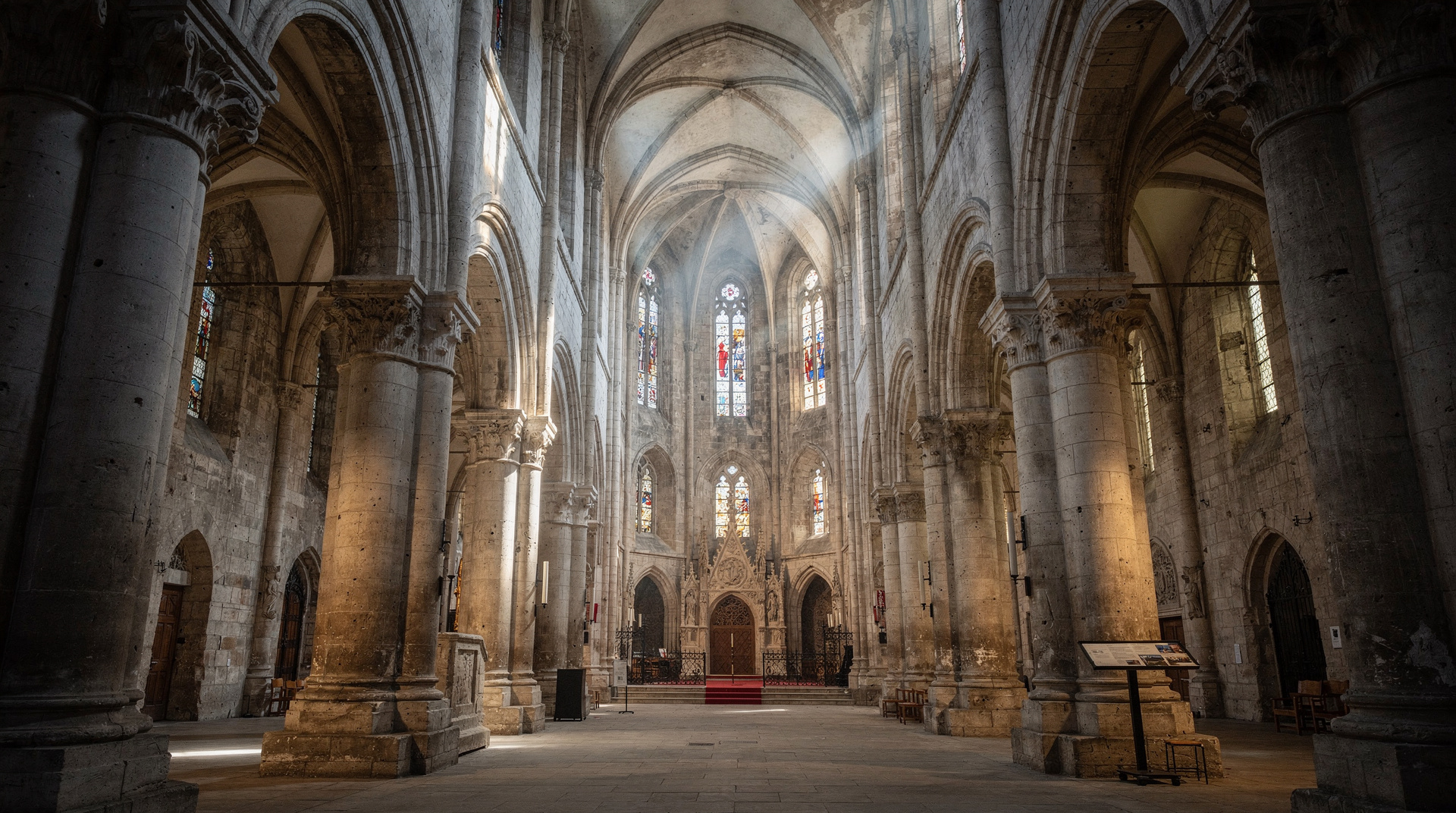
Dublin Castle sits at the top of Dublin’s surviving medieval area. Immediately to the south-west is Christ Church Cathedral, built by the Normans in the 12th century. A few hundred metres away is St Patrick’s Cathedral, the national cathedral. The Dublinia Viking and medieval experience is connected to Christ Church by a bridge and makes an excellent companion for the underground excavations you have just seen at the castle.
This cluster — castle, two cathedrals, and Dublinia — is the most concentrated medieval circuit in Dublin and works well as a full day. Use the hop-on hop-off bus to move between sites if your feet get tired, though everything is walkable.
The State Apartments in more detail
Beyond St Patrick’s Hall, the tour typically moves through the Throne Room (site of the original throne used by British viceroys, and later a ceremonial space for state occasions), the Wedgwood Room (named for its blue-and-white Wedgwood-style plasterwork), and the Portrait Gallery, lined with images of the viceroys and administrators who ran Ireland from this building.
Guides typically spend extra time on St Patrick’s Hall itself, since its painted ceiling — depicting Henry II receiving the submission of Irish chieftains, St Patrick converting the Irish, and George III’s coronation — sums up the layered, often uncomfortable history the whole complex represents. Presidential inaugurations still take place here, which gives the room a living political role well beyond its museum function.
Best time to visit
Mornings, shortly after opening at 09:00, are the quietest time for the guided tour, since tour groups and cruise-ship day visitors tend to arrive from mid-morning onward. The Chester Beatty Library stays comparatively uncrowded even at peak times, since many visitors skip it in favour of the paid castle sections — which makes it a good choice for a slower midday break between tours. If you’re planning your visit around Dublin’s broader seasonal patterns, the best time to visit Dublin guide covers how crowds and weather shift across the year.
Who should skip the guided tour
Visitors on a very tight one-day itinerary who have already committed to the Book of Kells and Christ Church Cathedral in the same day may find a third full guided interior is too much. In that case, walk the free Upper Yard, spend an hour in the Chester Beatty Library, and save the State Apartments for a return visit — the free areas alone justify a shorter stop. For a longer stay with room for all three, see the 3-day Dublin planning guide for how to sequence the medieval core across your trip.
How to shape your visit around the guided tour
The guided tour is the fixed point of the visit, so build everything else around it. Arrive a little before your slot, so that you are not rushing through the gate while the group is already gathering in the yard. Once the tour ends, you are free to wander: the Upper Yard, the gardens and the Chester Beatty Library all sit within the same complex, and nothing forces you to leave in a hurry. Many visitors treat the tour as the first half of the visit and the library as the second, which gives the day a natural rhythm of guided history followed by quiet browsing.
If you are visiting with children, the underground section tends to hold their attention better than the grand rooms, because it feels more like exploring than looking. For a wider look at family-friendly options in the city, the Dublin with kids guide and the rainy day guide for kids will help you decide how the castle fits alongside livelier stops. Guides on the tour are used to mixed groups and are usually happy to answer questions, so it is worth asking about anything that catches your eye, from a carved detail to a name on a portrait.
Reading the building: what you are actually looking at
It helps to remember that Dublin Castle is a layered site rather than a single building. The medieval origins sit underneath, the Georgian state rooms were built on top as the seat of the viceroys, and later restoration work brought the interiors back to the richness you see today. Each layer tells you something different about who held power in Dublin and how they wanted to be seen. The Norman walls speak of defence and conquest, while the painted ceilings and heraldic banners speak of ceremony and political theatre.
Pay attention to the contrast between the two. In the undercroft you stand among rough stone and archaeological remains; a short walk later you are among gilded plasterwork and chandeliers. That jump is the best summary of the castle’s story, and it is why the guided tour works better than wandering alone. For more on the early city that the excavations hint at, the Viking and medieval Dublin guide gives useful background, and the Irish revolution history walk follows the story forward to the years when British rule in this building came to an end.
Pairing the castle with the rest of the neighbourhood
Because the castle sits so close to the centre, it is easy to slot into a wider day on foot. The self-guided Dublin walk passes through this part of the city and can serve as a free way to connect the main sights. If you prefer to have a guide for the whole route, the best Dublin walking tours guide compares the options. Those drawn to the stories behind the stones may also enjoy the Dublin ghost tours guide for an evening activity once the castle has closed for the day.
For lunch or a coffee after your visit, the streets around the castle offer plenty of choice. The Dublin coffee culture guide and the best restaurants in Dublin guide are good places to start, and if you would rather stay on a budget, the Dublin on a budget guide explains how to enjoy the city without overspending. The nearby Georgian Dublin area is also worth a stroll if the castle’s Georgian interiors have left you curious about the architecture outside.
Planning it into a longer trip
The castle works equally well as part of a short first visit or a deeper history-focused stay. First-time visitors can see how it fits in the first-time guide to Dublin, while those with only a day can look at the one-day Dublin itinerary. Travellers with an interest in the past will find that the history buff three-day itinerary places the castle alongside the other major historical sites in a sensible order. If you are still deciding how long to stay overall, the how many days in Dublin guide helps you weigh it up.
Accessibility is worth thinking about before you go, since older buildings do not always suit every visitor. The Dublin accessibility guide covers general advice for getting around the city, and it is a good idea to check the official castle site or contact the visitor team before your visit if you have specific needs. Likewise, if the weather turns, the castle is a solid wet-weather choice, and the rainy day Dublin guide lists other indoor options to combine with it.
Making the most of the free areas
Even if you decide against the guided tour, the free parts of the complex deliver real value. The Upper Yard lets you take in the architecture and the atmosphere without spending anything, and the Chester Beatty Library offers enough to fill a good portion of a morning. Pair these with a wander through the nearby medieval streets and you have a satisfying low-cost outing. The free museums in Dublin guide lists other no-cost options that sit well alongside the castle, so you can build a day of sightseeing that costs very little while still covering the city’s most important stories.
Frequently asked questions about Dublin Castle guide
How much does Dublin Castle cost in 2026?
Guided tours cost approximately €14 for adults and €6 for children. The grounds, the castle gardens, and the Chester Beatty Library within the complex are all free to enter. A combo ticket pairing the castle with the Book of Kells is available through tour operators and typically saves money over buying both separately.How long should I spend at Dublin Castle?
A guided tour runs approximately 50–65 minutes. Add 20–30 minutes if you want to look around the Chapel Royal and castle gardens independently afterwards. Allow 1.5 to 2 hours total including queuing and orientation.Do I need to book Dublin Castle in advance?
Booking is strongly recommended during summer (June–August) and on bank holiday weekends. Guided tours have a fixed capacity and sell out on busy days. Walk-in access to the grounds and Chester Beatty Library is always free.Is the Chester Beatty Library at Dublin Castle worth visiting?
Absolutely — and it is free. This world-class collection of manuscripts, papyri, and decorative arts from Asia, the Middle East, and Europe was bequeathed to Ireland by American mining magnate Alfred Chester Beatty. It regularly wins Europe's most-visited museum awards and is easily the best free attraction in Dublin.What was Dublin Castle used for historically?
The castle was the seat of British rule in Ireland from 1204 until 1922, when Michael Collins took possession from the departing British administration. It housed the court of the Lord Lieutenant, held political prisoners (including Wolfe Tone), and was the centre of the system that ran Ireland for 700 years. Today it is used for EU Presidency meetings and presidential inaugurations.Can you visit Dublin Castle for free?
The cobbled Upper Yard, the castle gardens, and the Chester Beatty Library are all free. Entry to the State Apartments, the Underground (Viking and Norman excavations), and the Chapel Royal requires a paid tour ticket.
Top experiences
Bookable activities with verified prices and instant confirmation on GetYourGuide.

Dublin: private tour with skip-the-line Dublin Castle tickets
- Free cancellation
- Instant confirmation

Dublin: fast-track Book of Kells ticket & Dublin Castle tour
- Free cancellation
- Instant confirmation

Dublin: Book of Kells, Dublin Castle and Christ Church tour
- Free cancellation
- Instant confirmation

Dublin: historic guided walking tour & Dublin Castle ticket
- Free cancellation
- Instant confirmation