Monasterboice and Mellifont
Monasterboice has Ireland's finest high crosses; Mellifont was the country's first Cistercian abbey. Both are in County Louth, 55 km from Dublin.
Ireland: Newgrange, Monasterboice and Hill of Tara day tour
Duration: 8h
- Free cancellation
- Instant confirmation
Quick facts
- Distance from Dublin
- 55 km north via M1 to Drogheda
- Entry
- Monasterboice: free. Mellifont: small fee (Heritage Ireland)
- By car
- 55–65 min from Dublin city centre
- Ideal visit
- 2–3 h for both; best combined with Newgrange day
- Note
- Monasterboice closes at dusk; no lights on site
Ireland’s finest early Christian art, 55 kilometres from Dublin
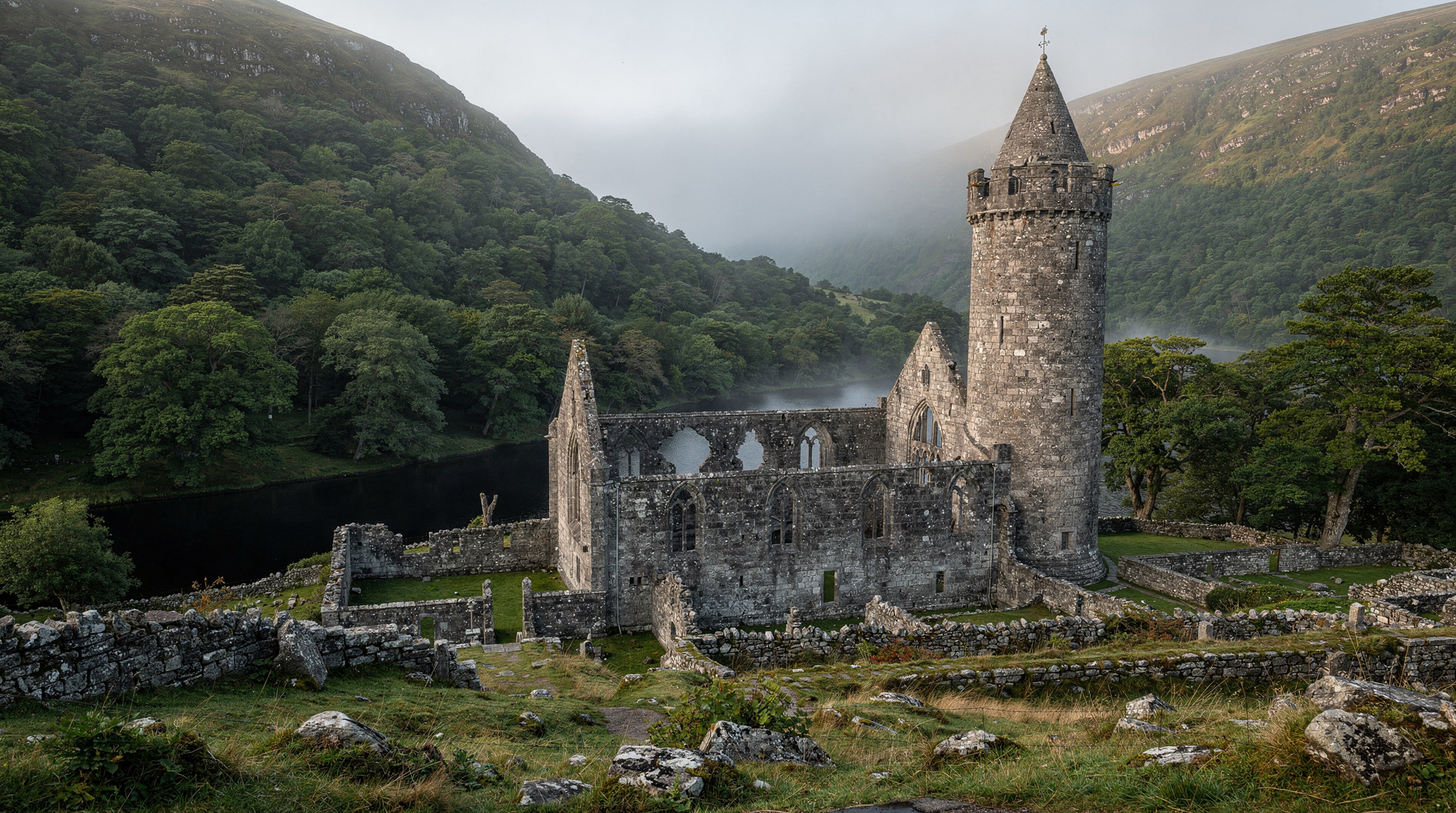
Monasterboice has the most remarkable collection of early Christian high crosses in Ireland — and that is a field with significant competition. The monastery was founded by St Buite in the 5th century and is now in ruins except for the two complete high crosses, a third fragmentary one, a round tower, and two early grave slabs. It is quiet, freely accessible, and largely unknown outside of specialist heritage tourism circuits. The nearest comparable site — Glendalough — draws coachloads daily. Monasterboice, 55 kilometres north of Dublin in County Louth, might have one other visitor when you arrive.
| Where | Co. Louth, near Drogheda, 55 km north of Dublin |
| Cost | Monasterboice free; Mellifont around €5 |
| Time needed | 2–3 hours for both sites |
| Getting there | Car (55–65 min) or tour; no direct public transport |
| Best time | April to October; arrive with at least 90 minutes of daylight |
Mellifont Abbey, 6 kilometres away, was Ireland’s first Cistercian monastery, founded in 1142 under the influence of St Malachy and the Cistercian reform movement from France. Its ruins give a clear picture of how Cistercian architecture arrived in Ireland — austere, geometrically rational, utterly different from the native Romanesque that preceded it. The octagonal lavabo, where monks washed their hands before meals, survives as the most complete Cistercian washing house in the British Isles.
Getting there from Dublin
Both sites are reached via the M1 motorway north from Dublin and are within 6 kilometres of each other near Drogheda. Monasterboice is signposted from the N1 north of Drogheda; Mellifont is accessed from the R168 west of the town. Allow 55–70 minutes from central Dublin by car.
There is no direct public transport. The nearest practical approach without a car is to take a train or bus to Drogheda (under an hour from Dublin on the Belfast line or by Bus Eireann) and then take a taxi for the remaining 8–10 kilometres.
Most visitors combine Monasterboice and Mellifont as additions to a Newgrange day in the Boyne Valley. The Newgrange, Monasterboice and Hill of Tara day tour is the most efficient organised option and covers all three in a structured itinerary that handles the transport between sites that would otherwise require multiple short car journeys.
Muiredach’s Cross at Monasterboice
The two great crosses at Monasterboice are designated Muiredach’s Cross and the West Cross (also called the Tall Cross). Muiredach’s Cross is the more celebrated of the two — a 10th-century masterpiece of sandstone carving, approximately 5.5 metres tall, covered on all four faces with biblical scenes executed with a precision and narrative clarity that puts it among the finest Romanesque sculpture in Europe. The scenes are legible if you know the iconography: the Last Judgment on the west face, the Crucifixion on the east, Old Testament scenes on the panels below. An inscription at the base asks for prayers for Muiredach, who had the cross made.
The West Cross is taller (6.5 metres, the tallest in Ireland) but less finely carved; many of its panels have weathered more severely. The round tower, its cap missing after a 12th-century attack, stands intact at about 28 metres and is one of the best-preserved in Ireland. You can walk right up to all of these with no barrier and no time limit. The site closes at dusk and there are no lights — plan your visit to arrive with at least 90 minutes of daylight.
Mellifont Abbey
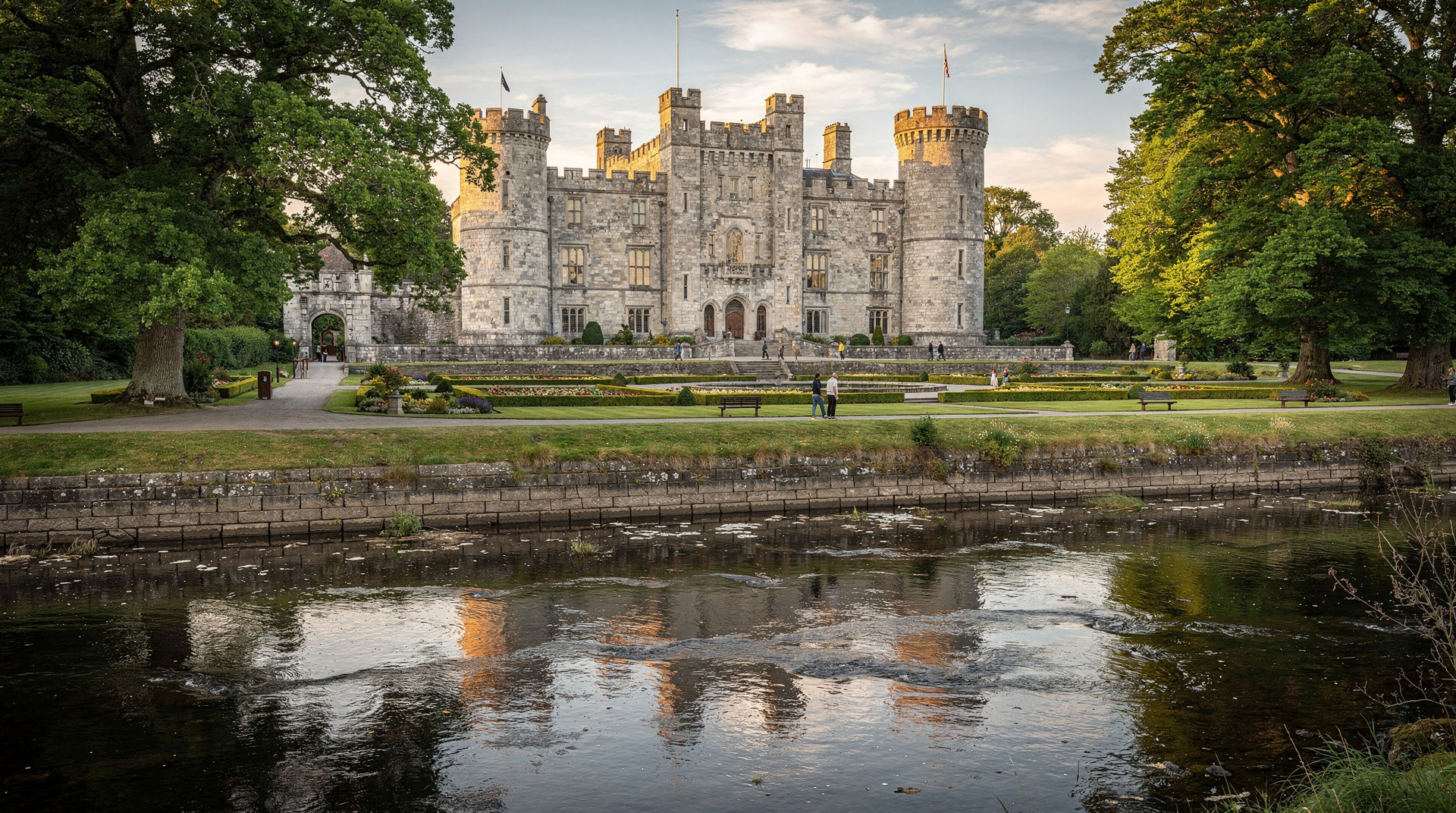
Mellifont was dissolved in 1539 and subsequently used as a private house before falling into ruin. The Cistercians chose the Mattock River valley here for the same reasons they chose every site: remoteness from the world, water for the mill and fish ponds, good agricultural land. The ruins that remain include the early Gothic chapter house with its round-headed windows, the lavabo (a 12-sided fountain house dating to around 1200), and sections of the cloister arcade.
The Heritage Ireland visitor centre on site provides context for the Cistercian order’s arrival in Ireland and explains the reform movement that brought it from Burgundy. Admission is modest, around €5 for adults. The site is significantly less visited than the ruins of Hore Abbey at Rock of Cashel and the landscape quality — the river, the water meadow, the hedgerow oaks — is particularly good.
Reading the crosses panel by panel
A high cross is a book in stone, and it rewards slow looking. Start at the base of Muiredach’s Cross and work upward, face by face, rather than circling it once and moving on. The carvers arranged the scenes so that a visitor walking around the monument meets the story of salvation in sequence: creation and fall on one side, judgment and resurrection on the other. If you have read a little about the iconography beforehand, the panels stop being abstract figures and become recognisable scenes with a clear narrative logic.
Light changes everything here. In flat, overcast conditions the relief can look shallow, while a low sun from the side throws every fold of cloth and every raised hand into sharp relief. If you have time to spare, walk around the cross once, wait, and look again when the light shifts. The same applies to the West Cross, where the weathering is heavier and a raking light helps the surviving panels emerge.
Take a moment, too, with the grave slabs and the fragmentary third cross. They are easy to overlook beside the two great monuments, but they show how much more once stood on the site, and they give a sense of a working monastic community rather than a single showpiece. The round tower completes the picture: a bell tower, a lookout and a refuge, standing as it has for centuries over a churchyard that is still quiet and still in use.
If you enjoyed the monastic landscape at Glendalough, you will recognise the same ingredients here — cross, tower, enclosure — but with far fewer people. For comparison with a very different kind of sacred site, Newgrange belongs to a much earlier world, and seeing both in one day makes the long span of Irish history tangible.
Exploring Mellifont at an easy pace
Mellifont rewards a slower, wandering approach rather than a checklist. The ruins are scattered across open grass beside the river, so there is no single route you must follow. Begin at the visitor centre for the background on the Cistercian reform, then walk out to the chapter house and the lavabo, and finish along the cloister remains with the water meadow beyond.
The Cistercian ideal explains what you see. These monks wanted plain stone, rational geometry and a setting far from distraction, and the site still reads that way. Stand in the footprint of the church and try to imagine it roofed and filled with the sound of the daily offices. Then compare the restraint of the stonework with the exuberant carving you saw at Monasterboice: two very different expressions of Irish Christianity, made within a couple of centuries of each other and only a short drive apart.
Mellifont is a good place to slow down after the crosses. The grounds are gentle, the setting is green, and the absence of crowds means you can sit by the river without feeling you are in anyone’s way. For readers who like their ruins with more drama, Rock of Cashel offers a hilltop contrast, while Trim Castle shows the secular side of the medieval Boyne Valley.
Drogheda
The town of Drogheda, a few kilometres east, is worth 30–45 minutes if you are in the area. It is not a tourist town — it is an Irish provincial city with genuine commercial life — but it contains St Peter’s Church (Catholic), which holds the preserved head of St Oliver Plunkett (executed 1681), and the Millmount Fort, a Martello tower above a museum of Drogheda’s complex history. The sack of Drogheda by Cromwell’s forces in 1649, with enormous civilian casualties, remains one of the most contested events in Irish history.
Combining Monasterboice and Mellifont in a Boyne Valley day
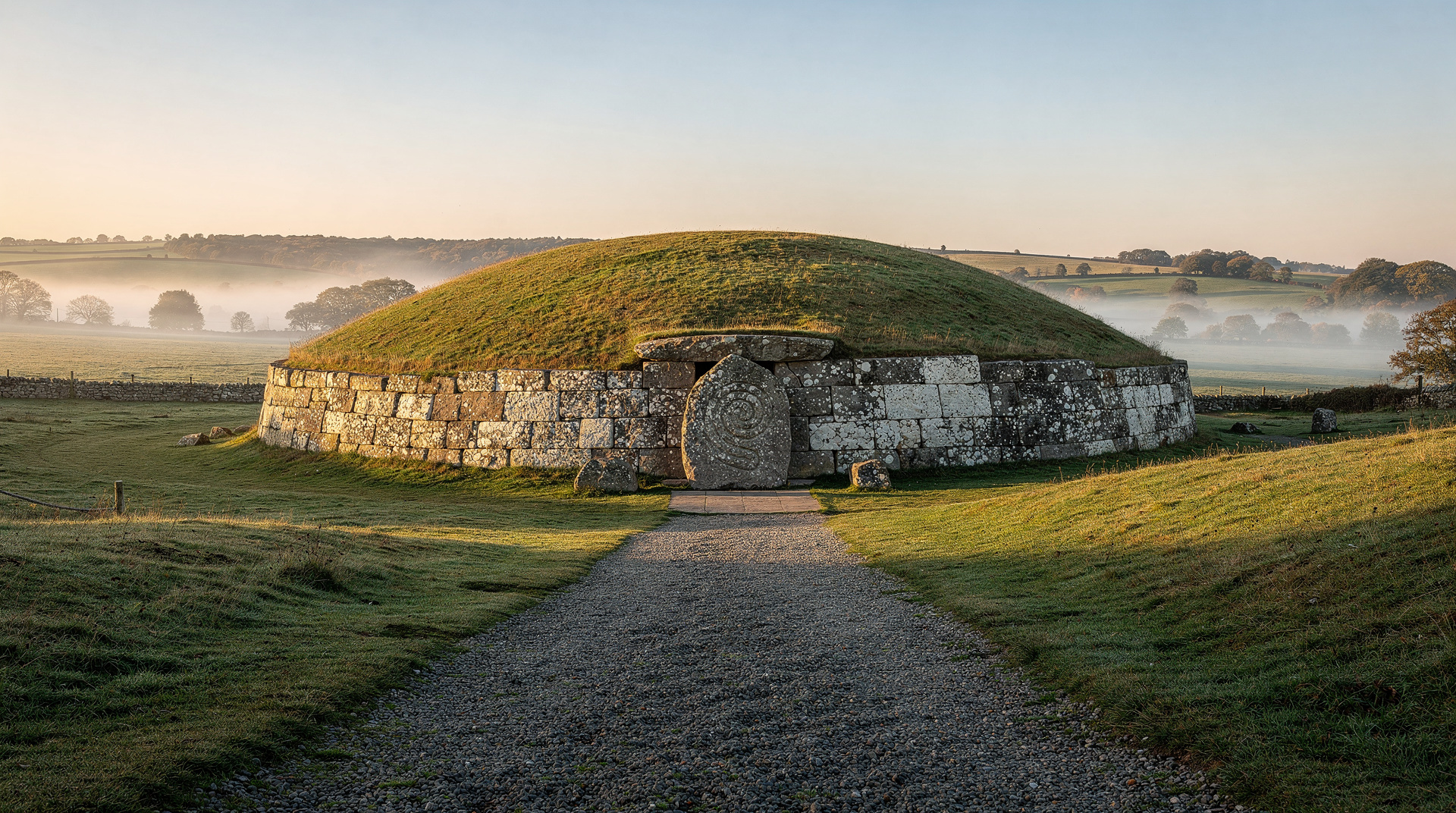
The logical sequence for a Boyne Valley day with these sites is: Newgrange (morning, booked in advance) — Monasterboice and Mellifont (afternoon) — with Hill of Tara or Trim Castle as an alternative afternoon option depending on your direction. Monasterboice and Mellifont together take about 2.5–3 hours at a reasonable pace; this fits well after a morning at the passage tombs.
The Boyne Valley day trip guide has full timing and routing suggestions.
If you would rather not drive, a guided tour removes the logistics. Travellers who want a broader sweep of the valley can choose a Celtic-themed day through the valley’s ancient sites, while those who prioritise the passage tomb itself may prefer a Boyne Valley tour that includes entry to Newgrange and Brú na Bóinne. Check each itinerary before booking to confirm which stops it covers, since the high crosses are not part of every route.
When to visit
The site is freely accessible year-round. Spring and autumn are the best times for photography — the soft light and the absence of full summer foliage shows the carvings more clearly. Summer is pleasant but the midday light can be harsh and flatten the relief of the carved panels. Avoid visiting within an hour of dusk in winter, as the site gates close early and the lane leading to Monasterboice is unlit.
Monasterboice and Mellifont compared with nearby sites
| Site | Best for | Crowds | Time needed |
|---|---|---|---|
| Monasterboice | High crosses, early Christian carving, solitude | Very low | 1–1.5 hours |
| Mellifont Abbey | Cistercian architecture, riverside setting | Low | 1–1.5 hours |
| Newgrange | Neolithic passage tomb, guaranteed guided access | High; timed tickets required | 2–3 hours |
| Hill of Tara | Mythology and open landscape | Low | 2–3 hours |
Monasterboice and Mellifont are the quietest of the Boyne Valley sites, which makes them the natural afternoon counterweight to a booked morning slot at Newgrange. If you are visiting Dublin and building out a wider Ireland itinerary, the best day trips from Dublin guide has the full range of Boyne Valley combinations, and the Dublin history buff 3-day itinerary works these sites into a structured multi-day plan alongside Kilmainham and the city’s own historic quarter.
Pacing the day and what to bring
The sites are simple, but a little preparation improves the visit. Sturdy shoes are worth having, since the ground at both sites is grass and can be wet underfoot after rain. A waterproof layer is sensible in any season, because Irish weather changes quickly and there is little shelter at Monasterboice. If you plan to photograph the carvings, bring a lens that can handle both wide views of the tower and close detail of the panels, and consider carrying a small cloth to keep gear dry.
Because there is no entry barrier at Monasterboice, you control the pace entirely. Some visitors spend a short time and leave; others stay for a long while with a notebook or a camera. Both approaches are fine. The advice that matters most is to put Monasterboice earlier in your day, while the light is good and there is no pressure from the closing hour, and to treat Mellifont as the relaxed second stop.
If you are travelling with children, the open spaces and the tower hold their attention better than many indoor museums, though the carvings themselves will appeal mainly to older children who enjoy stories. For more ideas on keeping a family trip lively, the family day trips from Dublin guide lists other outings that work well for mixed ages. If the weather turns against you, the rainy day in Dublin guide is a useful backup plan for the way back into the city.
Is this trip right for you?
This is a destination for travellers who like their history quiet. If your idea of a good day involves queues, gift shops and a guide with a flag, it will feel almost too still. If you would rather stand in front of a thousand-year-old carving with nobody at your shoulder, it is hard to beat.
It also suits people who are building a wider trip. Visitors who have already seen the city sights in the Dublin first-time guide often want one day that feels different, and the Boyne Valley delivers that. Those without a car can lean on the day trips without a car guide to see how organised options work, and anyone still deciding between destinations can compare choices in the best Dublin day trip guide.
For a longer stay, the Dublin 4 days with a day trip itinerary slots a Boyne Valley outing in without rushing the city, and the Dublin 2 days itinerary is a reminder of what you may want to see before you head north. Enthusiasts of the story behind these places can read the personal account in Newgrange, older than the pyramids for a sense of the atmosphere in this part of the country.
Driving notes
The M1 north from Dublin is a straightforward motorway drive, but the final approach to both sites is on narrower rural roads, and Monasterboice’s access lane in particular is single-track with passing bays. If you are new to driving in Ireland, the driving in Ireland from Dublin guide covers motorway tolls, rural road etiquette and rental car practicalities before you set out.
Top experiences
Bookable activities with verified prices and instant confirmation on GetYourGuide.

Ireland: Newgrange, Monasterboice and Hill of Tara day tour
- Free cancellation
- Instant confirmation

From Dublin: Boyne Valley, Celtic Ireland & Slane Castle tour
- Free cancellation
- Instant confirmation

From Dublin: Celtic Boyne Valley and ancient sites tour
- Free cancellation
- Instant confirmation

Dublin: Boyne Valley with Newgrange and Brú na Bóinne entry
- Free cancellation
- Instant confirmation