Hill of Tara
The Hill of Tara was Ireland's sacred royal site for over 4,000 years. It is 35 km north of Dublin and takes an hour to explore properly.
From Dublin: Celtic Boyne Valley and ancient sites tour
Duration: 10h
- Free cancellation
- Instant confirmation
Quick facts
- Distance from Dublin
- 35 km north via M3
- Entry
- Free; small charge for the interpretive centre (seasonal)
- By car
- 40 min from Dublin city centre
- By bus
- Bus Eireann to Navan, then taxi — impractical without a car
- Ideal visit
- 2–3 hours on site; combine with Newgrange or Trim Castle
The most mythologised hill in Ireland
The Hill of Tara is not very high — 154 metres above sea level — and in purely physical terms it is a gentle grassy mound with earthworks in County Meath. But in the Irish imagination it is enormous. This was the seat of the High Kings of Ireland, the ritual centre of the country from at least the Bronze Age through to the early medieval period, and the site of a passage tomb dating to the Neolithic. A 4,000-year accumulation of Irish history sits under an unremarkable field of grass, and the contrast between the modesty of the physical landscape and the weight of what happened here is part of what makes Tara worth the journey.
| Where | Co. Meath, 35 km north of Dublin via the M3 |
| Cost | Free to walk the hill; small charge for the seasonal interpretive centre |
| Time needed | 2–3 hours on site |
| Getting there | Car (40 min) or organised tour — no practical public transport |
| Best time | April to October, weekday mornings for fewer visitors |
The hill overlooks the Boyne Valley and on a clear day gives views across much of Leinster — the early kings were drawn to this combination of strategic visibility and symbolic elevation. The inauguration stone of the High Kings, the Lia Fáil, still stands on the summit mound. It is a worn standing stone about 1.5 metres tall, much less impressive in person than in legend, which is the honest truth of many sacred objects.
Getting there from Dublin
The Hill of Tara sits between Dublin and Navan, easily reached by car via the M3 motorway in 35–45 minutes. The M3 passes close to the site; follow signs from the Kilcock junction. Parking is free at the site entrance. There is no practical public transport connection — buses run to Navan but the hill is 8 kilometres off the main route, requiring a taxi or a long walk.
Most visitors combine Tara with Newgrange on the same day, and the most efficient way to do this is by organised tour. The Celtic Boyne Valley and ancient sites tour departs Dublin and covers both Tara and the Boyne Valley monuments in a single 10-hour day, with an experienced guide who provides the mythological and historical context that the sites badly need without it.
What you will find on the hill
The main monuments on the hill are:
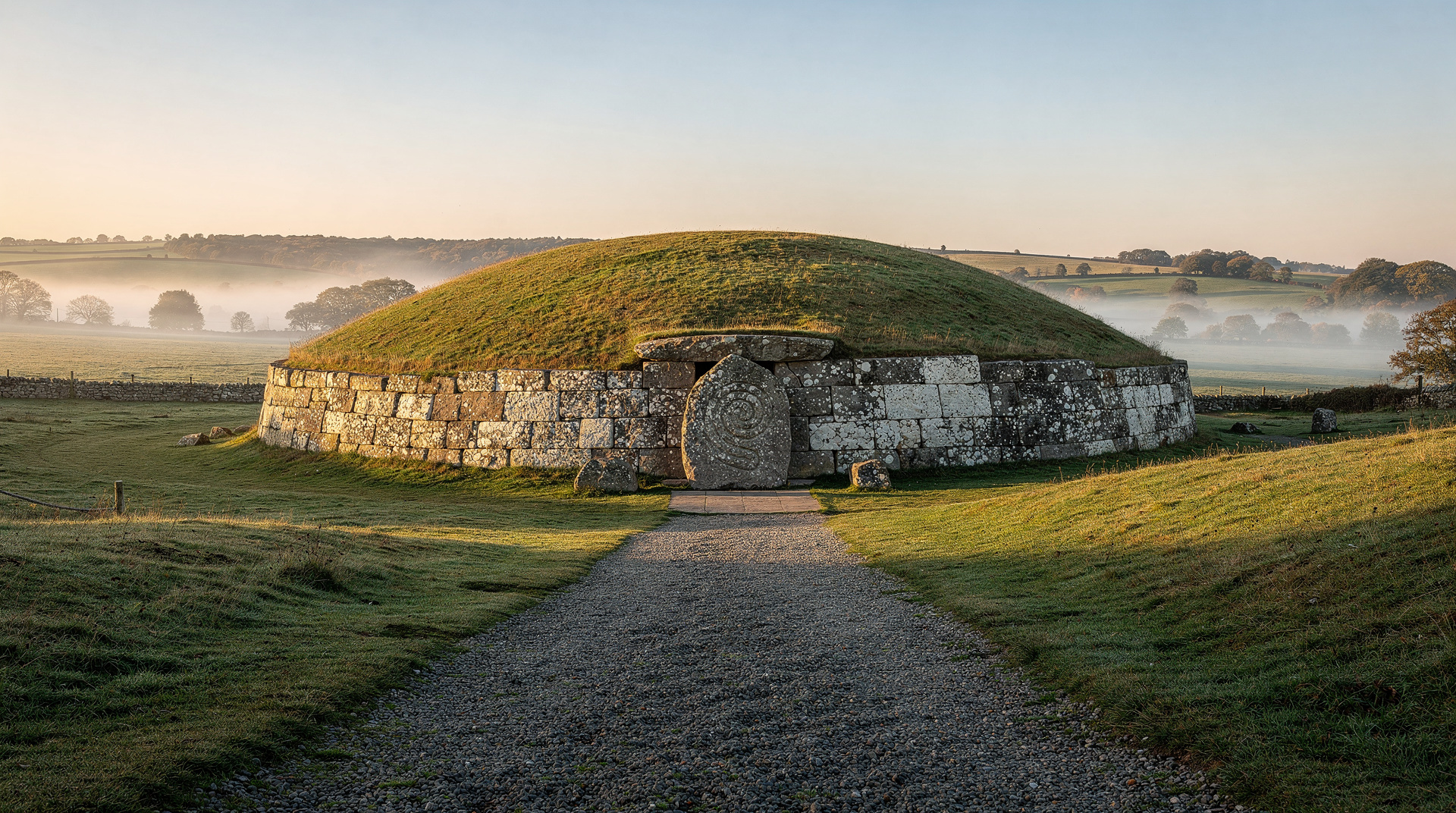
The Mound of the Hostages — a small passage tomb dating to approximately 3,400 BC, predating Newgrange. It is generally closed to entry but the exterior mound is visible. Excavations in the 1950s found over 200 burials and thousands of artefacts, many of which are now in the National Museum in Dublin.
Ráith na Ríog (the Royal Enclosure) — a large oval earthwork enclosing the Forradh and the Mound of the Synods, where the Lia Fáil standing stone is located. This is where you will spend most of your time.
The Banquet Hall — a long rectangular earthwork enclosure north of the main mound, which medieval sources describe as a great feasting hall. Modern archaeology suggests it may have been a ceremonial processional route rather than a structure, but the scale of the earthwork — 200 metres long — is still impressive when you walk it.
The interpretive centre
A small interpretive centre in the church at the base of the hill operates seasonally (roughly Easter to October) and provides context through exhibits and an introductory film. Admission is small. If you are visiting outside the season or the centre is closed, the site is entirely open access but you lose the interpretive layer — this is where a guided tour pays its way, as a guide provides the narrative that the site itself cannot.
Tara in mythology and history
In Irish mythology, Tara was the seat of the Fir Bolg and later the Tuatha Dé Danann before the arrival of the Gaels. The Feis Temhrach was a great assembly held here every three years — part feast, part law-court, part market — at which the High King presided. In historical terms, the last significant event at Tara was the mass gathering addressed by Daniel O’Connell in 1843, when an estimated 750,000 people assembled at what O’Connell called a Monster Meeting in support of the repeal of the Act of Union. The hill’s power as a symbolic gathering place persisted well beyond the age of the High Kings.
Combining with other Boyne Valley sites
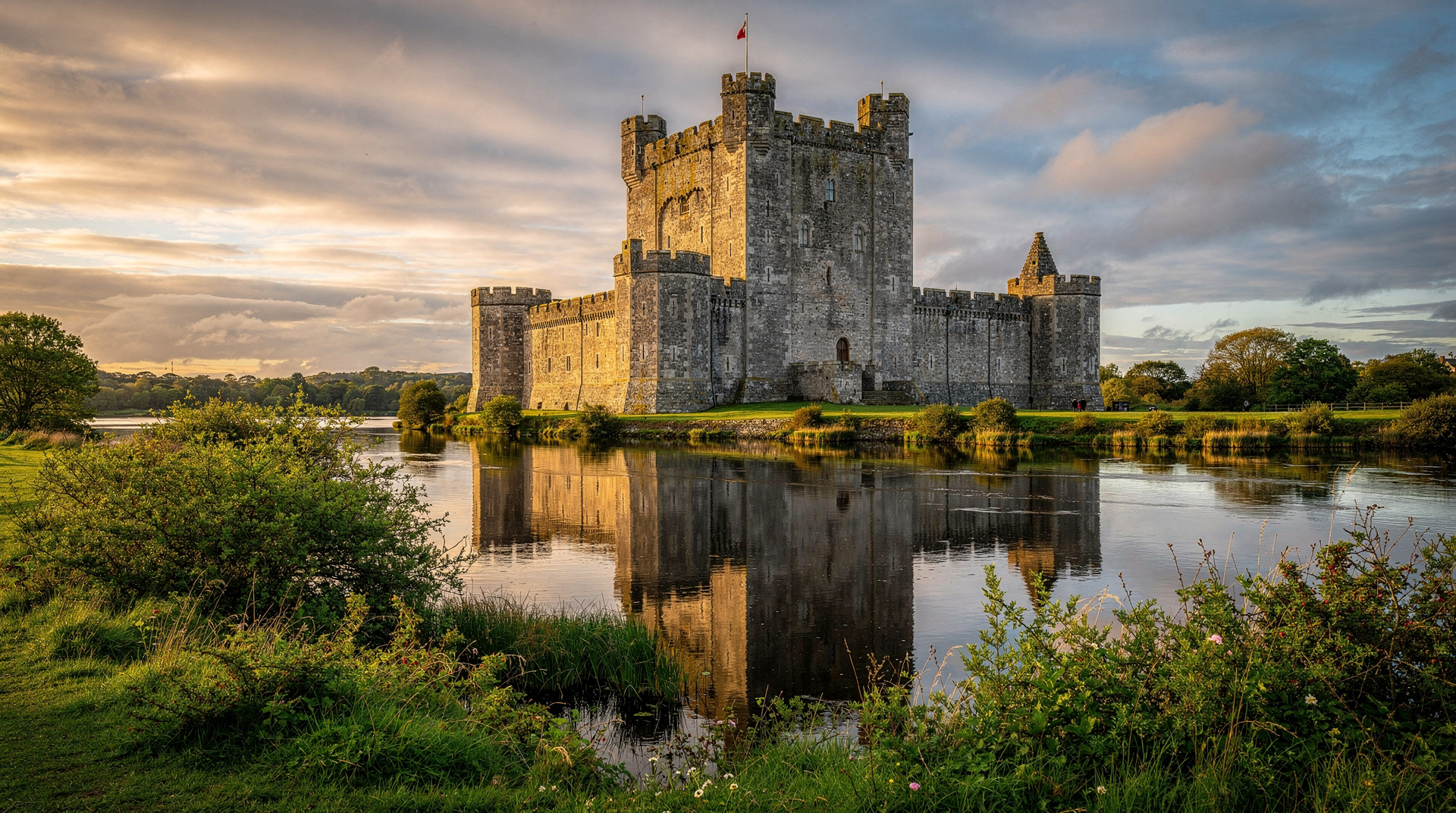
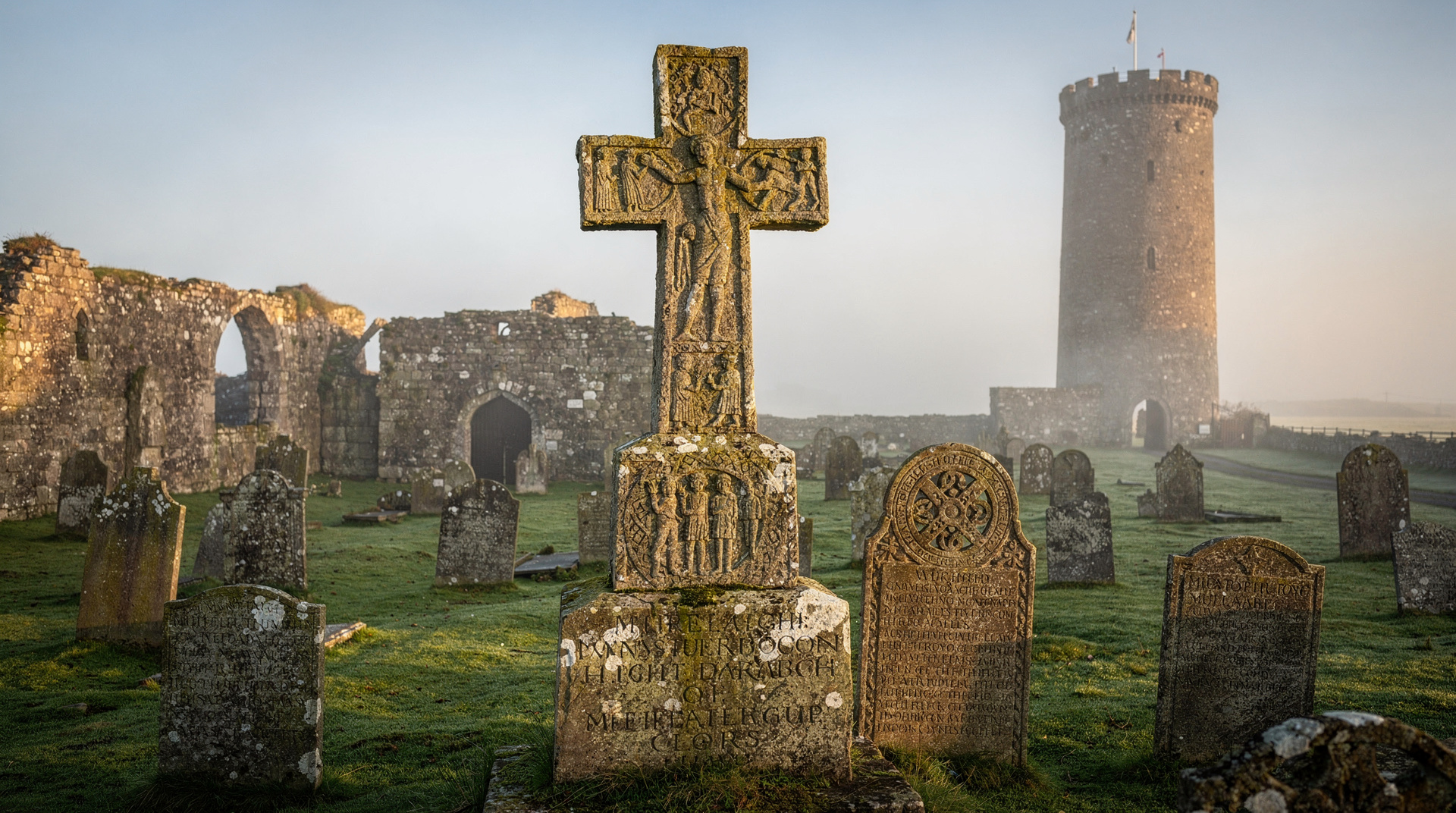
Tara is most rewarding when combined with at least one other Boyne Valley monument. Newgrange is 20 kilometres east and represents the prehistoric end of the timeline; Trim Castle, Ireland’s largest Anglo-Norman castle, is 15 kilometres west and brings the story forward to the medieval period. Monasterboice adds high crosses from the early Christian period. Together these sites trace Irish history from the Neolithic to the 15th century within a 25-kilometre radius.
For a one-day combination, the newgrange-trim-castle-hill-of-tara tour covers all three efficiently. The Boyne Valley day trip guide has timing and sequence recommendations. The best day trips from Dublin guide places Tara alongside the wider spread of options if you are still deciding where to spend a day outside the city.
Boyne Valley sites compared
Tara is one of three archaeological anchors within a 25-kilometre radius, and each rewards a different kind of visitor:
| Site | Best for | Time needed | Crowds |
|---|---|---|---|
| Hill of Tara | Mythology, open landscape, free access | 2–3 hours | Low, even in summer |
| Newgrange | Guaranteed guided access to a Neolithic passage tomb | 2–3 hours (booked slot) | High; timed tickets required |
| Monasterboice | Early Christian high crosses, near-solitude | 1–1.5 hours | Very low |
A day that combines all three, or Tara with just one, gives a rough chronological sweep of Irish history from the Neolithic to the medieval period. The Newgrange and ancient Irish sites private morning tour is a smaller-group alternative to the standard coach tour if you prefer a more personal pace.
Visiting with children or as a history enthusiast
Tara suits families reasonably well — the site is open grassland with no barriers, no steep drops and plenty of room to run, and the mythology (High Kings, a magic stone that roars) is an easy story to tell children on the walk up. There is no café or shop on site, so bring water and snacks, particularly in summer. For history-focused visitors, the Dublin history buff itinerary works Tara into a wider three-day sweep of Irish historical sites, and the driving in Ireland guide is worth reading first if you are self-driving from Dublin rather than joining a tour.
A suggested walk around the hill
Start at the church at the base, where the interpretive centre sits when it is open, and take a few minutes to get your bearings before you climb. The earthworks only make sense once you know what you are looking for, and the introductory film, if the centre is running, gives you the vocabulary: enclosure, mound, processional way. Without it, the grass can look like a series of unexplained bumps.
From the church, head up towards the Royal Enclosure and the Lia Fáil. Take your time here. Walk the full circuit of the earthwork instead of heading straight for the stone, because the shape of the enclosure is the point, and the ditch and bank are easier to read when you follow them with your feet. Then turn back to the Mound of the Hostages and the Banquet Hall, and walk the length of the long enclosure slowly. Standing at one end and looking along it is the quickest way to feel the scale that the medieval writers were describing.
Finish by standing still on the summit for a few minutes and looking out over the Boyne plain. This is the moment the site was built for. Pick out the field boundaries, the roads and the distant ridges, and remember that the people who gathered here chose this spot precisely because they could see, and be seen from, so much of the surrounding country.
Reading the landscape
Tara rewards a slow eye. Because there are no walls, roofs or reconstructed buildings, everything you see is shaped ground: banks, ditches, hollows and mounds. A useful habit is to look for lines. The long axis of the Banquet Hall, the curve of the enclosure banks and the paths worn by visitors all lead the eye across the hill, and the low light of morning or evening throws the earthworks into relief far better than flat midday sun. That is a good reason to plan your visit for either end of the day if your schedule allows it.
It also helps to hold two stories in your head at once. One is the archaeological story, of burials, ceremonial routes and centuries of reuse. The other is the literary story, of kings, feasts, assemblies and magic. The medieval texts and the modern excavations do not always agree, and the gap between them is part of the fun. Do not expect a tidy answer from the ground; expect a good question.
Photography and light
Tara is a photographer’s site in a quiet way. There is no single postcard monument, so the pictures that work are about space and atmosphere: the standing stone against a wide sky, the lines of the earthworks running away from you, the soft patchwork of the countryside below. Wide lenses suit the hill, but a longer lens is useful for compressing the distant fields and picking out details such as the stone itself.
Weather helps rather than hurts. Low cloud, passing showers and breaks of sunlight are common in Ireland, and they give the plain below a changing, dramatic quality. If you also plan to be in the city, the rainy day guide is a good plan B for the days when the forecast turns against a hilltop walk. For general advice on what to bring, see the Dublin weather and packing guide, because an exposed hill in open country feels cooler and windier than the streets you left behind.
What to wear and bring
The ground is open grass, so sturdy, comfortable shoes are better than anything smart, particularly after rain, when the turf can be soft and slippery. Bring a waterproof layer even if the morning looks bright; there is no shelter on the hill apart from the church at the bottom. As already noted, there is no café or shop on site, so water and a snack are worth packing, and a small bag keeps your hands free for photographs.
If you are travelling with older relatives or anyone who finds uneven ground difficult, the accessibility guide is a useful starting point for thinking about the day, and a tour with a driver is often easier than a self-drive, since the guide can set the pace and pick the best spot to stop.
Tara within a longer Dublin trip
Tara works best as a single half-day or day-long outing inside a longer stay, not as the centrepiece of a trip. If you have only a short visit, the Dublin 1 day itinerary and the Dublin 2 days itinerary concentrate on the city itself, and a Boyne Valley excursion is better kept for a longer plan such as the Dublin 4 days with a day trip itinerary or the Dublin 3 days itinerary.
Visitors who like to understand how the pieces fit together often read the how many days in Dublin guide before deciding how much time to give to the countryside. For those without a car, the day trips without a car guide explains how organised tours solve the transport problem that Tara poses, and the family day trips guide is useful if you are travelling with children and want to compare Tara with other outings.
Before and after Tara
A day at Tara pairs well with a quieter evening back in the city. Many visitors like to follow ancient history with something warm and sociable, and a traditional meal or a music session makes a natural contrast with a windswept hill. The traditional Irish food guide and the traditional Irish music in Dublin guide both suit that mood.
If the story of the High Kings and the Irish past has caught your interest, you may want to continue it in the city itself. The National Museum of Ireland guide is relevant because the museum holds artefacts from Tara excavations, and the Dublin Castle guide and the viking and medieval Dublin guide carry the story into later centuries. For another landscape with deep historical roots, the Glendalough destination page offers a very different, monastic view of early Ireland, and the Rock of Cashel page covers another ancient royal seat.
When to go
The site is open year-round and there are no ticketing restrictions on the hill itself (only the interpretive centre is seasonal). April through October gives the best weather for walking the earthworks. Summer evenings, when the light is long and golden across the Boyne plain, are particularly atmospheric. Avoid the very peak of summer weekends if you want the hill to yourself — it does attract visitors, though nothing like the managed crowds of Newgrange.
Top experiences
Bookable activities with verified prices and instant confirmation on GetYourGuide.

From Dublin: Celtic Boyne Valley and ancient sites tour
- Free cancellation
- Instant confirmation

From Dublin: Newgrange, Trim Castle and Hill of Tara
- Free cancellation
- Instant confirmation

Ireland: Newgrange, Monasterboice and Hill of Tara day tour
- Free cancellation
- Instant confirmation

From Dublin: Hill of Tara, Trim Castle & Boyne Valley Celtic sites
- Free cancellation
- Instant confirmation