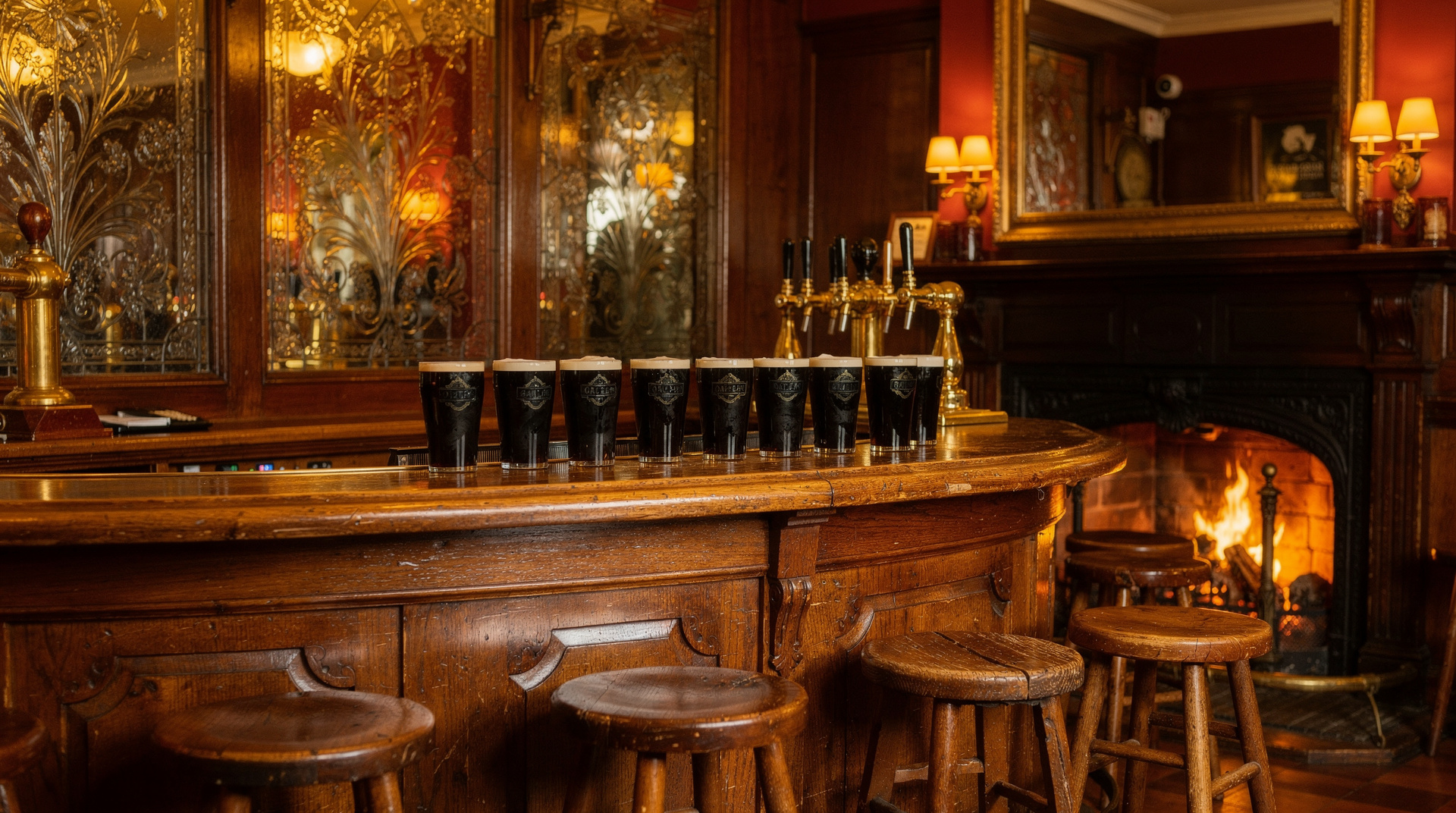
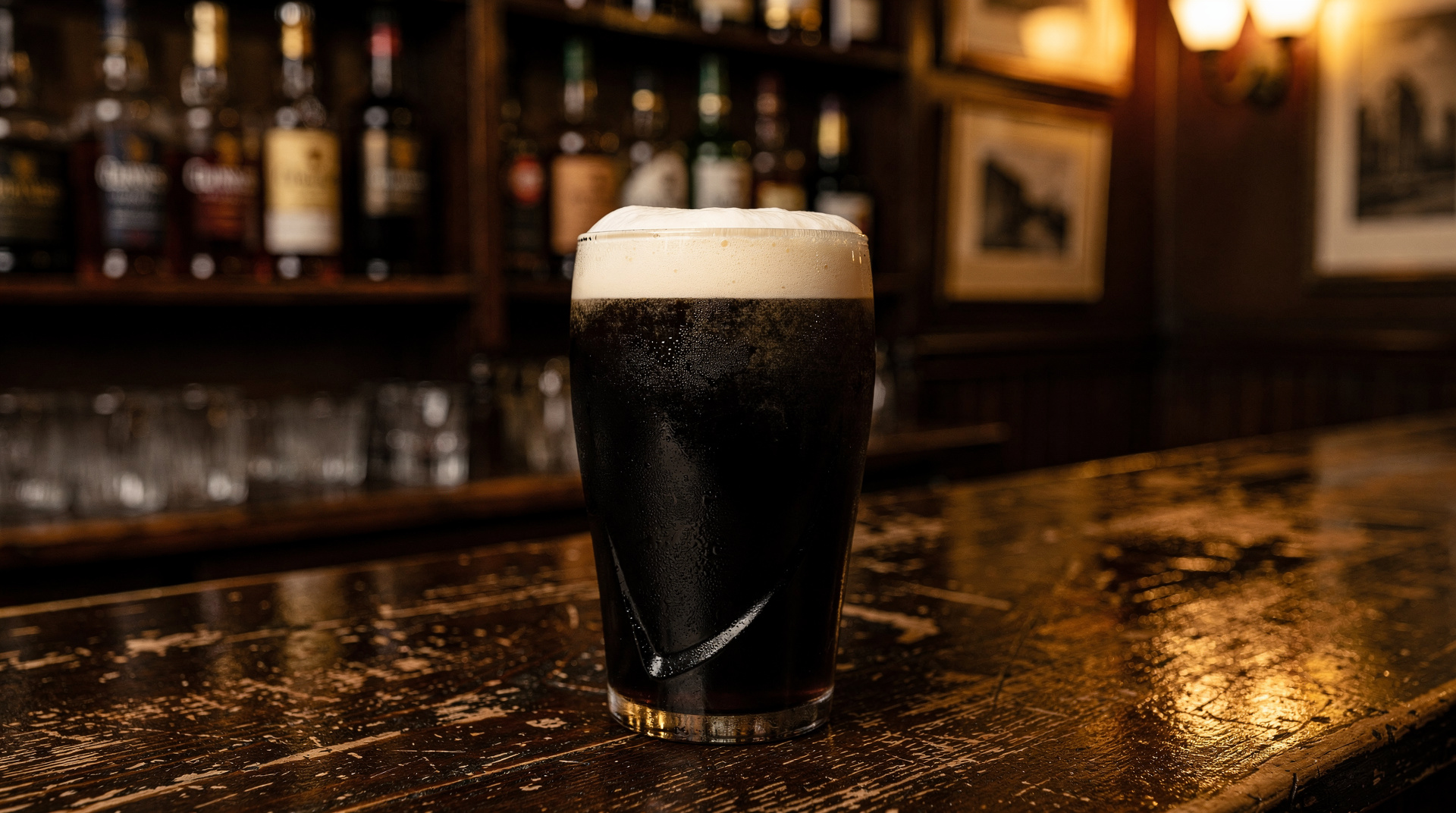
My first pint at the Guinness Storehouse
An honest account of a first visit to the Guinness Storehouse — the parts that live up to the hype, the parts that are pure gift-shop theatre, and the pint at the top that makes the whole morning worth it.
| Where | St James’s Gate, the Liberties |
| Cost | Around €26 online for standard entry |
| Time needed | 2-3 hours, unhurried |
| Best time | Weekday, 9:30am or the hour before closing |
| Included | One pint in the Gravity Bar |
The morning I finally went
I’d been avoiding the Guinness Storehouse for years. Not out of snobbery — or not entirely — but because I’d told myself I’d already absorbed the mythology through osmosis, through pints pulled in the dark of a dozen different pubs, through reading about Arthur Guinness and his improbable 9,000-year lease. What could a seven-storey brand experience add to that?
The honest answer, which took a September visit to discover, is: more than I expected, and occasionally less.
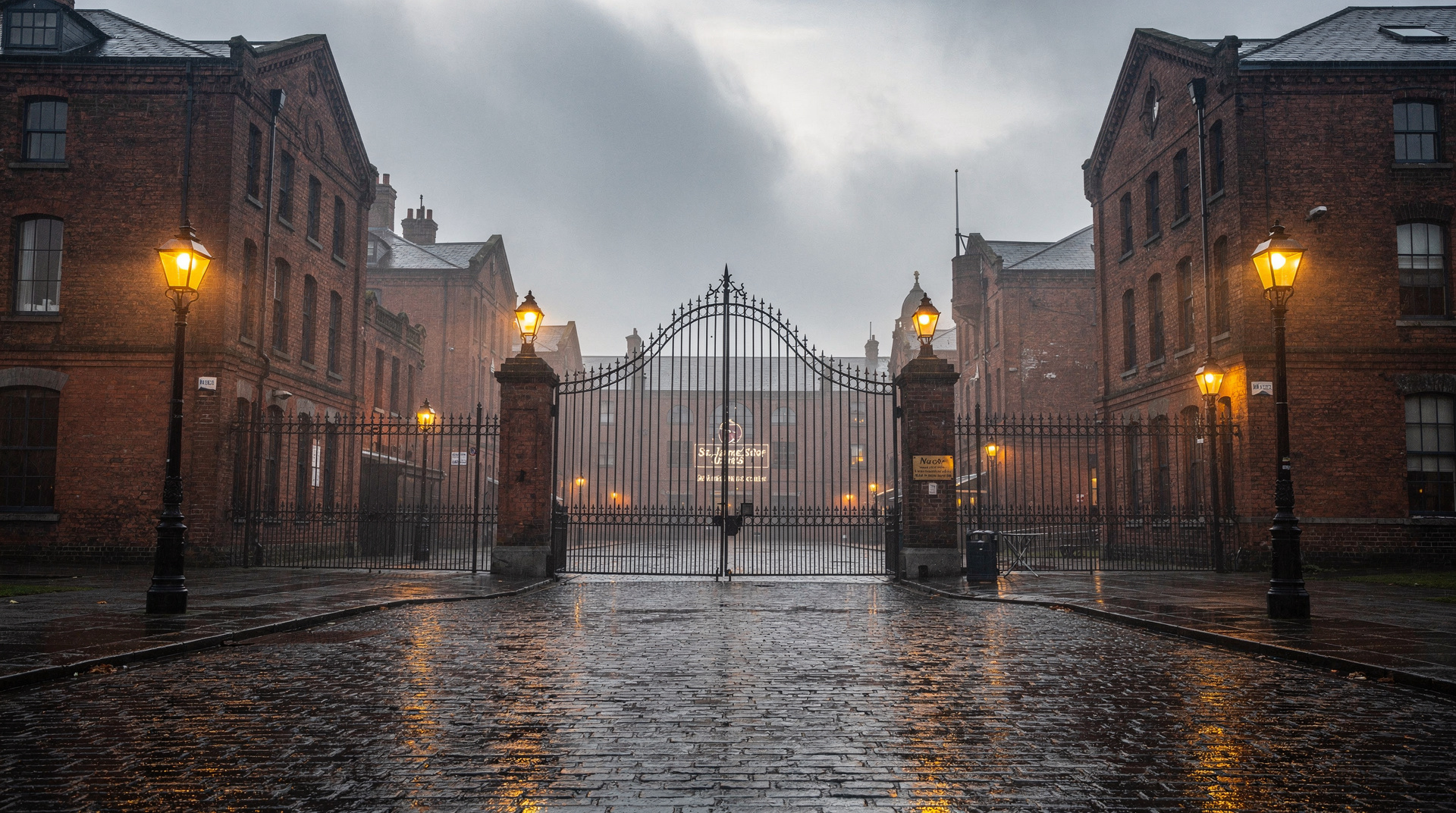
I booked a standard Guinness Storehouse entry ticket for ten in the morning on a Thursday — early, to avoid the worst of the crowd — and walked from the city centre through the Liberties, past Teeling Distillery and the back of St Patrick’s Cathedral, arriving at St James’s Gate with a slight September chill and no queue. That turned out to be the most important decision of the whole morning.
What I’d been wrong about
My assumption had been that the Storehouse would be a large gift shop with theatrical pretensions. That assumption was roughly a third correct.
The gift shop is real. It occupies the ground floor on exit, it is extensive, and if you’re not careful you will emerge blinking into the light of the car park clutching a linen tote bag, a commemorative pint glass, and something with a harp on it that you cannot fully account for. The theatrical pretensions are also real — there is lighting design, there are atmospheric soundscapes, there are moments where the experience machine revs up and you are being sold a feeling as much as a history.
But somewhere between the ground-floor ingredient rooms, with the actual 1759 lease preserved in the floor, and the fifth-floor tasting bar where a guide walked four of us through the difference between the nitrogen cascade and the carbonation in various commercial stouts, the visit became something genuinely interesting.
Floor by floor, honestly
The ground floor is atmospheric and a little obvious. The lease under glass is a good opening. The ingredient rooms — water from the Wicklow Mountains, roasted barley, hops, yeast — do what they’re supposed to do, which is make you think about what’s in the glass before you get to taste it.
Floors two and three trace the brewing process and the company’s global expansion with the kind of polished confidence that only a brand with serious money behind it can deploy. The advertising history is actually the most entertaining section here — the famous Gilroy posters, the toucan, the extraordinary range of slogans that would be impossible in any contemporary marketing environment — and it’s worth spending time with.
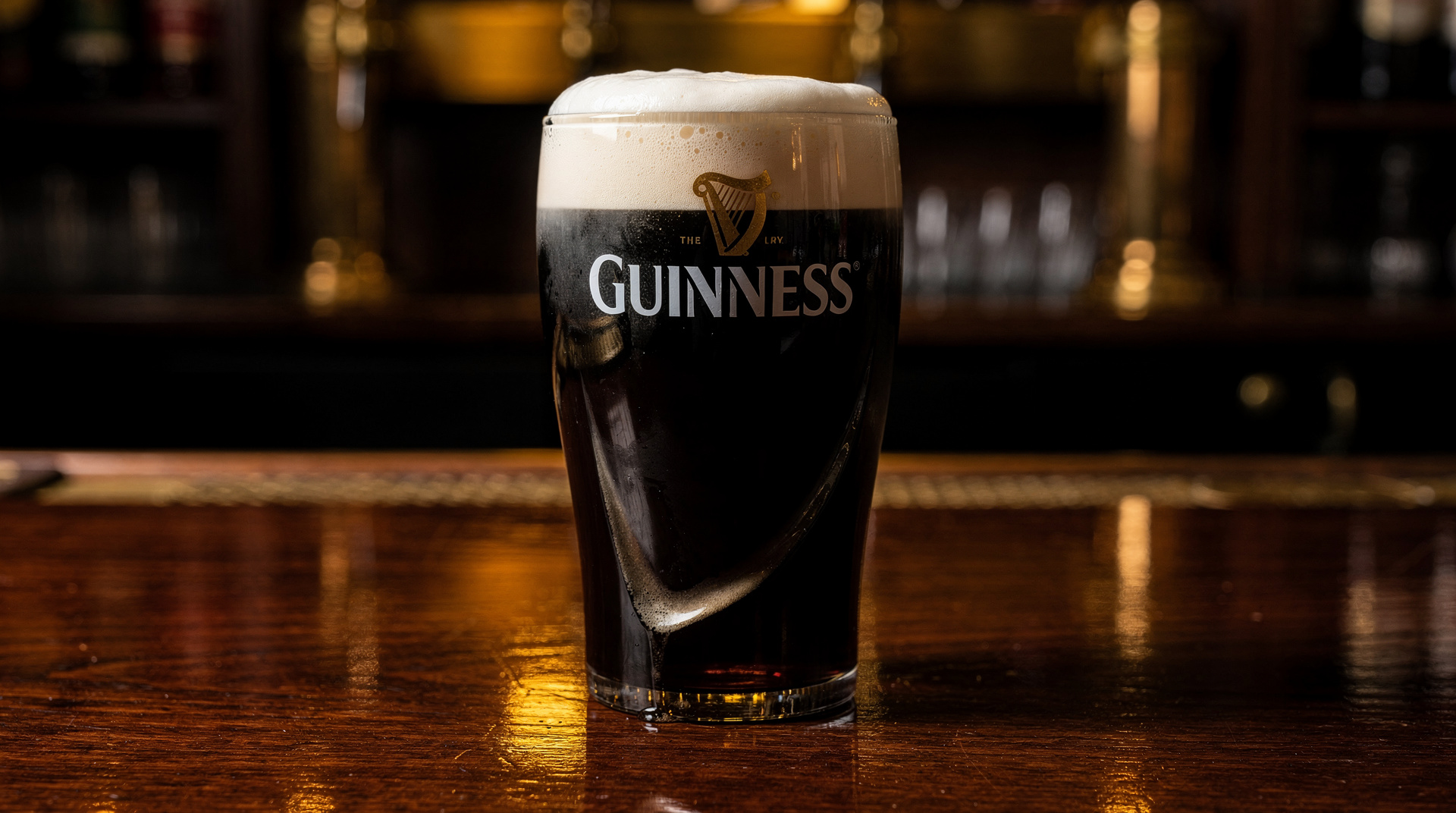
The fourth floor is the Guinness Academy, where you can learn to pour your own pint and get a certificate. I’ll admit I’d planned to skip this on the grounds that it was gimmicky, but the person in front of me in the queue — a woman in her seventies, clearly travelling alone, who had the specific purposeful energy of someone getting the most out of every moment of every day — convinced me to join in simply by her visible enjoyment of it. The pour, it turns out, is not as easy as it looks. Two minutes thirty seconds, left hand on the glass, angling at forty-five degrees, stopping at the harp. Mine was passable. Hers was better.
The fifth floor tasting room was the highlight I hadn’t anticipated. The guided session moved through four different Guinness variants — the standard draught, a slightly sweeter canned version, the Foreign Extra Stout which is darker and more intense than anything you’d normally encounter — and a guide who clearly knew his subject explained not just what distinguished them but why the roasted barley produces specific flavour compounds at specific temperatures. This is the kind of information that actually changes how you drink something. If you’re interested in what’s happening in the glass, this session earns the visit on its own.
The Gravity Bar
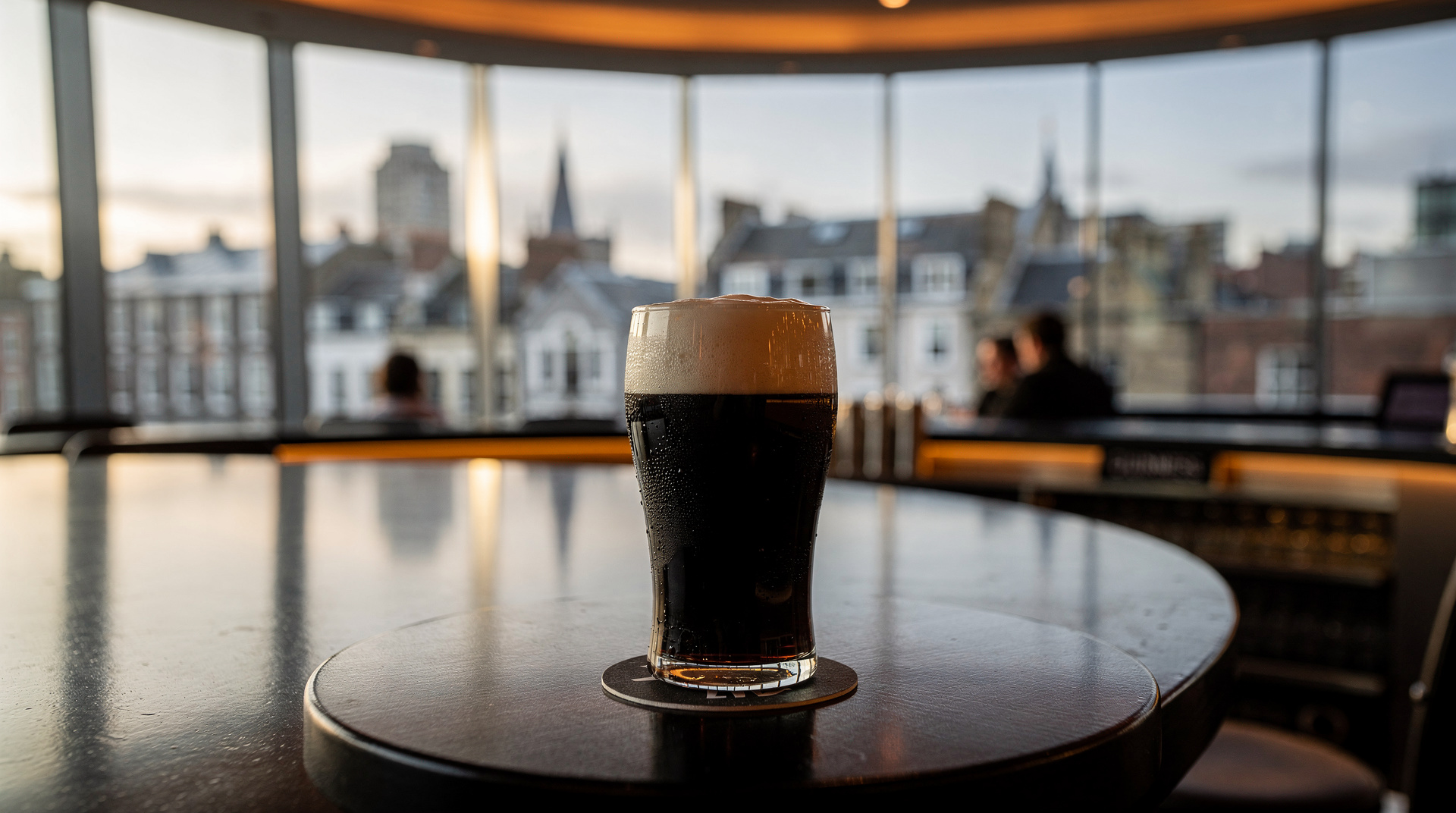
And then the seventh floor. The Gravity Bar is a glass-walled room at the top of the building, and the view it gives you — a 360-degree panorama of Dublin from the Wicklow Mountains to the north of the city — is genuinely the best indoor view in the city. The included pint (redeemed here or in one of the lower bars) is served at the correct temperature, poured correctly, and surrounded by a view that puts the whole city in perspective.
I sat there for forty-five minutes. I hadn’t planned to. The light on the brick roofscapes was doing something interesting, and a couple beside me were having a quiet conversation in a language I couldn’t identify, and the pint was good in the way that a pint can be good when everything around it is also good.
This is the Storehouse’s real trick. It gets you to a viewpoint and a well-poured pint and makes you feel like you earned them. It’s stage-managed, but the stout is real and the view is real, and those two things together are worth the morning.
What to do before and after
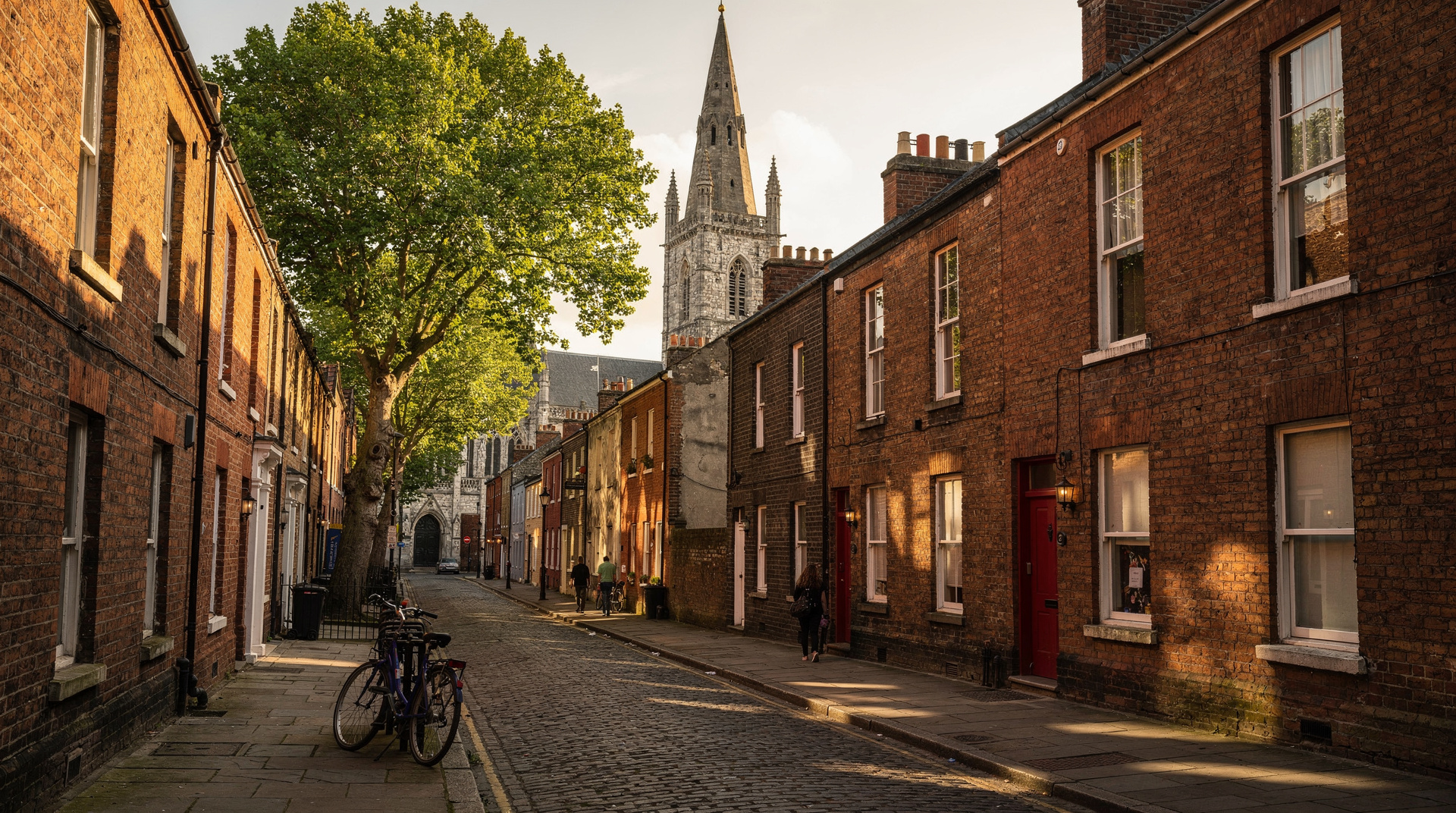
The Storehouse sits in the Liberties, the old distilling and brewing quarter, and there’s a half-day to be made here if you’re interested in the context. Walk in from the city through Thomas Street — the distilleries of Teeling, Roe & Co, and Pearse Lyons are all within a few minutes — and you understand why this particular piece of Dublin produced so much of what Ireland drank for two centuries. St Patrick’s Cathedral is a ten-minute walk, Christ Church a little further.
For the serious post-Storehouse conversation about what makes a good pint and where to find one, read where to drink Guinness in Dublin. The locals’ answer and the tourist’s answer are very different, and both are worth knowing.
If you’re deciding whether the Storehouse is worth it at all, we’ve answered that directly in our verdict guide. The short version: first visit, yes. Second visit, probably not. Third visit, go to a distillery instead.
What I’d do differently
If I were doing the morning again, I’d spend less time in the second and third floor advertising rooms — good once, not worth lingering on a return visit — and more time in the fifth-floor tasting session, which is genuinely the intellectual heart of the visit and the part most people rush through on the way to the Gravity Bar. I’d also skip breakfast beforehand; the ground-floor café does a reasonable coffee, and pacing yourself for the tasting floor and the pint at the top matters more than it sounds.
I’d also budget more time than I did. I gave the visit two hours and it took closer to three once the Gravity Bar view had its way with me. If you’re combining it with a Liberties distillery visit the same day, do the Storehouse first — it’s a longer, more involved visit and you don’t want to rush it to make a distillery booking.
How this compares to the distilleries nearby
The Storehouse is bigger, more polished, and more crowded than any of the Liberties distilleries. If you’ve done it once and are wondering whether to come back, the honest comparison is: Teeling, Roe & Co and Pearse Lyons are smaller, more hands-on, and give you closer contact with an actual working still than the Storehouse’s museum-scale operation does. The Dublin whiskey renaissance piece covers why the neighbourhood now has both in walking distance of each other.
Where to go next
The Storehouse works best as one piece of a wider picture rather than the whole day. If you want the practical side of the visit, the Guinness Storehouse guide covers the layout, and the ticket breakdown explains what the different options actually include before you pay for anything.
If the pour lesson and the tasting session got you curious about stout itself, Guinness versus other stouts is a good follow-up, and the whiskey tasting guide for beginners is the natural next step if the tasting floor made you want to learn more about how flavour works. For a comparison of the nearby distilleries, Teeling, Roe & Co and Pearse Lyons each have their own write-up.
The neighbourhood rewards a slow wander too. St Patrick’s Cathedral and Christ Church Cathedral sit close by, and if you’d rather see the area with someone who knows it, a historical walking tour fits neatly around a Storehouse morning. Anyone weighing the price against other sights should look at whether the Dublin Pass is worth it, and a rainy day is a perfectly good reason to come, as the rainy day guide explains.
For the stories from other corners of the city, the hidden corners of the Liberties and the Dublin whiskey renaissance pair well with this one, and Dublin’s first-time guide helps put the Storehouse in context for a first trip.
Other ways to book the visit
A plain entry ticket is the simplest route, but it isn’t the only one. If you like your sightseeing bundled, there are packages that pair the Storehouse with something else in the same day, such as a whiskey tour at a nearby Liberties distillery, which suits anyone who wants the brewing and distilling sides of the neighbourhood in one go.
Others add a ride on a hop-on hop-off bus around the city; if that appeals, the hop-on hop-off bus guide and which bus to pick are worth a look first. For help judging the options side by side, booking attractions in advance and Dublin Pass versus individual tickets lay out the trade-offs, and the maths behind the Dublin Pass is a more personal take.
Getting there and pairing the day
Getting to St James’s Gate is easy enough on foot, but getting around Dublin and the Leap Card guide cover the public transport options if you’d rather save your legs for the galleries. If you’re building a wider plan, Dublin in one day and two days in Dublin both leave room for a Storehouse morning, and the Dublin destination page is the best starting point for the city as a whole.
Afterwards, a good pint of the ordinary pub kind makes a fine comparison with the Gravity Bar one. The Temple Bar guide and whether Temple Bar is really that bad will tell you where to be careful, the pub crawl guide suggests a more sociable evening, and traditional Irish food is the obvious answer to the question of what to eat with it. For the other big name on the whiskey side, the Jameson Distillery guide is the one to read, and the Dublin tourist traps piece helps you spend the rest of the day wisely.
A note on crowds
Go early. Go on a weekday. Book in advance — the online ticket is cheaper than the door price and lets you skip the ticket queue. Midday on a Saturday in July is a specific kind of chaos that I have been told about by multiple people and have no desire to experience firsthand.
The earliest slot (nine-thirty) is quiet in a way that makes the experience feel different — less like a theme park, more like a well-designed museum. An hour before closing is similarly uncrowded. The two to four in the afternoon window on any summer weekend is the one to avoid.
If you’re planning a full Dublin day around this, fit the Storehouse into a 3-day Dublin itinerary on your first afternoon. That way you have the city’s baseline reading in place before you start trying to understand what it all means.
My first pint at the Gravity Bar was, in the end, a good pint. Better for being waited for. Better for the view. Slightly better for the certificate upstairs, which is now on my kitchen noticeboard and which I refuse to feel embarrassed about.
Frequently asked questions about My first pint at the Guinness Storehouse
Is the included pint at the Storehouse actually good, or just convenient? It’s genuinely well-poured and served at the correct temperature — the Gravity Bar staff pour a lot of pints and it shows. The view does most of the emotional heavy lifting, but the stout itself isn’t a letdown the way some attraction-included drinks can be.
Is one visit to the Storehouse enough, or is it worth repeating? For most people, once is enough — the exhibition content doesn’t change meaningfully between visits. If you want to go back to the neighbourhood, the Liberties distilleries offer a genuinely different, more hands-on second visit rather than repeating the same museum experience.
Top experiences
Bookable activities with verified prices and instant confirmation on GetYourGuide.