Dublin ghost stories for Halloween
Ireland and Halloween
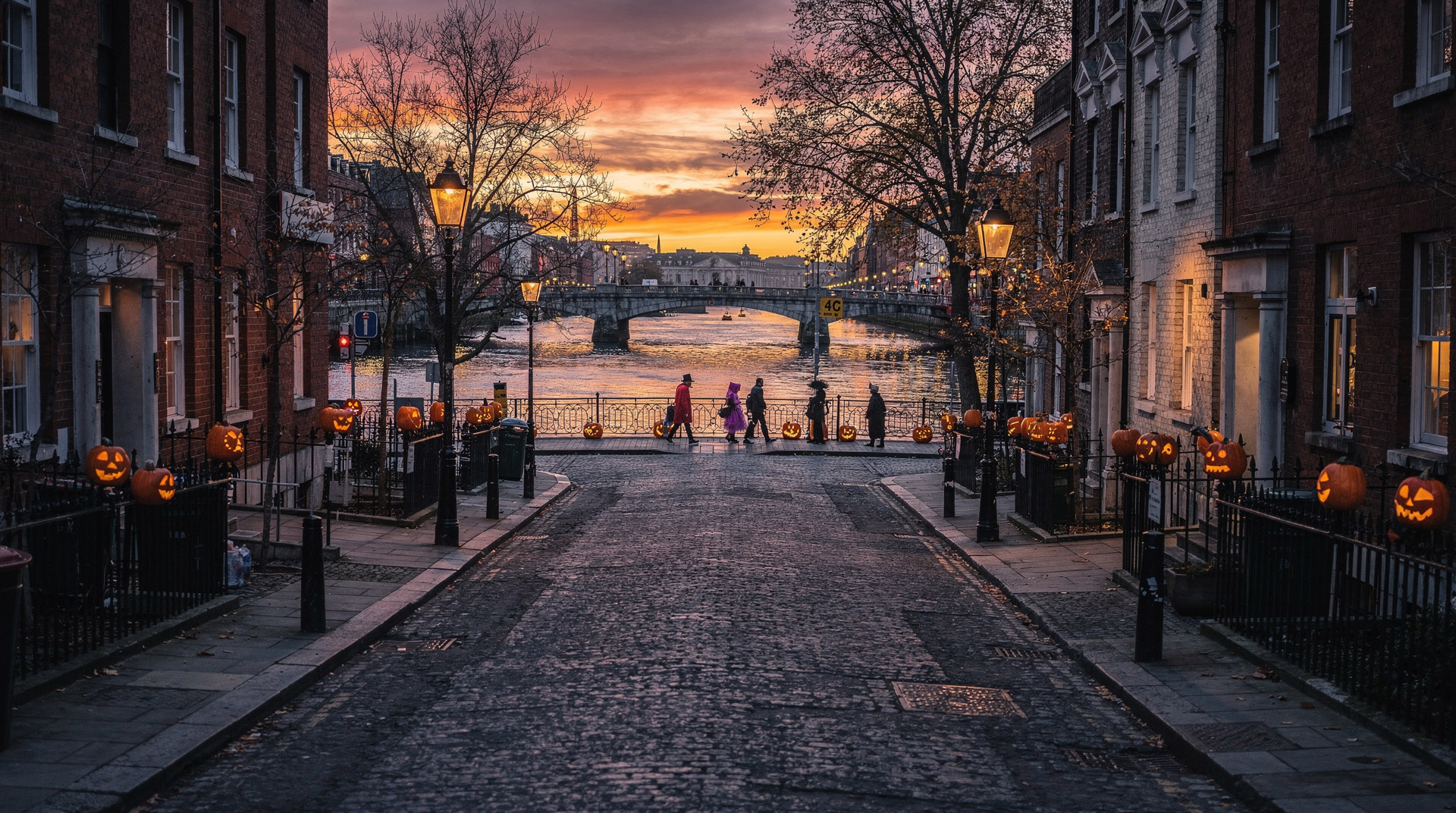
Halloween is an Irish invention. Samhain — the Celtic festival at the end of harvest, when the boundary between the living and the dead was held to be permeable — is the origin of every jack-o’-lantern, every costume, every “trick or treat.” The modern version came back to Ireland from America in the late twentieth century, somewhat altered, but the bones of the festival were always here.
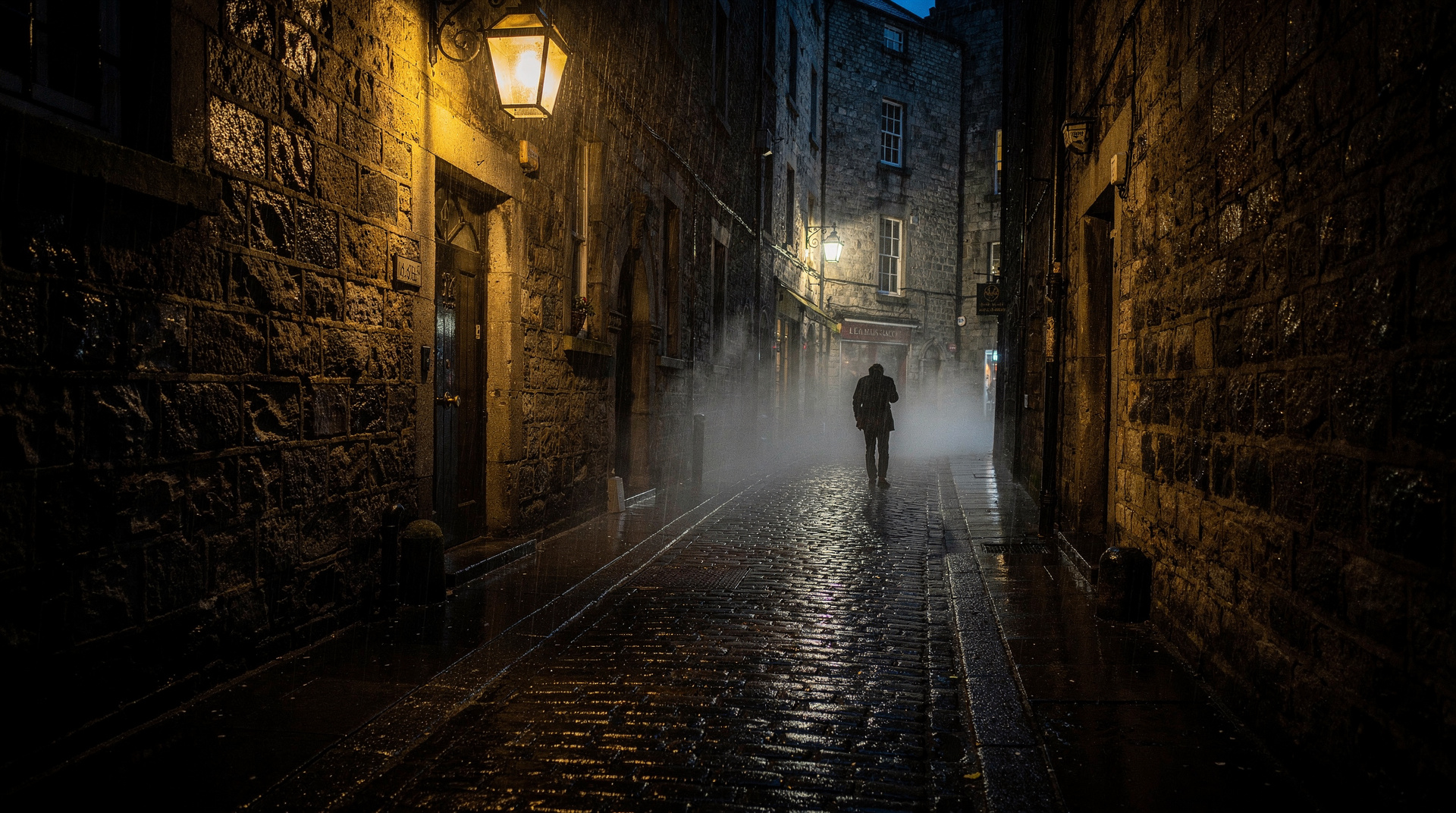
Dublin in late October is, accordingly, a good city to be in for Halloween. Not just for the costumes and the pubs — though both are present in force — but because the city has genuine ghost stories, properly grounded in history, attached to specific addresses and buildings that you can stand in front of while you tell them.
These are some of the better ones.
| Best time | Second and third weeks of October, before the crowds |
| Cost | Free to walk and look; guided tours around €15-25 |
| Time needed | An evening for a walking tour, a full day to combine several sites |
| Booking | Halloween-week tours sell out — book ahead |
| Wear | Comfortable shoes; several sites involve cobblestones and uneven ground |
Glasnevin Cemetery and the watchtowers
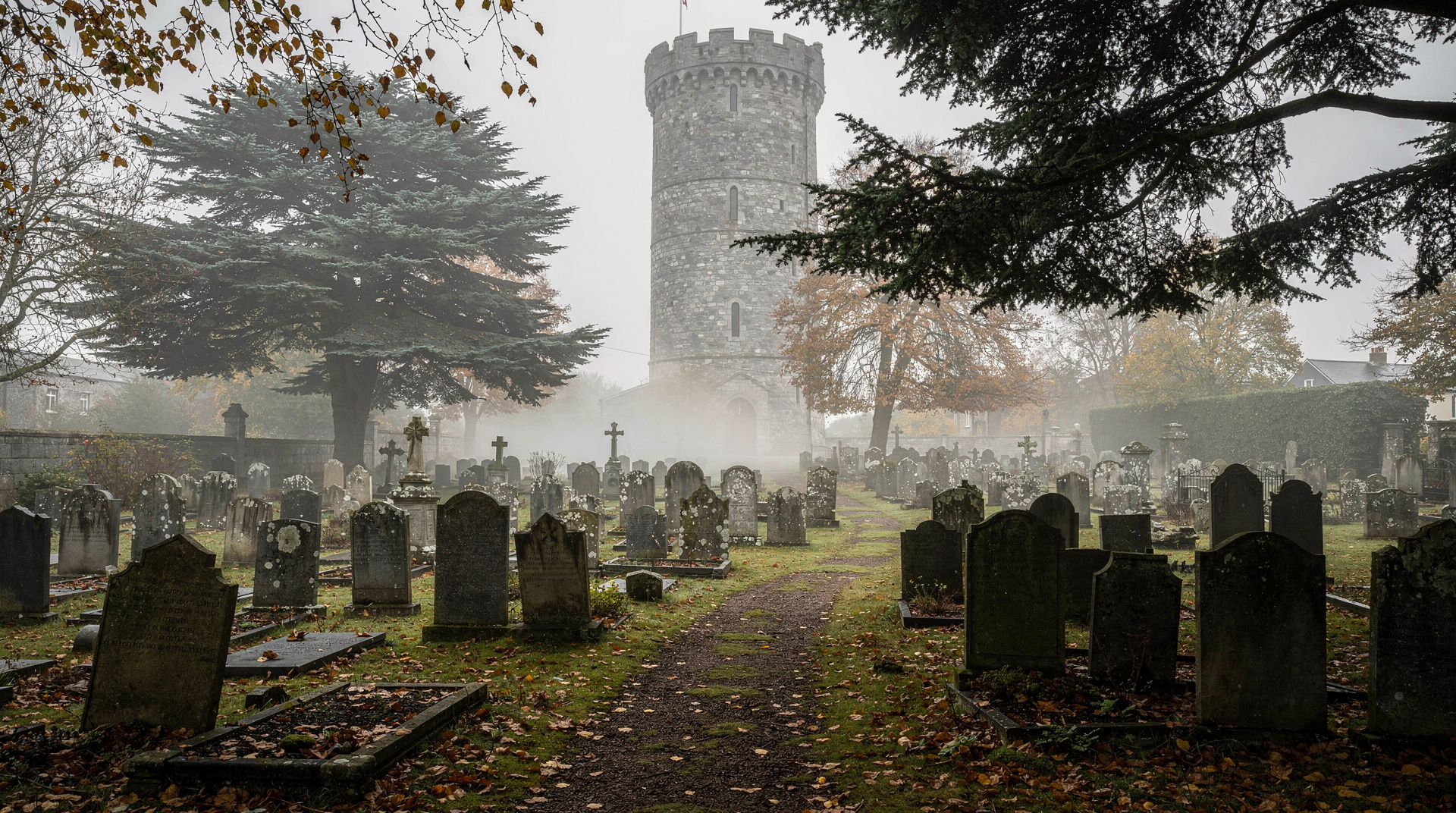
Glasnevin Cemetery is the largest cemetery in Ireland and the burial place of much of Irish history: Daniel O’Connell (whose round tower mausoleum is the cemetery’s central landmark), Michael Collins, Éamon de Valera, Constance Markievicz, Brendan Behan. One hundred and fifty years of Irish political life lies here, and the emotional weight of that is palpable even on a bright afternoon.
At Halloween, the weight is different. The cemetery was opened in 1832 specifically to provide a burial ground free from religious discrimination, during a period when grave robbing was a serious industry. The watchtowers around the perimeter — still standing, several still intact — were built not to keep intruders out but to keep body snatchers from digging up the recently buried and selling the corpses to medical schools. Dogs were kept on the grounds at night. The graves nearest the wall were considered the most vulnerable.
The stories that attach to Glasnevin are less supernatural than historical, but history here is dense enough to be its own kind of haunting. The Glasnevin guided tour operates year-round, with special Halloween programming in October.
The plague pits of the Liberties
In the fourteenth century, the Black Death killed somewhere between a third and a half of Dublin’s population. The city at that time was roughly contained within the old Norse and Norman walls — a small, dense, extraordinarily vulnerable place where disease spread with a speed that made the normal processes of burial impossible to maintain.
The plague pits of the Liberties — mass burial grounds outside the medieval walls — were used for decades, and several of them lie under buildings and streets that stand today. Some were discovered during construction work in the twentieth century. Others, almost certainly, have not been found.
Walking through the Liberties knowing this gives the neighbourhood a different texture. The streets around St Patrick’s Cathedral, where the worst of the fourteenth-century outbreaks were concentrated, have a density of history underfoot that the surface gives almost no sign of.
Kilmainham Gaol
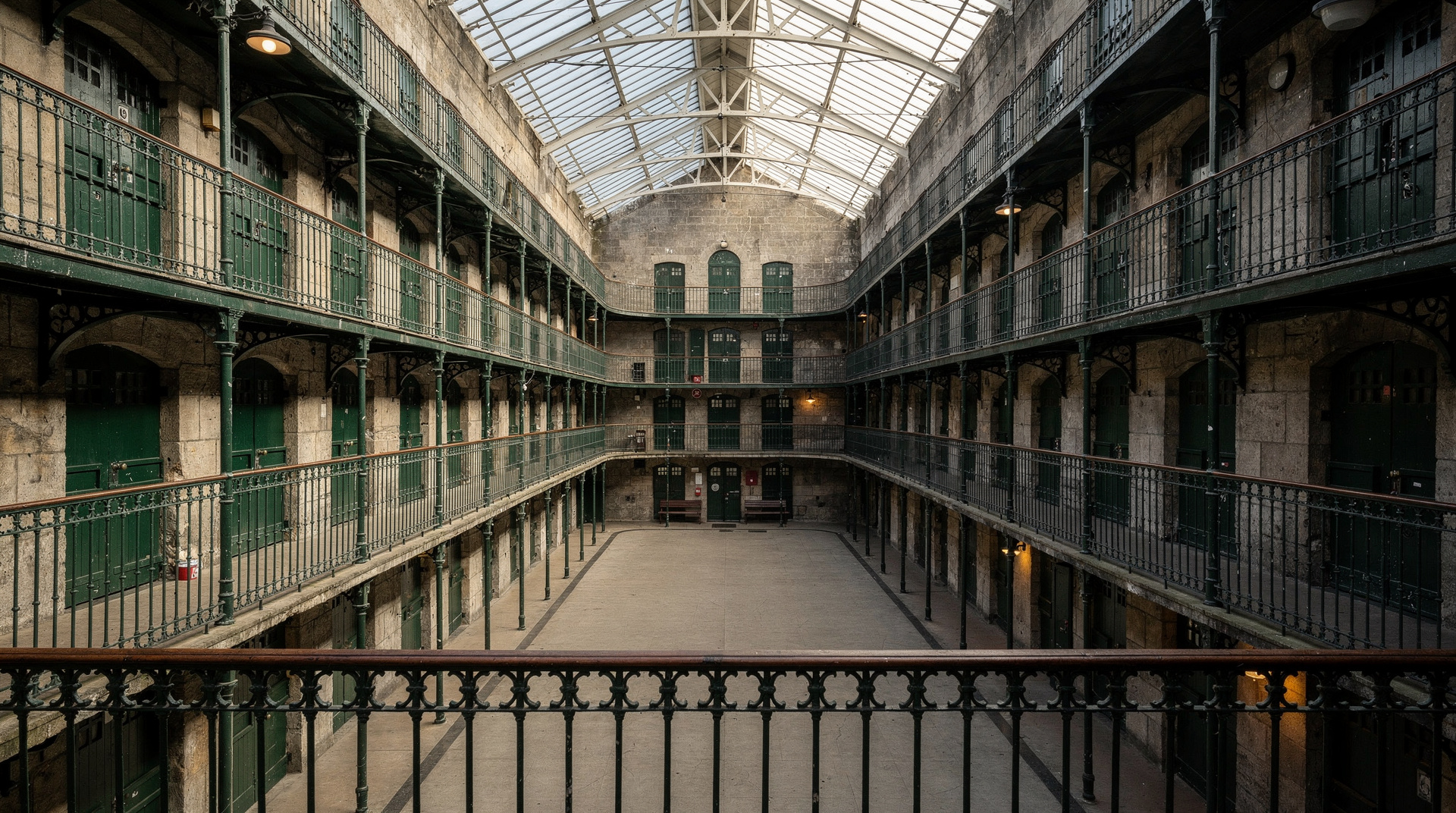
Kilmainham Gaol is one of the most genuinely atmospheric places in Ireland — a functioning Victorian prison that closed in 1924 and has been preserved, rather than restored, in a state of deliberate melancholy. The conditions in which prisoners were held are documented by the building itself: the tiny cells, the iron-framed windows that let in almost no light, the execution yard where the 1916 leaders were shot.
The ghost stories about Kilmainham are numerous and not all of them invented. The prison held men and women through the risings of 1798, 1803, 1848, 1867, and 1916. It held famine prisoners, political prisoners, ordinary criminals. The accumulated weight of that history in a building that has barely changed is enough to make the hairs on your arms react, even before you get to the specific stories attached to specific cells.
The guided tour is the only way to visit, and the guides are generally excellent — they know the history and they know how to tell it. At Halloween, special evening tours run by lantern light, which is not quite as theatrical as it sounds and considerably more atmospheric than a regular day visit.
The Viking ghosts of Wood Quay
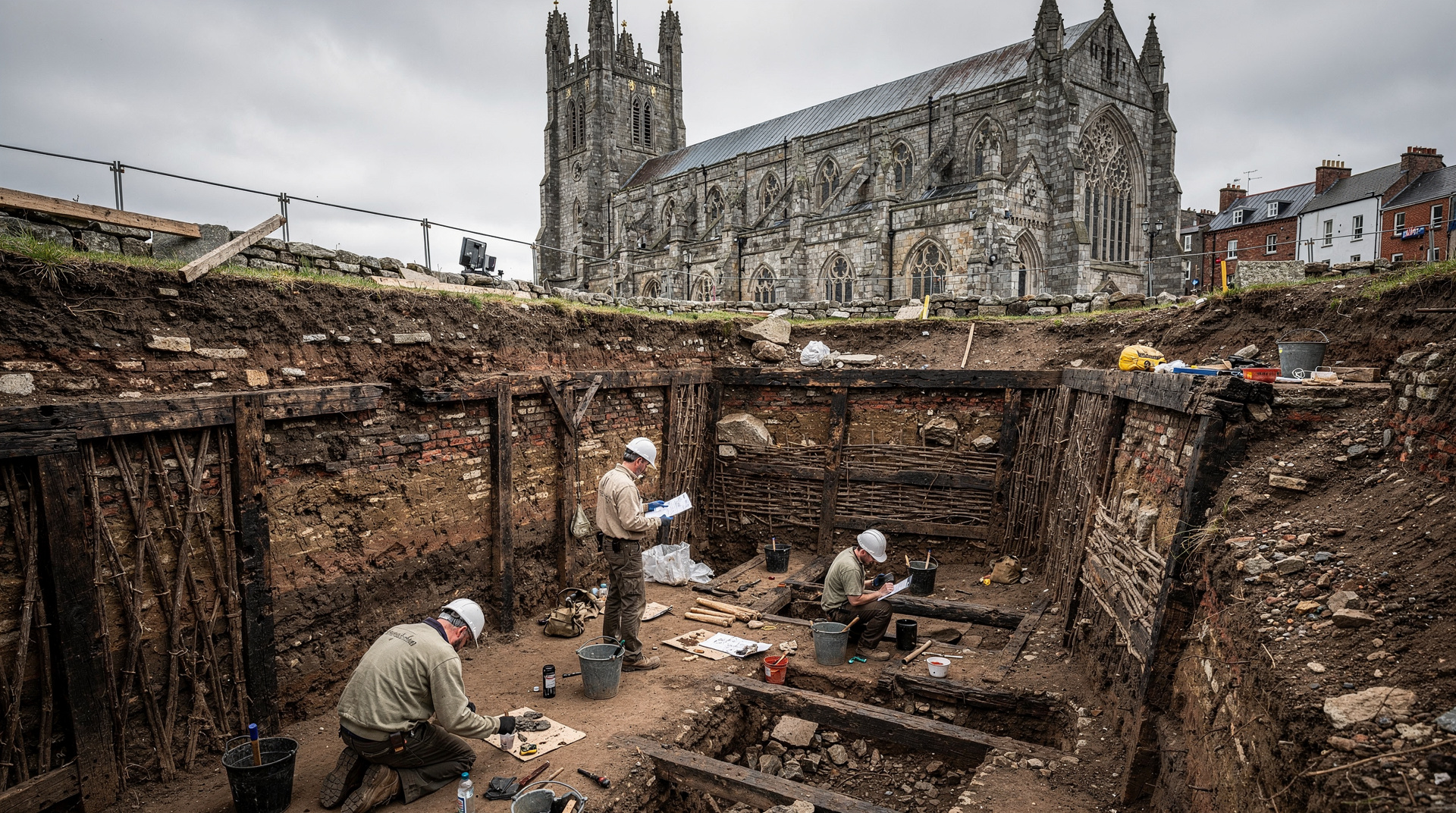
In the 1970s, one of the most significant Viking archaeological discoveries in Europe was found at Wood Quay — the site of the original Norse settlement of Dublin, occupied from approximately 900 AD, buried under the accumulated layers of a thousand years of city building. When the Dublin Corporation announced plans to build new civic offices on the site, a cultural war erupted that lasted years.
The offices were built. Much of the site was destroyed before it could be fully excavated. What was recovered — now in the National Museum — represents a fragment of what was lost: shoes, combs, wooden buckets, gaming pieces, the everyday evidence of a medieval city.
The civic offices at Wood Quay are not, by general consensus, beautiful buildings. They sit heavily on a significant piece of ground, and there is a certain local feeling that the site has never quite recovered its equilibrium. The Viking settlement is gone. The ghost of the argument about whether it should have been saved has not quite gone.
The haunted pubs
Dublin’s pubs attach ghost stories to themselves with a certain cheerful competence, and not all of these stories are pure invention. The Brazen Head on Bridge Street, which claims to be Ireland’s oldest pub (founded 1198, though the current building is eighteenth century), has the kind of history that generates genuine stories: United Irishmen meetings held in back rooms, executions of regulars, centuries of ordinary human drama.
The Bleeding Horse on Camden Street has a more macabre name and a reasonable historical basis for it — the street was a route for cattle being driven to the markets, and the occasional accident left marks. The pub’s interior, carved up into small rooms and snugs over the centuries, has the topology of a building that has absorbed a great deal.
For a structured walk through Dublin’s haunted history, the dark walking tour of haunted Dublin covers the major sites with a guide who knows the difference between authentic historical ghost stories and pure invention — a distinction that matters more than most ghost tours acknowledge.
Bus, walking, or cemetery: which ghost tour
Dublin’s ghost-tour scene has grown enough that the choice itself needs a bit of unpacking. They’re not interchangeable.
| Format | Pace | Best for |
|---|---|---|
| Walking tour | On foot, stops at specific buildings and streets | Those who want the historical detail, not just atmosphere |
| Ghost bus | Seated, covers more ground, theatrical presentation | Families, those who want entertainment over strict history |
| Cemetery tour (Glasnevin) | Slow, reflective, grounded in real graves | Anyone who wants the history without the theatrics |
If you’d rather explore independently first and book a tour afterward, the Kilmainham museums guide and Dublin ghost tours guide both cover self-guided options alongside the operator list. Because Halloween week sells out fast, cross-check timing against the booking Dublin attractions in advance guide if you’re combining several sites in the same trip.
Halloween in Dublin, practically
The Halloween Dublin guide covers the practical calendar for October: where the costume parties are, which events are family-friendly, what’s happening in the nights leading up to the 31st. The Bram Stoker Festival, named for the Dublin-born author of Dracula, has grown into a substantial weekend of events across the city.
The honest note on Halloween in Dublin: it is noisier and more crowded than the ghost stories suggest. If you want the atmosphere and the history without the fancy dress and the queues, the October shoulder weeks — the second and third weeks of the month rather than the last — are when the ghost tours and the cemetery visits have elbow room. The Dublin in the quiet season guide makes a similar case for off-peak visiting more generally, and it applies neatly to Halloween planning too.
The dead are just as dead in mid-October. The watchtowers at Glasnevin are just as old. The plague pits of the Liberties are just as much present underfoot.
The ghost stories work better when you have space to hear them.
Top experiences
Bookable activities with verified prices and instant confirmation on GetYourGuide.