Killarney
Guide to Killarney from Dublin — the national park, Muckross House, the Gap of Dunloe, how to get there by train and why it makes the best Kerry base.
From Dublin: Kerry full-day tour
Duration: 14h
- Free cancellation
- Instant confirmation
Quick facts
- Distance from Dublin
- ~340 km, about 3.5 hrs by train or car
- Getting there
- Irish Rail direct from Dublin Heuston
- Currency
- Euro (€)
- National Park
- Free entry; 26,000 hectares
- Ideal stay
- 1–2 nights
Kerry’s handsome hub
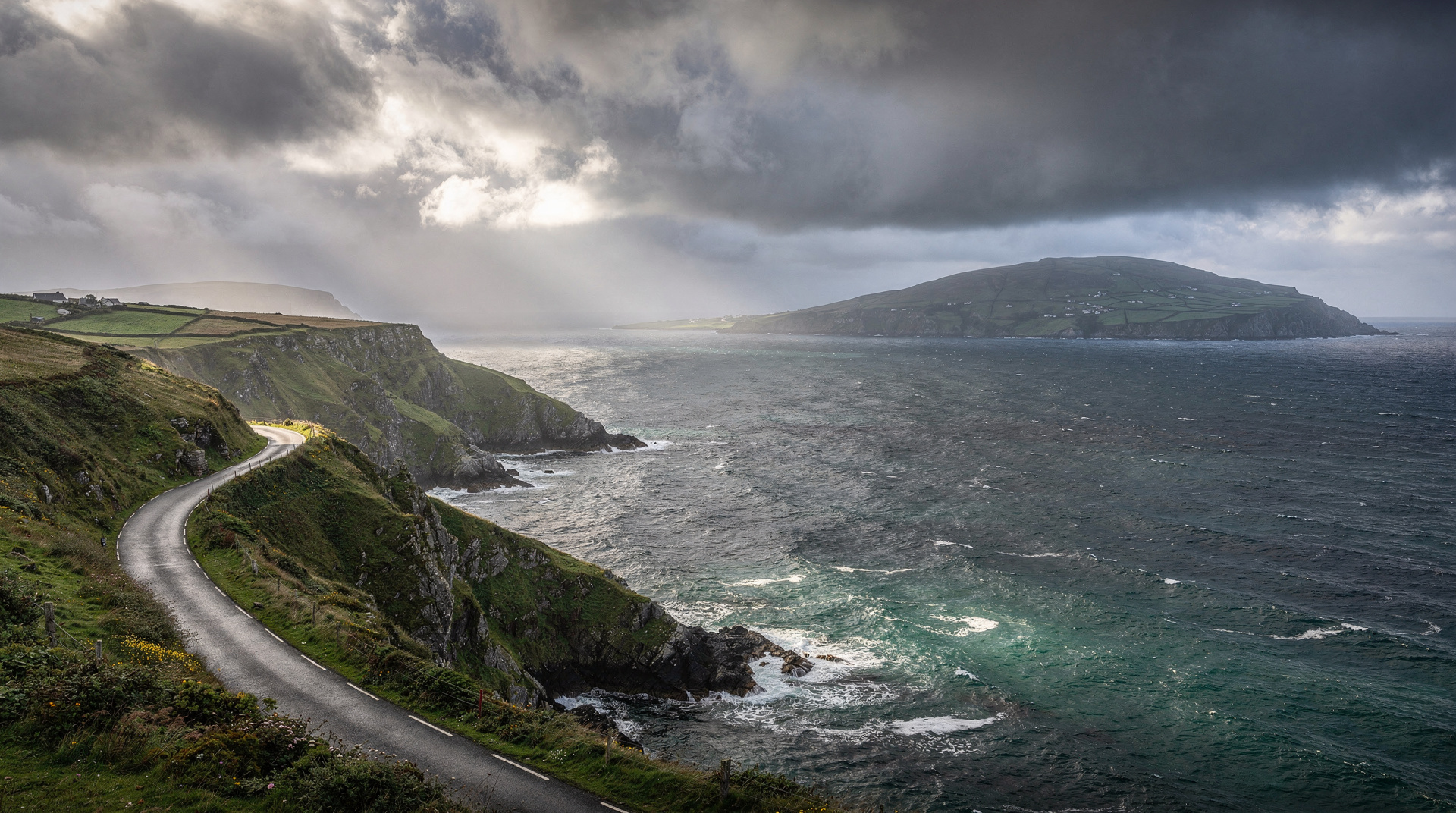
Killarney is the most tourist-ready town in County Kerry, and it knows it. The streets are full of gift shops, the jaunting cars (horse-drawn carriages) park along the roads to the national park, and the pubs play trad music every night regardless of season. None of this is a criticism — Killarney has been welcoming visitors since the 18th century and has got quite good at it. The national park immediately outside the town is magnificent and free. The lakes are real. The mountains are real. The town earns its reputation.
| Where | Co. Kerry, roughly 340 km south-west of Dublin |
| Cost | National park free; Muckross House and jaunting cars extra |
| Time needed | 1–2 nights minimum for the park, Gap of Dunloe and Ring of Kerry |
| Getting there | Irish Rail direct from Heuston, about 3h15 |
| Best time | May to September; shoulder months for fewer crowds |
From Dublin, Killarney is the best base for exploring Kerry. The train service is direct and reasonably fast, and the town has enough accommodation at every price point to absorb large numbers of visitors without feeling overloaded.
Getting there from Dublin
The Dublin Heuston to Killarney service on Irish Rail takes about 3 hours 15 minutes and is one of the most pleasant rail journeys in Ireland — the last section through the Tipperary and Kerry landscapes is particularly good. Services run several times daily; book ahead on summer weekends.
By car, the M7/M8 to Cork and then the N22 west is around 3.5 hours. Driving gives you flexibility for the Ring of Kerry circuit and side roads that public transport cannot reach.
Organised full-day tours from Dublin exist — the Kerry full-day tour from Dublin covers the main sights in a single long day (around 14 hours), combining Killarney National Park and the ring road scenery. The trade-off, as always, is limited time at each stop.
Killarney National Park
The park covers 26,000 hectares of lakes, woodland and mountain, and access is free. The main entry points are at Muckross and the Knockreer estate near the town centre.
Muckross House and Gardens. The Victorian mansion on the shores of Muckross Lake is open as a museum (paid entry) with period-furnished rooms. The gardens surrounding it are free and wonderful in spring when the rhododendrons are in flower — explosions of purple and pink against the lake backdrop. The traditional farms on the estate (a short walk from the house) demonstrate 1930s Kerry farming life.
Torc Waterfall. A 20-minute walk from the Muckross carpark leads to the 20-metre waterfall. Continue uphill for another 30 minutes and you reach open moorland with views across the Upper Lake.
Ladies View and the Upper Lake. The viewing point at Ladies View, on the road south toward the Ring of Kerry, looks back across all three Killarney lakes to the mountains. Named after Queen Victoria’s ladies-in-waiting, who reportedly enjoyed the view in 1861. The Upper Lake itself, further along, is the most dramatic of the three.
The Gap of Dunloe. A narrow glacial pass through the MacGillycuddy’s Reeks (Ireland’s highest mountain range), the Gap is most traditionally done by horse-drawn jaunting car or bicycle rather than car. The road is single-track in places and the scenery — high valley walls, three small lakes — is some of the wildest in Kerry. Allow 3–4 hours for the full circuit from Kate Kearney’s Cottage.
The town
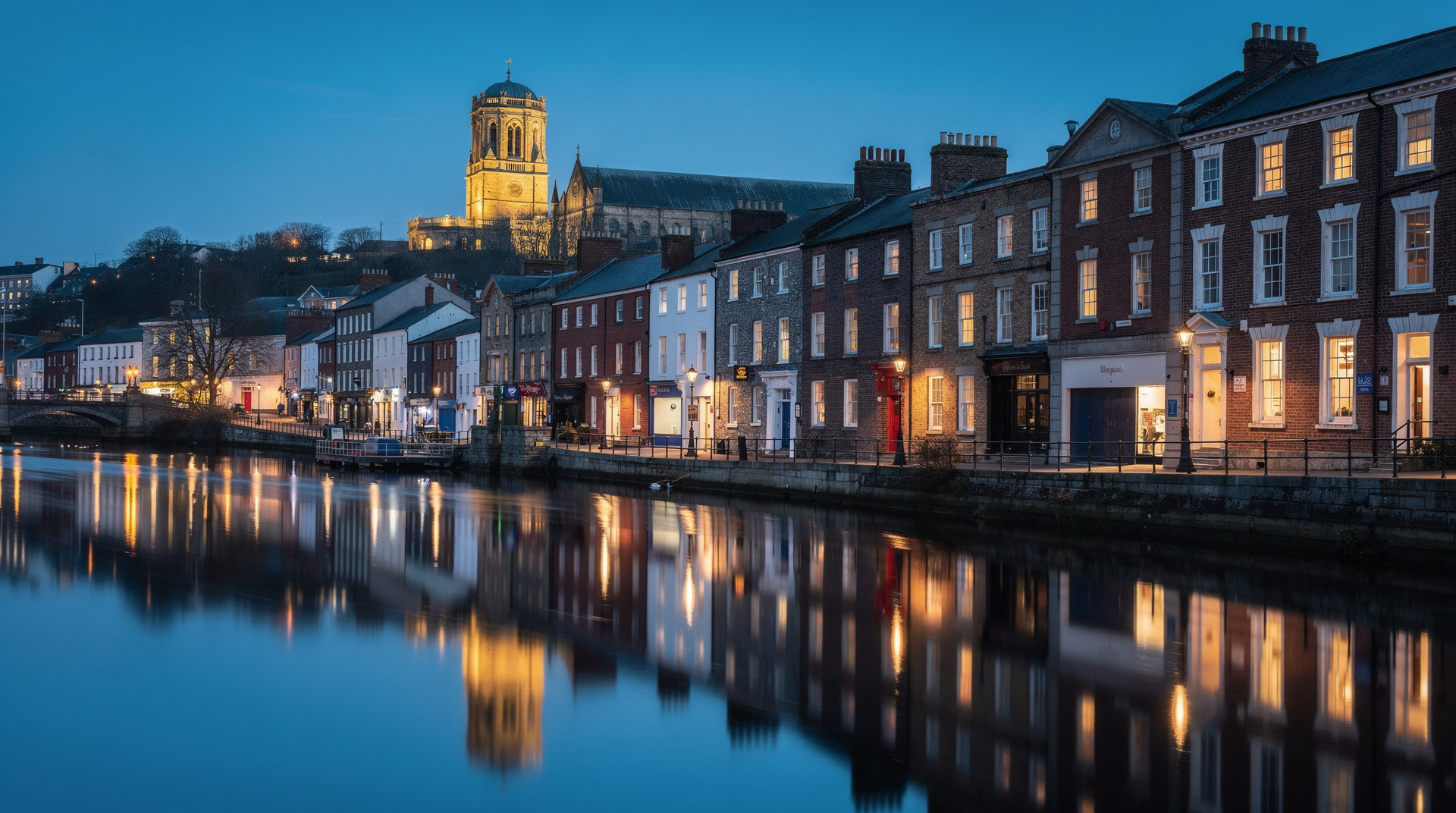
Killarney town centre has more than its share of tourism-facing businesses, but underneath the gift shops there are good restaurants and pubs. The traditional music sessions in some of the pubs near the cathedral are genuine rather than staged. The town is small enough to walk in 20 minutes, and most accommodation is within that radius.
Combining with Ring of Kerry and Dingle
Killarney is the natural base for both the Ring of Kerry circuit and Dingle. The ring is a full day from Killarney. Dingle is about 90 minutes by car via the mountain road over the Connor Pass — spectacular and worth the drive. Neither should be attempted as a rushed add-on; both deserve their own day.
On a broader Kerry trip from Dublin, three nights in Killarney with days for the ring, the national park and Dingle is the comfortable pace. See the best day trips from Dublin guide for how to fit Kerry into a wider Ireland itinerary. Killarney is also a common stop on longer road trips that take in Blarney Castle and Cork city on the way down, since both sit roughly on the route from Dublin.
Killarney as part of a longer Ireland trip
Because of the distance from Dublin, Killarney rarely works as a genuine day trip in either direction — the 3-hour-plus journey each way eats too much of the day. It fits far better as part of a multi-day Ireland trip: Dublin to Killarney via Cork and Blarney, several nights based in Killarney for the park, the Gap of Dunloe and the Ring of Kerry, then either returning to Dublin or continuing on to Galway and the west. The Dublin wild Atlantic 5-day itinerary sketches a version of this route, and the driving in Ireland from Dublin guide covers the practicalities of a long self-drive stretch, including rest stops and motorway tolls.
For budgeting, the Dublin trip cost and budget guide has a wider breakdown of typical Irish accommodation and transport costs that applies just as much to a Kerry leg as to Dublin itself.
Why Killarney suits a slower trip
Most visitors arrive in Ireland with a long list and a short calendar, and Killarney is the place where that list is easiest to trim. The park, the lakes and the mountains are all within reach of the town, so once you have unpacked you can stop planning transport and start walking. That is a real change of pace after Dublin, where the day is usually built around timed tickets and opening hours. If you have spent your first days in the capital with the Dublin first-time guide in hand, Killarney is the contrast that makes the whole trip feel balanced: city streets and museums first, then water, woodland and open hillside.
The setting also rewards people who do not want a fixed schedule. A walk can be as short as an hour by the water or as long as a full day on the hillsides, and the weather decides more than the guidebook does. Rain is part of the deal in the south-west, and the landscape often looks better for it, with cloud on the peaks and the lakes turning slate grey. Pack accordingly; the Dublin weather and what to pack guide applies just as well here, with waterproofs and layers at the top of the list.
A sensible first day in the park
If you arrive by train, resist the urge to do everything at once. A good first day starts gently: drop your bags, walk into the Knockreer end of the park from the town centre, and let the lake shore set the tone. From there you can decide how much further to go. People who arrive in the early afternoon often do best with an easy loop and an early dinner, saving the bigger sights for the following morning when the light is fresh and the car parks are quieter.
On a second day, head for the Muckross side. The house, the gardens and the traditional farms sit close together, so you can combine them without much backtracking, and Torc Waterfall is an easy addition on the same outing. The gardens are the part most worth lingering in, and the lake edge nearby is a good place to sit with a flask and watch the weather move across the water. Wear proper footwear: the paths around the waterfall can be slippery, and the uphill section toward the moorland is steeper than the first stretch suggests.
A third day, if you have it, belongs to the Gap of Dunloe and the wilder country behind it. This is the day to start early, take food and water, and accept that the pace will be set by the terrain rather than the clock.
Choosing how to move around
Killarney is unusually flexible about transport. On foot, the town and the nearest edges of the park are easy. By bicycle, the flat lakeside tracks make for relaxed, unhurried riding and let you cover more ground than walking without the stress of driving. By jaunting car, you trade speed for atmosphere: the drivers are part of the local tradition and usually happy to talk about the area as you go. By car, you gain access to the viewpoints and the roads toward the Ring of Kerry, but parking in busy spots can be tight in summer.
If you do not want to drive at all, the logic of the day trips without a car guide carries over: pick one base, use trains and organised excursions for the long legs, and keep the local days simple. For a wider view of getting around Ireland by public transport, the Dublin to Belfast transport guide shows how rail and bus connections are usually laid out, which helps when you are comparing a train-based trip with a hired car.
Where Killarney sits among the other south-west stops
It helps to see Killarney as one stop in a chain rather than a destination on its own. On the way down, Cork city and Blarney Castle make natural breaks, and the Cork and Blarney day trip guide explains how those two fit together if you want to see them properly rather than from a car window. Cobh, the harbour town on the Cork side, is another option for travellers who like maritime history and have a spare half day.
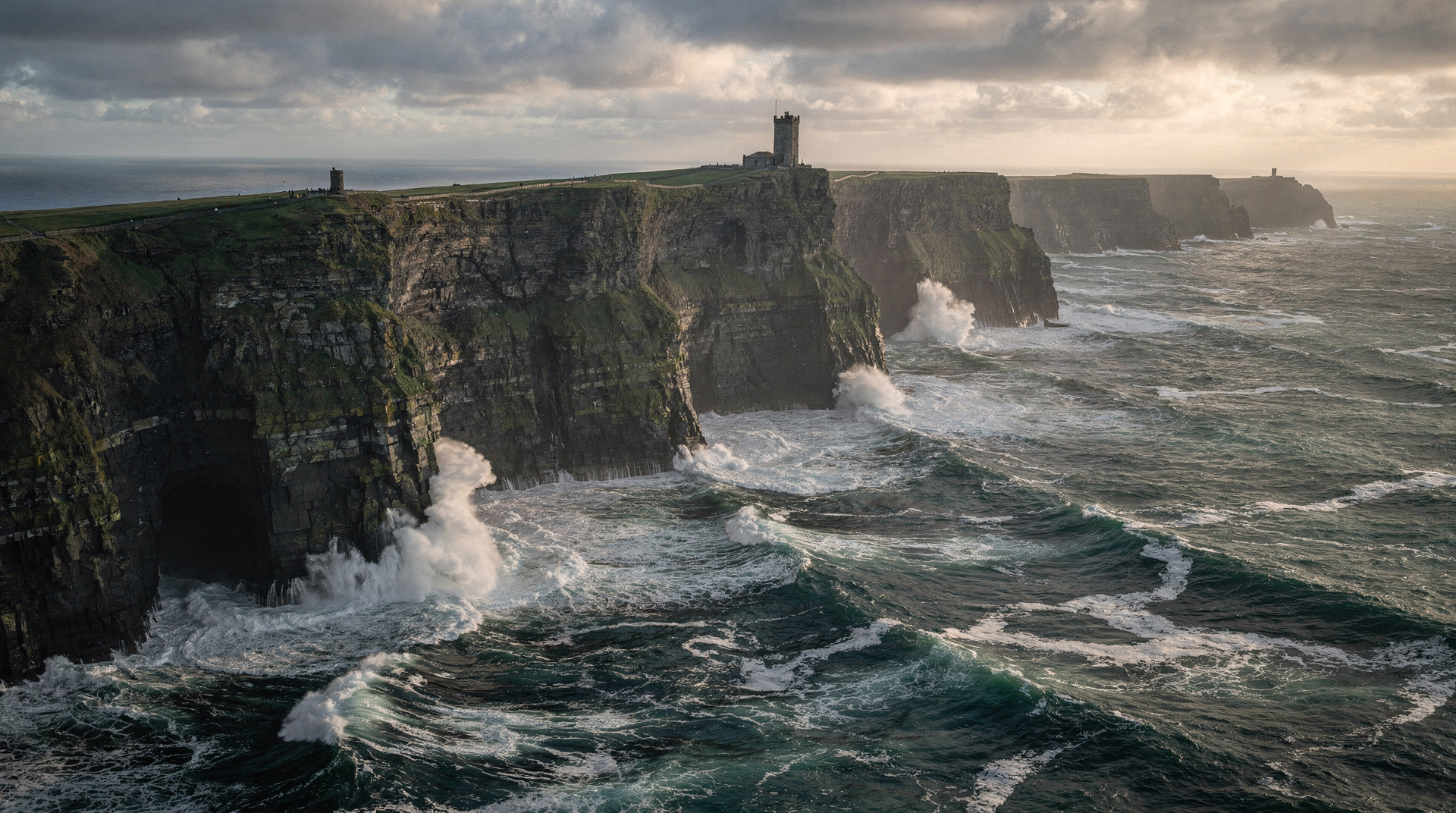
Heading north from Kerry, the route toward the Atlantic coast opens up the Cliffs of Moher and the Burren, and beyond them Galway city and Connemara. The Cliffs of Moher guide is worth reading before you commit, because it shows how much time the cliffs deserve and how they sit alongside the rest of the western coast. Together these stops make a coherent loop that starts and ends in Dublin and covers most of what first-time visitors to Ireland hope to see outside the capital.
Food, music and evenings
After a day outdoors, the town does what it does best. Restaurants range from simple pub kitchens to more formal dining rooms, and menus lean on local produce, seafood and lamb. If you want to understand what you are eating, the traditional Irish food guide is a useful primer before you sit down. Many pubs serve food until fairly late, though kitchens differ, so it is worth asking when you walk in rather than assuming.
Music is the other pillar of the evening. Sessions in the pubs near the cathedral are the kind where local players sit around a table and the tune starts when it starts. If you are new to the form, the trad session etiquette guide explains how to behave: listen, keep conversation low during the tunes, buy a round if you are lingering, and never talk over the musicians. The same manners that work in Dublin work in Kerry, and locals notice and appreciate visitors who follow them.
Practical notes for a smooth stay
Book accommodation early for summer and for any weekend that coincides with a festival or holiday, since the town is small and fills quickly. Shoulder months are quieter and often cheaper, and the park is at its most atmospheric when the crowds thin out and the autumn colours arrive. In winter some attractions reduce their opening, so check before you plan a day around a specific visit.
Carry cash for small purchases and tips, but expect cards to be accepted almost everywhere in town. Keep a phone charged and download offline maps before you head into the more remote parts of the park, because signal can drop in the valleys and around the mountain passes. Tell someone at your accommodation where you are going if you plan a long walk, and turn back if the weather closes in; mountain conditions here change faster than they appear to from the town.
Finally, keep your expectations calibrated. Killarney is busy, and in high summer you will share the best-known spots with a lot of other people. The way around that is simple: start early, walk further than the car park crowd is willing to, and save the famous viewpoints for the edges of the day. Do that, and the town’s reputation holds up well.
Fitting Killarney into a wider Dublin plan
If your trip is mainly about the capital, Kerry may be a step too far, and that is a perfectly reasonable conclusion. The how many days in Dublin guide and the Dublin 7 days Ireland base itinerary help you judge whether a long southern leg earns its place. For shorter trips, the nearer options in Glendalough and the Wicklow Mountains give a taste of the same landscape with far less time on the road. If you decide Kerry is worth the effort, plan it as a proper stay, and Killarney will repay it.
Letting someone else handle the long legs
If the idea of a long drive or a tight train connection puts you off, a guided option can take the strain out of the journey. The rail-based tour that reaches the Ring of Kerry from Dublin suits travellers who like the train and would rather not navigate single-track roads themselves. For a slower pace with a few more stops, a two-day tour linking Cork, Blarney Castle and the Ring of Kerry turns the outbound journey into part of the trip. Both still leave you with less time in the park than a few nights of your own, so treat them as a taster and decide whether Killarney earns a return visit.
Deciding between Kerry and the alternatives
Kerry is not the only way to spend a long weekend outside the capital. The best Dublin day trip: which one comparison and the best day trips from Dublin overview help you weigh Kerry against closer options. If your appetite is for old towns rather than mountains, Kilkenny and Waterford sit in a gentler corner of the south-east, and the Kilkenny day trip guide shows what a day there looks like.
If it is the Atlantic you want, the Aran Islands and the Connemara guide offer a rougher, more open coast, and the blog write-up of a weekend in Galway from Dublin gives a first-hand sense of the pace. For a trip that mixes the capital with one big outing, the Dublin 4 days with a day trip itinerary is a sensible template, and the Galway day trip guide covers the western option in more detail.
Keeping the cost and the weather in check
Kerry can be done sensibly on a modest budget if you plan around shoulder-season stays, self-catering lunches and free park access. The Dublin on a budget guide has habits that carry over directly. When the cloud comes down, the rainy day in Dublin guide is a reminder that a wet day is no reason to abandon a trip, and in Killarney the house, the pubs and a long lunch are all good answers. If Blarney is on your route south, read is the Blarney Stone worth it before deciding how much time to give it.
Top experiences
Bookable activities with verified prices and instant confirmation on GetYourGuide.