Ring of Kerry
Visiting the Ring of Kerry from Dublin — the 180-km circuit, best stops, whether the rail tour works and how long you really need in Kerry.
From Dublin: rail tour to the Ring of Kerry
Duration: 14h
- Free cancellation
- Instant confirmation
Quick facts
- Distance from Dublin
- ~340 km to Killarney, ~3.5 hrs
- Ring circuit length
- ~180 km from Killarney
- Currency
- Euro (€)
- Main town
- Killarney (start/finish for most)
- Ideal stay
- 2 days minimum; 1-day tour possible
Ireland’s most famous scenic drive
The Ring of Kerry is a 180-km circuit around the Iveragh Peninsula in County Kerry — a loop of coastal road, mountain passes, small harbours and sweeping Atlantic views that has been drawing visitors for 150 years. It is, by any measure, one of the most beautiful drives in Europe. It is also, in August, one of the busiest, with coach traffic moving anticlockwise along the N70 in a slow procession that makes the scenery harder to enjoy.
The honest version: go in May, June or September, drive clockwise (opposite to the coaches), and stop where you want rather than where a schedule dictates. If you can afford two nights in Kerry rather than one, do it.
| Where | Iveragh Peninsula, Co. Kerry — 340 km from Dublin |
| Cost | Free to drive; rail day tour typically €80–120 |
| Time needed | 1 day by tour; 2 days minimum by car for real value |
| Getting there | Rail to Killarney (~3h15) or car via M8/N22 (~3.5h) |
| Best time | May, June and September; avoid August traffic |
Getting to Kerry from Dublin
The Ring of Kerry starts and finishes in Killarney, about 340 km from Dublin. By car, the M8 to Cork and then the N22 west to Killarney takes around 3.5 hours. By rail, the Dublin Heuston to Killarney service takes about 3 hours 15 minutes with connections.
From Dublin, the most popular day-trip option is the Ring of Kerry rail tour from Dublin, which takes the train to Killarney and then connects with a coach around the ring. It is a genuinely long day (around 14 hours door-to-door) but it covers the main highlights without you needing a car. The trade-off is inflexibility — you stop where the coach stops.
The Ring is a 180-kilometre loop that takes a full day on its own before any detours, which puts it beyond reach of a single day from Dublin under any schedule: a two-day Cork, Blarney Castle and Ring of Kerry tour is the shortest honest format.
Choosing between car, train and tour
Which way you travel shapes the whole trip. If you have never driven on Irish roads, read the guide to driving in Ireland from Dublin before you commit to a rental: the roads are narrower than many visitors expect, and the western stretches of the ring reward a calm, unhurried driver. If you would rather not drive at all, the guide to day trips without a car from Dublin explains how rail and organised tours fit together, and the same logic applies to Kerry.
A tour is the easy option and a car is the free option, but neither is the best option for everyone. A tour removes every decision, which suits a traveller who simply wants to see the coast go by from a window seat. A car gives you the freedom to stop at a beach because the light is good, to turn back for a photograph, or to linger over lunch. Rail gets you to Killarney without the stress of the M8 and N22, but once you arrive you still need a way around the ring, so think of it as the first half of a plan rather than the whole plan.
Reading the landscape
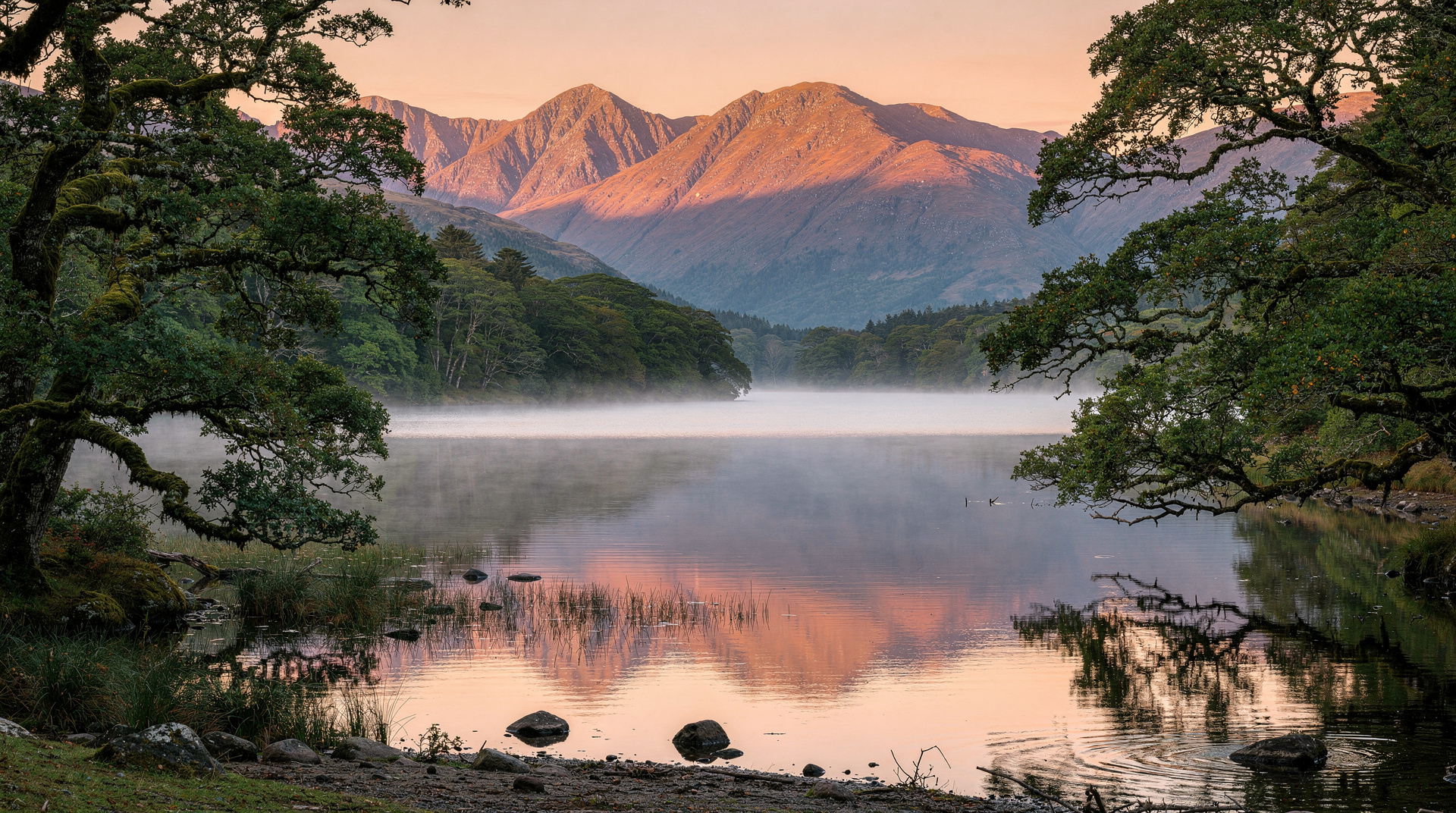
The Iveragh Peninsula is not one kind of scenery but several. On the northern side the road runs beside Dingle Bay, with long views across the water to the neighbouring peninsula. Around the western tip the coast becomes rougher and more exposed, with the Atlantic doing most of the talking. On the southern side the landscape softens again, the vegetation thickens and the road drops toward Kenmare Bay. Because the weather moves quickly in this part of Ireland, you may well see all four seasons in a single afternoon, and the same viewpoint can look completely different an hour later.
That changeability is part of the appeal rather than a flaw. Mist hanging over the mountains can be more atmospheric than a flat blue sky, and a passing shower often clears to reveal sharp, bright light that photographers love. Pack layers, keep a waterproof within reach, and treat a wet morning as a reason to start with a long breakfast rather than a reason to cancel. If you want a wider sense of what to wear and expect across the year, the guide to the best time to visit is a useful companion even though it is written for Dublin.
Stops worth slowing down for
Not every stop on the ring deserves the same amount of time. The towns are pleasant but are mostly places for coffee, fuel and a stretch of the legs. The real rewards are the places where the road meets the sea or the mountains and you have a reason to get out of the vehicle.
- Beaches. Rossbeigh and Derrynane are the two that most visitors remember. Even a short walk on the sand gives the trip a different texture from a day spent looking through glass.
- Historic sites. The ring fort near Cahersiveen and the O’Connell house at Derrynane bring human history into a landscape that can otherwise feel purely natural.
- Viewpoints. Lay-bys and pull-ins along the coast road are where the best photographs are taken. Use them rather than stopping on a bend.
- Quiet detours. The Skellig Ring described above is the best example, but any minor road that drops toward the water is likely to be quieter than the main route.
Planning a longer south-west trip
The Ring of Kerry works best as one chapter of a longer story. If you have a week or more, the Dublin Wild Atlantic 5-day itinerary shows how the western coast can be strung together, and the 7 days in Ireland itinerary suits travellers who want to keep Dublin as a base and still reach the south-west. Travellers heading north from Kerry can pair the trip with Galway city and the wild landscapes of Connemara, which sit on the same Atlantic coastline and offer a very different mood from the Kerry mountains.
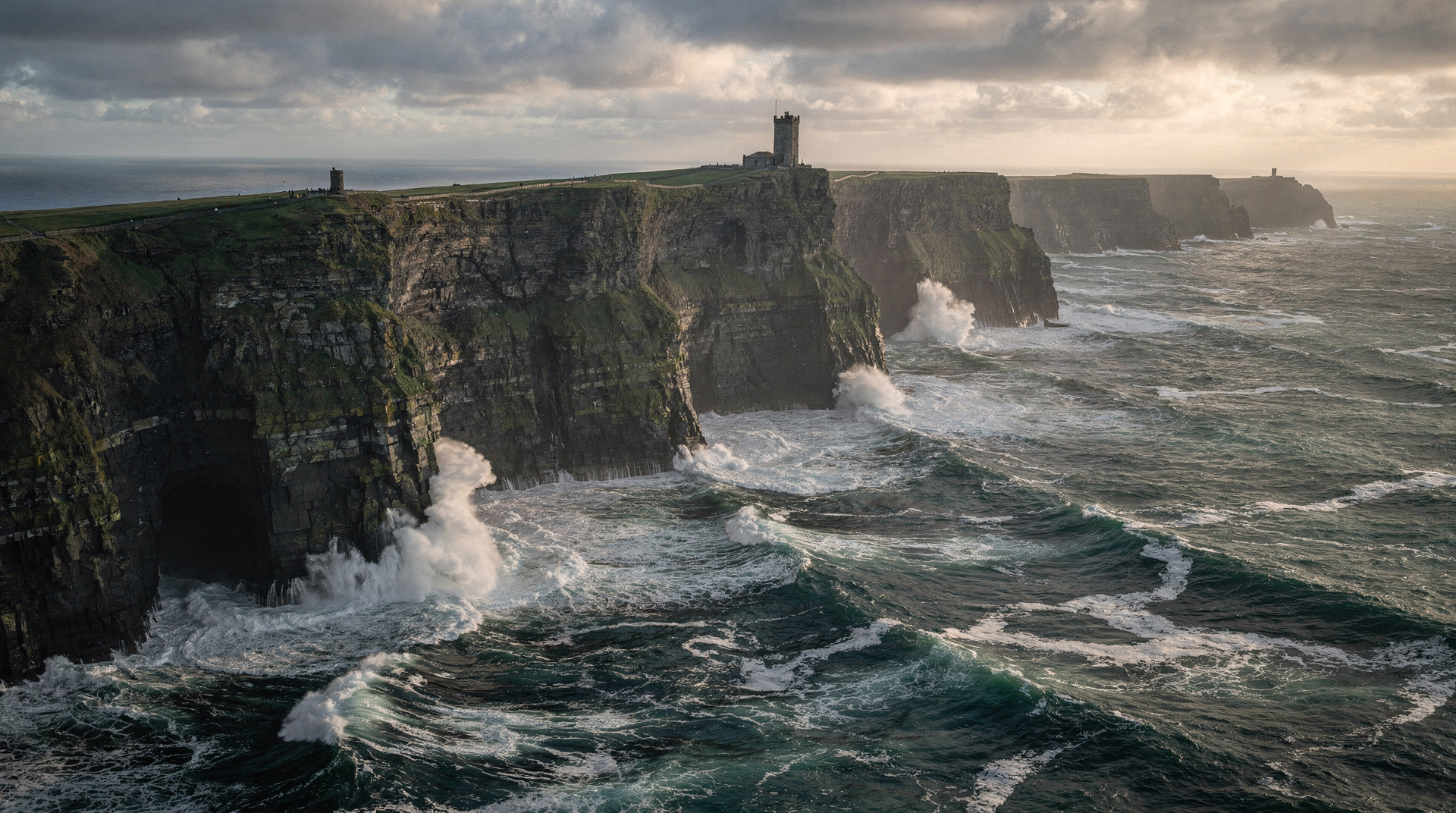
The Cliffs of Moher guide is also worth reading if you are weighing up which of Ireland’s great coastal sights deserves your limited days. Kerry and Clare are often compared, but they are not rivals: one is a long, varied circuit and the other is a single dramatic stretch of cliff, and many visitors find they want both.
The ring itself: what to see
Killorglin. The first town on the anticlockwise route, famous for the Puck Fair festival in August. Worth a brief stop for coffee, then press on.
Glenbeigh and Rossbeigh Strand. The beach at Rossbeigh is a sand spit pushing into Dingle Bay, with views across to the Dingle Peninsula. It is one of the finest beaches in Kerry and often uncrowded compared to the main circuit stops.
Cahersiveen. A working town with a heritage museum focusing on Daniel O’Connell, the Catholic Emancipation campaigner born on the peninsula. The Derrynane stone fort nearby is one of the finest ring forts in Ireland.
Derrynane Bay. The beach and dunes at Derrynane are spectacular — the house of Daniel O’Connell sits behind the dunes and is open as a museum. This is the most rewarding stop for history and scenery combined.
Sneem and Kenmare. Sneem is a pretty village with painted houses; Kenmare is a market town at the head of Kenmare Bay and one of the best places to eat and stay in Kerry. If you are doing the ring over two days, Kenmare is the natural overnight.
Ladies View and the Gap of Dunloe. These are technically in the Killarney National Park area rather than on the ring road itself, but most itineraries include them. Ladies View looks back across the Killarney lakes toward the mountains. The Gap of Dunloe is a narrow mountain pass — if you drive through it yourself, be prepared for single-track roads; it is more atmospheric on foot or by horse-drawn jaunting car.
The Skellig Ring alternative
South-west of Portmagee, a smaller loop road called the Skellig Ring branches off the main N70 and is worth knowing about even if you don’t have time for the full circuit. It passes closer to the coast than the main ring, gives clear views out to the Skellig Islands (weather permitting), and is far quieter than the N70 because coach tours generally skip it. If you are driving and have an extra hour, taking the Skellig Ring instead of the direct N70 near Waterville adds real value for relatively little extra time.
Extending the trip beyond Kerry
Many visitors combine the Ring of Kerry with a longer south-west Ireland loop. Cork city and Blarney Castle sit about 90 minutes east of Killarney and make a natural next stop if you are driving rather than returning straight to Dublin. Further north again, the Cliffs of Moher and County Clare are a full day’s drive from Kerry and better treated as a separate leg of a longer Ireland trip than a same-day add-on.
Seasonality on the ring
| Season | Conditions | Notes |
|---|---|---|
| May–Jun | Good weather odds, moderate crowds | Best overall balance |
| Jul–Aug | Warmest, but heaviest coach traffic | Book Kenmare/Killarney beds well ahead |
| Sep | Quieter roads, still decent weather | A strong alternative to summer |
| Oct–Apr | Fewer visitors, unpredictable weather | Some smaller attractions reduce hours |
One day or two?
One day (by coach tour or car) gives you the main sweep of the ring and a sense of the landscape. Two days lets you stop when you want, walk the Derrynane dunes, eat well in Kenmare and take the morning to explore the Killarney National Park before or after the drive. Two days is meaningfully better.
Dingle, the peninsula to the north of Kerry, is a separate destination and a separate day — it does not combine with the Ring of Kerry in a single visit unless you are willing to sprint. See the Killarney page for accommodation and park options, and the best day trips from Dublin for how Kerry fits into a broader Ireland itinerary.
Making the most of a slow day
The best days on the ring tend to share a few habits. Start early, before the coaches have settled into their rhythm, so that the first viewpoints are quiet. Decide in advance which two or three stops matter most to you and protect the time for them; everything else is a bonus. Keep lunch simple and local, ideally in a small town rather than at a crowded roadside stop. And leave a margin at the end of the day, because the light on the western stretches in the evening is often the reason people remember the trip.
If you are travelling with children or with someone who gets restless on long drives, plan a break at least every so often and let the beaches do the work. A short walk on the sand resets everyone’s mood far better than another hour behind the wheel. For families building a wider trip, the family day trips guide offers ideas closer to Dublin that balance out a long Kerry journey.
Where Kerry fits in a bigger Ireland trip
Many people ask whether Kerry is worth the distance from Dublin. The honest answer is that it depends on how much time you have. For a short city break, the journey is a poor use of limited days, and the best day trips from Dublin will give you better value. For a longer trip, Kerry is one of the places that makes Ireland feel like more than a city and a few castles, and it is the kind of landscape that people describe to friends years later.
If you are still deciding, compare it with the Glendalough and Wicklow Mountains options, which offer mountain and lake scenery within easy reach of the capital. They are not the same as Kerry, but they are a realistic alternative when time is tight, and they can be a good way to test whether a scenic-drive trip suits you before committing to a long journey west.
Practical notes
Coaches travel anticlockwise around the ring by law (to prevent two coaches meeting on narrow passes), so if you are driving, go clockwise — you will have more freedom to stop and fewer coaches coming at you. Fill the tank before you leave Killarney or Kenmare; petrol stations are sparse on the western sections. The ring takes 4–6 hours to drive without stops; allow 8 hours for a proper visit with detours.
Frequently asked questions about Ring of Kerry
Is the rail tour from Dublin worth it if I don’t want to drive? Yes, with the caveat that it is a genuinely long day (around 14 hours door-to-door) and gives you no control over where the coach stops. It suits visitors who want to see the ring’s highlights without renting a car, but it is not the way to experience Kerry at its best — for that, staying overnight and driving yourself makes a real difference.
Can I do the Ring of Kerry as a side trip from Killarney National Park? Yes — many visitors base themselves in Killarney for two or three nights, spending one day in the national park (Ross Castle, Muckross House, the lakes) and a separate day on the ring itself. This is a more relaxed structure than trying to combine both in a single day.
Top experiences
Bookable activities with verified prices and instant confirmation on GetYourGuide.

From Dublin: rail tour to the Ring of Kerry
- Free cancellation
- Instant confirmation

From Dublin: Kerry full-day tour
- Free cancellation
- Instant confirmation

From Dublin: Galway and Kerry 3-day budget tour
- Free cancellation
- Instant confirmation

From Dublin: Southwestern Ireland — 4 days from Galway to Kerry
- Free cancellation
- Instant confirmation