Killiney
Killiney Hill offers views of Dublin Bay, the Wicklow Mountains and Wales on clear days. A guide to the walk and how to combine it with Dalkey.
Dublin surrounds day tour: Killiney Hill & Dalkey Castle
Duration: 5h
- Free cancellation
- Instant confirmation
Quick facts
- Getting there
- DART to Killiney station, 35 min from city centre
- Hill walk
- Summit 155 m; 30–45 min from the DART station
- Entry
- Free; car park charges apply if driving
- Currency
- Euro (€)
- Views
- Dublin Bay, Wicklow Mountains, Howth, and on clear days, Snowdonia in Wales
The view that stops people mid-sentence
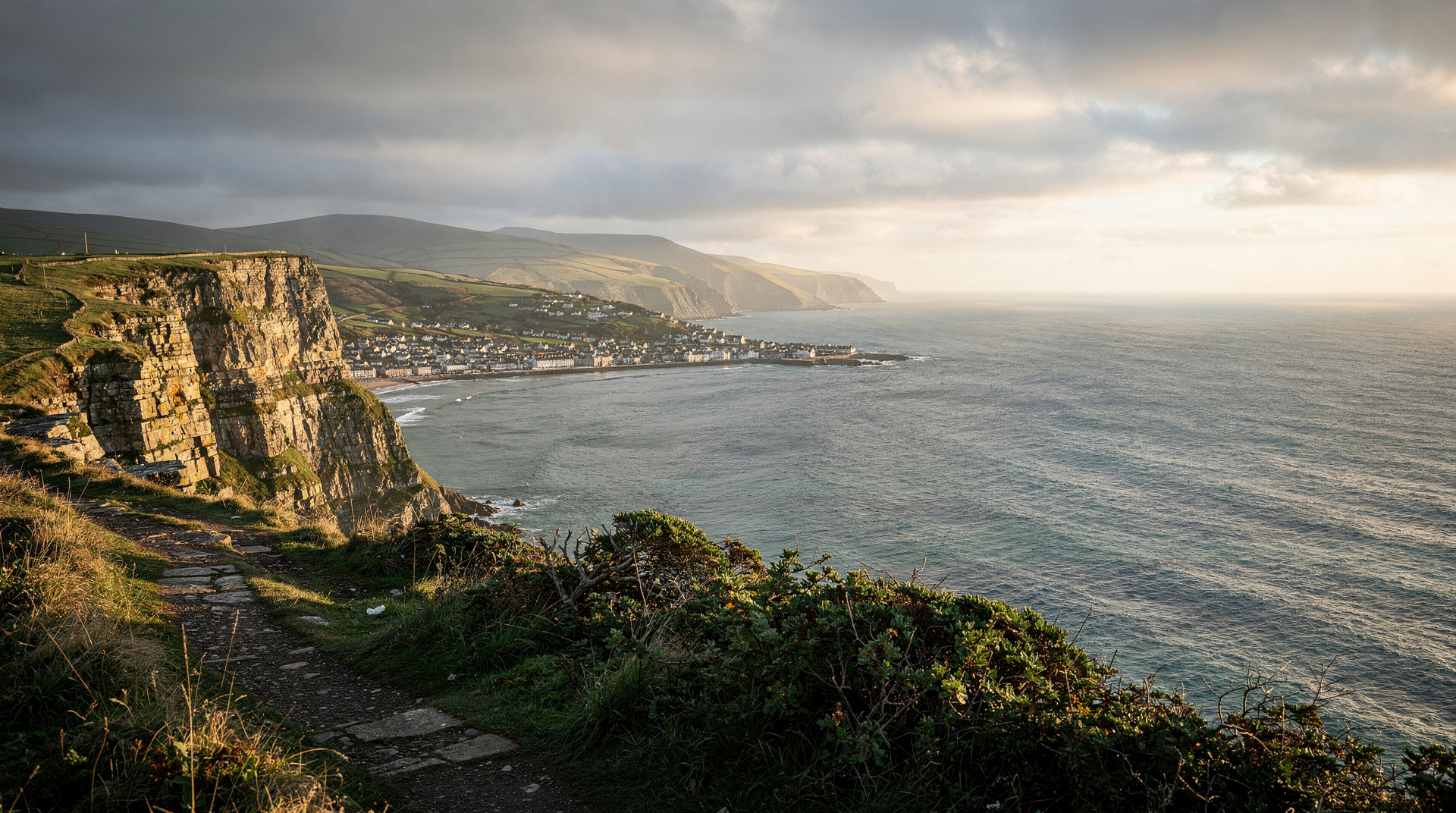
Killiney Hill is 155 metres at its summit, which sounds modest until you stand at the top and understand why it is worth the walk. The panorama from the summit obelisk covers the full arc of Dublin Bay from Howth Head in the north to Bray Head in the south, with the Wicklow Mountains rising behind and, on clear days, the mountains of Wales visible across the Irish Sea. In good light, it is one of the finest urban viewpoints in northern Europe.
| Where | Killiney, south Dublin coast |
| Cost | Free; small car park charge if driving |
| Time needed | 2–3 hours including the walk up and down |
| Getting there | DART to Killiney, 35 min from city centre |
| Best time | Clear days year-round; spring and autumn for lighter crowds |
The hill is a public park — Killiney Hill Park — free to enter and maintained by Dún Laoghaire-Rathdown County Council. It covers about 78 hectares of open grassland and gorse scrub, with several walking paths, a Victorian obelisk at the summit (built in 1742 as an employment scheme after a hard winter), and views from multiple angles depending on which path you take.
Getting up the hill
The main approach from Killiney DART station is a walk of about twenty to twenty-five minutes up a moderately steep path through the park. The station is on Killiney Road, and the park entrance is clearly signposted within five minutes of leaving the platform. The path climbs through woodland at the lower section and then opens out into heather and gorse on the upper slopes.
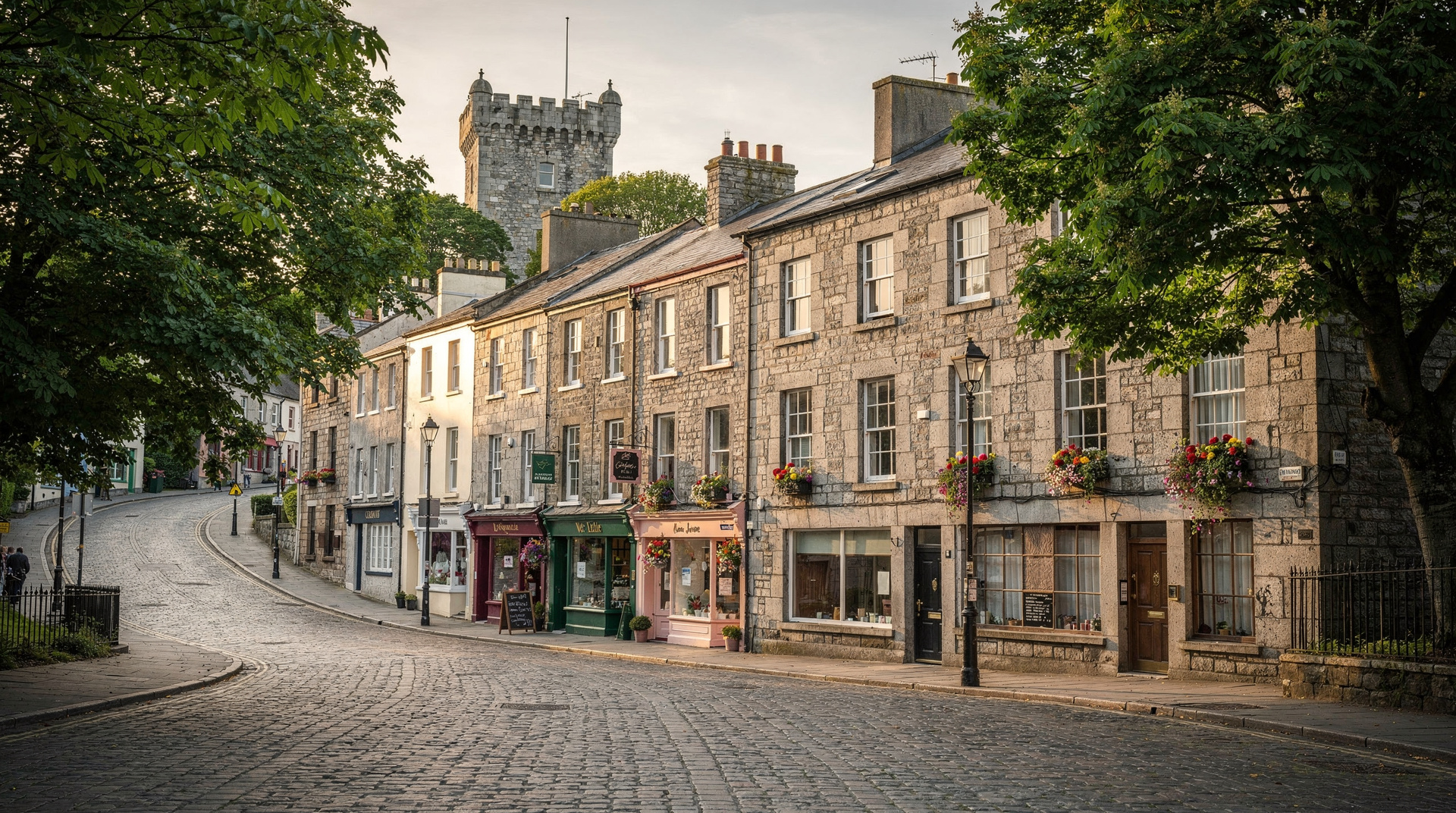
Alternative access points exist from Killiney village (further south, with parking), from the Vico Road below the hill’s eastern face, or from Dalkey village (twenty-five to thirty minutes on foot along a connecting path). The Dalkey approach is the most scenic and makes logical sense as part of a combined Dalkey and Killiney visit.
There are no facilities on the hill itself — no café, no toilets, no visitor centre. Bring water.
The Killiney Hill and Dalkey Castle day tour
For visitors who want to combine Killiney Hill with the medieval history of Dalkey Castle without navigating the bus connections, the combined day tour handles logistics and provides guided context for both sites. It is a good option if you are not confident on the hill paths or want the background on the geology and history of the area woven into the walk.
Independent visitors with decent navigation and suitable footwear will find the combination straightforward on their own using the DART.
What to see on the hill
The Victorian obelisk at the summit is the main landmark and the obvious gathering point for the views. A second, smaller obelisk sits lower on the eastern side of the hill, near the Vico Road. Below the obelisk, on the far side of the hill, the Vico Bathing Place is cut into the granite rocks at sea level — a small cove with swimming access similar to the Forty Foot at Dún Laoghaire. It is used by local swimmers throughout the year and involves a steep descent from the hill’s eastern face via the Vico Road.
The area between Killiney Hill and the Vico Road below is famously associated with expensive residential property — many of the large Victorian villas on this hillside have sold for record prices, and the area is sometimes compared to the Bay of Naples for its topography (an absurd comparison but one the locals enjoy). Some of the houses are visible from the hilltop path.
Combining Killiney with the south coast DART sequence
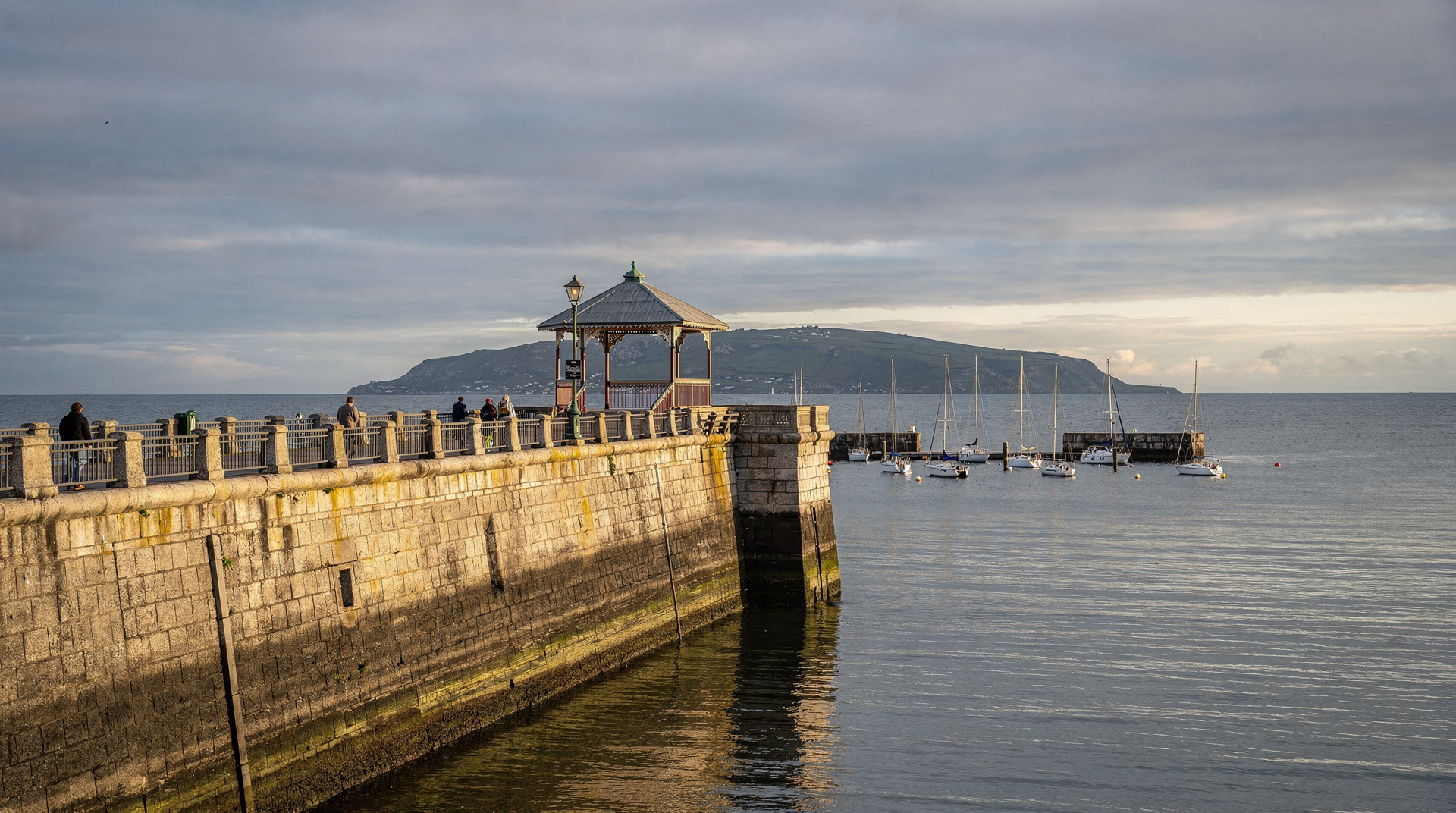
Killiney works best as part of a coast sequence rather than as a standalone destination. The natural combination is Dún Laoghaire for the pier walk, one stop south to Dalkey for the village and possibly the island boat, then one more stop to Killiney for the hill. The DART sequence takes about ninety minutes of travel time across the three stops, and each has two to three hours of content.
Alternatively, Killiney is a good add-on to a Bray and Greystones day — stop at Killiney on the way south to Bray, walk the hill, and continue to Bray for the seafront and cliff walk.
Practical notes
Killiney Hill is windier than the summit elevation suggests — the Irish Sea exposure means conditions change quickly, and a jacket is worthwhile even on summer days. The hill is busiest on weekend afternoons between May and September; weekday mornings are significantly quieter.
The DART from Killiney station back to the city centre runs every 20–30 minutes. The journey to Pearse Station is about 35 minutes. From the summit back to the station takes about twenty minutes downhill. If you are continuing south to Bray, the next station is Shankill (one stop), and Bray is two stops.
The DART and Luas guide covers the full south coast line with timing and fare information, and the day trips without a car page covers the full south coast sequence as a self-guided itinerary. The DART coastal day out guide is a more general version of the same idea if Killiney is just one stop among several you are considering.
The south coast DART stops compared
Killiney is one of four stops that make up Dublin’s classic south coast DART sequence, each offering something different:
| Stop | Highlight | Time needed |
|---|---|---|
| Dun Laoghaire | Harbour piers, Forty Foot swimming spot | 1–2 hours |
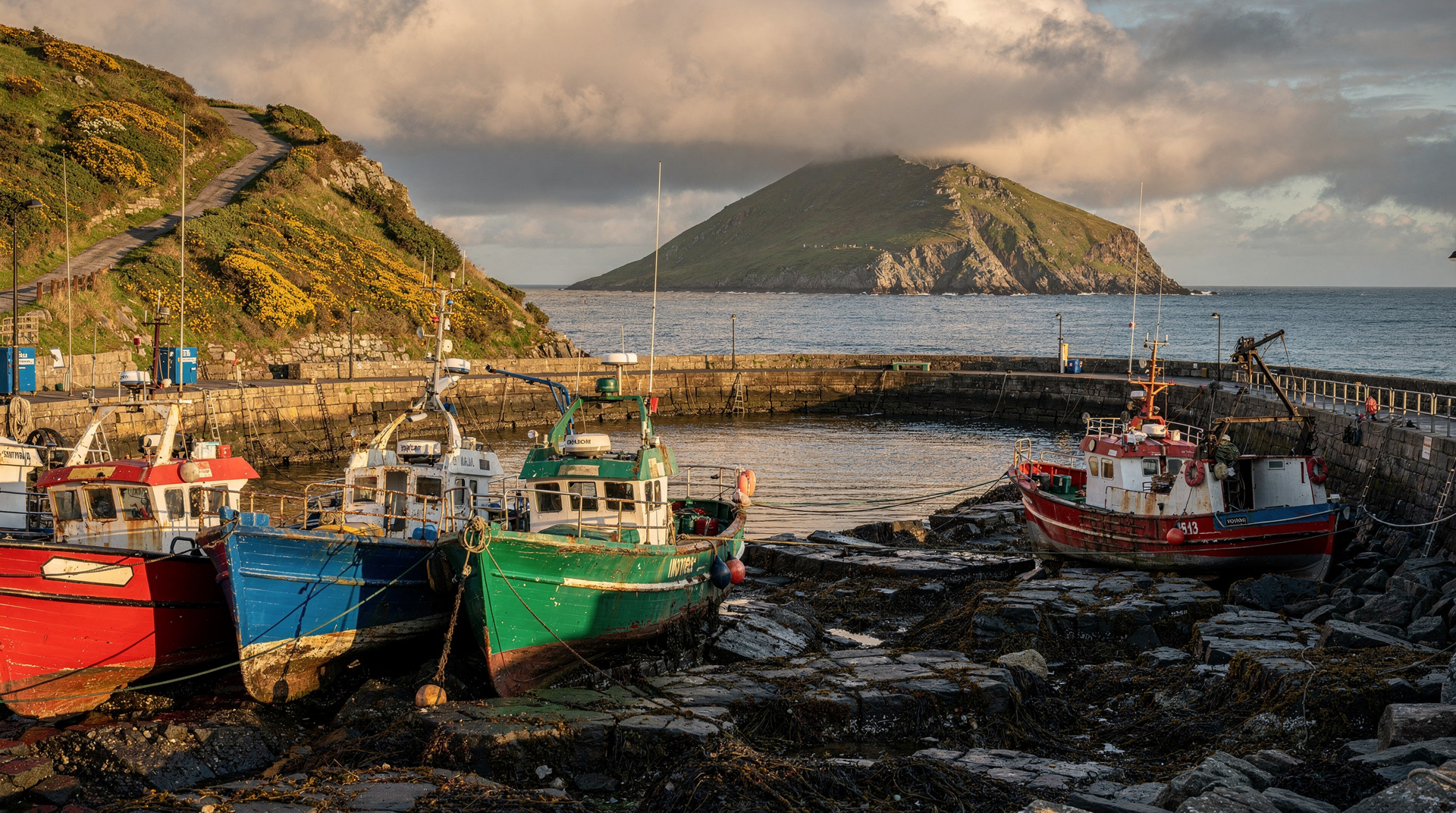
| Dalkey | Medieval village, castle, boat to Dalkey Island | 1–2 hours |
| Killiney | Panoramic hilltop views, Vico swimming cove | 2–3 hours |
| Bray/Greystones | Seafront and the Bray–Greystones cliff walk | 2–4 hours |
Doing all four in one day is possible but rushed; most visitors are better served picking two, or following the full Dublin coastal 3-day itinerary to spread them out properly.
Killiney for swimmers and photographers
The Vico Bathing Place below the hill is a genuine local swimming spot, not a tourist attraction — expect a steep, uneven descent and no facilities, but a rewarding sea swim in a dramatic granite setting if the weather cooperates. Photographers should aim for early morning or the last hour before sunset, when the light rakes across Dublin Bay and the Wicklow Mountains catch colour; midday light tends to flatten the view.
For a broader sense of lesser-known Dublin viewpoints and walks worth seeking out, the hidden gems Dublin walk guide covers several in the same spirit, and the what to pack for Dublin weather guide is useful preparation given how exposed the hilltop is.
Reading the view from the top
Once you reach the obelisk, give yourself a few minutes before reaching for the camera. Start at the northern end of the panorama and work round slowly: the long arm of Howth Head, the sweep of the bay with the city tucked into its curve, then the coast running south towards Bray Head. Behind you the Wicklow hills layer one behind another, and on a clear day they are the reason the view feels so much bigger than the hill itself. If you want to put names to what you are seeing, the Howth destination page and the Wicklow Mountains page cover the two ends of the horizon, and both make good follow-up days.
Different paths give different framings. The upper paths look out over open gorse and heather, while the lower woodland stretches give you glimpses of the sea through the trees, which is a pleasant contrast on the way down. It is worth taking a different route back from the one you used to climb, simply to see the hill from another side.
A relaxed half-day shape
The hill rewards an unhurried pace. A sensible rhythm is to arrive on a morning when the forecast is clear, walk up from the station, spend a while at the summit, and then drift downhill towards the coast rather than straight back to the train. Finish with a slow wander in Dalkey and a coffee or a meal there, since the hill itself has nothing to offer in the way of refreshments. The Dalkey village guide lays out what to do once you arrive, and it pairs naturally with this page.
If you would rather make it the finale of a longer day, start in Dún Laoghaire, walk the harbour, and let the hill be the reward at the end. Either way, the trains do the connecting work, which is the whole appeal of this stretch of coast. For the practical side of getting around, the getting around Dublin guide and the Leap card guide explain how to keep the fares simple when you are hopping on and off.
Who Killiney suits best
Killiney is a good match for travellers who like their scenery earned but not punishing. It suits first-time visitors who have seen the city centre and want a different angle on Dublin, and it suits returning visitors who already know the main sights. If you are still building your plan, the first-time guide to Dublin and the best day trips from Dublin put the hill in context, and the how many days in Dublin guide helps you decide whether you can spare the time.
Families with children who are comfortable walking will find the climb manageable at an easy pace, with the open summit giving plenty of room to run about. The Dublin with kids guide has more ideas for pairing the hill with other outings. Solo travellers will find it a calm, safe-feeling place to spend a morning, and the solo travel guide covers the wider city from that perspective.
Weather, seasons and timing
Because the whole point is visibility, the weather decides the visit more than the calendar does. Dublin’s weather changes quickly, so a morning that looks grey can brighten by midday, and a bright start can cloud over. Checking the forecast the day before and again on the morning is a better habit than fixing a date months ahead. The best time to visit Dublin guide explains how the seasons shape a trip, and the rainy day Dublin guide gives you a plan B for the days when the hill is not worth the climb.
In summer the long evenings make a late walk up the hill particularly appealing, with softer light and a quieter summit once the afternoon crowds thin. In the shoulder seasons the air is often clearer and the paths less busy. In winter the days are short, so plan your timing around daylight and keep an eye on the light for the walk back down.
Where Killiney fits in a longer trip
If you are planning several days around the bay, Killiney slots in neatly as a low-effort, high-reward outing. The Dublin coastal 3-day itinerary already builds the south coast into a wider plan, and the Dublin 3-day planning guide shows how to balance coastal time against museums and city sights. For a hill day that connects with the city, the Dublin Bay boat tours guide offers a way to see the same coastline from the water, which makes a satisfying counterpart to the view from above.
Seeing the same coast from the water
If your legs fancy a rest after the climb, or the forecast turns against the hill, the coast is just as rewarding from sea level. Taking a boat cruise from Dún Laoghaire out towards Dalkey Island shows you the granite shoreline and the headlands you were looking down on from the obelisk, and it pairs well with the Dún Laoghaire harbour walk.
For a wider sweep of the bay, a Dublin Bay cruise from the city centre to Dún Laoghaire lets you trace the arc of coastline from the water that you picked out from above, and it makes the journey itself part of the day. The Dublin Bay boat tours guide compares the options in more detail.
Worth it for the view alone — Killiney Hill delivers one of the best panoramas near Dublin for a free, unticketed twenty-minute climb. Skip it on a hazy or rainy day, since the payoff is almost entirely visual and a poor-visibility day removes most of the appeal; check the forecast and go on a clear one instead. The best alternative on a cloudy day is Dalkey village and castle, which rewards a visit regardless of weather. No booking needed — just good footwear and a jacket.
Top experiences
Bookable activities with verified prices and instant confirmation on GetYourGuide.

Dublin surrounds day tour: Killiney Hill & Dalkey Castle
- Free cancellation
- Instant confirmation

Dublin: Dún Laoghaire Dalkey Island boat cruise
- Free cancellation
- Instant confirmation

Dublin Bay: cruise from city centre to Dún Laoghaire
- Free cancellation
- Instant confirmation

From Dublin: half-day guided coastal tour to Howth village
- Free cancellation
- Instant confirmation

Dublin: the original hop-on hop-off green bus tour
- Free cancellation
- Instant confirmation