Howth cliff walk in late summer
Late August on the Howth cliff path: purple heather, hauled-out seals, diving gannets, and a harbour full of the best casual seafood on Dublin’s coast — all thirty-five minutes from the city centre by train.
| Getting there | DART from Connolly, ~35 min |
| Cost | Under €3 each way with a Leap card |
| Time needed | 2.5 hours for the full coastal loop, plus lunch |
| Best time | Weekdays, third week of August |
| Wear | Proper walking shoes — grass and mud sections |
The DART to the headland
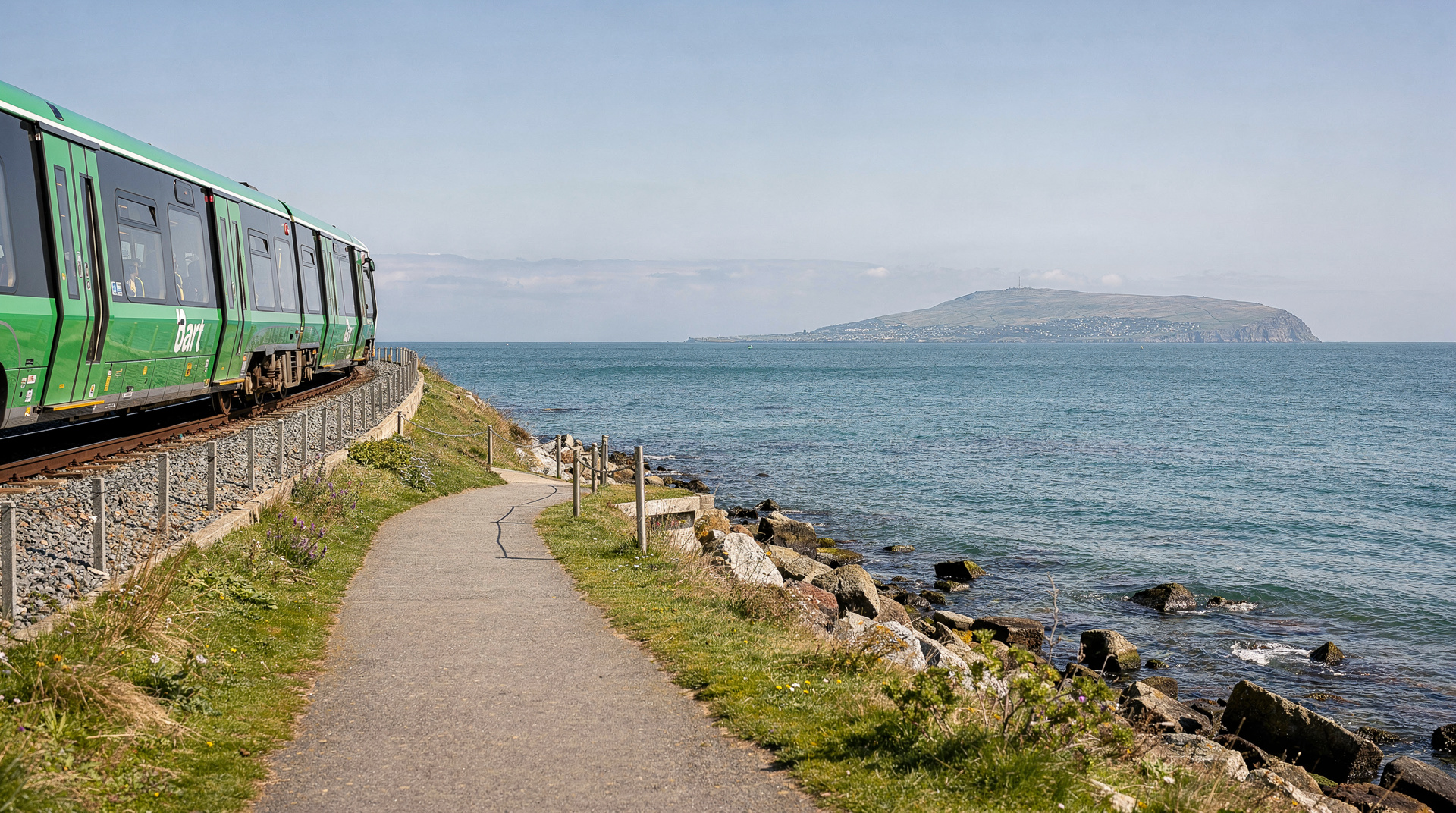
The DART from Connolly takes thirty-five minutes to Howth, which is long enough to read a chapter of something and short enough to feel like a legitimate escape from the city rather than a proper journey. The line runs north along the coast from the city, passing the backs of Clontarf’s houses, then Sutton, and then curving east onto the Howth Peninsula as the sea begins to appear in the windows on the right.
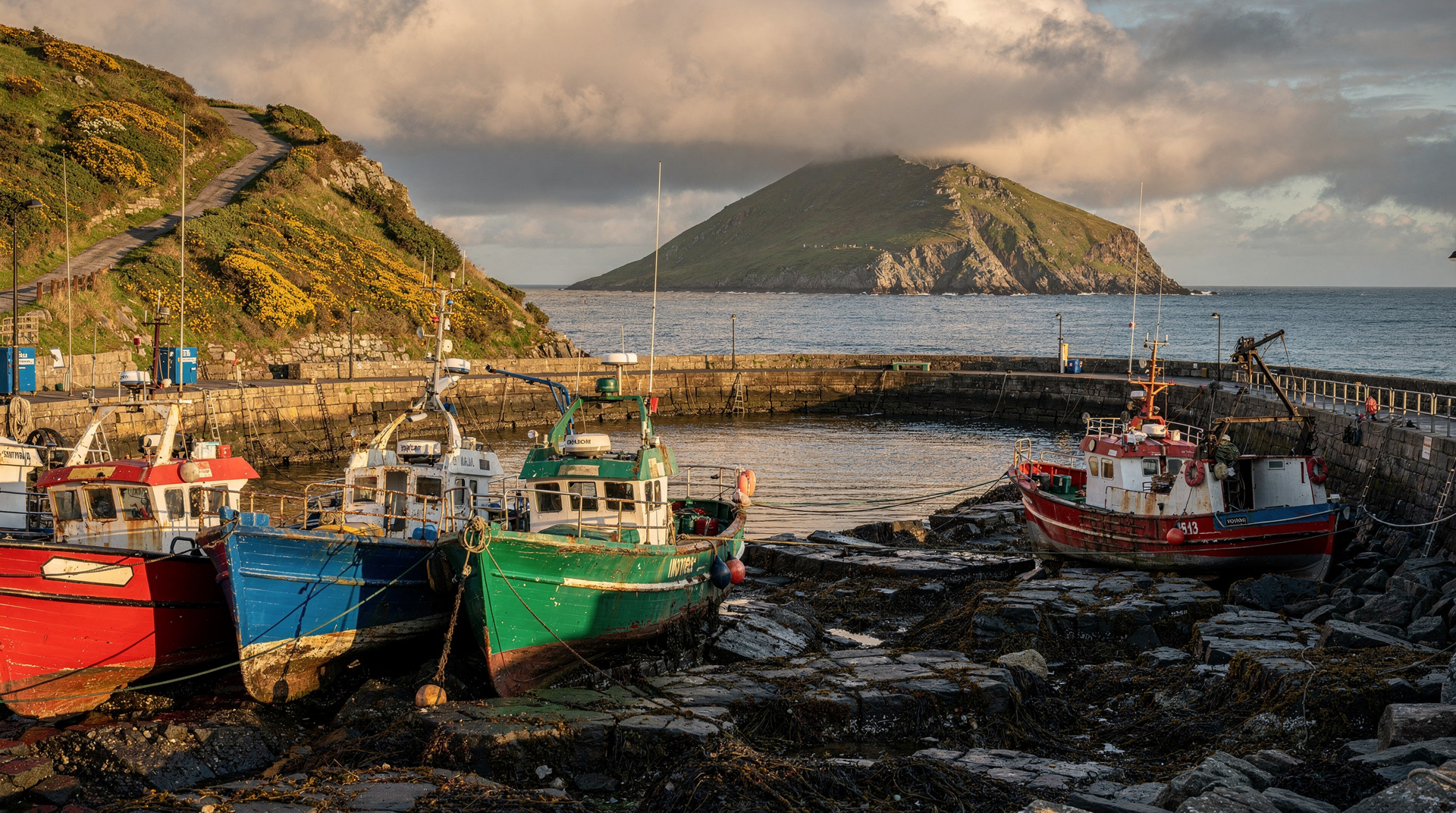
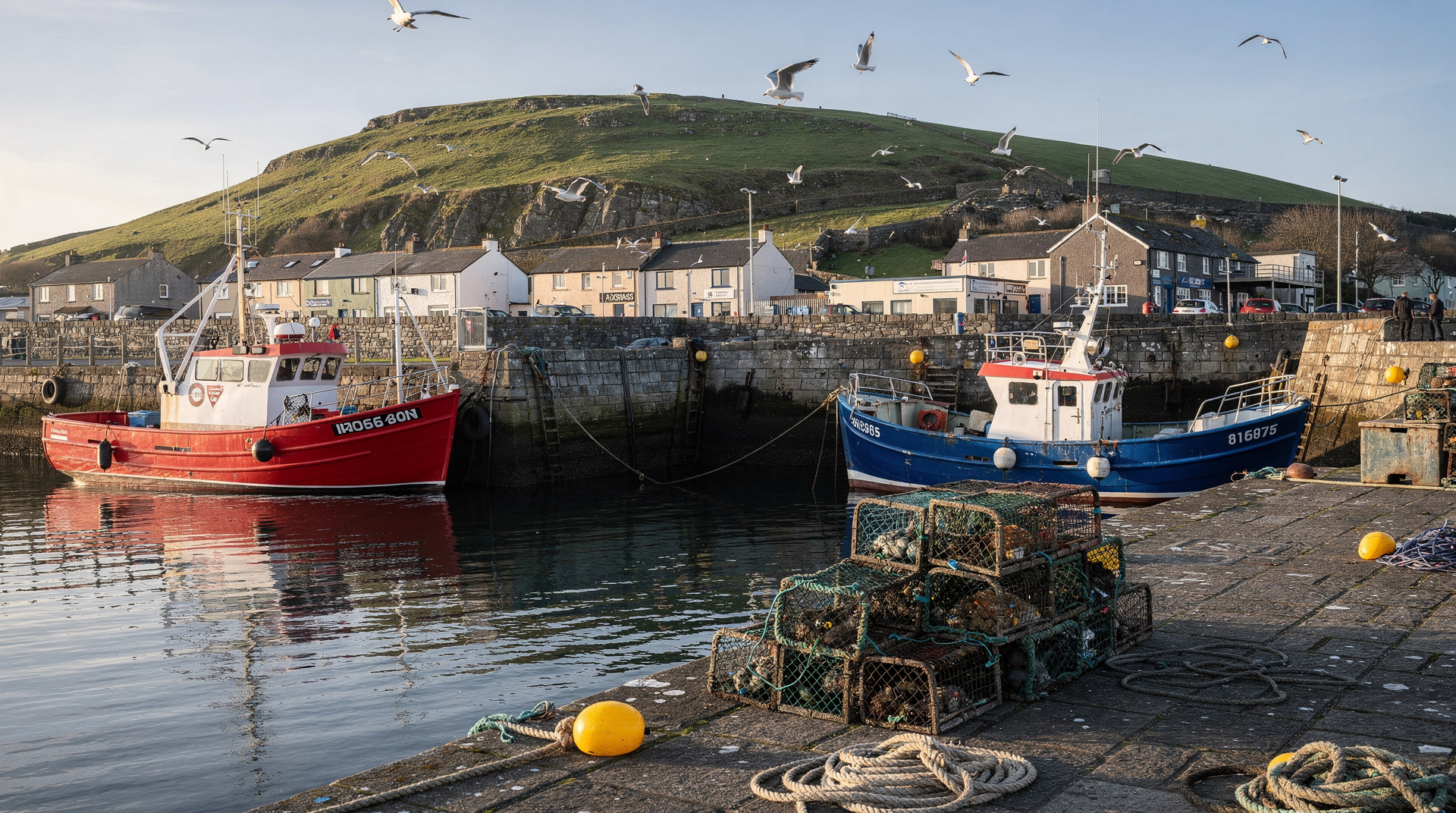
Arriving at Howth station in August is an exercise in recalibration. You step off the train into what feels like a different Ireland from the one you left forty minutes ago: the harbour, the boats, the smell of salt and diesel, a village that has somehow maintained its fishing-town character despite being a commuter suburb of one of Europe’s most expensive cities.
Late August is, in my view, the best time for this particular day out. The gorse has stopped flowering, but the heather on the cliff tops is in its full purple September-preview, the light stays good until nine in the evening, and the summer crowds have thinned just enough that you can walk the cliff path without feeling like you’re in a procession.
Choosing your path
The Howth cliff walk has four official loop options, ranging from a thirty-minute harbour circuit to a full three-hour summit walk. In late August, after a dry spell, the longer loops are completely manageable with ordinary walking shoes. After rain, or if you haven’t walked much, the middle options are more sensible.
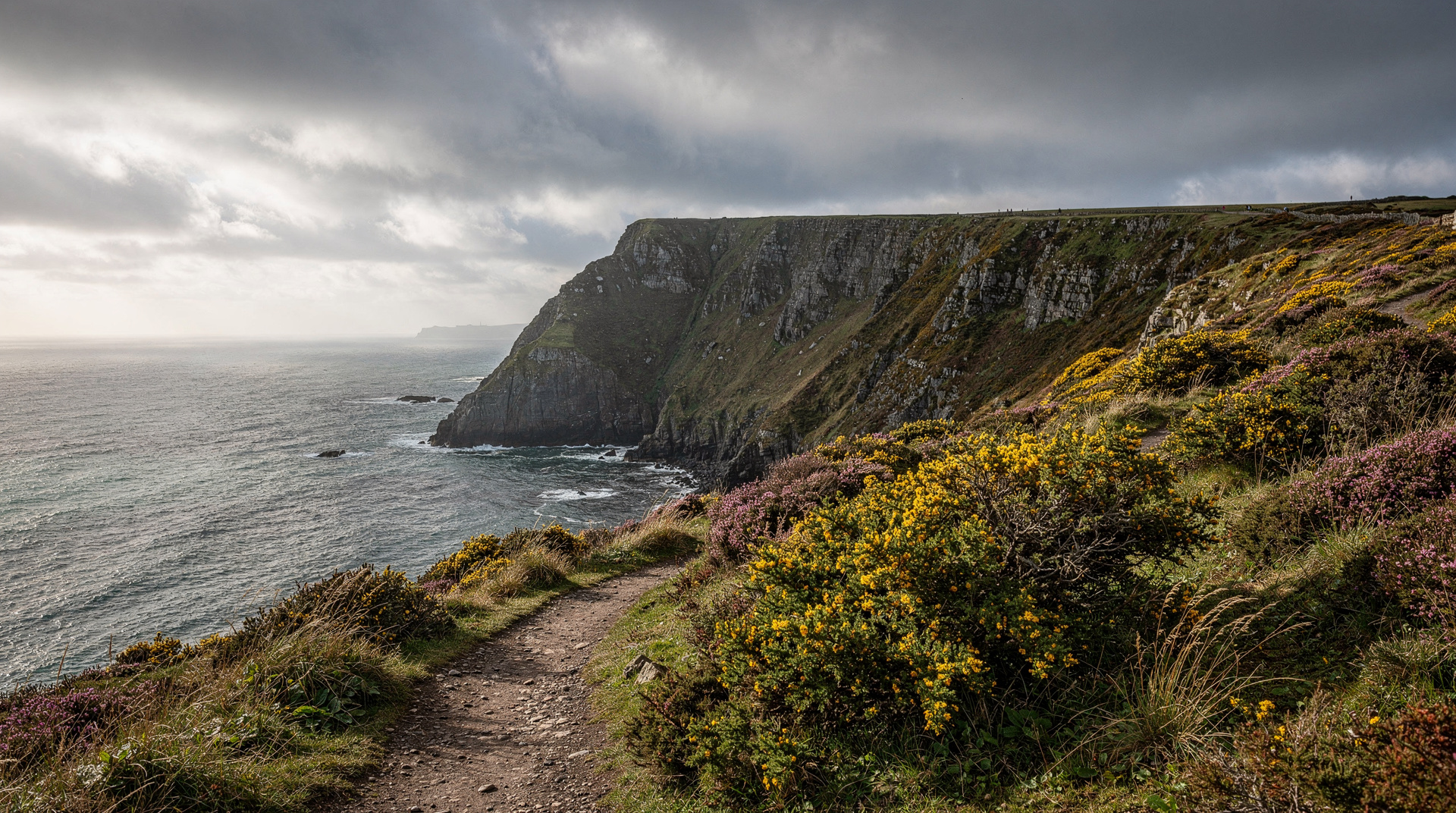
My preference is the longer coastal loop — out along the summit ridge, back along the cliff path proper, down into the village through the Abbey grounds. This takes about two and a half hours at a comfortable pace with stops for the view, which you will want. The views north to the Mourne Mountains on a clear day, south along Dublin Bay to the Wicklow Mountains, east to the open Irish Sea with Ireland’s Eye sitting close offshore — this is as good as coastal walking gets in the greater Dublin area, and you’re on a DART line.
The full guide to Howth cliff walk routes breaks down each loop with timings, terrain notes, and what to watch out for in different seasons.
If you are building the walk into a wider stay, the Howth destination page sets out the village itself, and the Howth day trip guide is the better starting point if you would rather treat the whole peninsula as a single outing than as a walk with a lunch attached.
What you actually see
In August the heather makes the upper slopes purple-brown, dramatic in a way that photographs well but rewards being looked at directly even more. The cliffs drop sharply on the seaward side, and the path runs close enough to the edge in places to require attention if you’re walking with children or have vertigo. Below, the water is a specific Atlantic blue-green in clear weather that doesn’t look quite real.
The birds are one of the unexpected pleasures. Howth is a seabird colony as well as a fishing village, and the cliff path puts you level with kittiwakes and gannets, close enough to see the yellow-black of the gannet’s head and the exact mechanics of the dive that makes them the best fishers on the coast. A gannet hitting the water from sixty feet is one of those sights that makes you forget you were thinking about anything else.
The seals usually appear around the lower rocks on the southern cliff face. In August they’re well-fed and relaxed — hauled out on flat rocks, barely reacting to the walkers above them, doing the specific seal thing of looking simultaneously ancient and completely unbothered. If you walk the lower path rather than the summit route, you get close enough that you can see the whiskers.
The harbour and lunch
Come down from the walk hungry. The harbour at Howth has a concentration of seafood restaurants and casual fish-and-chips places that constitutes one of the better food stops on the Dublin coast. The range runs from excellent sit-down seafood restaurants where the lobster was alive that morning to the harbour-front fish-and-chips shacks where you eat standing up with vinegar running through your fingers.
The best lunch I’ve had in Howth was a bowl of chowder in a small restaurant behind the fish market, made with that morning’s catch and served with soda bread. I’ve eaten more expensive lunches in Dublin that didn’t come close.
For those who want a guided experience of the coast — taking in the cliff walk, the village, and a stop for seafood — a half-day coastal tour to Howth combines the journey from Dublin with a guided walk and time in the village, which takes the logistics out of the day.
Ireland’s Eye
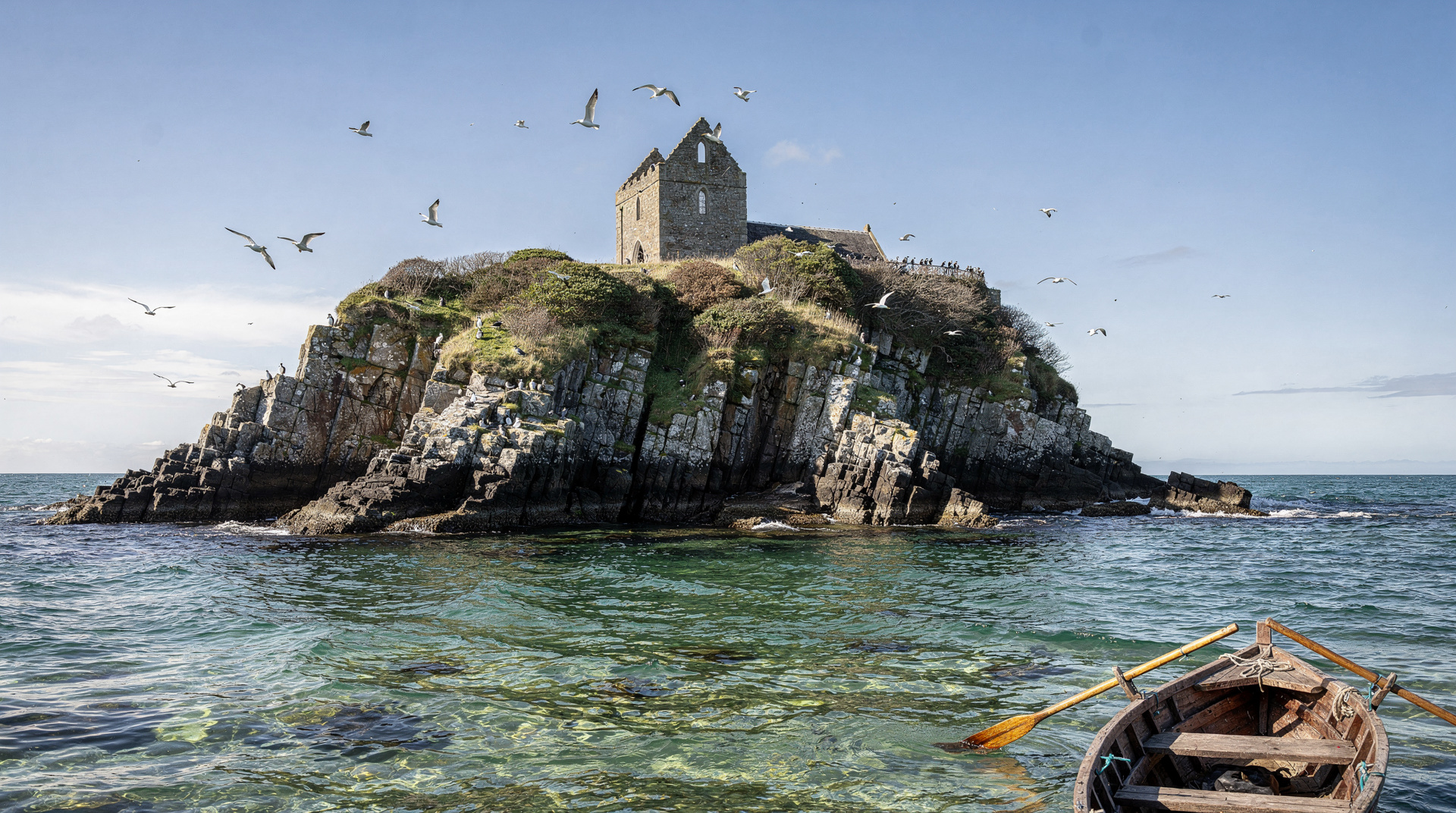
The small island visible from the harbour, about a mile offshore, is Ireland’s Eye — an uninhabited nature reserve with an early Christian church ruin, a Martello tower, and enough space to feel properly away from everything. The ferry runs from the harbour several times daily in summer, takes about fifteen minutes, and deposits you on a landing beach.
Ireland’s Eye in August has the quality of a place that has been kept outside time. There are seals, seabirds, the ruins, the tower, and whatever weather the Irish Sea is running that day. There are no facilities, no café, no interpretive signs. You bring your own lunch, find a rock to sit on, and watch the gannets.
It’s one of the most peaceful two hours available within thirty-five minutes of Dublin city centre. Our guide to Ireland’s Eye covers the ferry timetables and what to bring.
Because the island has no café, plan lunch on the mainland either before you sail or after you return. Many people do the clifftop loop in the morning and keep the island for the quieter end of the day, but the order is entirely a matter of taste and weather.
The four loop options compared
| Loop | Length | Difficulty | Best for |
|---|---|---|---|
| Harbour circuit | ~30 min | Easy | Limited time, still want the village and sea air |
| Middle loop | ~1.5 hrs | Moderate | After rain, or a shorter walking shoe |
| Full coastal loop | ~2.5 hrs | Moderate | The full heather-and-cliff experience |
| Summit walk | ~3 hrs | Moderate-hard | Best long views, fewer people at the top |
Beyond Howth: the rest of the coast
Howth is one stop on a longer coastal line, and late summer is a good time to see more of it in a single day if you have the energy. Malahide, north along the same DART line, has its own castle and gardens and a gentler, more low-key village atmosphere than Howth’s harbour bustle. South of the city, Dalkey and Dun Laoghaire offer a similar coastal-village feel with a different character — more genteel, less fishing-village. The DART coastal day out guide has the fuller breakdown of how to combine two or three of these stops without overloading the day.
For a guided version of the coast that takes in more than just Howth, the Howth coastal boat tour gives you the cliffs and Ireland’s Eye from the water, which is a genuinely different perspective from the clifftop path.
Practical notes for August
The DART from Connolly to Howth runs roughly every fifteen minutes in peak hours. A Leap card covers the fare, which is less than €3 each way. If you’re planning the full cliff walk, wear actual walking shoes rather than trainers — not because the path is difficult but because wet grass and occasional mud reward ankle support.
August bank holiday weekend (the last weekend of August) is the busiest day of the year in Howth and worth avoiding if you want the walk to feel like countryside rather than a leisure facility. The weekdays in the third week of August, after most families with school-age children have returned home but before September makes the evenings feel different, are close to perfect.
Pack a waterproof jacket regardless of the forecast. Eat the chowder. Look at the seals. Take the ferry to Ireland’s Eye if you have time. The DART home at seven, with the evening light on the sea and the city returning in the windows, is a good end to a day.
If you’re plotting a wider coastal itinerary, our DART coastal day out guide shows how to string Howth together with Malahide to the north or Dalkey and Dún Laoghaire to the south.
Making a day of it
A day on the headland sits comfortably alongside the rest of a Dublin trip. If you only have a short stay, the Dublin in one day itinerary shows what to prioritise in the city itself, while the three-day itinerary leaves room for a coastal morning like this one. Anyone planning a trip around the sea rather than the museums will find the coastal three-day itinerary built for exactly this kind of day.
Getting about is easy without a car. The Leap card guide explains how to pay for the DART and other public transport, and the DART and Luas guide covers how the two networks fit together. For other easy escapes by rail, the best day trips from Dublin is a good place to compare options, and the Dalkey village guide is the natural follow-up if you enjoyed the sea air and want another coastal village.
If the weather turns against you, the rainy day in Dublin guide has indoor alternatives, and our Glendalough in spring post offers another walking day for a different season.
Frequently asked questions about Howth cliff walk in late summer
Is the Howth cliff walk suitable for a half-day trip from Dublin without a car? Yes — that’s the point of it. The DART puts you in Howth in 35 minutes, and even the full 2.5-hour coastal loop plus lunch fits comfortably into a half-day, leaving the rest of your day free in the city.
Do I need to book the Ireland’s Eye ferry in advance? Not usually — it runs several times daily in summer and is generally walk-up, though arriving early in the day gives you more sailing options if you want flexibility around the tide and weather.
Top experiences
Bookable activities with verified prices and instant confirmation on GetYourGuide.