The Burren
Honest guide to visiting the Burren from Dublin — the geology, the archaeology, Poulnabrone dolmen, and how it combines with the Cliffs of Moher.
From Dublin: Cliffs of Moher, Bird of Prey & Aillwee Cave
Duration: 13h
- Free cancellation
- Instant confirmation
Quick facts
- Distance from Dublin
- ~230 km, about 3 hrs by car
- Getting there
- Car or coach tour; no direct public transport
- Currency
- Euro (€)
- Closest town
- Ballyvaughan or Lisdoonvarna
- Ideal visit
- Half day as part of Cliffs of Moher tour
A landscape that looks like another planet
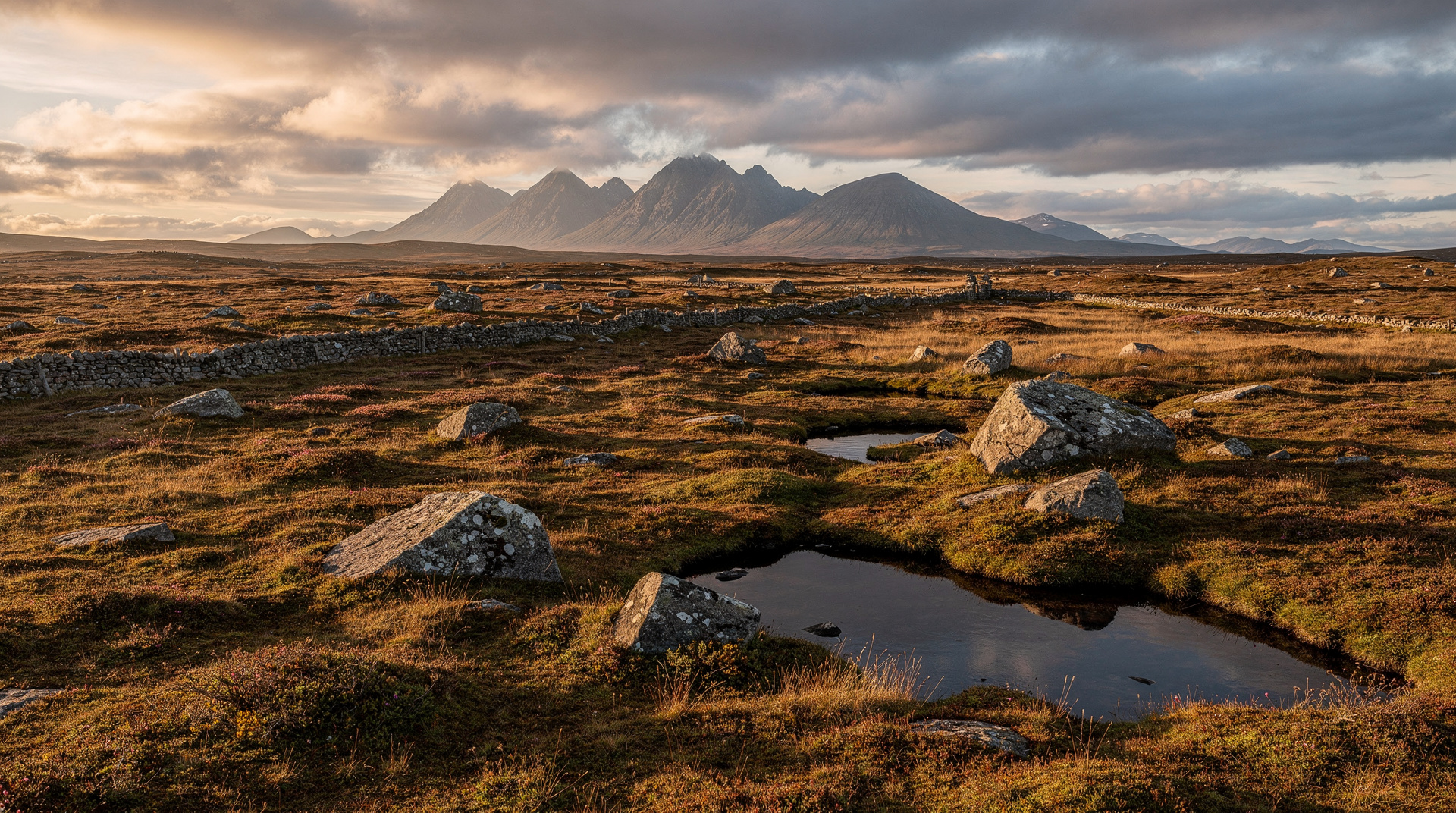
The Burren is a 250-square-kilometre expanse of limestone karst in County Clare that looks, at first glance, as though nothing lives here. The surface rock is pale grey and deeply fissured, the hillsides bare of trees. And then you crouch down and look into the cracks — the grykes, as they are called — and find orchids, gentians, mountain avens and ferns growing in their sheltered warmth. Arctic, Mediterranean and alpine plant species grow within metres of each other in the Burren, which is botanically unlike anywhere else in Europe.
It is a strange and compelling place. Most visitors encounter it as a stop on a Cliffs of Moher day tour, and that is a perfectly valid way to see it — but the Burren rewards time spent slowly, and a few hours moving through the landscape on foot reveals far more than a coach-window glance.
| Where | County Clare — about 230 km, 3 hrs from Dublin |
| Cost | Free to explore; Aillwee Cave around €14–18 |
| Time needed | Half day as part of a Cliffs of Moher tour |
| Getting there | Car via N18/R480, or organised coach tour |
| Best time | May–June for wildflowers; April–October generally |
Getting there from Dublin
The Burren is in northwest County Clare, roughly three hours from Dublin by car. The nearest large town is Ennis, and the main Burren towns of Ballyvaughan, Kinvara and Lisdoonvarna are reached via the N18 motorway or the R480 through the Burren itself (a spectacular route if you are driving).
Without a car, the Burren is almost always visited as part of an organised day tour that combines it with the Cliffs of Moher — which lies at the western edge of the Burren region. The Cliffs of Moher, Bird of Prey and Aillwee Cave tour from Dublin includes a stop at Aillwee Cave, a natural limestone cave system at the heart of the region, and gives a broader sense of the Burren landscape than the cliffs alone.
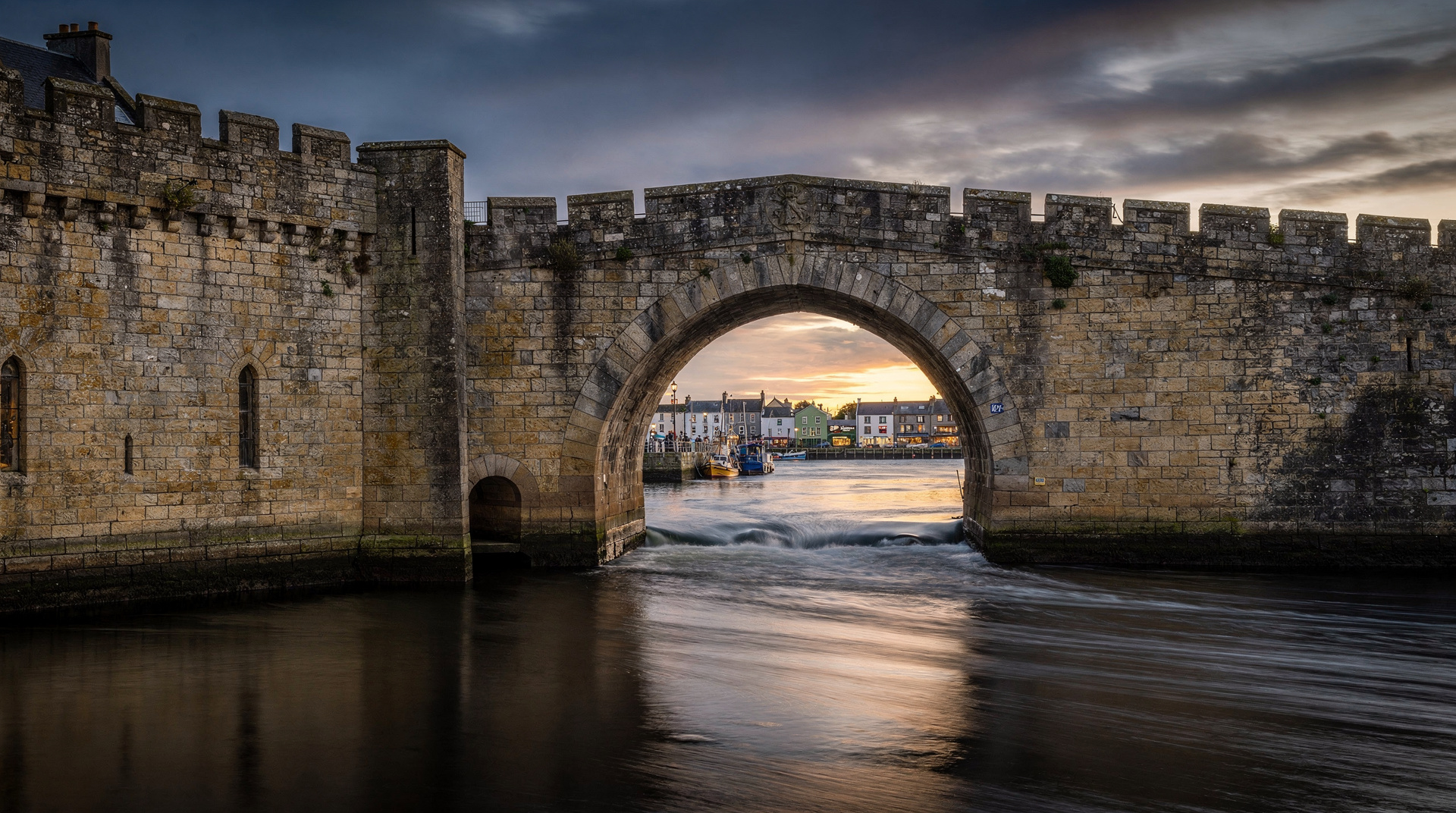
Ennis is the market town the Burren’s roads all lead back to, and Bunratty guards the estuary crossing that made the region reachable at all: a Cliffs of Moher, Ennis and Bunratty Castle day tour follows that older logic.
What to see
Poulnabrone dolmen. The portal tomb at Poulnabrone is a 5,800-year-old megalithic structure — a massive capstone balanced on thin uprights in the middle of the open limestone plateau. It is one of the most-photographed prehistoric monuments in Ireland and genuinely impressive in person. It is accessible from a small car park off the R480.
Aillwee Cave. The cave system near Ballyvaughan descends into the heart of a limestone hill, with stalactites, underground waterfalls and the remains of a prehistoric brown bear den. Tours run regularly and last about 30 minutes. An adjacent bird of prey centre offers falconry demonstrations.
Mullaghmore. This small flat-topped mountain offers short walks through some of the most dramatically terraced limestone scenery in the Burren, with views toward Galway Bay and the Aran Islands on clear days.
The Caher Valley and the green road. A network of old paths and green roads crosses the Burren, and the Caher Valley route along an ancient green road is one of the finest short walks in Ireland — about 10 km return, relatively flat, through limestone terracing and old field systems.
Burren National Park. The park focuses on the Mullagh More area and has a small visitor centre at Corofin with information on the archaeology and botany of the region.
How the landscape formed
The Burren’s limestone was laid down as sediment on a tropical seabed around 350 million years ago, later exposed and scoured bare by glaciers during the last ice age. What looks like barren rock is in fact riddled with underground drainage — rivers here often vanish into swallow holes and run beneath the surface for kilometres before re-emerging, which is why the region has almost no surface streams despite Ireland’s reputation for rain. This underground plumbing is also why the exposed limestone pavement retains just enough warmth and shelter in its grykes to support plants that have no business growing side by side: Arctic gentians beside Mediterranean orchids, all rooted in the same crack in the rock.
Walking the Burren Way
For visitors with more than a coach-tour stop to spare, the Burren Way is a signed long-distance walking route of about 114 km running from Lisdoonvarna to Corofin via the coast near the Cliffs of Moher. Few visitors walk the whole route, but short sections — particularly the stretch near Fanore along the coast, or the green roads around the Caher Valley — are accessible as half-day walks and give a far deeper sense of the terrain than driving the R480 alone. Sturdy footwear is essential; the limestone is uneven and can be slippery when wet.
How to look at the Burren properly
The Burren asks for a different kind of attention from most Irish landscapes. There is no single viewpoint that explains it, and the first impression of bare grey rock can be misleading. Slow down, get off the road and give your eyes time to adjust. Look at the pavement underfoot, at the way the rock is split into blocks, at the tiny plants wedged into the cracks, and at the stone walls that divide the fields and show how long people have worked this ground.
A few habits make the visit richer:
- Walk a short distance from the car park. Even a few minutes on foot changes the scale of what you notice, and you leave the coach-window view behind.
- Look down before you look out. The wildflowers are small and tucked into the grykes, so they only reward a close look.
- Stay on the paths and take care with the plants. The flora is fragile, and the limestone is uneven underfoot.
- Carry a layer and a waterproof. The plateau is open and exposed, and the weather can turn quickly, as it can anywhere on the west coast.
- Bring a little background reading. The geology, botany and archaeology are what turn a grey hillside into something memorable.
If you want the wider context of the region, the Cliffs of Moher guide explains how the coastline and the limestone uplands belong to the same story, and the Galway day trip guide shows how the city fits into a western circuit.
A landscape shaped by people as well as rock
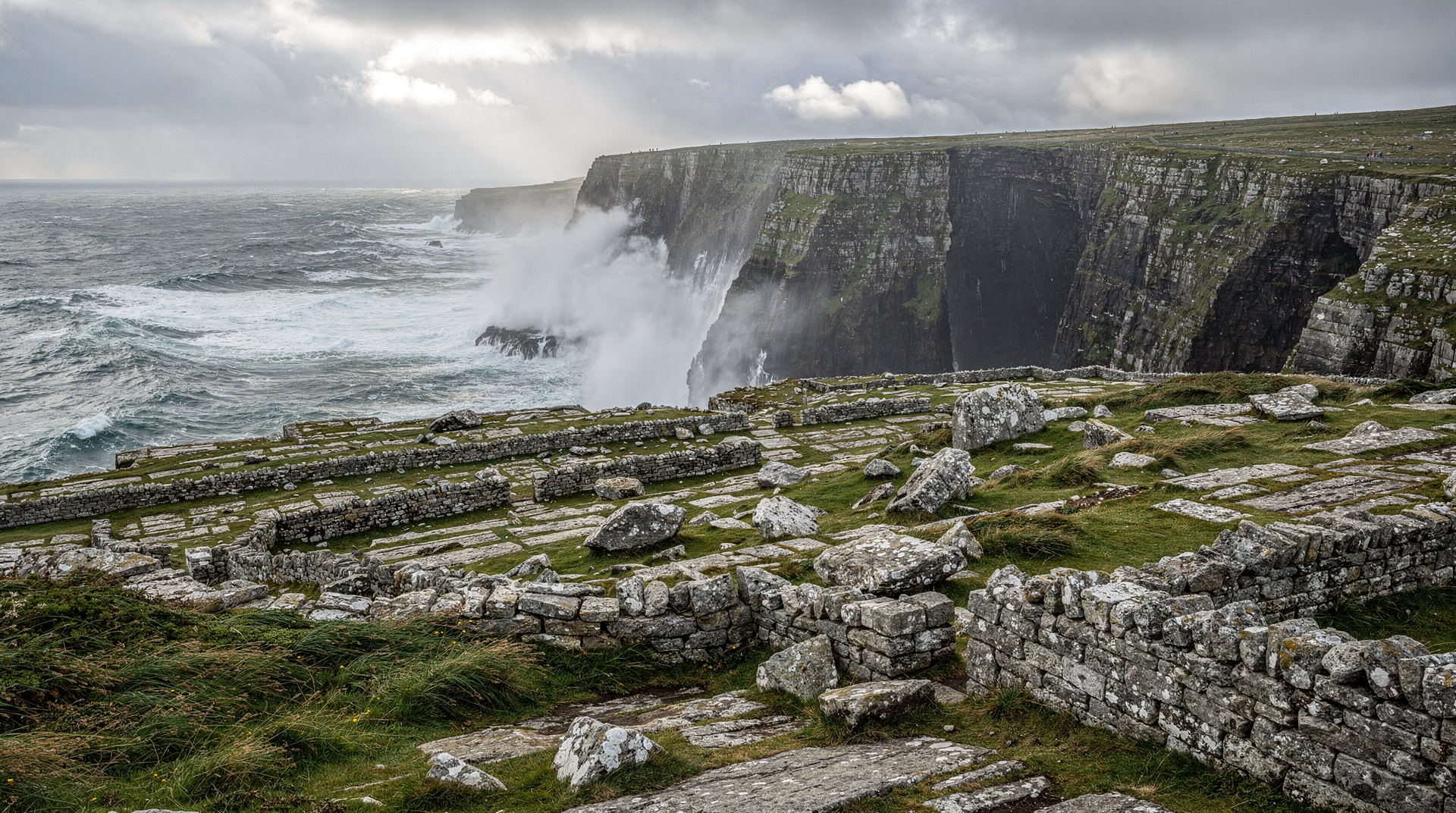
The Burren is not only a natural curiosity. People have lived and farmed on this limestone for a very long time, and the traces are everywhere: tombs, ring forts, field walls, old roads and ruined churches scattered across the plateau. Poulnabrone is the best-known of these, but it is far from alone, and you will often spot smaller monuments from the road or from a walking route if you know to look for them.
Farming here also has an unusual rhythm. Cattle have traditionally been moved onto the uplands for the winter rather than the summer, taking advantage of the shelter the rock provides, and this long-established practice is one reason the plant life has stayed so rich. It is a good reminder that the flowers you admire are partly a product of careful, traditional land use rather than simple neglect.
That human layer is worth bearing in mind when you plan your day. If history is your main interest, pair this page with the Newgrange and Boyne Valley page, which covers another great prehistoric landscape closer to Dublin, and with the Rock of Cashel page for medieval Ireland. Together they give a very different, but complementary, picture of the island’s past.
Planning the journey without the stress
The journey is the main challenge of a Burren visit from Dublin. The distance is real, and the day is long whichever way you travel, so it pays to plan sensibly rather than hope for the best.
If you are driving, read the driving in Ireland from Dublin guide before you set off, particularly if you are not used to narrow rural roads and driving on the left. The road through the Burren is scenic but can be slow, and stopping safely for photographs takes a little forethought.
If you would rather not drive, the day trips without a car guide explains how organised tours work and what to expect from them. For help comparing the different options on the Cliffs of Moher side, the which tour to choose for the Cliffs of Moher guide sets out the trade-offs, and the Cliffs of Moher day trip guide covers the shape of a typical day.
If you are travelling with children or a mixed-age group, the family day trips from Dublin guide helps you judge whether a long day on the road suits everyone. The cave and the bird of prey demonstrations tend to go down well, while the open limestone walking is better for older children who enjoy being outdoors.
Making a western Ireland trip of it
Because the Burren sits so close to other major sights, it works well as part of a longer western loop rather than a rushed single day. Galway city makes a lively base, and the Dingle peninsula or Killarney can extend the trip south for travellers with more time.
For a ready-made structure, the Dublin and the Wild Atlantic Way in five days itinerary shows how the west can be strung together, and the best day trips from Dublin guide helps you decide whether the Burren and the cliffs deserve one of your limited days at all. If you are still deciding between destinations, the best Dublin day trip and which one to choose guide gives a straight comparison.
When to go
May and June are the peak months for wildflowers — the gentians are brightest in April and May, the orchids in June. The Burren is also beautiful in September and October when the light is low and the stone takes on a warmer tone. Winter visits are quiet and atmospheric, though some cave attractions have shorter hours.
| Month | What to expect |
|---|---|
| Apr–May | Gentians in bloom; cool, changeable weather |
| Jun | Orchids at their best; long daylight |
| Jul–Aug | Warmest, busiest tour season |
| Sep–Oct | Fewer visitors, warm low light on the limestone |
| Nov–Mar | Quiet, stark, some attractions reduce hours |
Combining with the Cliffs of Moher
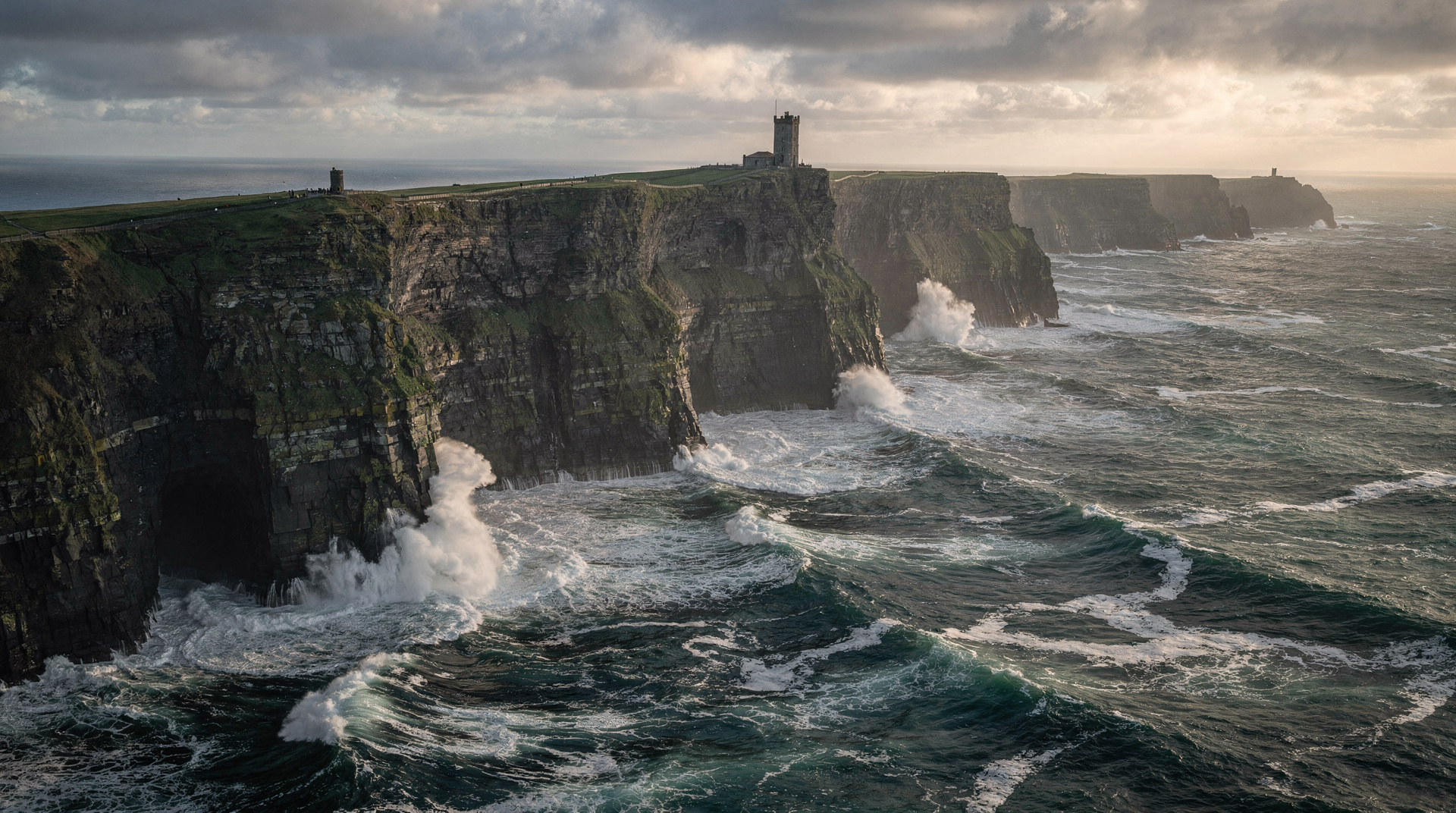
Almost every day trip to the Burren from Dublin includes the Cliffs of Moher, which sits at the Burren’s western edge near Liscannor. This is the logical pairing and the reason most organised tours combine them. See the Cliffs of Moher page for what to expect there.
If you are in Galway city and want to reach the Burren independently, a local operator can take you to the cliffs and back as a day tour, which makes more sense than the long Dublin-return journey. A three-day western Ireland trip might combine Connemara and Kylemore Abbey one day, then Aran Islands the next, then Burren and the cliffs on the third — a structure that avoids the exhausting 13-hour return from Dublin.
Who the Burren suits, and who it does not
The Burren is ideal for travellers who enjoy landscapes that reveal themselves slowly. If you like walking, photography, botany, geology or archaeology, it can be the highlight of a western Ireland trip, and the quiet of the plateau is a welcome contrast to the busier sights nearby. It also suits people who are happy to be outdoors in changeable weather and who do not need every stop to deliver a dramatic view.
It is less suited to anyone who wants constant spectacle, or who has limited patience for long travel days. If that sounds like you, the coastline at the cliffs will probably satisfy you more, and the Burren works best as a quieter chapter in the same day. Travellers who prefer a more compact, easy-to-manage outing might look at Howth or Glendalough, both of which are far closer to the capital and still give a strong sense of Irish landscape.
A sensible approach is to decide in advance what you want from the stop. If it is a quick look and a photograph at the dolmen, a tour will do that well. If it is a real walk, give yourself more time, choose your season carefully and think about staying overnight in the area rather than racing back.
Honest notes
The Burren can feel underwhelming if you expect rugged green Ireland. It is grey, austere and, in grey weather, slightly forbidding. Its beauty is subtle — the more you know about the botany and archaeology before you arrive, the more satisfying the visit. The Burren Ecotourism Network website is a useful primer.
If you are on a tight day-trip schedule and can only choose one west of Ireland destination, the Cliffs of Moher is the higher-impact choice. The Burren is its natural companion, and together they make a full and varied day.
Frequently asked questions about Burren
Do I need a car to appreciate the Burren, or is a coach tour enough? A coach tour gives you the headline views and Poulnabrone dolmen, which is genuinely worthwhile. A car (or a short walk from a parked coach stop) lets you get onto the limestone pavement itself and look into the grykes for the wildflowers, which is where the Burren’s real character shows.
Is the Burren interesting outside wildflower season? Yes, though differently. Outside May–June the flowers are gone, but the bare limestone geology, Poulnabrone dolmen and Aillwee Cave are unaffected by season, and low autumn or winter light on the stone has its own stark appeal.
Top experiences
Bookable activities with verified prices and instant confirmation on GetYourGuide.