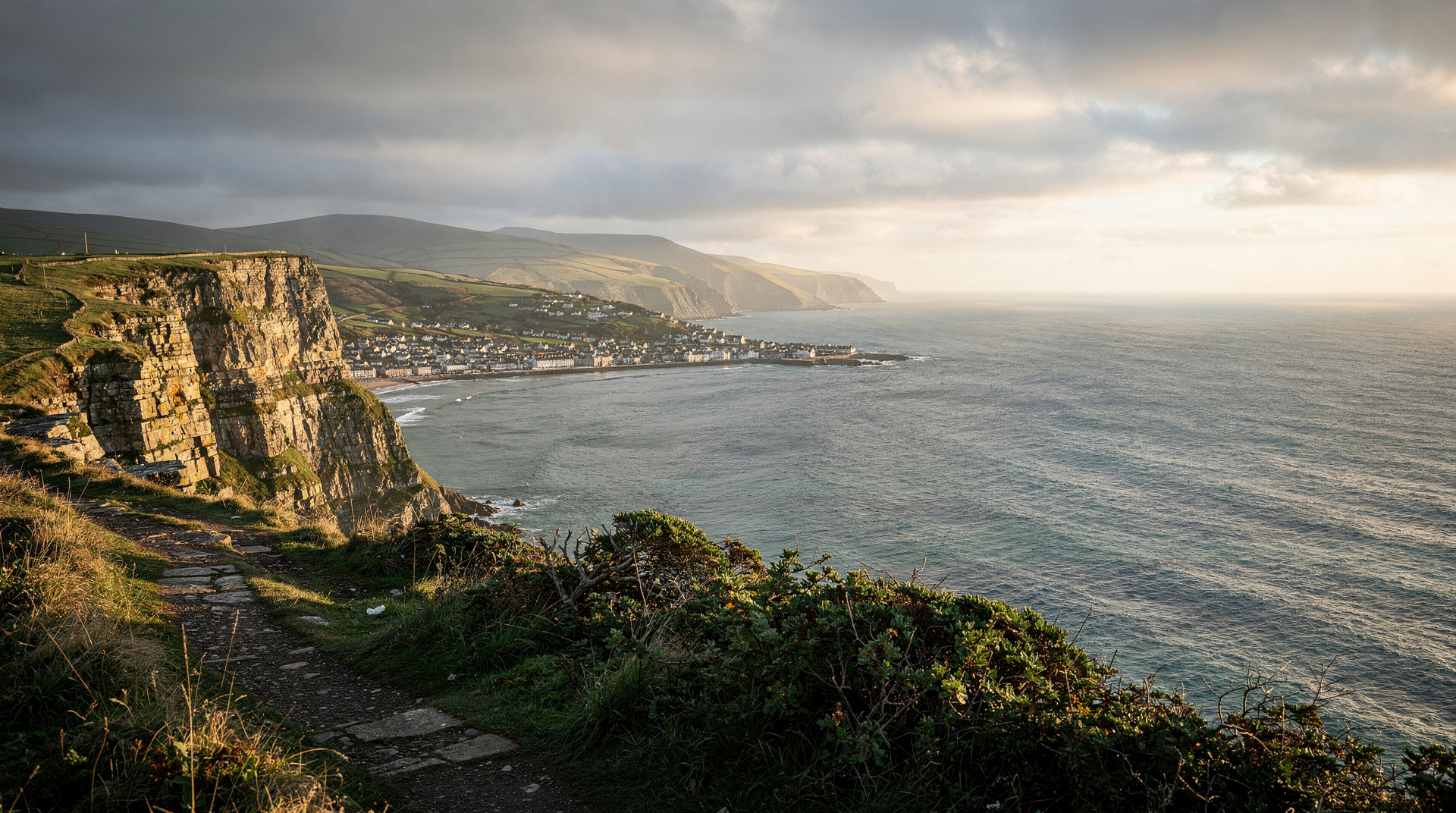
Lough Tay and the Sally Gap
Lough Tay — the Guinness Lake — drops into the Sally Gap plateau above Roundwood. The most dramatic viewpoint in Wicklow, 45 minutes from Dublin.
Personal tour from Dublin: Wicklow, Glendalough & Powerscourt
- Free cancellation
- Instant confirmation
Quick facts
- Distance from Dublin
- 45 km south via M11 and R759
- By car
- 50–60 min; no public transport to the viewpoint
- Viewpoint parking
- Small lay-by on the R759; can fill at weekends
- Elevation at Sally Gap
- Approximately 490 m
- Ideal visit
- Half day as part of a wider Wicklow circuit
The lake that looks like a Guinness advertisement
From the road on the western shore, Lough Tay appears suddenly: a dark, almost black lake cupped between granite cliffs and a curve of white sand at its southern end. The family that owns the land — the Guinnesses — reportedly planted the white sand to give the lake the appearance of a pint of stout viewed from above, the dark water as the porter and the sand as the head. Whether the story is true or apocryphal, the view is genuinely striking, and Lough Tay has become one of the most photographed landscapes in Ireland.
| Where | Sally Gap plateau, Wicklow Mountains, 45 km south of Dublin |
| Cost | Free; no admission or facilities |
| Time needed | 20–30 minutes at the viewpoint; half day as part of a Wicklow circuit |
| Getting there | Car or organised tour only — no public transport |
| Best time | April to November; early morning or late afternoon light |
The lake sits on the Sally Gap plateau in the Wicklow Mountains, roughly 45 kilometres south of Dublin. It is not a stand-alone destination in the way that Glendalough or Powerscourt is — there is no visitor centre, no admission charge, no cafe, and no monument. You park in a lay-by on the R759, walk to the wall, look at the view, and continue your journey. That is the point. The satisfaction is architectural: the proportions of the lake, the cliff on one side, the slope of heather down to the strand on the other, and the sensation of having driven to something that is simply landscape.
Getting there from Dublin
Lough Tay is not reachable without a car or an organised tour, and there is no public transport to the viewpoint. The most direct route from Dublin is the N11 south to the Kilmacanogue junction, then the R760 through Enniskerry and onto the R759 over the mountain plateau. Allow 50–65 minutes from the city centre. The R759 is a single-carriageway mountain road that narrows in places — it is fine in ordinary cars but demands attention when meeting oncoming traffic or tour coaches.
Most organised day tours that cover the Wicklow Mountains pass the Lough Tay viewpoint. The Powerscourt, Guinness Lake and Glendalough tour is the most direct choice, combining the three most distinctive Wicklow sites in a single day. This tour departs Dublin in the morning and returns by early evening, making stops at each site with adequate time at each.
The Sally Gap
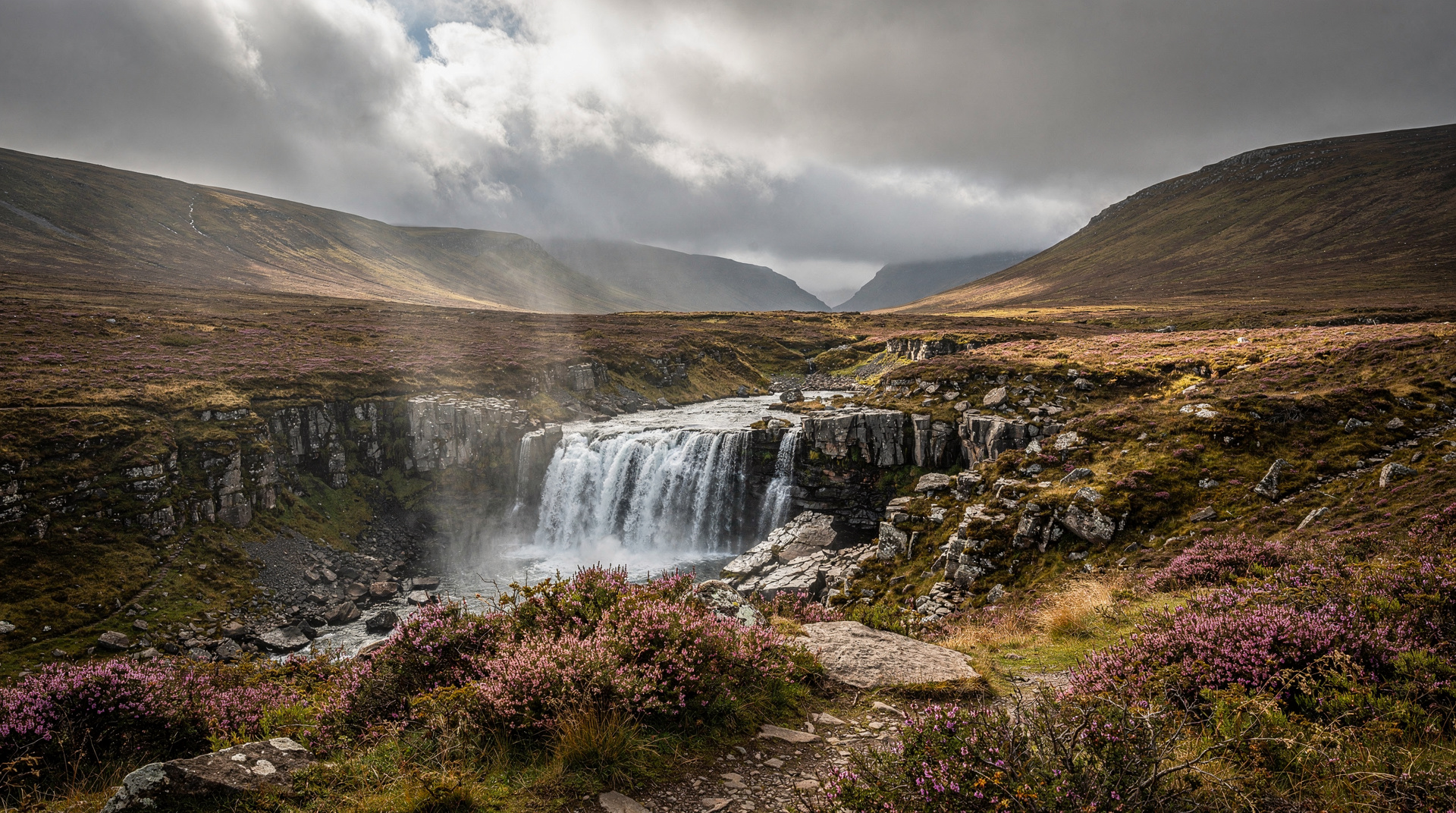
The Sally Gap itself — the crossroads at the highest point of the road — is a bleaker place than the lake. Treeless bog in every direction, a few sheep, wind, and the occasional cyclist grinding uphill. The Military Road runs north-south through here, built by the British after the 1798 rebellion to allow rapid troop movement through the mountains where rebels had found easy cover. The road is now a scenic route and attracts cyclists from Dublin in the summer months; on a clear day the views across the bog plateau toward the sea are wide and austere.
Walking from the Sally Gap
If you have walking boots and a few hours, the area around the Sally Gap offers several routes across the open moorland. The ridge above Lough Tay (Luggala Mountain, 595 metres) is accessible from the road but requires good navigation in mist and appropriate footwear — this is not a place for trainers on a wet day. The Wicklow Way long-distance walking route passes close by, and you can join it from the gap for a section of the ridge before returning to the road.
For more structured walking with a guide, the Wicklow Mountains page has details on organised hiking tours that cover this area. Glendalough is 15 kilometres south from the Sally Gap on the same road, making the combination of viewpoint and monastic site a natural pairing.
If you would rather not navigate the moorland alone, a full-day guided hike and drive through the Wicklow Mountains lets someone else handle the route-finding and the driving while you concentrate on the scenery.
Luggala House
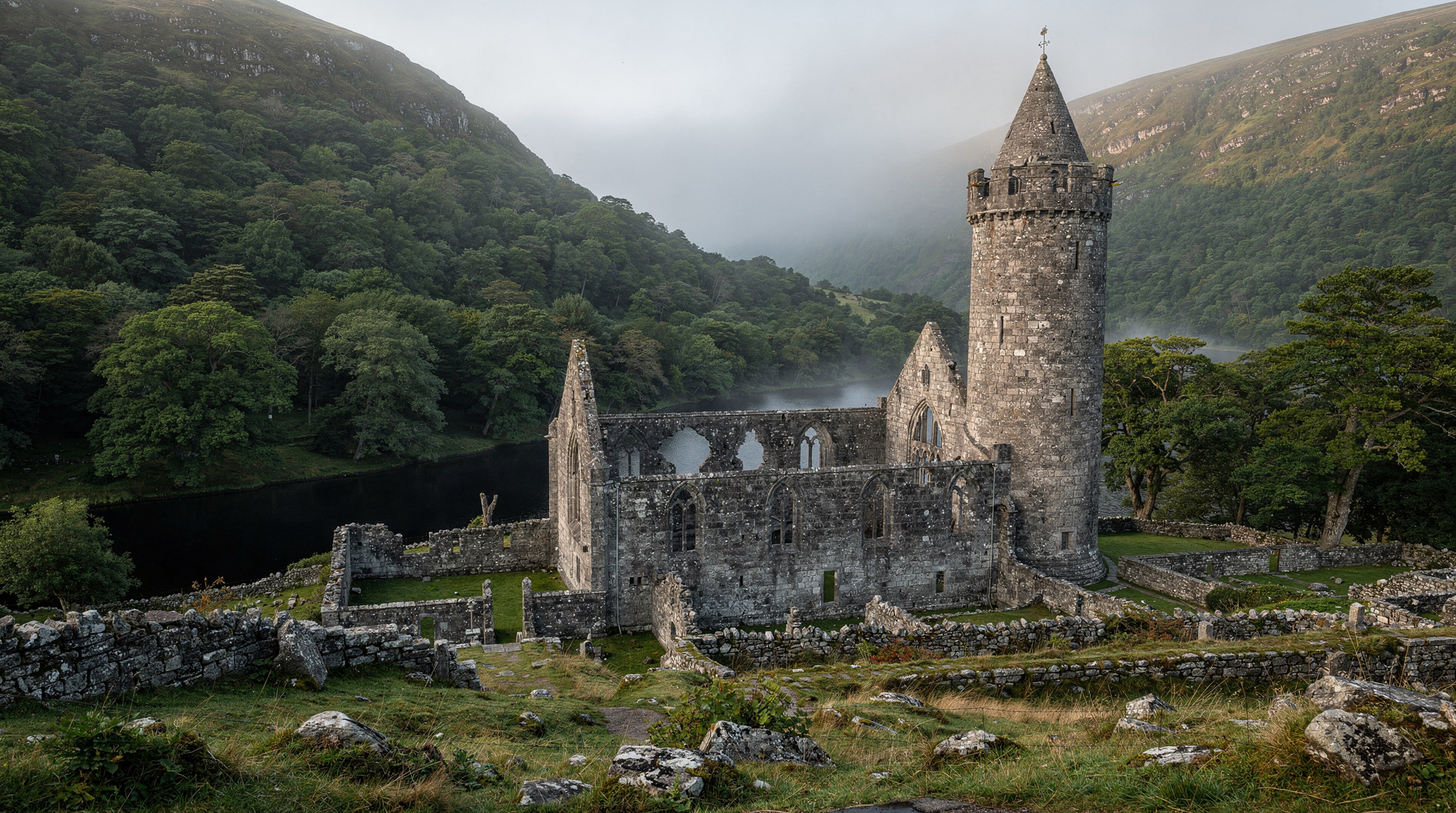
On the far shore of Lough Tay, barely visible from the road, sits Luggala House — a Gothic Revival shooting lodge that formed part of the Guinness estate from 1937 until 2018, when it was sold. The estate attracted a remarkable number of artists, writers and musicians over the decades, including Brendan Behan, John Huston and Samuel Beckett. It is now a private retreat and not open to visitors, but it adds a layer of literary and social history to the view.
Filming locations
The Sally Gap and Lough Tay have appeared in numerous Irish television productions, most notably as a backdrop for several scenes in the BBC drama Normal People (which was filmed extensively in Wicklow) and in older productions going back decades. The combination of accessible moorland and dramatic lake scenery close to Dublin makes it a regular choice for location managers, which means the landscape may feel oddly familiar even on a first visit.
Combining with the wider Wicklow circuit
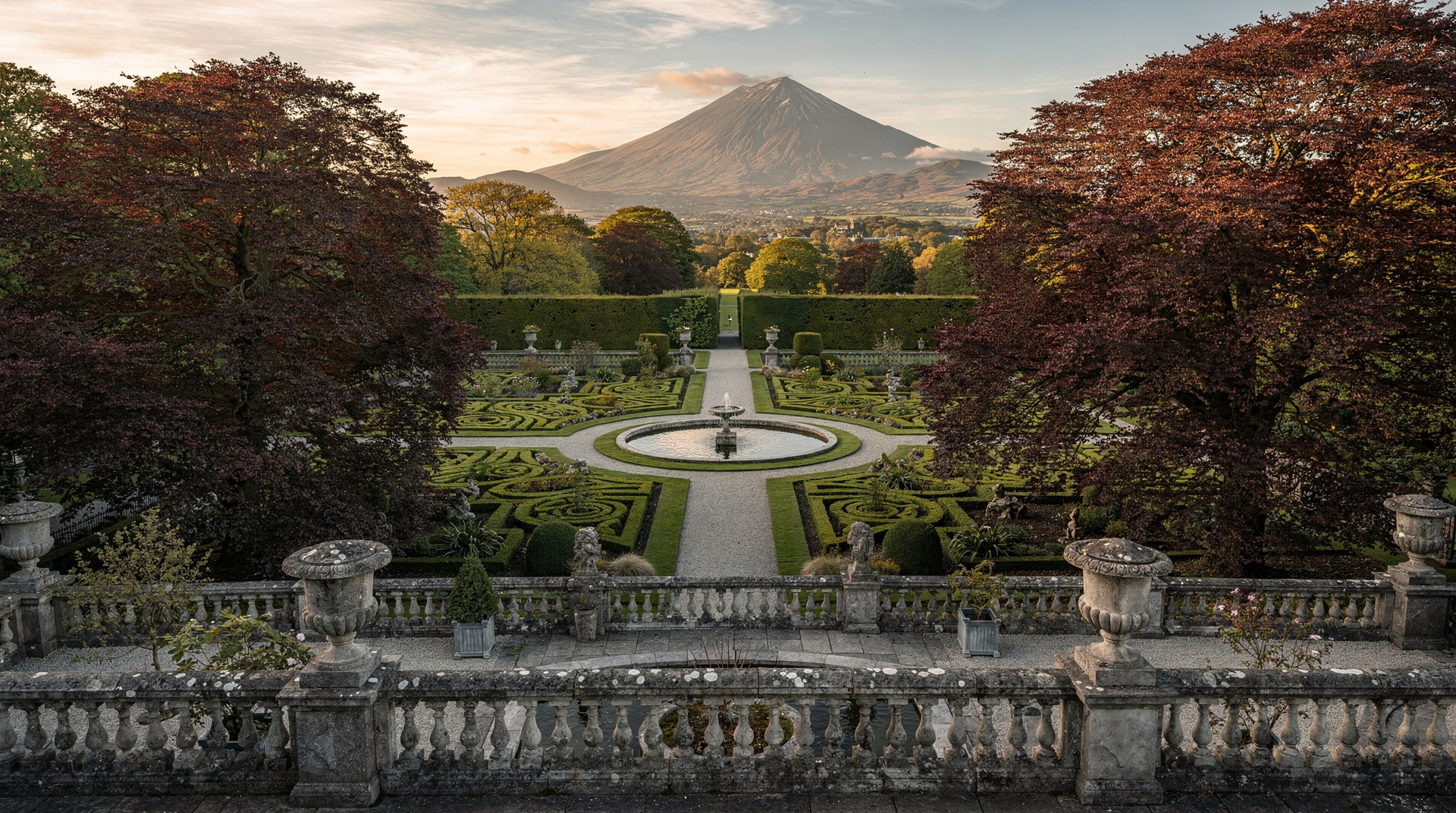
Lough Tay works best as part of a wider day in Wicklow rather than a destination in its own right. The natural pairings are Powerscourt to the north — 20 kilometres via the R759 — and Glendalough to the south, another 20 kilometres on the same road through Roundwood. This triangle is the most rewarding Wicklow day-trip combination and can be done comfortably in a car with an early start from Dublin.
The wicklow-glendalough day trip guide has timing recommendations and driving routes for the full circuit.
When to go
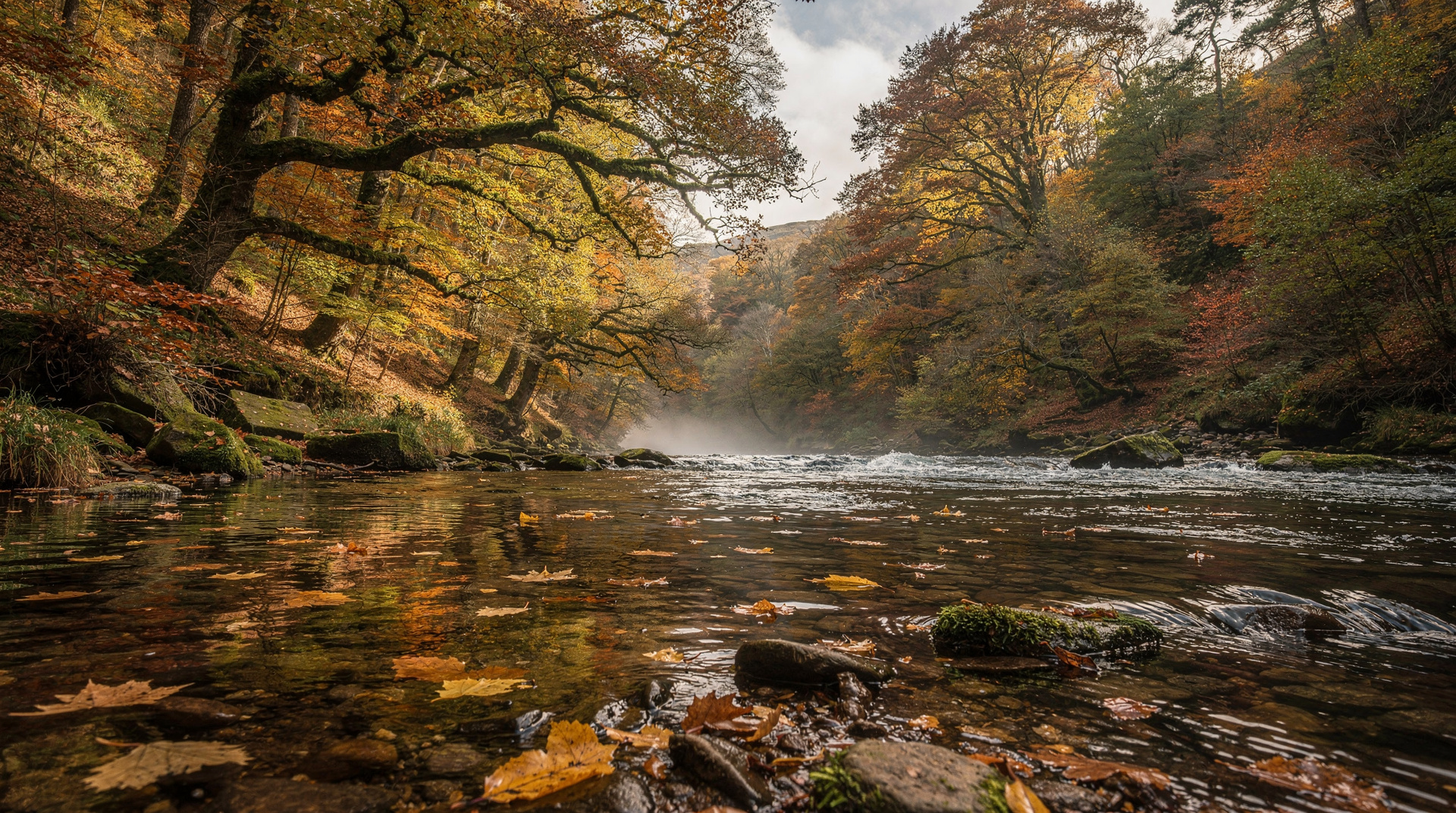
The viewpoint is accessible year-round, but the light and weather vary enormously. Autumn (October–November) gives the most dramatic bog colouring — bronze and russet heather against the dark water. Spring (April–June) brings green growth and lower visitor numbers than summer. July and August weekends see the parking lay-by filling by 10 am; arriving before 9 am or mid-week avoids the worst. In winter the road can be icy and is occasionally closed in severe weather; check conditions before setting out.
Photography is best in soft morning light when the cliff face on the east shore catches the early sun, or in late afternoon when the shadows lengthen across the water. The lake is almost always darker than it looks in photographs — the tannins from the peat bog stain the water brown-black in reality, which is part of what makes it so distinctive.
Lough Tay by season
| Season | Landscape | Road conditions | Crowds |
|---|---|---|---|
| Spring (Apr–Jun) | Green growth, lower visitor numbers | Generally clear | Light to moderate |
| Summer (Jul–Aug) | Warmest, but the lay-by fills by 10am on weekends | Clear, busy with tour coaches | Heaviest |
| Autumn (Oct–Nov) | Best bog colouring, bronze and russet heather | Clear but shorter daylight | Moderate |
| Winter (Dec–Mar) | Starkest, most dramatic light on clear days | Can be icy or closed in severe weather | Lightest |
Driving the Sally Gap yourself
If you are self-driving rather than joining a tour, the R759 across the Sally Gap is straightforward in good conditions but narrows to single-track in places, with blind bends and no barriers on some drops. Go slowly, use passing places courteously when meeting oncoming tour coaches, and check road conditions before setting out between November and March, since the plateau road is among the first in the region to close in snow or ice.
The driving in Ireland from Dublin guide covers rental car practicalities and rural road etiquette for visitors unused to Irish mountain roads, and the what to pack for Dublin weather guide is worth checking before an exposed, unshielded viewpoint like this one — conditions on the plateau can differ sharply from Dublin city.
Extending the circuit to Wicklow town
Beyond the Powerscourt–Lough Tay–Glendalough triangle, a longer version of the Wicklow circuit continues south to Wicklow town and Avoca, adding the coast and the Avoca handweavers to the mountain scenery, or loops back toward Dublin via Bray and Greystones for a coastal finish. The Wicklow Mountains guide has the fuller range of route options for those with a full day and a car.
What to expect at the viewpoint
The stop is short and unceremonious, and that suits it. You step out of the car into wind that is almost always stronger than it was in the valley, walk a few paces to the wall, and the whole lake opens below you. Most visitors spend their time looking for the angle that best shows the pale strand against the dark water, and it is worth moving along the wall rather than settling at the first gap. Give yourself a few minutes simply to look before you reach for the camera; the view changes as cloud shadows cross the cliffs and the surface of the lake shifts from black to slate.
Bring a layer even on a fine day. The plateau is exposed, and the temperature feels very different from the city or from the sheltered gardens at Powerscourt. If you are travelling with children, keep them close to the wall and away from the road edge, since cars and coaches pass regularly and there is little room beside the lay-by.
Planning a day around the viewpoint
Because the viewpoint is so brief, the real planning question is what surrounds it. Three kinds of day work well:
- The classic triangle. Start with the gardens, cross the plateau, and finish among the monastic ruins. The Powerscourt gardens and waterfall guide and the Glendalough guide cover the two ends of that day in detail.
- The scenic drive. If you care more about landscape than sights, treat the whole Military Road as the attraction, stop at the lake, pause at the Sally Gap crossroads, and take the time to pull in at safe places along the way.
- The walking day. Use the lake as a warm-up viewpoint, then head onto the moorland with a map and proper boots. The Wicklow Mountains destination page is the best place to start choosing a route.
If you are building a longer stay around Dublin, the Wicklow circuit slots easily into several of the site’s plans, including the 4-day itinerary with a day trip and the 3-day coastal itinerary. Our overview of the best day trips from Dublin shows how Wicklow compares with the other options, and the Dublin day trip chooser helps if you are torn between the mountains and somewhere further afield.
Going without a car
If you do not drive, the sensible route is an organised tour, since public transport does not serve the viewpoint. Our guide to day trips without a car explains the options and what to look for in a Wicklow itinerary, in particular whether the route actually stops at the lake rather than merely driving past it. A tour also removes the stress of the narrow mountain road and the crowded lay-by, which is a real advantage on summer weekends. For the wider picture of getting around, see the getting around Dublin guide.
For a straightforward option that keeps the mountains and the monastic valley in one day, a guided Wild Wicklow Mountains and Glendalough day tour from Dublin covers the same landscape without the parking and road worries.
Visitors who want a quieter time of it can read about Glendalough in spring, a personal account of the same corner of Wicklow outside the busiest months, and the Dublin spring shoulder season guide for advice on timing the whole trip. Anyone drawn to the television connection should look at the Game of Thrones tours guide, which covers another screen-tourism option in the region, though it is aimed mostly at Northern Ireland.
Respecting the landscape
Lough Tay is private land on the far side and a working upland landscape on the near side. Keep to the road verge and the viewpoint, take your rubbish with you, and do not climb the wall or wander toward the water. Sheep graze freely across the plateau, so slow down on the approach, and keep dogs on a lead. The absence of facilities means the only thing standing between this place and a litter problem is the habits of the people who stop here. If the lay-by is full, move on and come back rather than parking on the verge or blocking the road, because the narrow carriageway has no spare width for badly parked cars.
A few photography notes
A longer lens picks out the contrast between the sand and the water more cleanly than a wide-angle, which tends to flatten the scene and make the lake look smaller than it feels. A polarising filter helps with glare on bright days, though overcast skies often give the richest tones in the peat-dark water.
Shoot early in the day if you want fewer people at the wall, and be patient when cloud cuts the light, since it can clear within minutes on the plateau. Pack for rain as well; the Dublin weather and packing guide is a useful companion when you are carrying camera gear into an exposed spot, and the Dublin first-time guide puts a Wicklow outing in the context of a wider visit.
Top experiences
Bookable activities with verified prices and instant confirmation on GetYourGuide.

Personal tour from Dublin: Wicklow, Glendalough & Powerscourt
- Free cancellation
- Instant confirmation

From Dublin: Wild Wicklow Mountains and Glendalough tour
- Free cancellation
- Instant confirmation

Glendalough: full-day Wicklow Mountains hike and drive
- Free cancellation
- Instant confirmation

Dublin: Wild Wicklow shore tour - Glendalough & Guinness Lake
- Free cancellation
- Instant confirmation