Cliffs of Moher without the crowds: what I learned going wrong
My first visit was a mistake
I arrived at the Cliffs of Moher at 1:30pm on a Thursday in August. The coach park was full. The path south of the visitor centre was a slow-moving river of people, shoulder to shoulder, everyone stopping at the same viewpoints, everyone holding up their phones at the same angles. The cliffs themselves — 214 metres of sheer rock dropping into the Atlantic — were genuinely extraordinary. I could see that even through the crowd. But I left feeling I had experienced a car park with a view rather than one of Europe’s most spectacular stretches of coastline.
The second visit I got right.
| Where | Cliffs of Moher, County Clare, about 250km from Dublin |
| Cost | Around €50-75 for a coach day tour; free-ish if self-driving beyond fuel |
| Time needed | A full day; arrive before 9:30am to avoid the worst of the crowds |
| Best time | September-October or March-April for fewer people |
| Getting there | Self-drive, or an early-departure coach or small-group tour |
The geometry of the crowds
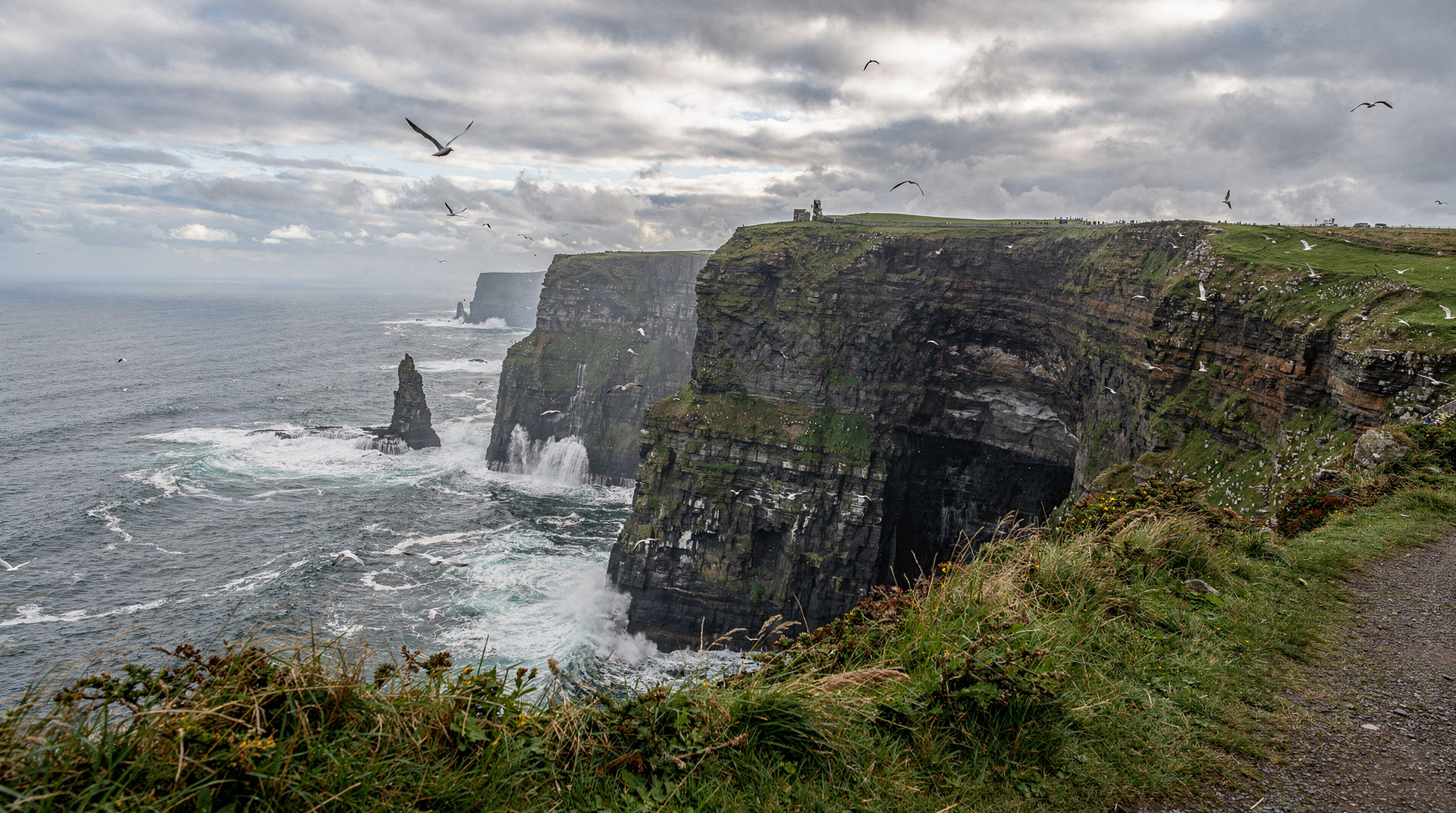
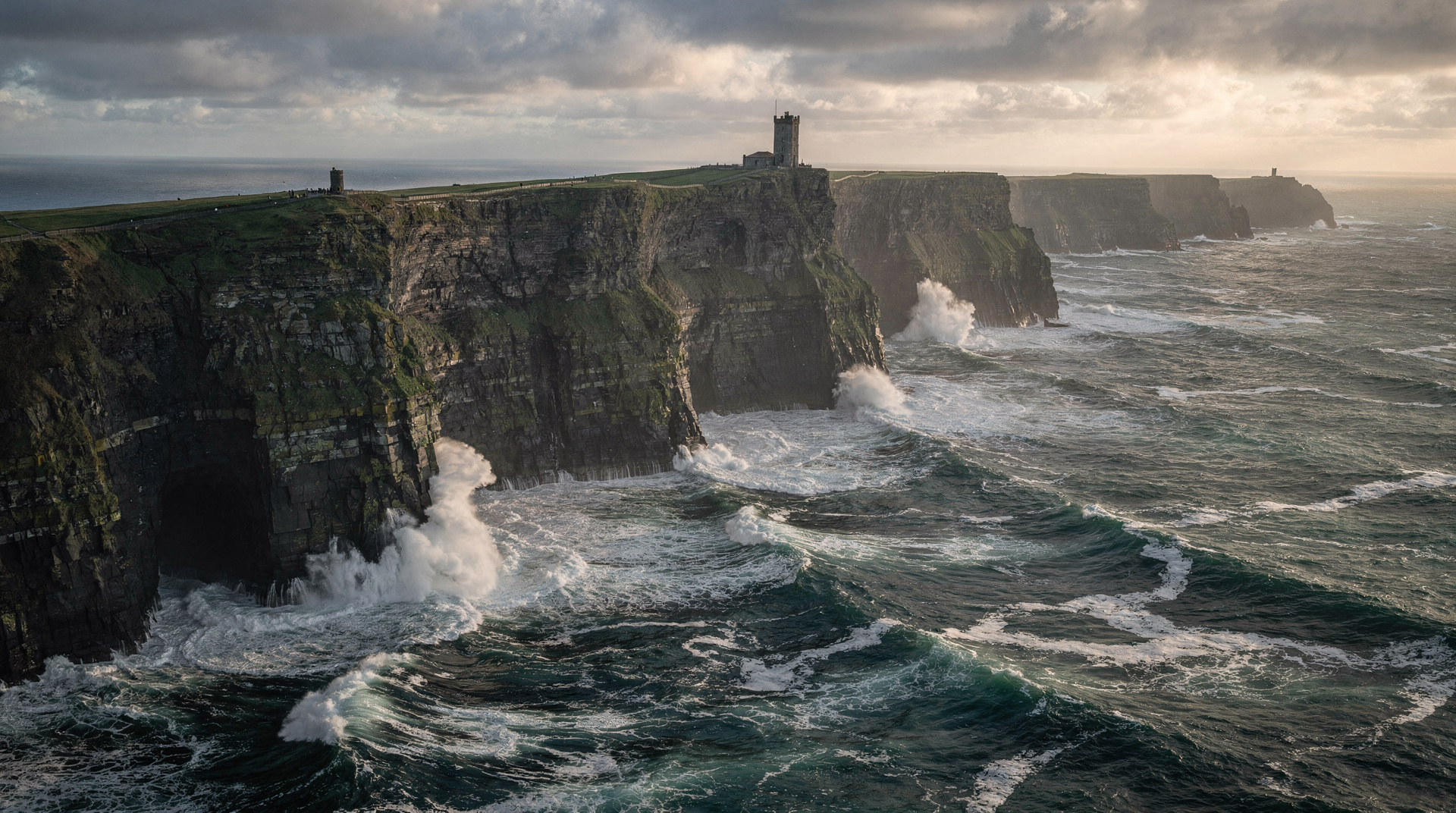
The cliffs stretch for roughly eight kilometres along the Clare coast. The visitor centre sits roughly in the middle, and the majority of visitors — perhaps 90 percent of them — walk the half-kilometre south to Hag’s Head overlook and the half-kilometre north to O’Brien’s Tower. That’s about 1.5 kilometres of the 8-kilometre cliff path that absorbs almost everyone who comes. Walk north of O’Brien’s Tower and the crowd drops to almost nothing within fifteen minutes.
Most tours don’t tell you this because most tours give you sixty to ninety minutes at the cliffs. That’s enough time to do the popular loop and take your photographs. It is not enough time to go further north, where the cliff edge curves and the views back towards O’Brien’s Tower are arguably better than the views from it.
If you have a full day rather than a rushed afternoon stop, this changes everything.
What timing actually means
The visitor centre officially opens at 8am. If you arrive before 9:30am, you will likely have the southern path to Hag’s Head almost entirely to yourself. By 10am the first coaches are arriving. By noon the busiest part of the day begins, running until about 4pm when the afternoon tours start leaving.
I arrived at 8:45am on my second visit. The carpark had perhaps twenty cars. I walked south first — the light in the morning hours is on the Atlantic face, which illuminates the cliff face rather than silhouetting it. Then I walked north past O’Brien’s Tower and continued for another kilometre. The path becomes rougher, there are no guard rails in sections, and the views become more open and more honest — less curated, more wild. I met three other walkers in about forty minutes.
The shoulder seasons make this even better. September and October are excellent: the crowds drop significantly, the light is golden rather than bleached, and the ocean has a quality of intensity that the summer haze often flattens. March and April can be spectacular for those willing to accept the possibility of rain (very high).
Best months, honestly ranked
| Months | Crowds | Weather odds | Verdict |
|---|---|---|---|
| September - October | Low | Good, golden light | Best overall balance |
| March - April | Low | Changeable, high rain chance | Good if you don’t mind gambling on weather |
| May - June | Moderate | Generally good, puffins nesting | Good for wildlife, busier |
| July - August | Very high | Best odds of clear skies | Worth it only with early timing |
| November - February | Very low | Wet, wind can close paths | Atmospheric but check conditions first |
The Atlantic edge below the cliffs
From the cliff path, especially on the northern stretches, you can see rock stacks and sea caves that are invisible from the visitor centre area. Puffins nest in the cliff face in spring and early summer — May and June are the best months, though you need binoculars to appreciate them from the path. The cliff face is home to guillemots, razorbills and fulmars through the summer. I am not a serious birdwatcher but even I stopped for ten minutes to watch the guillemots stacked on a ledge.
The boat tours from Doolin, the small village about four kilometres north, take you below the cliffs and let you look up at the full height from the water. It is a genuinely different perspective and not one you get from any path. The sea is often choppy — this is the open Atlantic — and the boats are small. Whether it’s worth it depends entirely on your stomach. On a calm day: absolutely yes.
Cliffs of Moher tour with Doolin boat cruiseGetting there without the chaos
From Dublin, the cliffs are about 250 kilometres and take three to four hours to drive, depending on route. A day trip by car is long but manageable; you’d need to leave by 7:30am to get any meaningful time at the cliffs before the main crowds arrive.
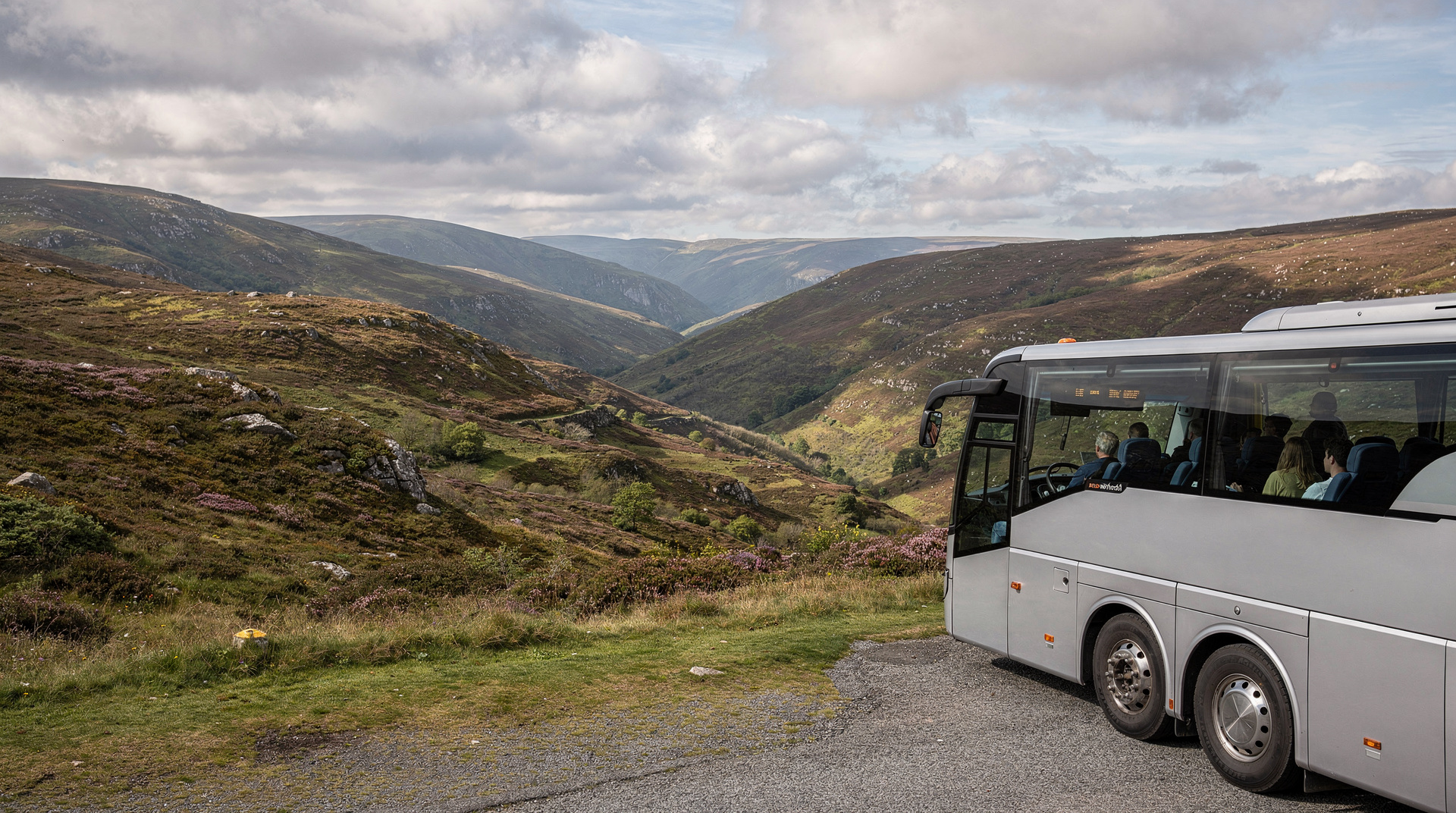
Most people come on an organised day tour from Dublin, which typically takes twelve to thirteen hours return. The advantage is that someone else handles the driving and navigation. The disadvantage is that the timing is fixed — you arrive when the tour arrives, usually late morning, and leave when the tour leaves. If avoiding crowds is your priority, a private or small-group tour that gives you earlier access is worth the extra cost.
The Cliffs of Moher full-day tour from Dublin is the standard option — it gets you there and back with a guide, and includes a stop at the Burren on many routes. For more flexibility, the small-group options tend to spend more time at the cliffs themselves.
Cliffs of Moher small-group day tour from DublinOur Cliffs of Moher day trip guide and the which tour to book comparison go deeper into the trade-offs between the standard coach, small-group, and self-drive options.
What the visitor centre is and isn’t
The Atlantic Edge exhibition inside the visitor centre is better than its reputation. It covers the geology, ecology and human history of the area, and takes about forty-five minutes if you engage with it properly rather than rushing through. In wet weather — and weather at the cliffs is consistently dramatic — it’s a valuable fallback. The café is fine. The shop is what you’d expect.
Do not base your visit timing around the exhibition. Time your arrival by the sun position and the crowd patterns, then visit the exhibition if the weather turns or you want a break.
The Burren and what’s nearby
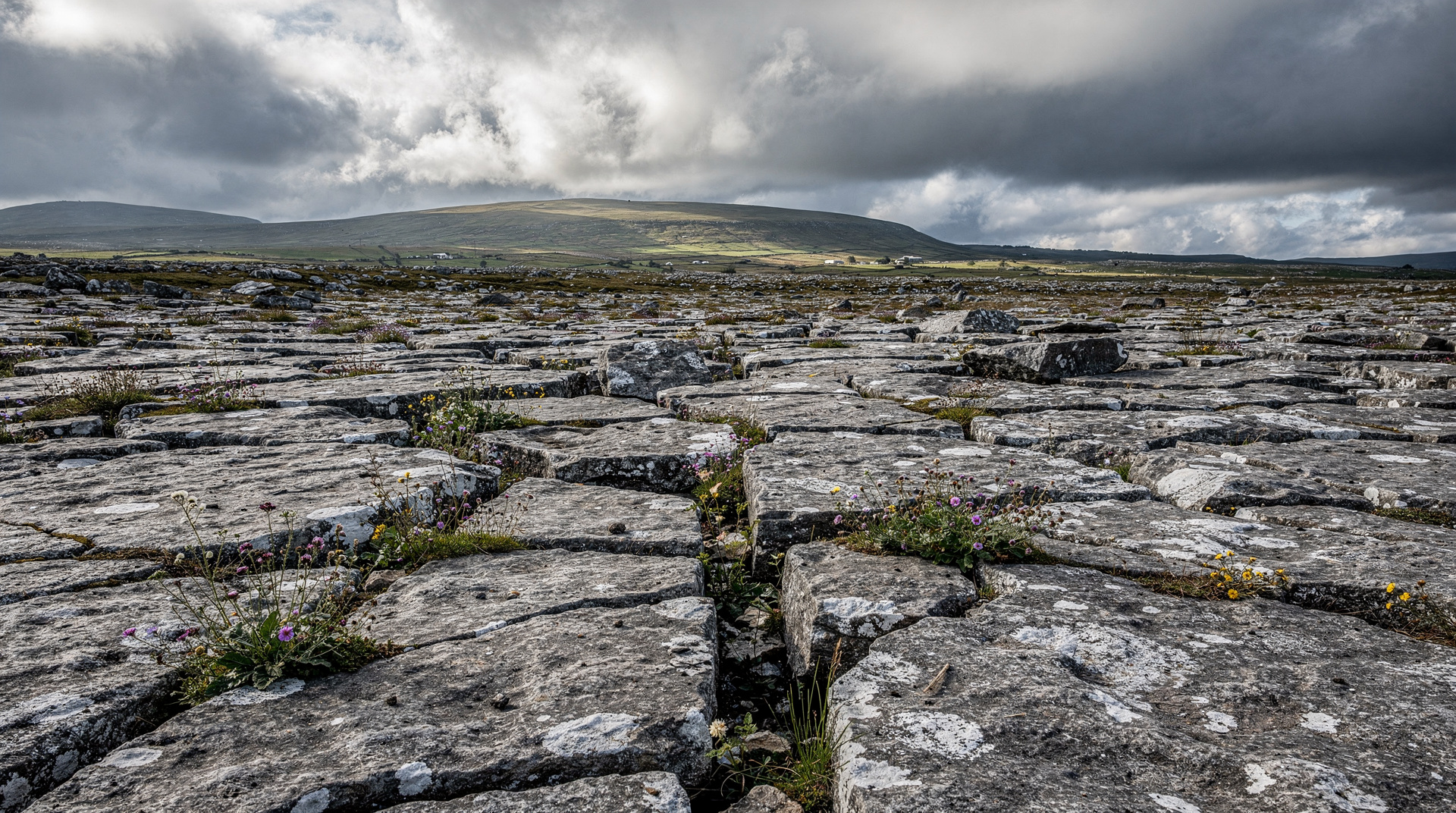
The Cliffs of Moher sit at the southern edge of the Burren, one of Europe’s most unusual landscapes — a lunar plateau of cracked limestone pavements where Mediterranean flowers grow in the cracks alongside Arctic species. Driving north from the cliffs through the Burren adds perhaps an hour to your journey but transforms the day from “cliffs trip” to something more complex and interesting.
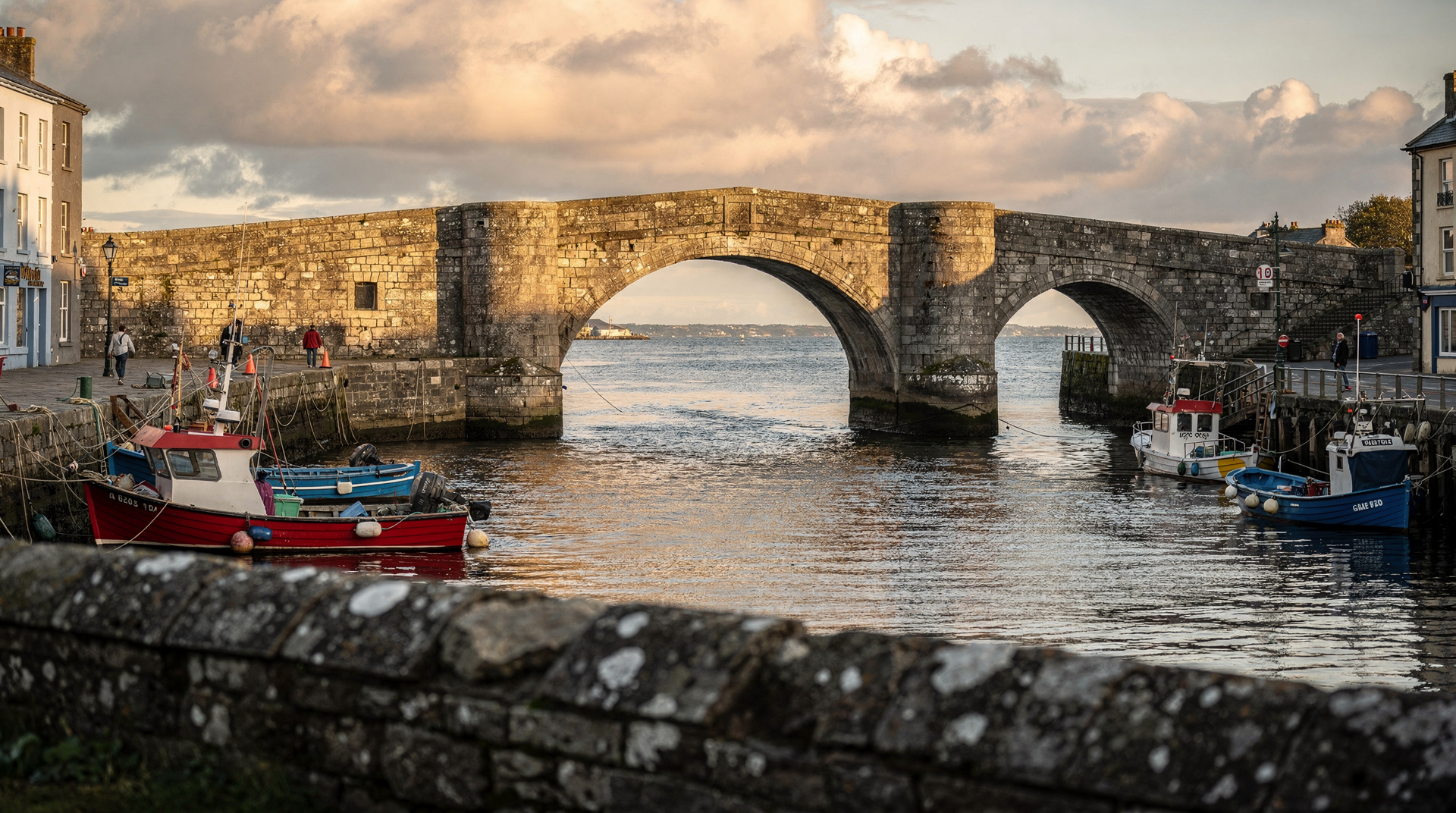
Doolin is the village of choice for an overnight if you want to split the journey. It has traditional music most nights in a handful of pubs, a working ferry to the Aran Islands, and accommodation ranging from hostels to guesthouses. Spending a night here means you can walk the cliff path in the evening light, which is legitimately magical in summer when the sunset doesn’t come until 10pm. The cliffs face west.
For a longer exploration of the west, slot the cliffs into a five-day Dublin and Wild Atlantic itinerary. Or, if Galway is already on your list, combine the two — the cliffs are an easy hour from the city and make a logical pairing for a Galway day trip from Dublin.
The Cliffs of Moher destination page has more on the visitor centre and access practicalities, and if you’re deciding between this and Northern Ireland’s equivalent coastline, the Giant’s Causeway versus Cliffs of Moher comparison is worth reading first. Whatever season you go, pack according to the Dublin weather and packing guide — the west coast is windier and wetter than the capital even on a good day.
The honest verdict on the crowds
The Cliffs of Moher are genuinely worth it. The scale, the colour of the rock, the sound of the Atlantic — these are real and they do not disappoint. The problem is a structural mismatch between the site’s capacity and the volume of visitors it receives in peak summer, combined with tours that arrive mid-day and give people ninety minutes.
Go early. Go in shoulder season if you can. Walk north of the tower. Those three adjustments transform the experience. The cliffs were here before the coaches and the carpark, and with a little timing, you can still feel that.
Top experiences
Bookable activities with verified prices and instant confirmation on GetYourGuide.