The best day trip I ever took from Dublin
The argument for a long day
There’s a category of Dublin visitor who treats the city as a destination in itself and everything outside it as optional. This is a coherent position — Dublin has more than enough material for a week — but it misses something fundamental about the place. Dublin is one of the densest hubs in Europe for day trips that are genuinely, substantially different from the city itself. The Atlantic coast is two hours away. Medieval Kilkenny is ninety minutes. The Boyne Valley passage tombs are forty-five minutes.
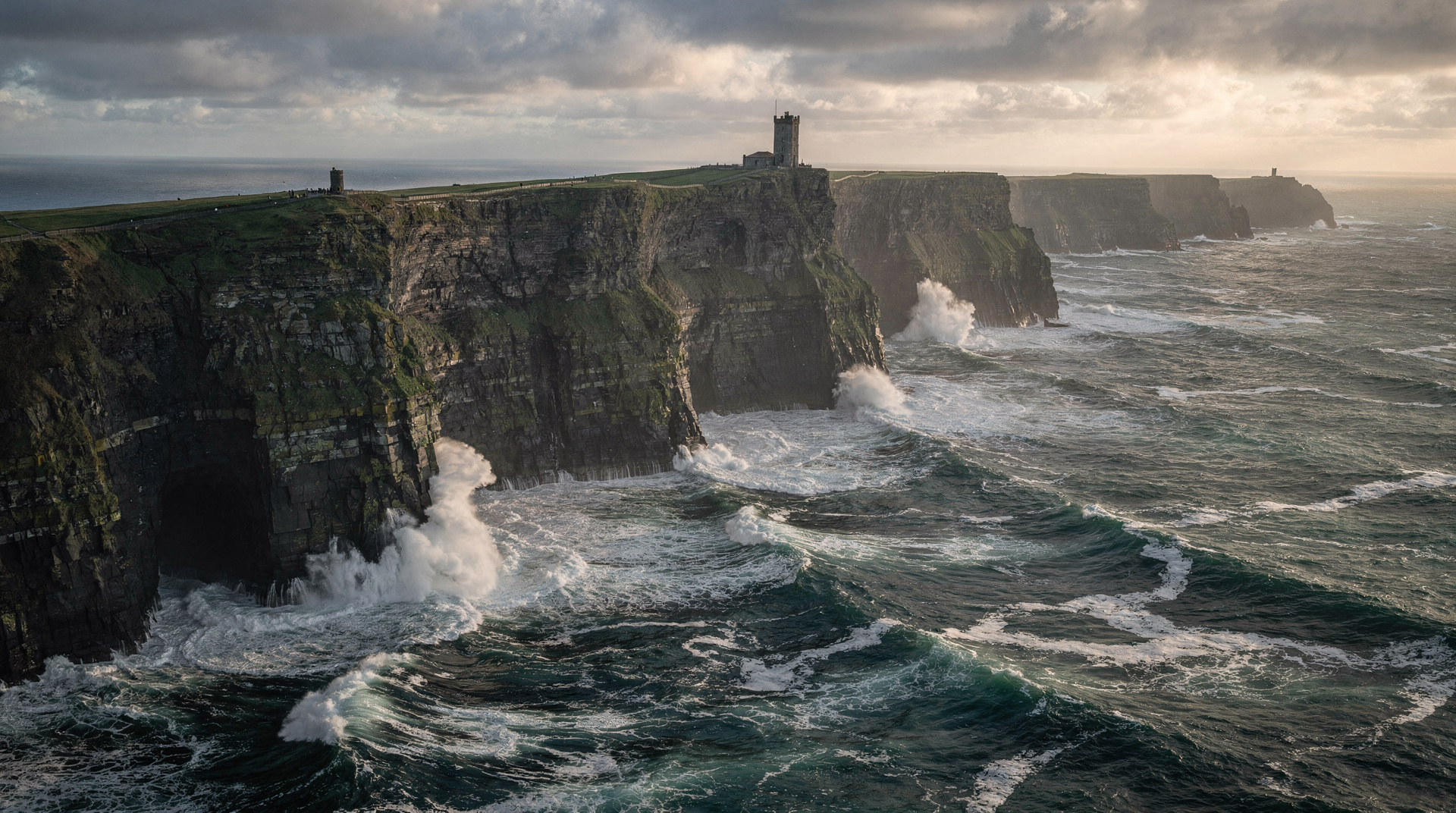
I’ve taken a lot of these trips over the years. The one that stands out — the one I’d recommend first, without qualification, to anyone with a single day to spare from a Dublin visit — is the Cliffs of Moher and the Burren.
I’ll explain why, but I’ll also explain what it actually involves, including the part that no guidebook quite tells you, which is that it is a genuinely long day and you should go in with your eyes open.
| Where | Cliffs of Moher, County Clare, about 230km from Dublin |
| Cost | Coach day tour typically €50-75 per person |
| Time needed | A full day, around 13 hours door to door |
| Getting there | Coach day tour, or self-drive via the N7 and R477 |
| Best time | Clear summer days for visibility; pack a waterproof regardless |
What the day looks like
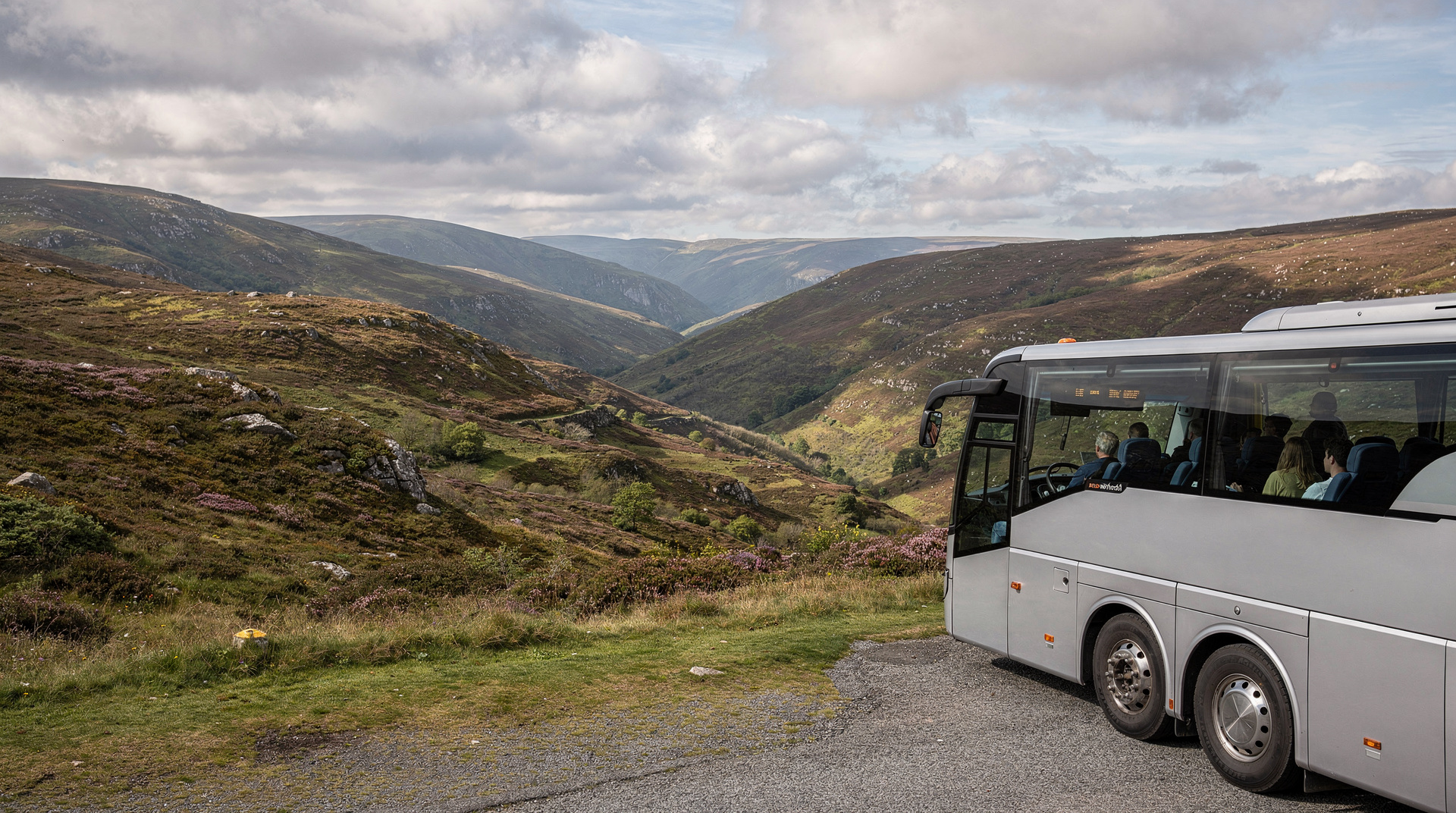
Coach tours from Dublin to the Cliffs of Moher leave at about seven in the morning. This is not a suggestion; it’s a physical constraint of the distance. The Cliffs are in County Clare on the west coast of Ireland, about 230km from Dublin, and you need at minimum two and a half hours of driving to get there. The return adds another two and a half hours, plus a stop, plus actual time at the cliffs. The tours run to thirteen hours.
On a July morning, leaving Dublin at seven means the city is still quiet. The motorway west through the Midlands is empty. The landscape changes as you cross the Shannon — the west of Ireland feels different from the east, lower, flatter initially, then the limestone karst of the Burren appears and the scale changes again.
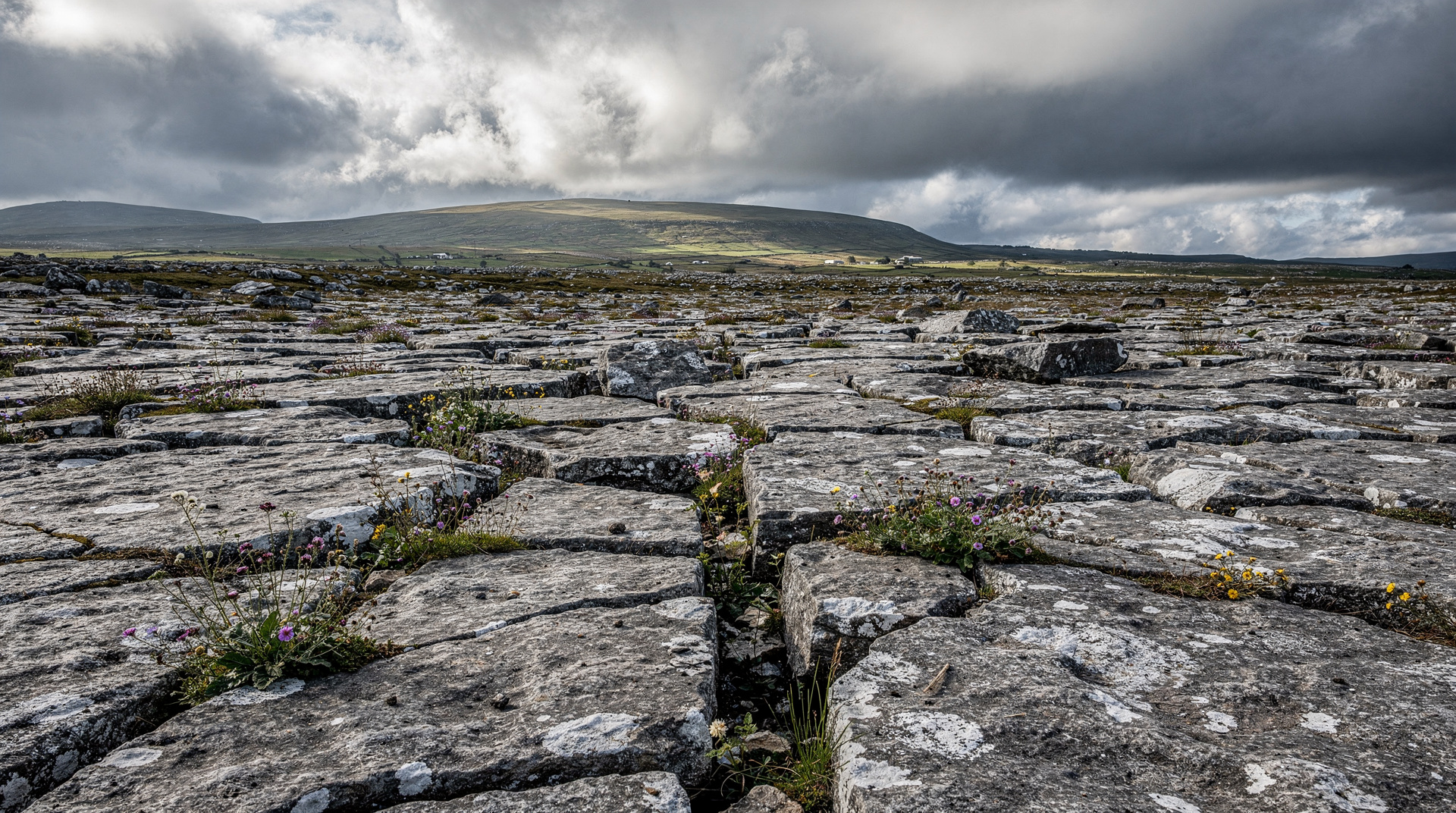
The Burren — the great limestone plateau of northwest Clare — is the experience that people don’t expect and often find more affecting than the Cliffs themselves. The landscape is alien in the specific sense that it looks like something that shouldn’t support life but does: wildflowers growing in cracks in bare rock, the specific yellow of the mountain avens, harebells, and in July the orchids that appear in the limestone pavement. Geologically it’s a karst, formed when glaciers stripped the soil from carboniferous limestone. What’s left is a white-grey surface that looks like a moon installation and contains, somewhat impossibly, some of the richest wildflower ecology in Ireland.
The Cliffs themselves
I want to be honest about the Cliffs of Moher, because I’ve seen people overstate and understate them in roughly equal measure.
Overstated version: the most dramatic landscape in Ireland, towering walls of rock, an overwhelming experience. This is true but abstract.
Understated version: nice cliffs, bit windy, busy. Also true but reductive.
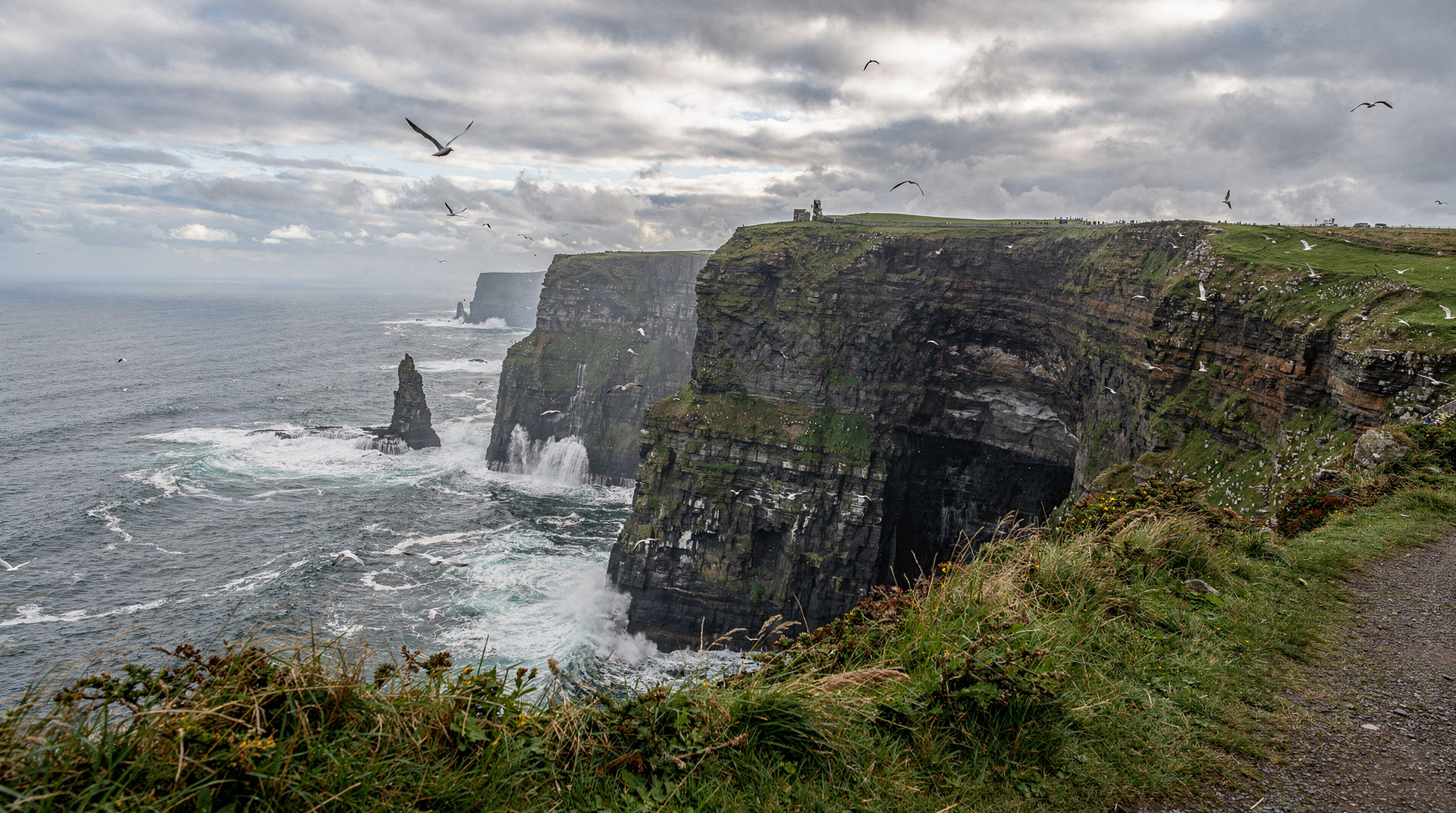
The honest version: the Cliffs of Moher at 8km long and up to 214m high are an experience that depends almost entirely on conditions. On a clear summer day with the Atlantic running blue below and the Aran Islands visible on the horizon, they are one of the most visually striking places I have ever stood. The scale takes time to register — the far end of the cliffs is so far away that it’s slightly hazy, and the sea below seems improbably distant. The guillemots and razorbills that nest on the cliff faces provide a sense of scale; watching a gannet dive from this height is extraordinary.
On a mist-closed day, the Cliffs are a grey wall in grey air, which has its own quality but is not the version anyone is hoping for.
July is statistically among the better months for clear conditions on the west coast, though the west of Ireland reserves the right to disappoint at any time. Pack a waterproof regardless.
How to get there
The coach tour from Dublin is the standard option if you’re not hiring a car, and it’s a genuinely good option. The guide running the tour provides context for the Burren crossing that transforms it from a strange landscape you’re passing through into a story you understand.
The Cliffs of Moher full-day tour from Dublin is among the most popular day trips operated from the city, with multiple departures daily in summer. It handles the logistics — the distance, the parking at the visitor centre, the return timing — so that you can focus on looking at things rather than managing a car on unfamiliar roads.
If driving is your preference, the driving in Ireland from Dublin guide covers the N7 to Limerick and the R477 approach to the Cliffs via the Burren road, which is the more scenic route. It adds time but is worth it.
If the standard big coach isn’t your style, a small-group option covers the same ground with fewer people on the bus and a bit more flexibility at stops.
Cliffs of Moher small-group day tour from DublinOur dedicated Cliffs of Moher guide and the which Cliffs of Moher tour to book comparison go deeper into picking between the coach options, and the Cliffs of Moher destination page has the visitor centre practicalities. If you don’t drive and are travelling without a car more generally, the day trips without a car guide covers your other options too.
The boat cruise, if you have the extra hour
One thing that surprises first-timers: you can see the Cliffs from the water as well as from above. A handful of tours combine the standard cliff-top visit with a short boat cruise from Doolin, which gets you underneath the cliffs looking up — a genuinely different perspective and a good way to appreciate the scale that’s hard to grasp from the top.
Cliffs of Moher day tour with Doolin boat cruiseWhat comes after the Cliffs
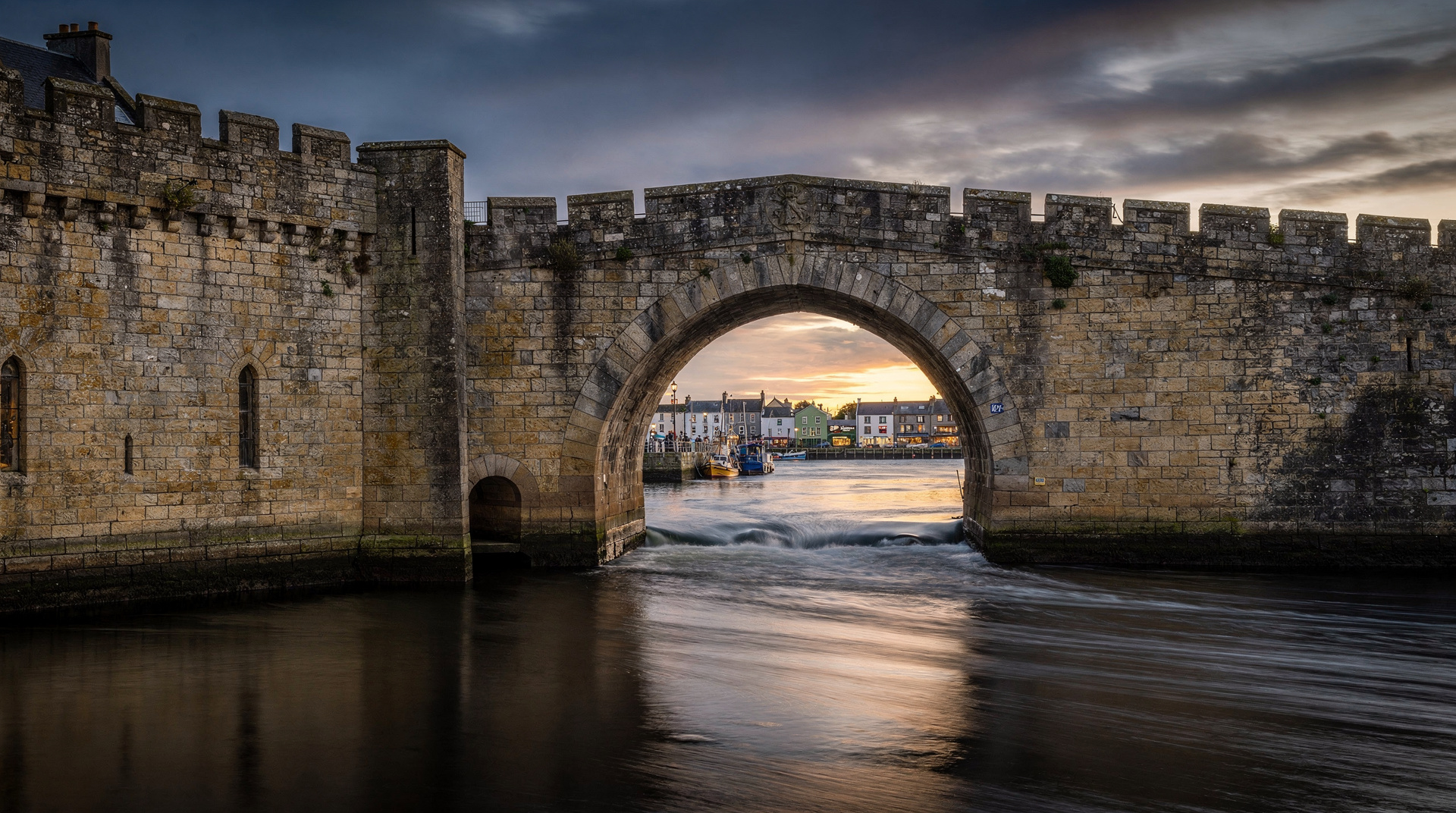
Most tours include a stop in either Galway or Ennis on the return. If you have the choice, take Galway — even an hour in Galway City is enough to feel the contrast between the Atlantic town and Dublin’s Georgian capital. The Spanish Arch, the pedestrian shopping streets, the buskers on Shop Street. Galway in July runs at a different frequency from any other Irish city, and an hour there at least shows you what you’re missing if you don’t come back.
The drive back to Dublin from Galway follows the motorway east through Athlone, and by the time you’re back in the city it’s after nine in the evening and the light is finally beginning to fail. This is the part the tour brochures don’t mention: the pleasantly exhausted quality of a day that was long and full and genuinely worth the alarm at six in the morning.
Why this trip over the others
Dublin is surrounded by good day trips. Glendalough, the Boyne Valley, Belfast and the Causeway Coast, Kilkenny, Cork and Blarney — all are worth doing, and some of them are closer and easier. So why the Cliffs?
Because the Cliffs of Moher, in clear conditions, are the thing in Ireland that most reliably stops the internal monologue. The scale and the exposure do something that smaller, more comfortable landscapes don’t. You stand at the top of a 200-metre drop above the North Atlantic and the ordinary concerns of the day take approximately twenty seconds to become meaningless.
That’s not a small thing to buy for the price of a coach ticket and a long Tuesday. If you’re deciding between this and Northern Ireland’s equivalent, the Giant’s Causeway versus Cliffs of Moher comparison lays out the honest differences.
Coach, small group, or self-drive
| Option | Cost | Time on the road | Best for |
|---|---|---|---|
| Standard coach tour | Around €50-75 | 13 hours, fixed schedule | First-timers, no car |
| Small-group tour | Around €70-95 | 13 hours, more flexible stops | Smaller group, slightly more comfort |
| Self-drive | Fuel plus rental, from ~€60/day | Similar total, but on your own schedule | Confident drivers, side trips en route |
Our full Cliffs of Moher day trip guide covers everything from which tour to book to where to stand for the best views and how to handle the visitor centre crowds. Read it before you go.
Top experiences
Bookable activities with verified prices and instant confirmation on GetYourGuide.