Guinness vs other stout
Dublin: Guinness Storehouse entry ticket with free pint
Duration: self-guided
- Free cancellation
- Instant confirmation
Is Guinness actually better than other stouts?
Better is subjective, but Guinness is the most consistent. Murphy's Irish Stout from Cork is creamier and sweeter. Beamish is the most bitter and chocolatey. The craft stout scene in Dublin has produced some excellent alternatives. In a great pub, a well-poured Guinness remains the benchmark.
The stout that defines a city, and the alternatives
Ask a Dubliner to pick a pint and most will say Guinness without hesitation. Ask the same question in Cork and the answer is more likely to be Murphy’s. In a craft beer bar, it might be none of the above. Irish stout is not monolithic, and understanding the differences makes visiting Dublin pubs more interesting.
This guide is not a brand loyalty exercise. It is a practical comparison of the main Irish stouts and dark beers you will encounter in Dublin’s pubs and bars, with honest notes on flavour and advice on where to find each.
| Most common in Dublin | Guinness Draught |
| Sweetest mainstream option | Murphy’s Irish Stout |
| Most bitter mainstream option | Beamish |
| Best non-alcoholic | Guinness 0.0 |
| ABV range | around 4.2% (draught) to 7.5% (Foreign Extra Stout) |
Guinness Draught
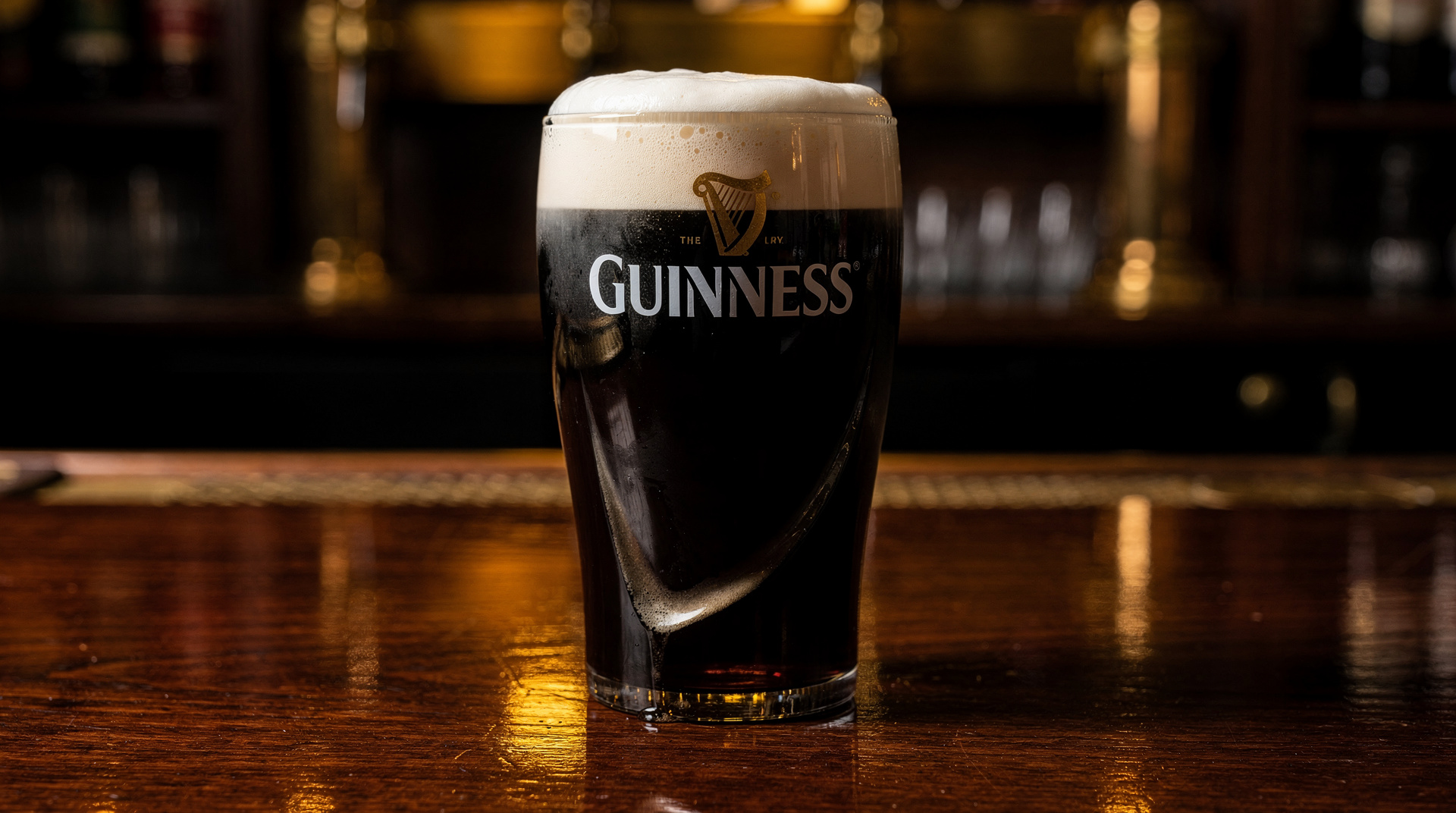
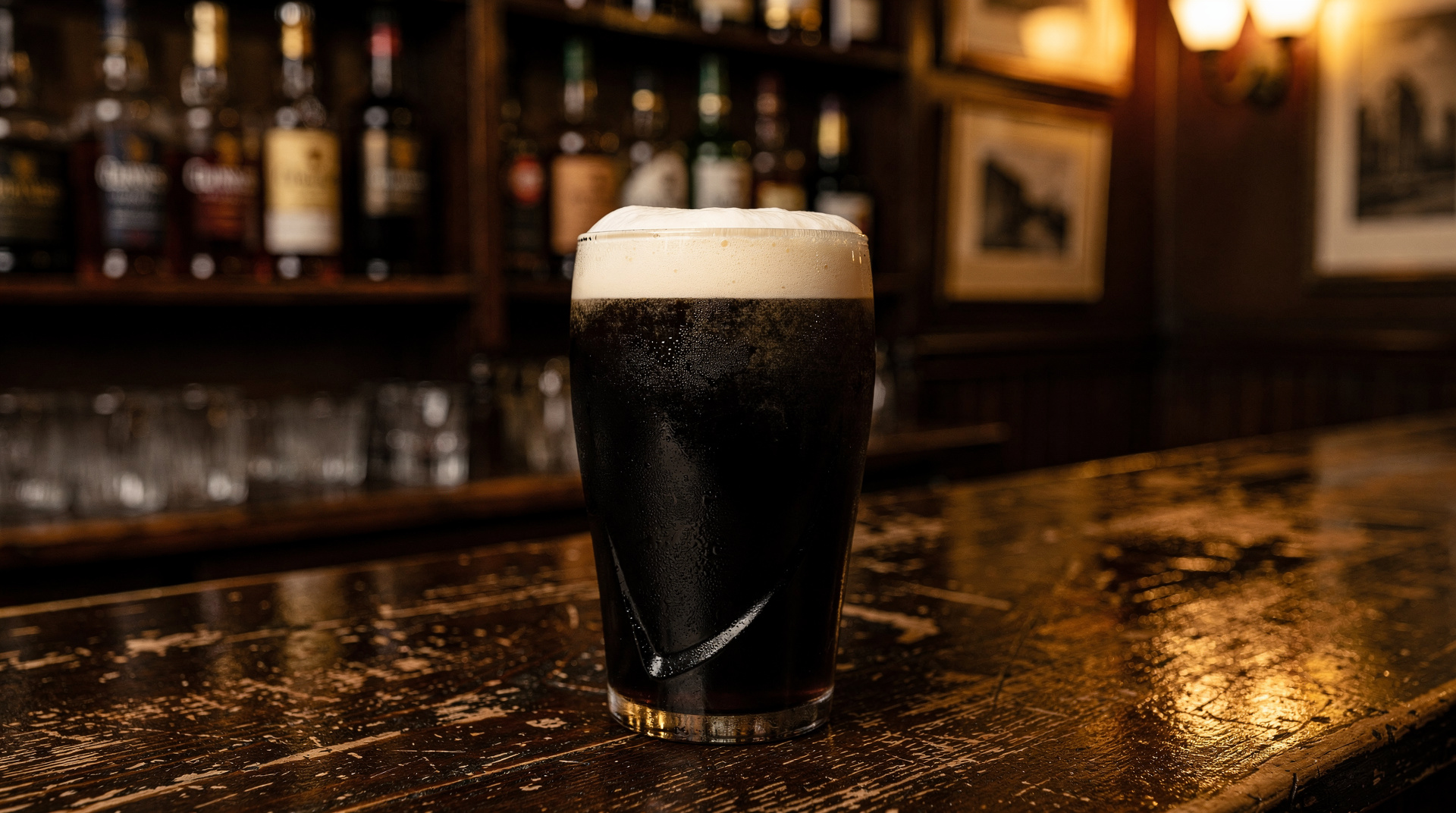
Guinness Draught, dispensed on nitro tap, is the most famous stout in the world and the default pour in any Irish pub. The pour takes approximately two minutes — the cascade of nitrogen settling the dark liquid to a creamy head — and a good pint has a pronounced roasted-barley bitterness balanced by a smoothness that comes from the nitrogen rather than carbon dioxide.
The flavour profile: dark chocolate, coffee, slight iron-mineral note, clean dry finish. At around 4.2% ABV it is sessionable. The quality varies enormously by venue. A pint at a tourist-trap Temple Bar establishment can taste flat and underwhelming; a pint in a quiet neighbourhood pub with high turnover and a well-maintained line will taste completely different. Read where to drink Guinness in Dublin for specific recommendations.
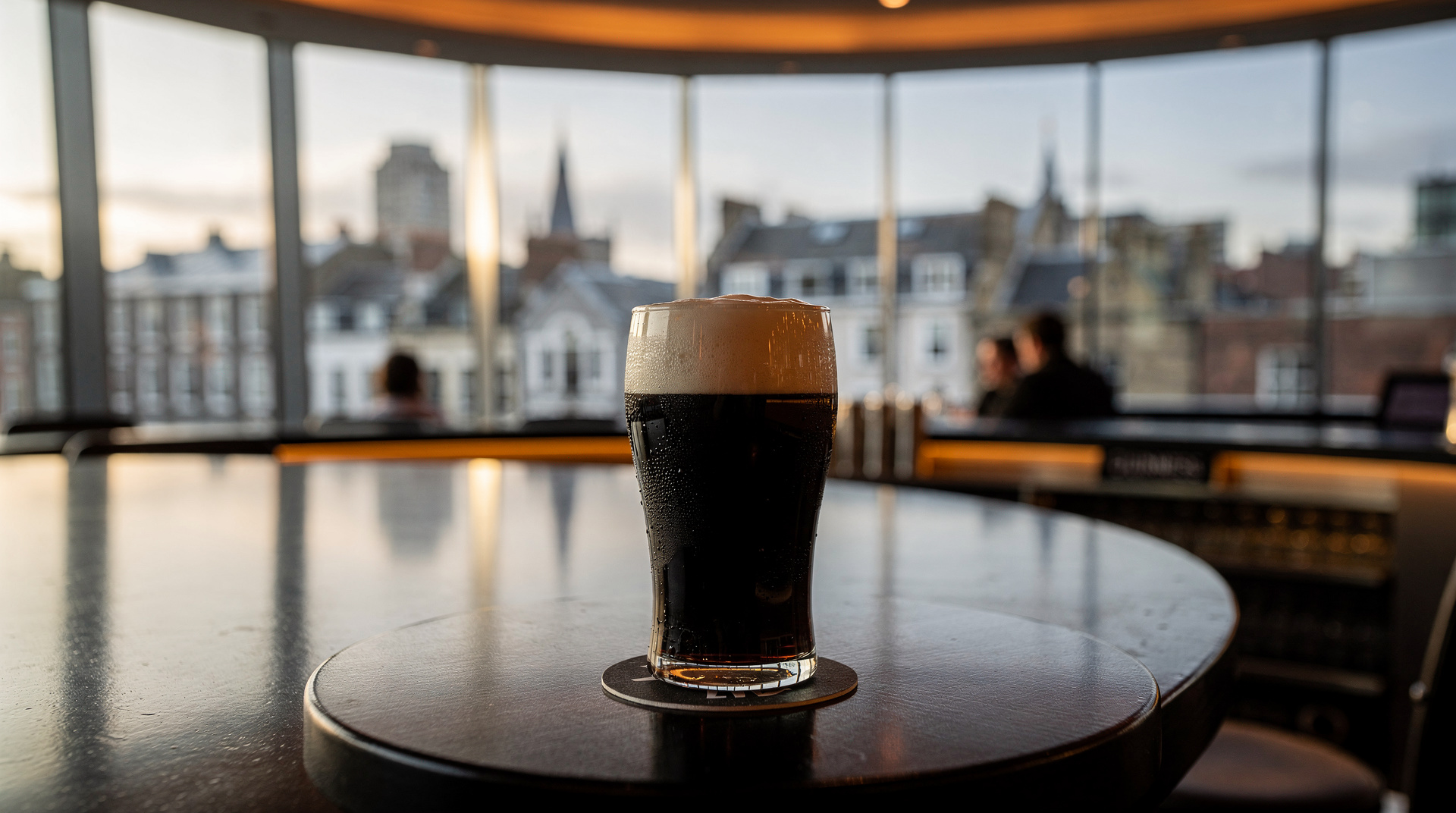
The Guinness Storehouse entry ticket includes a pint in the Gravity Bar, which is a genuinely fine Guinness in a memorable setting. The Guinness Storehouse Connoisseur experience includes a tutored tasting of four Guinness variants, which is the most educational way to understand the range.
Guinness Foreign Extra Stout
Available in bottles and at some specialist bars, Foreign Extra Stout is 7.5% ABV and a dramatically different drink from the draught. Brewed with more roasted barley and hops for a more assertive flavour, it was historically exported to warm climates where the higher alcohol preserved the beer in transit. The flavour is more intense — dark fruit, tobacco, bitter espresso — and it is closer to what Guinness tasted like in the nineteenth century. If you like stout, seek this one out.
Murphy’s Irish Stout
Murphy’s is brewed in Cork (at the Lady’s Well Brewery on Leitrim St.) and is the stout of choice in most Cork pubs. In Dublin it is available in many pubs but less prevalent than Guinness. The comparison is instructive:
- Murphy’s is smoother and slightly sweeter, with less roasted bitterness. Some drinkers find it more approachable; Guinness drinkers often find it lacks the dry complexity.
- Guinness has more edge — the roasted-barley note is more prominent, the finish drier.
If you visit Cork as a day trip from Dublin — there is a full Cork and Blarney day trip option — try Murphy’s in its home environment. The difference is real.
Beamish
Also from Cork, Beamish is the most bitter of the three mainstream Irish stouts. It has a higher chocolate-malt note and a more pronounced hop presence, which makes it a good choice for drinkers who prefer their stout with more structure. It is increasingly hard to find in Dublin; a few old-school pubs still stock it alongside Guinness.
Guinness Stout variants: the expanded range
Diageo has extended the Guinness family considerably in recent years:
- Guinness 0.0 (non-alcoholic): the cold-filtered version has improved substantially — it is the best widely available non-alcoholic stout on the market in Ireland
- Guinness Over the Moon Nitro Milk Stout: sweeter, lower-bitterness, with a lactose smoothness that makes it approachable for those who find the standard draught too bitter
- Guinness West Indies Porter: a historical recreation at 6%, with more hop character and tropical-fruit notes
- Guinness Nitro IPA: technically outside the stout category but an interesting experiment with the nitro pouring format applied to a different style
Dublin craft stouts
The craft beer renaissance in Dublin has produced some excellent alternatives. Breweries worth seeking out:
- Trouble Brewing (Kildare, widely available in Dublin): Ambush, their milk stout, has a caramel smoothness that pairs unexpectedly well with oysters
- White Hag (Sligo): The Black Boar is an imperial stout that has nothing to do with session drinking and everything to do with enjoyment
- Stonewell (Cork): primarily a cider producer, but their darker ciders are worth trying alongside stout for a comparison
The craft beer and gin guide covers where to find Dublin’s independent beer scene in more detail.
What makes a great pint
The pour matters more than the liquid for stout on nitro tap. The things that make or break a Guinness:
- Line quality — regular cleaning of the beer lines is non-negotiable. A pub that does not clean lines properly will produce flat, off-flavoured pints regardless of the source material
- Turnover — a busy pub goes through more kegs, which means fresher beer. A quiet tourist pub with one keg per week is selling degraded product
- Temperature — Guinness should be served at 6–8°C (42–46°F). Too cold and the flavour is muted; too warm and the bitterness becomes harsh
- The two-part pour — fill three-quarters and allow to settle before topping off. This is not ritual for its own sake; it produces a more consistent result
An Irish beer tour is a good structured way to understand the difference between well-served and poorly-served stout. The J.R. Mahon’s beer tasting tour with Irish storytelling (~€35) includes the context and the comparison in a single session. For a tour built specifically around stout tasting alongside the ticket to the Storehouse itself, the Irish beer tour with Guinness Storehouse tickets combines both in one booking.
How to run your own tasting
You do not need a guided session to compare stouts properly. The simplest method is to order small pours or share pints with a friend, so that you taste two beers back to back without committing to a full evening of one style. Start with the lighter, sweeter option and move towards the more bitter one, because a bitter pint first will flatten your palate for everything that follows. Drink some water between pours and give each stout a minute or two to settle and warm very slightly before you judge it.
Pay attention to three things: the first aroma (coffee, chocolate, toast or something fruitier), the texture on the tongue (creamy, thin, or thick and heavy), and the finish (does the bitterness linger or vanish quickly). Writing a short note on your phone for each pint sounds fussy, but by the third beer it is the only reliable record you will have. If you are already planning a longer pub day, the Dublin pub crawl guide explains how to pace it, and the whiskey trail is a natural companion if you want to finish the evening with something stronger.
Stout and food
Stout is a better food beer than its reputation suggests. The roasted, slightly bitter character cuts through rich, salty and fatty dishes, which is exactly why it has long been paired with seafood and with hearty pub plates. The sweeter milk-style stouts work well with desserts and with anything chocolate-based, while the drier, more bitter pours suit stews and cured meats.
If you want to see how this works in practice, the traditional Irish food guide describes the dishes most worth ordering with a pint, and the best restaurants in Dublin guide is useful when you would rather sit down to a proper meal. Pub kitchens vary a great deal, so ask what the staff recommend with the pint in your hand; they usually have a strong opinion.
Pub etiquette when you order stout
Ordering a Guinness is easy, but a few habits make the experience smoother. Be patient while the pint settles: the bartender will pour, pause and finish, and a good pub will not rush that step. Do not ask for a pint to be topped up to the brim before it has settled, and do not take the glass early. Pay when the pint is handed over, or run a tab if the pub offers it, and keep the round moving if you are in a group.
If you end up in a pub with live music, the same patience applies to the session itself. The trad session etiquette guide explains how to behave around the musicians, and the traditional music pubs guide helps you choose a venue where the pint and the tunes are both worth the visit. For something a little more literary, the literary pubs guide covers rooms where the stout comes with a story.
Choosing the right stout for your taste
If you like dark chocolate and coffee and do not mind a dry finish, stay with Guinness Draught and look for a pub with a good reputation for its pour. If you find roasted bitterness harsh, Murphy’s or a milk stout will probably suit you better. If you enjoy strong, assertive beers, the Foreign Extra Stout or an imperial craft stout is the direction to go. Drivers, early starts and long sightseeing days are good reasons to reach for Guinness 0.0 instead, and it holds up well enough that nobody at the table will feel short-changed.
Remember that your own preference matters more than any ranking. A pint that tastes best to you, in a pub you enjoy, is the right pint. Pair the tasting with the sights that give it context: the Guinness Storehouse tickets explained guide helps you pick the right entry option, and the Dublin first-time guide places a pint-focused day inside a wider plan. For a pub area that is very different from the busiest tourist streets, the Liberties are a rewarding place to wander before or after a pint, and Temple Bar is worth seeing even if you drink elsewhere.
Planning a stout-focused day
A sensible stout day starts with context and ends with comparison. Visit the brewery experience first, while your palate is fresh, and save the side-by-side comparison for the afternoon and evening in the pubs. Space your pints out, eat a proper meal in the middle, and keep the last stop somewhere quiet so that you can actually taste what you are drinking. The Dublin 1-day itinerary and the Dublin weekend foodie itinerary both give a framework you can adapt, and the first pint at the Guinness Storehouse story gives a personal account of what that opening pour feels like.
Side-by-side tasting comparison
| Stout | Sweetness | Bitterness | ABV | Where to find it |
|---|---|---|---|---|
| Guinness Draught | Medium | Medium-high | ~4.2% | everywhere in Dublin |
| Guinness Foreign Extra Stout | Low | High | ~7.5% | bottles, specialist bars |
| Murphy’s | High | Low-medium | ~4.0% | some Dublin pubs, most Cork pubs |
| Beamish | Low | High | ~4.1% | a few old-school Dublin pubs |
| Trouble Brewing Ambush (milk stout) | High | Low | ~4.5% | craft beer bars |
The verdict
Guinness Draught in a good Dublin pub remains the standard against which all Irish stout is measured. Murphy’s is worth trying for comparison, particularly in Cork. Beamish is harder to find but rewarding when you do. The craft scene offers genuine alternatives that can match or exceed the mainstream options. And Guinness Foreign Extra Stout, if you can find it on tap, is a revelation.
For the full picture on where to drink well in Dublin, the best pubs in Dublin guide has specific neighbourhood-by-neighbourhood recommendations. For the wider independent drinks scene beyond stout, see gin and craft beer in Dublin.
Frequently asked questions about Guinness vs other stout
Which Irish stout is sweetest?
Murphy's Irish Stout is generally regarded as the sweetest and smoothest of the three mainstream Irish stouts, with less of the roasted-barley bitterness that defines Guinness. Among the newer Guinness variants, the Nitro Milk Stout is sweeter still, thanks to its lactose content.Can you get Murphy's or Beamish in Dublin pubs?
Murphy's is available in a reasonable number of Dublin pubs, though far less common than Guinness. Beamish is increasingly hard to find in Dublin — a handful of old-school pubs still stock it, but do not expect to find it everywhere. Both are far more common in their native Cork.
Top experiences
Bookable activities with verified prices and instant confirmation on GetYourGuide.

Dublin: Guinness Storehouse entry ticket with free pint
- Free cancellation
- Instant confirmation

Dublin: Guinness Storehouse Connoisseur experience
- Free cancellation
- Instant confirmation

Dublin: J.R. Mahon's beer tasting tour with Irish storytelling
- Free cancellation
- Instant confirmation

Dublin: Irish beer tour with Guinness Storehouse tickets
- Free cancellation
- Instant confirmation