Irish Whiskey Museum guide
Dublin: Irish Whiskey Museum tour and whiskey tasting
Duration: 1h
- Free cancellation
- Instant confirmation
Is the Irish Whiskey Museum worth visiting?
Yes, especially as an introduction to the full history of Irish whiskey — not just one brand's story. The museum covers four centuries of the industry, and the tasting sessions are good value. Best for visitors who want historical depth before doing individual distillery tours.
The only museum covering the full story of Irish whiskey
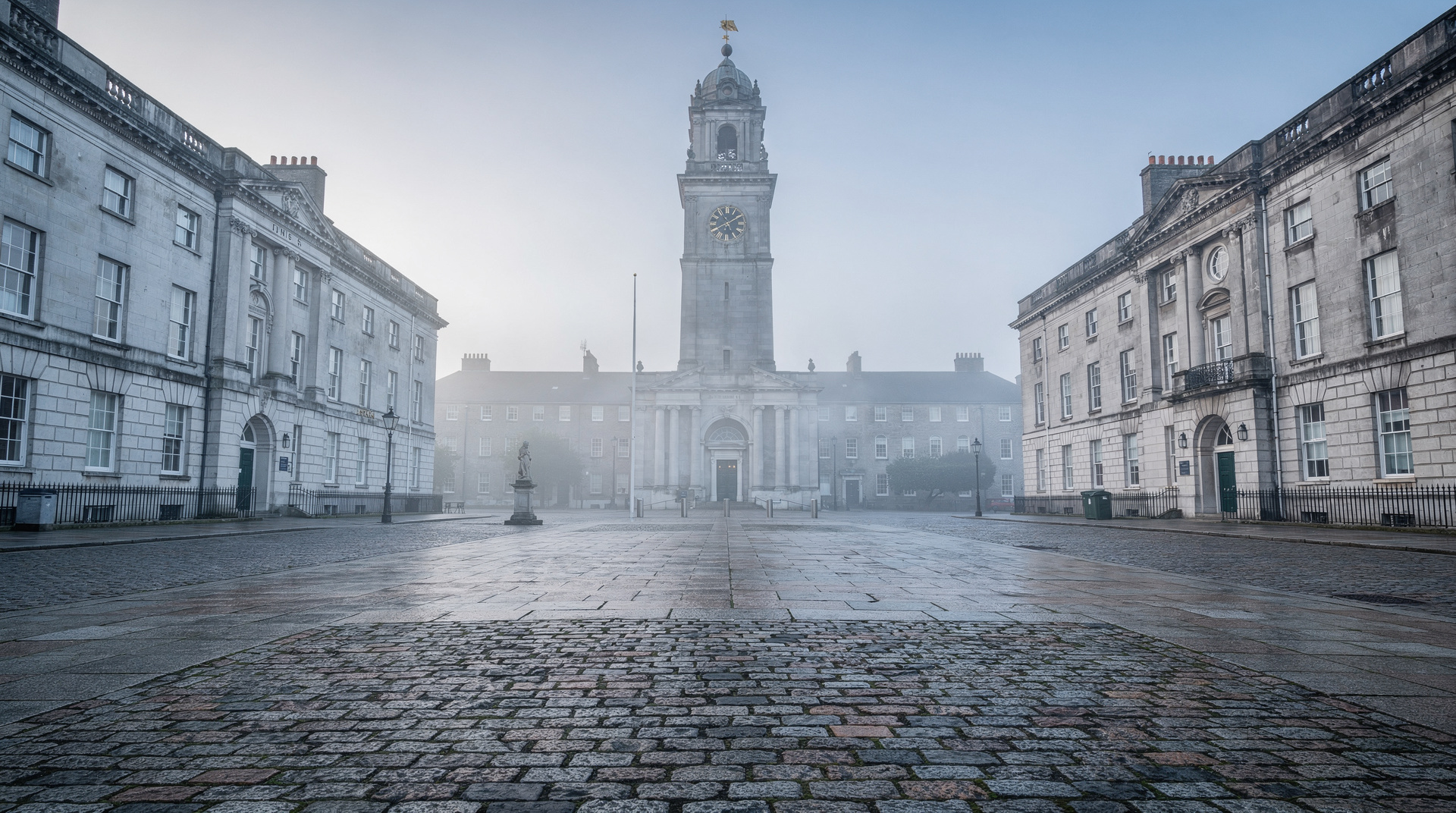
The Irish Whiskey Museum occupies a Georgian townhouse on Grafton St., steps from Trinity College, and it fills a gap in Dublin’s whiskey tourism landscape that none of the individual distilleries address: the full four-century history of an industry that once dominated the world before nearly dying out entirely.
| Where | Grafton St., opposite St Stephen’s Green |
| Cost | Around €25 for the tour and tasting |
| Time needed | About 60 minutes, longer for the blending or coffee sessions |
| Getting there | Central Dublin, Luas Green Line to St Stephen’s Green |
| Booking | 24 hours ahead recommended, more for blending sessions |
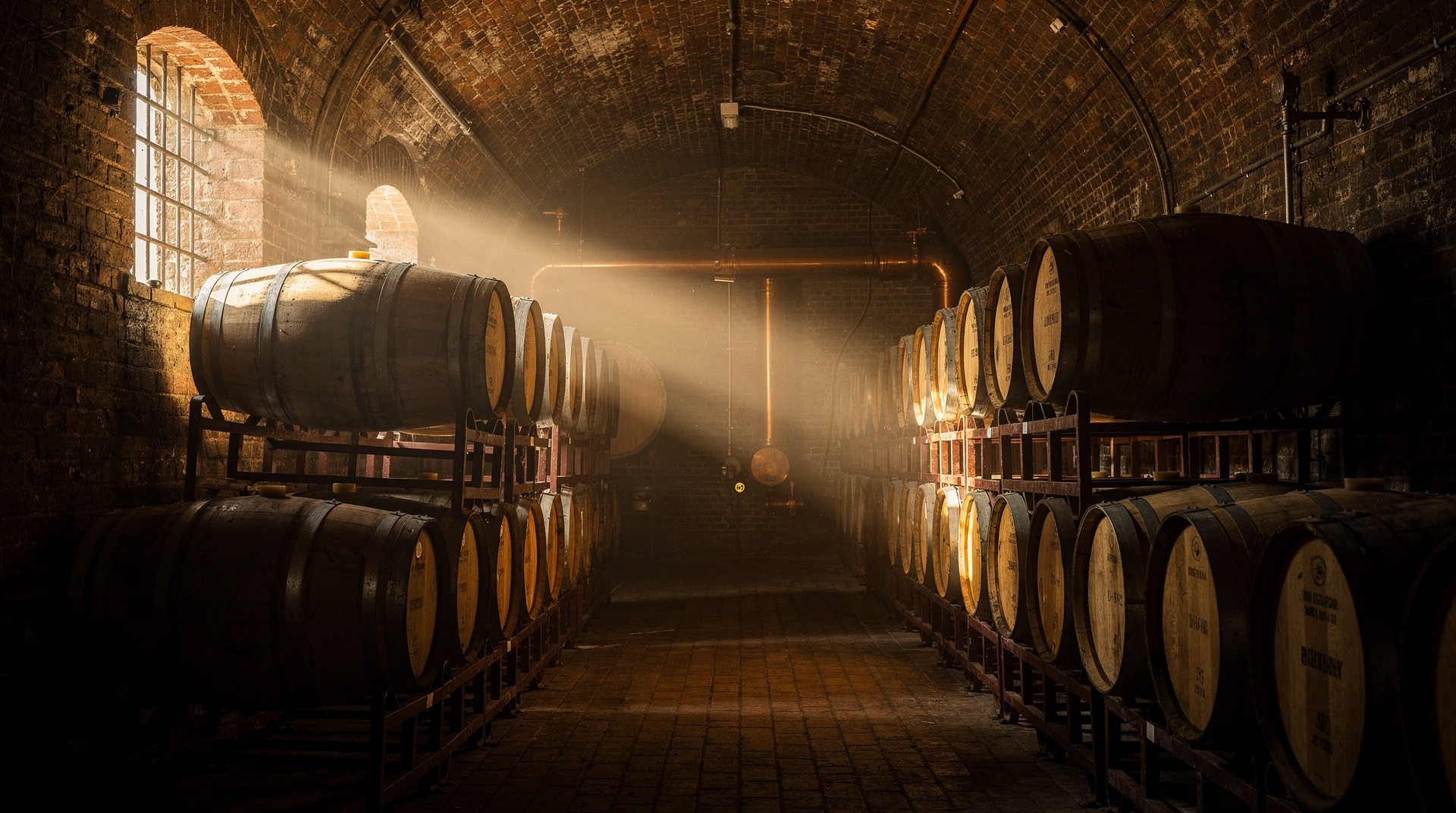
At the distilleries — Jameson, Teeling, Roe & Co, Pearse Lyons — you get each brand’s story. The Irish Whiskey Museum covers all of them and more: the rise of Dublin and Cork as the world’s leading whiskey producers in the eighteenth century, the catastrophic collapse caused by the temperance movement, Irish independence, trade wars with Britain, and the long slow recovery that has led to the present-day renaissance with over 40 active Irish distilleries.
If you are interested in the drink itself rather than just the brand, this context matters.
What the tour covers
The Irish Whiskey Museum tour and whiskey tasting (~€25) takes about 60 minutes with a guide through four gallery rooms, each covering a period of Irish whiskey history:
- The golden age — how Dublin became the whiskey capital of the world in the 1800s, the great distilleries of the Liberties, the dominance of Irish pot still whiskey in the British Empire and America
- The decline — the temperance movement, the 1916 Rising and Irish independence, trade embargoes with Britain, and the impact of US Prohibition (which killed the export market just when Irish distilleries needed it most)
- The consolidation — how the industry shrank to effectively three companies and three distilleries by the 1960s, and the near-extinction of Irish whiskey as a category
- The revival — from the 1987 reopening of Midleton to the current craft distillery boom, and where Irish whiskey stands today
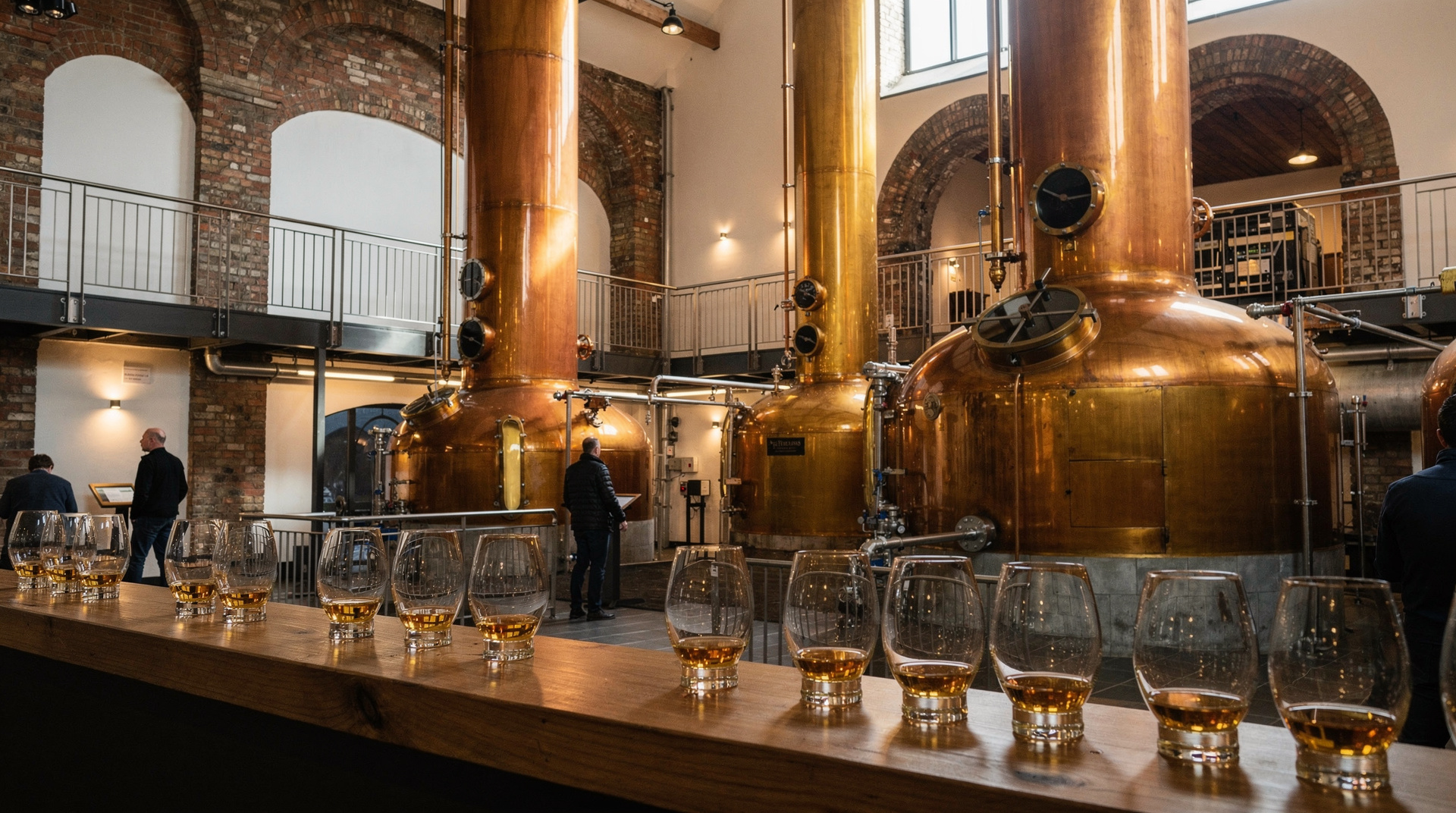
The tour ends with a tasting of three or four Irish whiskeys — typically including a blended, a single malt, and a single pot still expression — with the guide explaining the style differences.
The blending experience
The blending tour (~€45) adds a hands-on session where you blend your own Irish whiskey from components, bottle it, and take it home. This is a popular gift-experience option and works well for couples or small groups looking for something more interactive than a standard tour. Book the Irish Whiskey Museum blending tour — it sells out on weekends.
The Irish coffee masterclass
The Irish coffee masterclass (~€30) is a separate 45-minute session focused entirely on the classic drink — its history at Shannon Airport in the 1940s, the correct recipe, and the technique for layering the cream. You make and taste two Irish coffees. It is an entertaining option for anyone who wants something lighter than a full whiskey tasting, and it pairs the history with the practical skill neatly.
Location advantage
The museum’s location is a genuine selling point. It is on Grafton St. in the Trinity College and Grafton area, which means it fits naturally into a city-centre walking itinerary without requiring a trip across to the Liberties. If you are combining a Book of Kells visit with whiskey education, this is the logical sequence: Trinity in the morning, Irish Whiskey Museum around noon, Jameson or the distilleries in the afternoon.
The museum also pairs well with literary Dublin and Georgian Dublin walking routes since the building itself is part of the Georgian streetscape.
Museum vs distillery tour: which comes first?
| Irish Whiskey Museum | Distillery tour (Jameson, Teeling) | |
|---|---|---|
| Focus | Full 4-century industry history | Single brand’s production and story |
| Time | ~60 minutes | 60–90 minutes |
| Best for | Context before visiting distilleries | Seeing an actual working still |
| Order | Do first | Do after, for depth |
Doing the museum before a distillery tour gives the production process context it otherwise lacks — you understand why Irish whiskey is triple-distilled, why the industry nearly collapsed, and what the current craft revival actually represents.
Who gets the most out of the visit
The museum suits a wide range of travellers, and it helps to know which group you belong to before you book. First-timers who have never tasted Irish whiskey get a gentle, structured introduction: the guide explains the styles in plain language, and nobody expects you to arrive with tasting vocabulary. Curious drinkers who already enjoy a glass at the pub gain the story behind the bottle, which changes how you read a menu afterwards. If you have spent an evening choosing from a long back-bar in one of the best pubs in Dublin, the tour gives you a framework for choosing better next time.
Couples and small groups tend to enjoy the blending session most, because it turns a lecture into something you make together. Solo visitors are comfortable here too: a guided tasting is an easy way to share a table with strangers, which is one reason it appears in our advice for solo travel in Dublin. Families with older teenagers can join the history rooms, though the tasting itself is an adult activity, so check the age rules when you book and see teen-friendly Dublin for other ideas that suit mixed ages.
How the tasting works
Tasting whiskey properly is slower than drinking it. The guide will invite you to look at the colour, nose the glass before sipping, and then taste in small amounts, comparing one glass against the next. The point of putting a blend, a single malt and a single pot still side by side is to let your own palate notice the differences, not to memorise a list. Take your time, add a drop of water if the guide suggests it, and say so if something does not suit you. There is no wrong answer, and the guides are used to people who discover they prefer the lighter style over the richer one.
A few habits make the session better:
- Eat beforehand. A proper lunch beforehand keeps the afternoon enjoyable, especially if you plan to continue to a distillery.
- Pace yourself. Treat the tasting as the start of a whiskey day, not the end of one. Our whiskey tasting guide for beginners explains how to approach a flight without rushing.
- Ask questions. The guides know the history of the industry in depth, and the gallery rooms are a good prompt for questions about why certain styles disappeared and others returned.
- Notice what you like. Jot down the expression you enjoyed most, so you can look for it later in a pub or shop.
Building a whiskey day around the museum
Because the museum sits in the middle of the city, it works as the anchor for a relaxed day. Start with a morning at Trinity College and the Book of Kells, walk up Grafton St. for the tour, and then decide how far you want to push the whiskey theme.
If you want the production process, head to Jameson or compare the big three in Jameson vs Teeling vs Pearse. If you prefer a smaller, more modern distillery, the Roe & Co guide and the Pearse Lyons guide show two very different settings in and around the Liberties. And if the idea of a long afternoon of tasting appeals less than a gentle evening, finish at a pub from our Dublin whiskey trail and put the museum’s lessons to work on the menu.
Anyone short of time can fold the museum into a wider plan. The one-day Dublin itinerary and the three-day itinerary both pass close to Grafton St., so a whiskey stop slots in without a detour. Visitors interested in the wider story can pair it with the history buff itinerary, since the museum’s account of collapse and recovery connects neatly with the Irish revolution history walk.
Rainy days and shoulder seasons
Dublin weather is unpredictable, and an indoor, guided activity in the city centre is a dependable plan B. When the sky turns grey, the museum sits comfortably alongside the other options in our rainy day Dublin guide. In the cooler months, a warm room and a glass of whiskey is a pleasant way to spend an hour, and the coffee masterclass is especially fitting when it is cold outside. Check the best time to visit Dublin if you are still choosing dates, and the Dublin weather guide for what to bring.
Budget and value
The museum is a paid attraction, so it helps to decide where it sits in your spending. Compared with a full distillery visit, it offers a different kind of value: breadth of history rather than a look at working equipment. If you are watching costs, read Dublin on a budget and the trip cost guide before stacking several paid whiskey experiences into one trip. For travellers weighing a bundled ticket, the Dublin Pass comparison explains when individual bookings make more sense. Reading how to book attractions in advance will also help you secure a slot in busy weeks.
If you enjoy the subject, our whiskey renaissance story gives a personal view of how the revival has changed the city’s bars and shops, and it makes good reading before or after your tour.
Honest verdict
The Irish Whiskey Museum is well-run and the guides are good. For a visitor who arrives in Dublin knowing nothing about Irish whiskey, this is the best single starting point — the historical arc explains why Irish whiskey is the way it is in a way no single distillery tour can. For visitors who already have some whiskey knowledge, it may feel lighter than the distillery experiences; in that case, go straight to the blending tour rather than the standard option.
The location on Grafton St. makes it less off-the-beaten-path than the Liberties distilleries, which is both a convenience and a minor reduction in atmosphere.
What to do after the tour
Once the glasses are empty, you are on one of the busiest pedestrian streets in the city, so options are plentiful. A short walk takes you to Temple Bar, though our honest Temple Bar guide explains why many visitors prefer quieter bars elsewhere. For a proper meal, see the best restaurants in Dublin or the traditional Irish food guide. If you would rather keep the drinking theme going with a different glass, where to drink Guinness in Dublin and the Guinness Storehouse guide cover the obvious counterpart to whiskey.
Practical details
Address: Grafton St., Dublin 2 (opposite the main entrance to St Stephen’s Green).
Getting there: Central Dublin — walking distance from virtually everywhere in the city centre, Luas Green Line at St Stephen’s Green, multiple bus routes on Nassau St. and Grafton St. See getting around Dublin.
Hours: Daily 10:00–18:00 (last admission 17:00). Bar open until later on weekends.
Booking: The Irish Whiskey Museum tour and tasting can fill up, especially in peak season. Book at least 24 hours in advance. Blending experiences need more lead time.
Combine with: The museum fits naturally into a Dublin whiskey trail day as the historical preamble. Follow it with Jameson or head to the Liberties for the craft distilleries. First-time whiskey visitors should also read whiskey tasting in Dublin for beginners.
Top experiences
Bookable activities with verified prices and instant confirmation on GetYourGuide.

Dublin: Irish Whiskey Museum tour and whiskey tasting
- Free cancellation
- Instant confirmation

Dublin: Irish Whiskey Museum blending tour with tastings
- Free cancellation
- Instant confirmation

Dublin: Irish coffee masterclass at the Irish Whiskey Museum
- Free cancellation
- Instant confirmation

Dublin: Irish Whiskey Museum classic tour + city sightseeing
- Free cancellation
- Instant confirmation