Whiskey tasting in Dublin for beginners
Dublin: 2-hour whiskey tasting tour
Duration: 2h
- Free cancellation
- Instant confirmation
Where should a whiskey beginner start in Dublin?
Start at the Jameson Distillery — the comparative tasting of Irish whiskey against Scotch and bourbon is specifically designed to orient beginners. Follow with the Irish Whiskey Museum for historical depth. Then try a craft distillery if you want to go further.
You do not need to be a whiskey person to enjoy Irish whiskey
The most important thing to know about Irish whiskey tasting as a beginner is that you do not need existing knowledge or an established palate. The experience is designed to be accessible, the guides are trained for novice audiences, and Irish whiskey is, by most accounts, the gentlest introduction to the whiskey world available. The triple-distillation process that defines the Irish style produces a smoother, lighter spirit than Scotch or American bourbon, which makes it easier to taste without the spirit dominating everything.
This guide explains what to expect, how to taste whiskey properly, and which Dublin experiences work best if this is new ground.
| Where to start | Jameson Distillery Bow St. |
| Cost | around €25–55 depending on the experience |
| Time needed | 45 minutes (Jameson) to 2 hours (dedicated tasting tours) |
| Getting there | Jameson and the Irish Whiskey Museum are both a short walk from O’Connell St / Temple Bar |
| Best time | mornings are quieter and your palate is freshest before lunch |
What makes Irish whiskey Irish
Irish whiskey is legally defined by production within the island of Ireland and aged for a minimum of three years in wooden casks. Within that broad definition, there are four main styles:
- Blended Irish whiskey — the most common category; a blend of malt, grain, and often pot still whiskeys. Jameson Original is the world’s best-known example. Smooth, approachable, relatively light on congeners.
- Single malt — made from malted barley only, at a single distillery, in pot stills. More complex than blended; ranges from light and floral (like Teeling Single Malt) to rich and sherried (like some Redbreast expressions).
- Single pot still — uniquely Irish; made from a mixture of malted and unmalted barley in a pot still. The unmalted barley produces a characteristic oily texture and spicy note. Examples: Green Spot, Redbreast, and Jameson’s pot still range. This style nearly went extinct and is now the category’s most interesting offering.
- Single grain — made from cereals other than malted barley (usually corn or wheat) in a column still. Lighter than malt or pot still. Teeling Single Grain is the most accessible example.
You do not need to memorise this before visiting — the guides at every venue will walk you through it. But knowing the categories helps you frame what you are tasting.
How to taste whiskey
Tasting whiskey well is not mystical, but there is a technique. The guides at Jameson and the Irish Whiskey Museum will demonstrate this in detail; here is the short version.
Nose first. Hold the glass just below your nose and breathe normally — do not shove it up your nostrils and inhale hard. You are looking for fruit notes (apple, pear, citrus), wood (vanilla, caramel, oak), cereal (grain, fresh bread), and anything unusual (sherry, smoke, herbs). Take 20–30 seconds.
A small sip, held. Let the liquid sit on your palate for a few seconds before swallowing. This is when the texture registers — is it oily, thin, silky? Then note what flavours develop: sweetness, spice, bitterness.
The finish. After swallowing, what remains? A good whiskey has a long, evolving finish. A mediocre one fades immediately.
Add water optionally. A few drops of still water can open up the flavour of a whiskey, especially cask-strength expressions. At the distilleries, water will be available; there is no wrong answer on whether to use it.
Reading the glass: a simple vocabulary
Beginners often freeze at the moment a guide asks, “what do you get?” The trick is to start with ordinary words rather than professional ones. Sweet, spicy, fruity, woody, creamy, grassy: any of these is a perfectly good answer. If a sample reminds you of a biscuit, a baked apple or a bowl of porridge, say so. Tasting notes on a bottle are only other people’s comparisons, and yours are as valid as theirs.
It also helps to taste in a sensible order. Guides at every venue move from lighter to heavier, and there is a reason for it: a rich, sherried whiskey poured first would flatten the delicate grain whiskey that follows. If you are tasting on your own at a bar later, copy that logic and begin with the gentlest bottle.
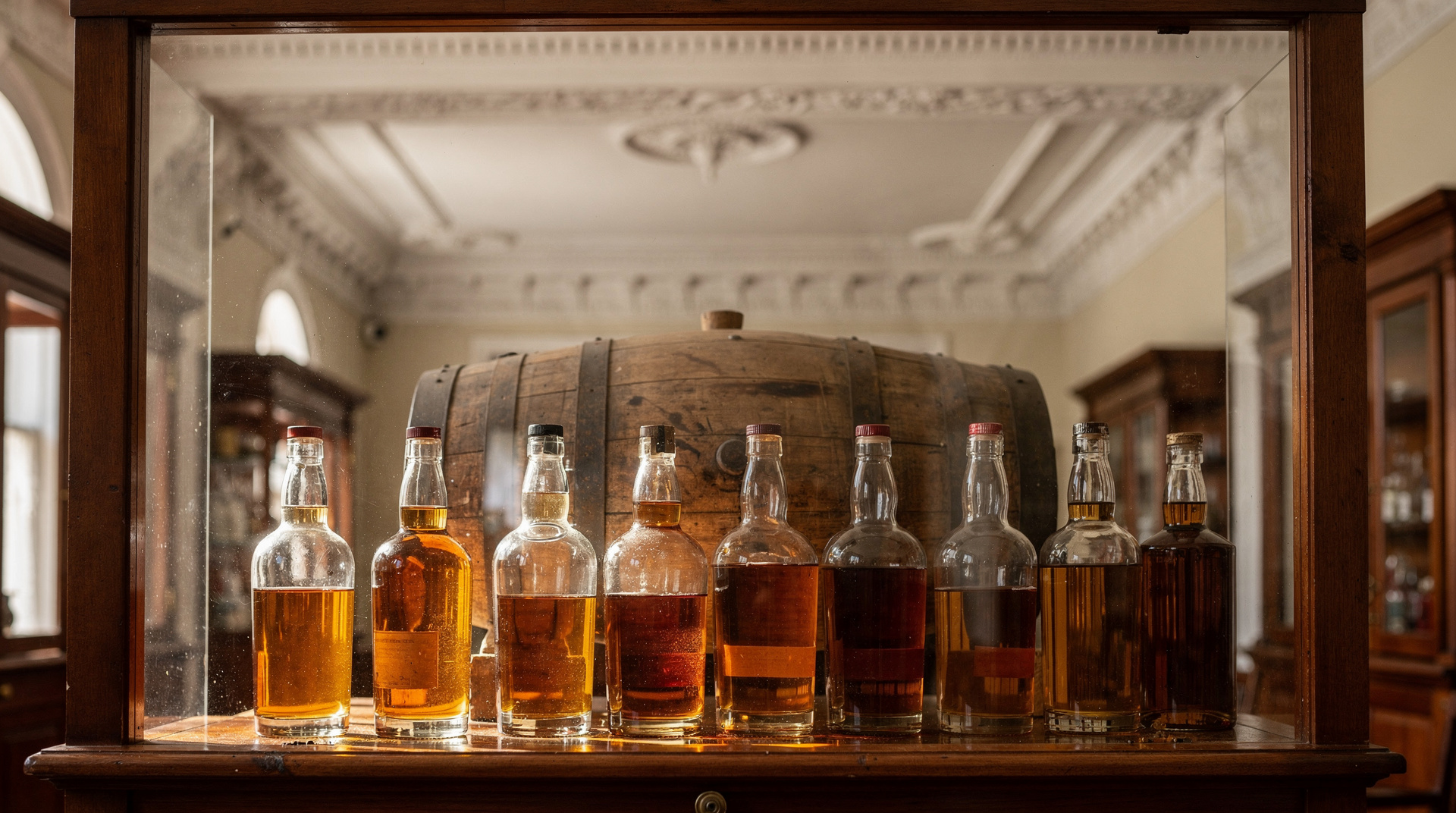
Colour tells you something, but not everything. Darker whiskey often spent time in a different kind of cask, though the shade alone will not tell you whether you will like it. Treat it as a hint, then let your nose and tongue make the call.
What to expect in the room
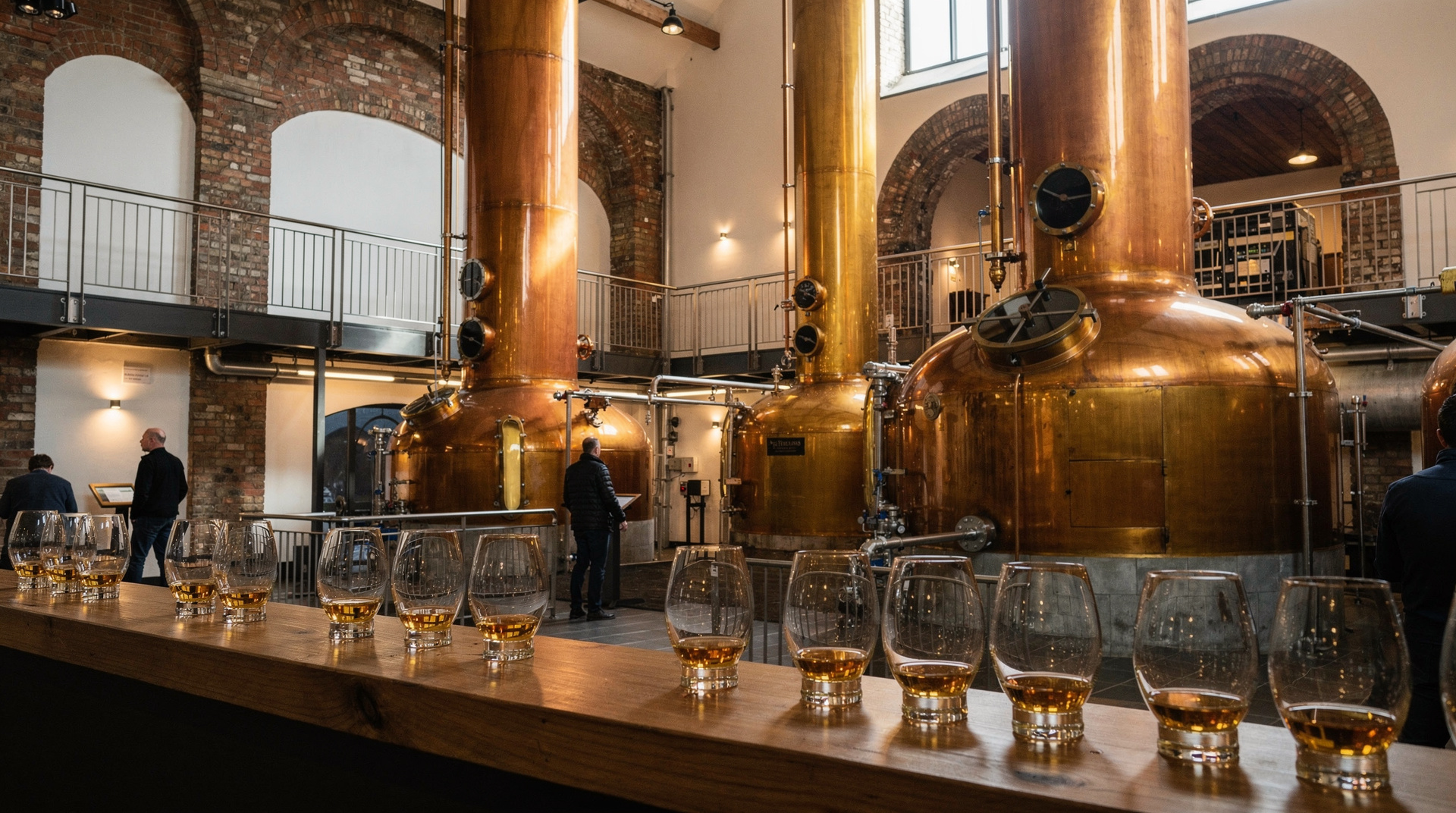
Most beginner sessions are friendly and unhurried. You sit or stand with a small group, a guide pours each sample, and the talk moves between history, production and the tasting itself. Nobody expects you to perform. If you prefer a quieter, more personal pace, a smaller or private format is worth considering; the Dublin private tours guide explains how those are set up.
Expect to be asked what you normally drink. Be honest. Someone who usually drinks gin, wine or craft beer has plenty of useful reference points, and guides like to build on them. If you have a taste for the botanicals of gin, the gin and craft beer guide shows how much of the city’s drinks scene sits next door to whiskey.
The best introductory experiences
Jameson Distillery Bow St.
The comparative tasting at Jameson is specifically designed for beginners. You taste three whiskeys side by side — Jameson Irish, a Scotch single malt, and an American bourbon — to demonstrate how the Irish style differs. By the end of 45 minutes, you will have a functional framework for understanding the category. Book the Jameson distillery tour with tastings as your starting point.
A beginner’s tasting in a group moves at the pace of whoever already knows the answers, which is the opposite of what a first session needs: a private Irish whiskey tasting tour sets the pace around your own questions.
Irish Whiskey Museum
After Jameson, the Irish Whiskey Museum fills in the historical story — why Irish whiskey nearly disappeared and why it matters that it came back. The tour ends with a tasting; at this point you will be better placed to articulate what you are tasting after the Jameson session.
Two-hour whiskey tasting tour
If you want to bypass the brand storytelling and go straight to guided tasting, the 2-hour whiskey tasting tour (~€45) covers multiple expressions with a focus on developing your palate rather than learning brand history. This suits anyone who has some food and drink knowledge and wants a faster, more practical approach.
Premium whiskey and food tasting
For a deeper experience from the start, the 2-hour premium whiskey and food tasting tour (~€55) pairs Irish whiskeys with food — matching cheese, chocolate, and charcuterie with specific expressions. This approach works particularly well for people whose existing reference points are in food rather than spirits.
What to do after the basics
If the introduction sparks genuine interest, the natural next steps are:
- Visit Teeling or Pearse Lyons for the craft-distillery experience — smaller groups, more technical conversation, different whiskey styles
- Buy a bottle at the distillery retail — the exclusive expressions available only at the source are the best single purchase recommendation
- Read the Dublin whiskey trail page to plan a fuller exploration of the city’s distilleries
- Try single pot still whiskey specifically — it is the style that is uniquely Irish and that whiskey professionals consistently cite as the most interesting category
Building a whiskey session into a real Dublin day
A tasting works best when it has room around it. Pairing a distillery visit with a walk beforehand keeps the pace gentle: the self-guided Dublin walk and the hidden gems walk both take you through parts of the city where a drink later feels earned. If you prefer your history with a guide, the Dublin historical walking tour sets the scene for why a drink like whiskey mattered so much to the city.
Food belongs in the plan too. A proper lunch before the tasting is the simplest way to enjoy it more; the best restaurants in Dublin and the traditional Irish food guide give you somewhere sensible to eat first. A food tour can do the same job if you would rather have the choices made for you.
Evenings suit a different kind of drinking. Once your tasting is done, a pub is the natural place to try a pour in a more relaxed way. The where to drink Guinness guide and the literary pubs guide are good starting points, and the guide to Guinness versus other stout is a fun comparison for anyone who has just learned to pay attention to flavour. If live music is on your list, the trad session etiquette guide explains how to behave once you are in the room.
After the tasting: making it stick
The best thing you can do after a first session is write down the one whiskey you liked most and the one you liked least. Those two notes are worth more than any brand list, because they tell you which direction to explore. If you loved the creamy, oily texture, single pot still is your next stop. If the lighter, cleaner samples appealed, look at single grain and single malt. Keep the notes on your phone and read them again before you buy a bottle or order at a bar.
It is also worth remembering that taste changes with context. A whiskey that seemed sharp in a busy tasting room can seem generous with a quiet evening and a little water. Do not write anything off after one sip, and do not feel pressure to pretend you enjoyed something you did not. Honest preferences are the whole point of the exercise, and a guide would much rather hear “not for me” than watch you politely finish a glass.
Practical tips for beginners
Eat before you go. Food slows alcohol absorption and improves tasting sensitivity. Doing three distillery tours in a row on an empty stomach is not enjoyable.
Drink water. Every distillery has still water available; use it between samples. It helps your palate reset and reduces the effects.
Take notes. Even a few words on your phone about what you taste is useful — after four or five samples things blur together. Write down one observation per glass.
Ask questions. The guides at every venue are trained for beginners and will happily slow down, repeat, or explain anything. There are no stupid questions about whiskey.
Do not feel obliged to drink everything. The tasting measures are small — around 20ml each — but you are entitled to skip any glass. Nobody is keeping score.
For building a full whiskey day, use the Dublin whiskey trail as your planning document. For the non-whiskey part of the day, the Guinness Storehouse guide and best pubs in Dublin fill out the picture of how Ireland’s drink culture works.
Other distilleries worth knowing about
Once you have your bearings, Dublin has more than the obvious names. The Roe & Co distillery guide covers a newer, design-led venue in the Liberties area, which makes a pleasing contrast to the older, more traditional feel of the big heritage brands. Reading the guides side by side before you book will help you decide which atmosphere suits you. The Dublin whiskey renaissance post explains why so many distilleries have reopened in the city, which gives useful context for a first-timer.
If you are still deciding how whiskey fits into a larger trip, the Dublin food and drink options and the booking attractions in advance guide help with timing, especially in busy months.
Jameson vs Teeling vs Pearse Lyons for a first visit
If you can only pick one distillery, Jameson vs Teeling vs Pearse Lyons breaks down which suits beginners best — the short version is that Jameson’s comparative tasting format is the most beginner-oriented of the three, while Teeling and Pearse Lyons reward a second visit once you know roughly what you like. The Irish Whiskey Museum tour with tasting is a good second stop on the same day if Jameson leaves you wanting more history.
Whiskey and Guinness together
Several tours combine both drinks in a single afternoon rather than treating them as separate outings — useful if your trip is short. These tend to move faster than a dedicated whiskey session, so they suit visitors who already know they enjoy both rather than absolute beginners still working out their palate.
Pair either with a stop in The Liberties, where the Guinness Storehouse and several whiskey distilleries sit within a 15-minute walk of each other — see where to stay in Dublin if you want to base yourself there for a full drinks-focused trip. Working this into a broader plan is easiest alongside a Dublin 3-day itinerary, which has room for one drinks-focused afternoon without crowding out the sightseeing. If you’re mapping out your whole trip, the Dublin first-time guide covers where a whiskey session fits against the rest of the essentials.
Frequently asked questions about Whiskey tasting in Dublin for beginners
Is Irish whiskey sweeter than Scotch? Generally smoother rather than sweeter — the triple distillation removes more of the harsher compounds, which reads as gentler on the palate even when the actual sugar content is similar.
How many whiskeys will I taste in a beginner session? Most beginner-oriented tastings pour 3–5 measures of around 20ml each, enough to compare styles without overwhelming an untrained palate.
Top experiences
Bookable activities with verified prices and instant confirmation on GetYourGuide.

Dublin: 2-hour whiskey tasting tour
- Free cancellation
- Instant confirmation

Dublin: Jameson whiskey distillery tour with tastings
- Free cancellation
- Instant confirmation

Dublin: Irish Whiskey Museum tour and whiskey tasting
- Free cancellation
- Instant confirmation

Dublin: 2-hour premium whiskey and food tasting tour
- Free cancellation
- Instant confirmation