Glendalough in spring
Glendalough in April is a different valley from Glendalough in July — nearly empty, fully in bloom, and running at the waterfall volume that summer drought never quite matches. Here’s why spring is the season to see it in.
| Where | Wicklow Mountains, ~45 min south of Dublin |
| Best months | April, early May |
| Time needed | Half a day minimum for the monastic site + a walk |
| Getting there | Coach tour or self-drive over Sally Gap |
| Wear | Waterproof boots — trails stay boggy into late May |
The valley before the season
I’ve been to Glendalough six or seven times now, at different seasons, under different conditions of weather and light and company. The visit I remember most clearly is an April morning, a Tuesday, when the coach from Dublin dropped me at the visitor centre at half nine and I had the monastic city almost entirely to myself for the first hour.
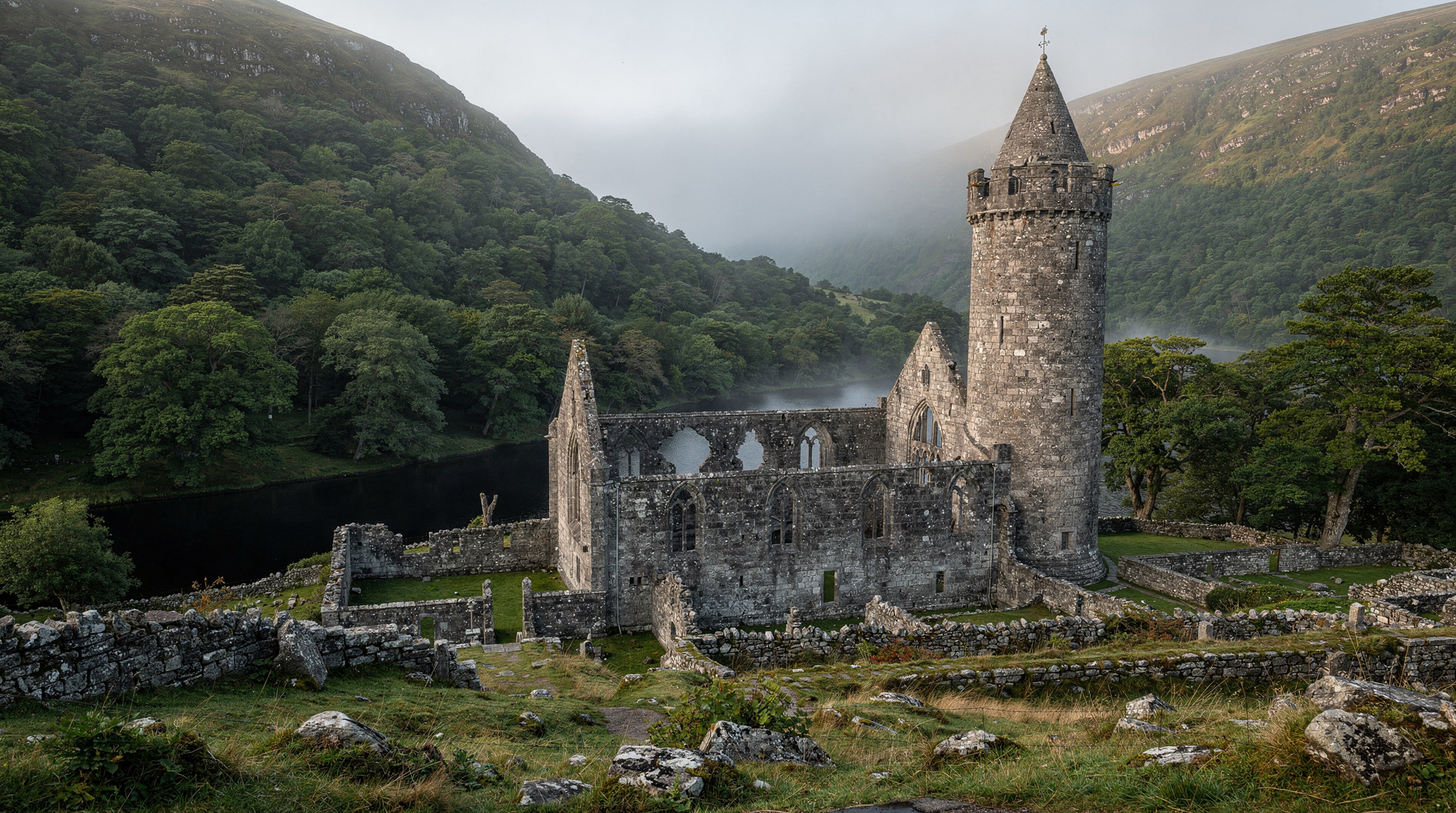
This is the Glendalough that the summer photographs don’t show: the round tower with no crowd gathered at its base, the ruins of the cathedral with the grass between the stones still damp from overnight rain, the Poulanass waterfall running at full spring volume and the sound of it filling the valley more fully than it does in August when the water drops. The beech trees, just coming into leaf, were at the specific yellow-green of early spring that they’ll never be again that year.
Spring — April in particular, and early May before the school-holiday season begins — is when Glendalough is most itself. The argument for it is simple and mostly about timing: come when the valley is not overwhelmed by its own popularity.
What Glendalough actually is
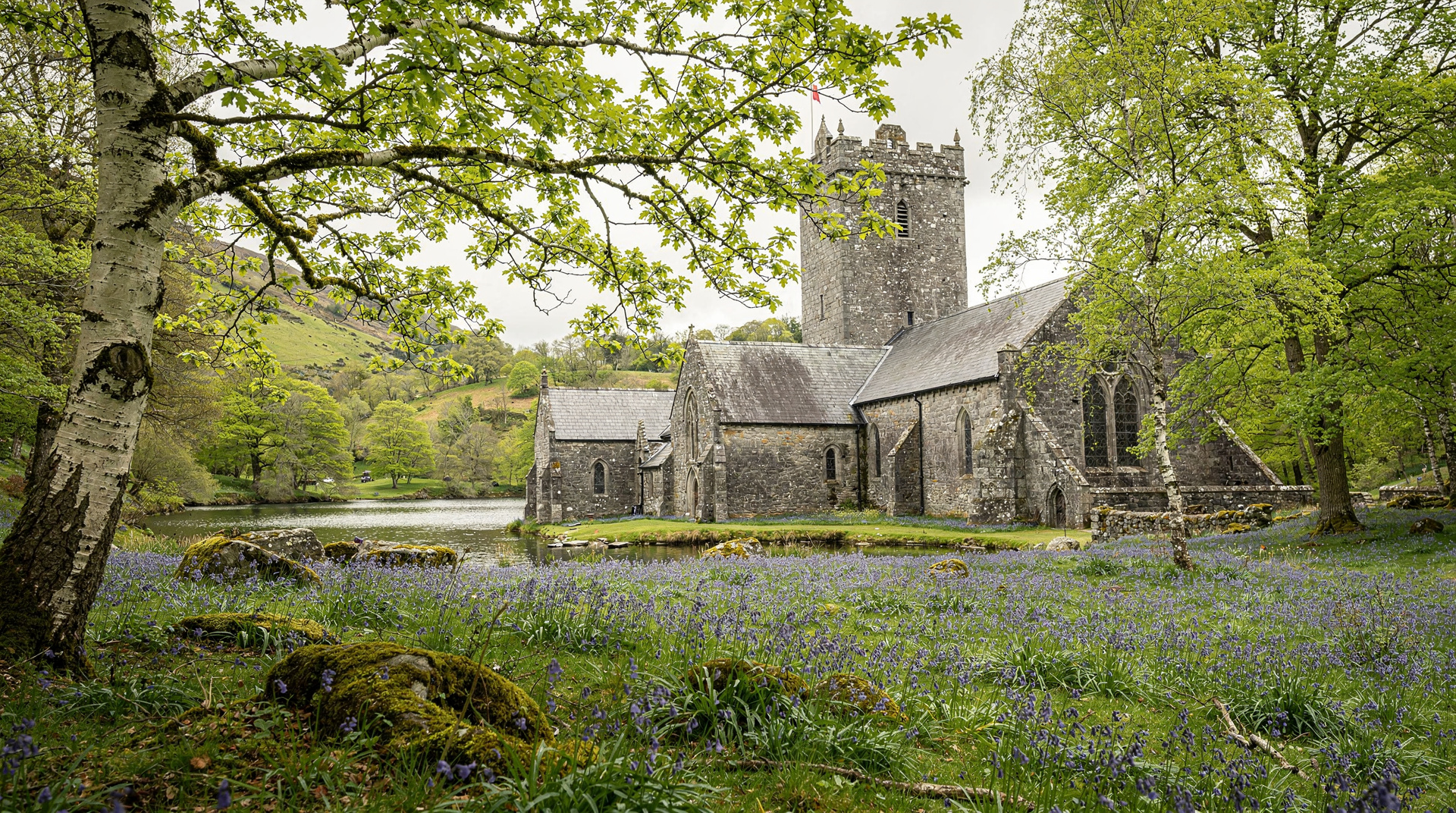
Glendalough is a glacially carved valley in the Wicklow Mountains, forty-five minutes south of Dublin, containing the remarkably intact remains of a monastic settlement founded by St Kevin in the sixth century. The key word is “intact” — the round tower, built around 1000 AD, still stands to its original height. The cathedral, the priest’s house, several smaller churches, and the famous Gateway (the only surviving example of a monastic gateway in Ireland) are all present in recognisable form.
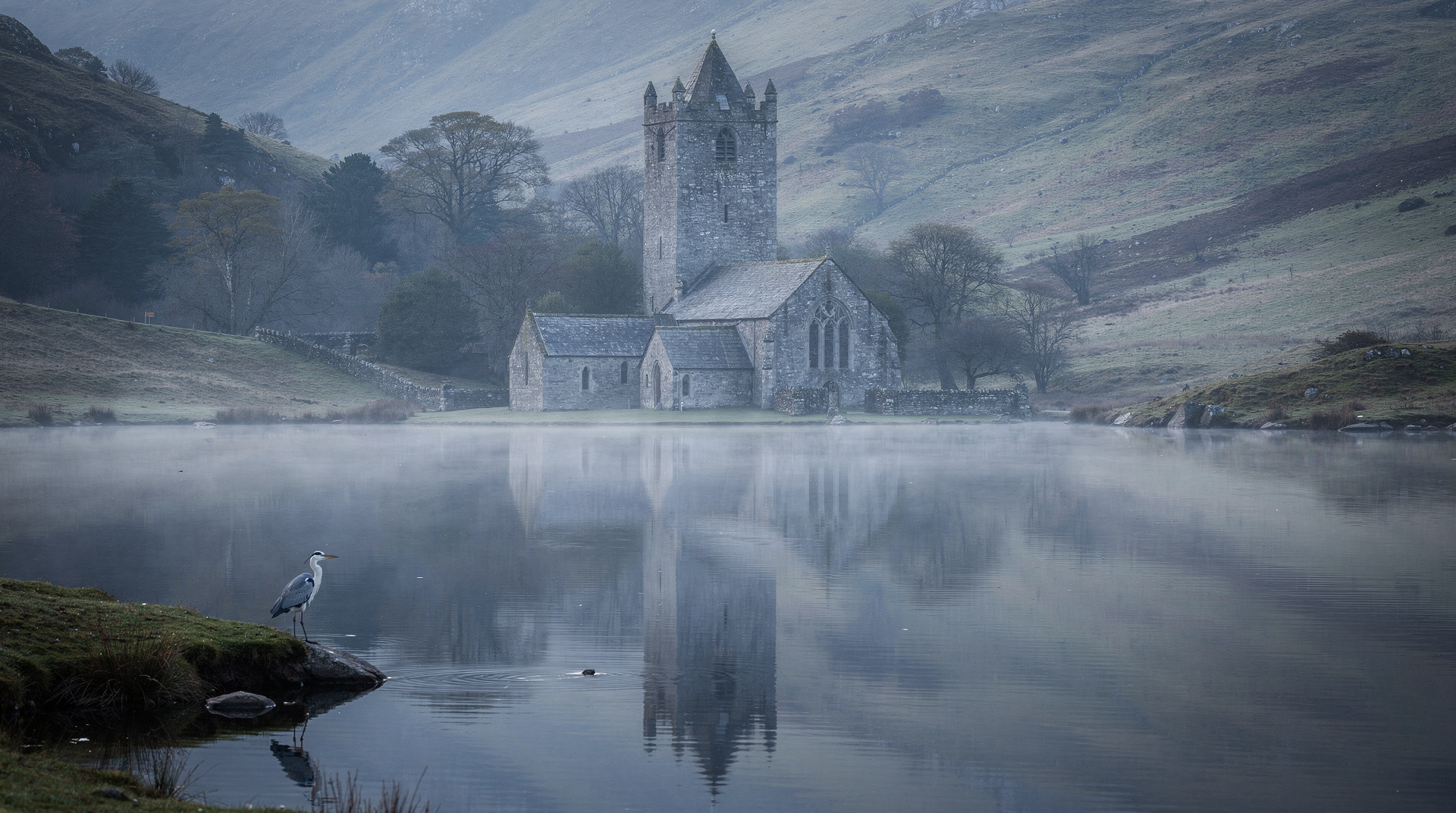
The valley has two lakes — the Upper and Lower lakes — and the monastery sits between them, in a site that makes obvious sense as a place of contemplation and also as a place of defensible community. Medieval monasteries were simultaneously religious communities and the most significant centres of learning, craft, and manuscript production in the region. Glendalough was a major one.
Our full Glendalough guide covers the historical details, the walking routes, and the visitor centre in depth.
The spring case
The practical argument first: in April, you avoid the summer crowds without incurring the limitations of winter. The visitor centre and the site itself are open at full hours. The walking trails are passable — muddier than August but not the boot-sucking conditions of January. The days are long enough for a full afternoon in the valley after arriving from Dublin around midday.
The aesthetic argument: spring in a valley surrounded by mixed deciduous woodland is one of the more visually concentrated experiences the Irish countryside offers. The beech, oak, and ash trees come into leaf at slightly different times over a two-to-three week window in April, and the gradient of greens — from the first lime-yellow of the beech to the darker, more established oak leaf — gives the valley walls a texture that’s absent in full summer, when everything runs together into a uniform green mass.
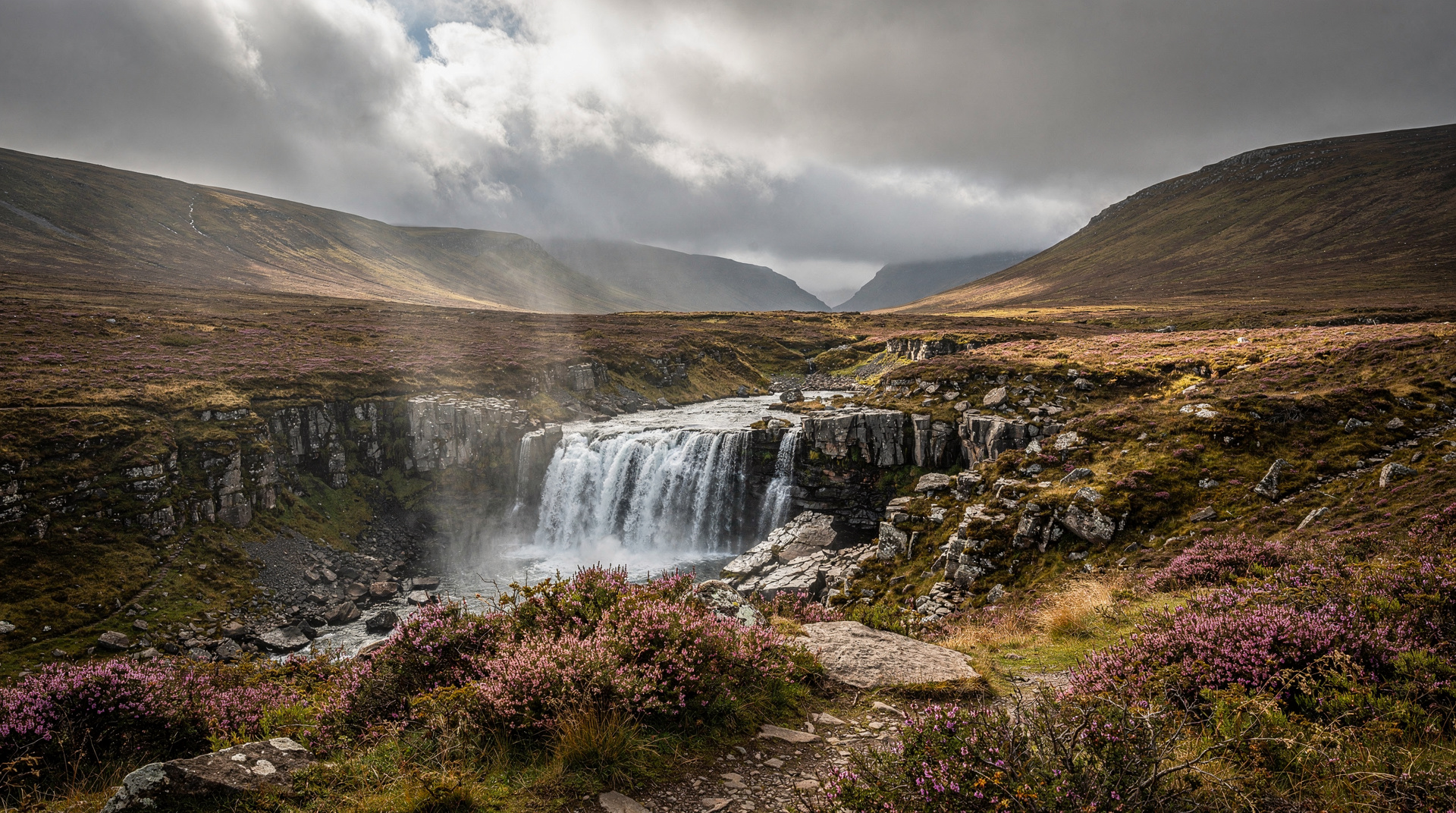
The waterfall above the Upper Lake is at its best in spring. The Poulanass waterfall path — a roughly two-kilometre walk from the main monastic site — takes you past the falls at full volume and gives you the Upper Lake from the north shore, which is the view that the photographs don’t usually show.
Getting there
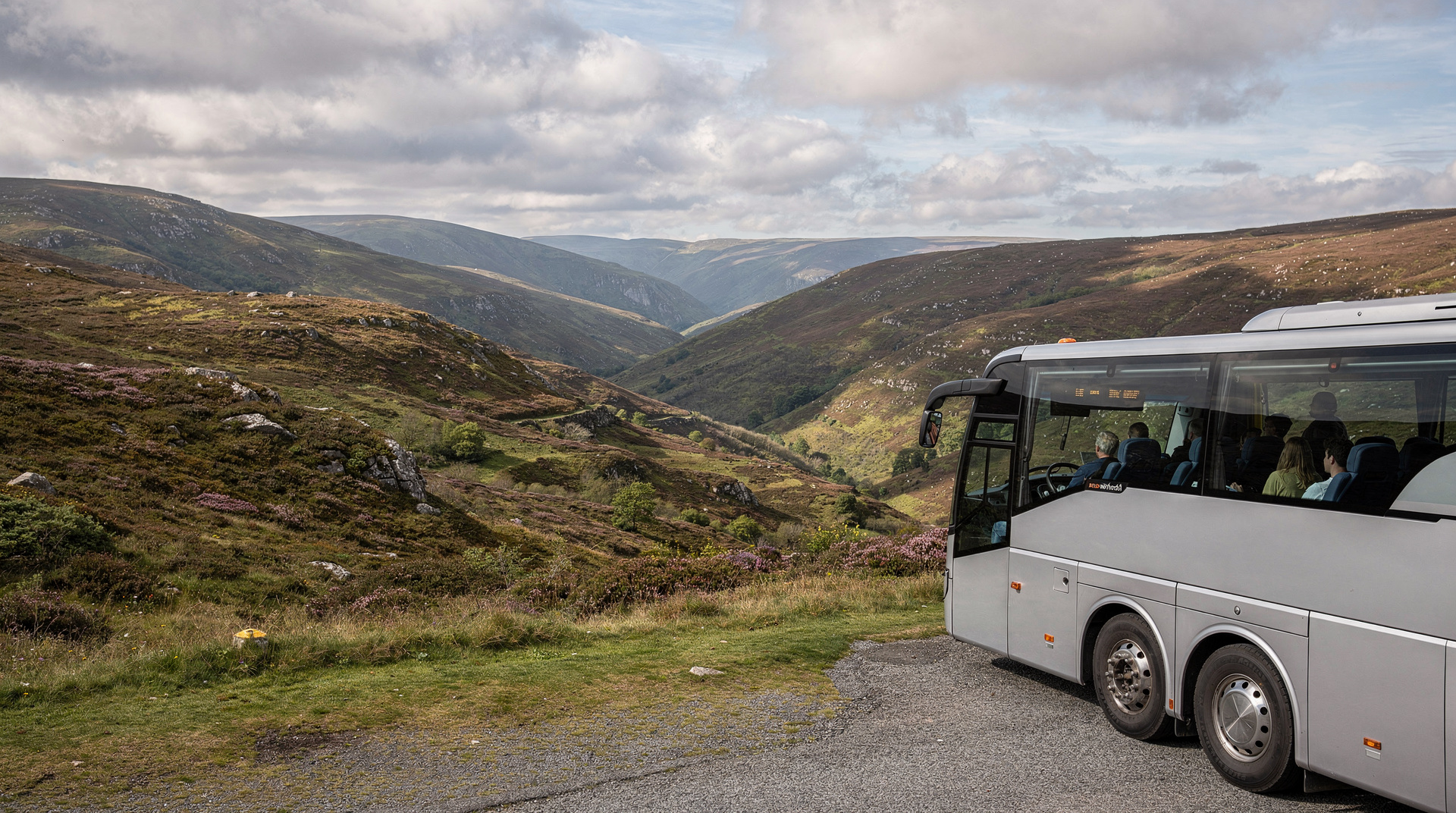
The coach tours from Dublin are the most practical option if you’re not hiring a car. Several operators run daily departures, and the journey takes about an hour. An afternoon tour that leaves Dublin around midday gets you into the valley for the early afternoon and back before evening.
The Wild Wicklow and Glendalough day tour from Dublin covers Glendalough with stops at other Wicklow highlights and is the most popular option for good reason: it handles the logistics and gives you context for the landscape you’re passing through.
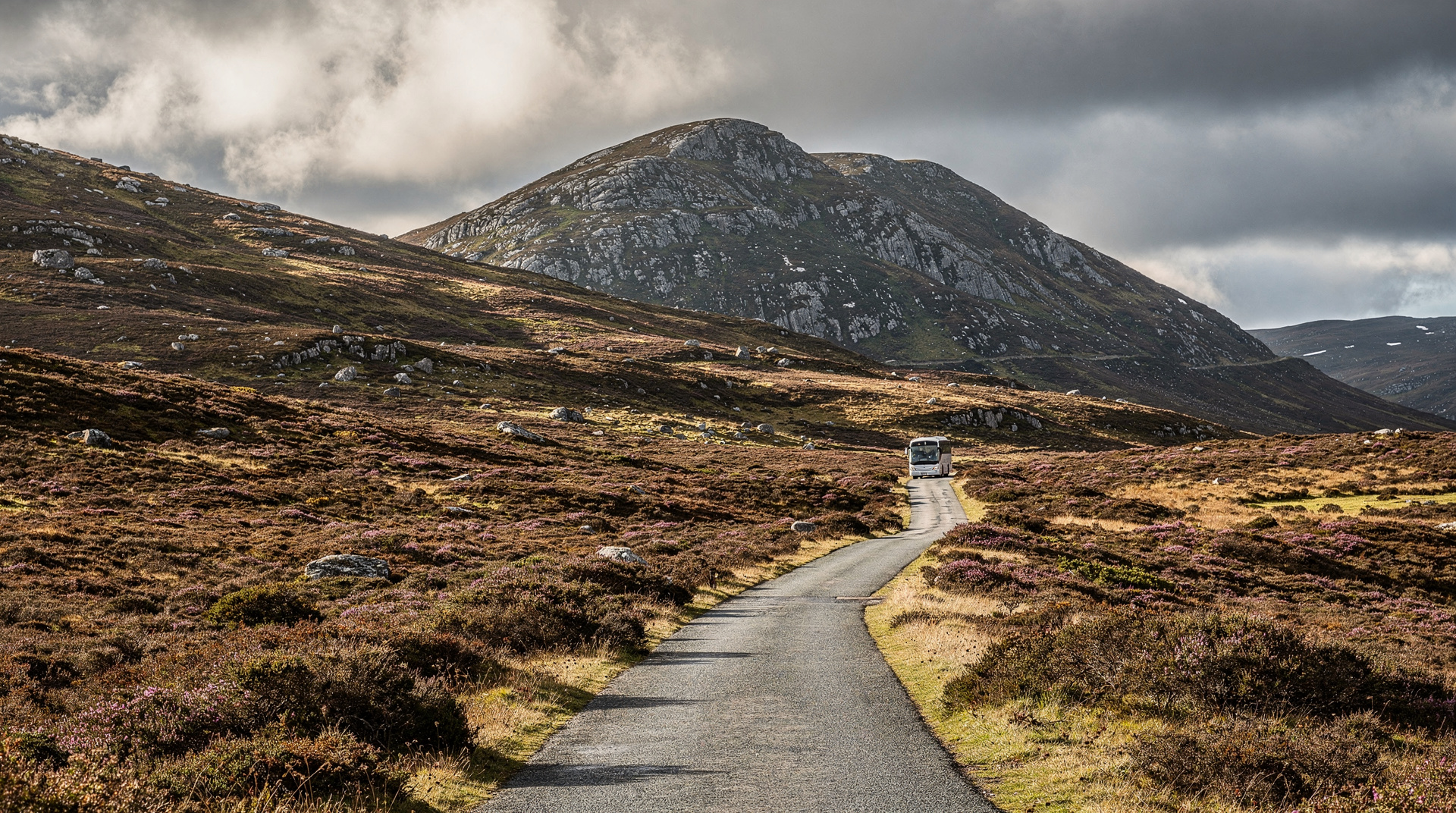
If you’re driving yourself, the approach over the Sally Gap — through open bogland and past Lough Tay, the so-called Guinness Lake — adds forty-five minutes to the journey but gives you a very different Wicklow. The high bog landscape in April, with the heather not yet in colour but the first tentative growth beginning, is bleakly beautiful in a way the valley approach doesn’t prepare you for.
Walking in the valley
The main monastic site requires about forty-five minutes to walk properly — through the Gateway, past the Round Tower, the Cathedral, the Priests’ House, St Kevin’s Kitchen (the small barrel-vaulted church with a miniature round tower), along the lakeshore to the Early Christian crosses.
Beyond the monastic site, the valley opens up into a network of walking trails ranging from an easy thirty-minute lakeshore path to the more serious Spinc Ridge walk that climbs above the Upper Lake and gives you the valley from above. The Spinc in April, if the day is clear, produces the view that tends to convert people to Wicklow: the two lakes below, the monastic site a visible collection of stone shapes, the surrounding mountains still mostly bare but beginning to show green at the lower elevations.
Wear waterproof boots for any walk beyond the main site, regardless of the weather forecast. The trails have sections of boggy ground that don’t dry out completely until late May.
Kevin’s story
A note on the saint, because Glendalough makes more sense with him in it.
St Kevin (Caoimhín in Irish) came to the valley in the sixth century as a hermit, looking for the kind of solitude that increasingly complex monastic life elsewhere in Ireland was failing to provide. The stories about him — and there are many, some of them very strange — all have the quality of a person who found other humans difficult but managed to be loved by them anyway.
The legend that I find most revealing: Kevin was praying with his arms stretched out in an act of penitence when a blackbird landed in his open palm and built a nest there. He held his position, motionless, until the eggs hatched and the chicks fledged. Whether or not you take the story literally, it says something about the character of the place he chose.
Glendalough by season
| Season | Crowds | Waterfall | Trail conditions | Verdict |
|---|---|---|---|---|
| Spring (Apr-May) | Low | Full volume | Boggy, needs waterproof boots | Best overall |
| Summer (Jun-Aug) | High, car park fills | Reduced by drought | Dry, easy | Busiest, worth avoiding weekends |
| Autumn (Sep-Oct) | Moderate | Rising again | Mixed, cooling | Good alternative to spring |
| Winter (Nov-Mar) | Very low | Full, sometimes icy | Cold, can be muddy | Atmospheric but short daylight |
Extending the day beyond the monastic site
If the Spinc Ridge walk has whetted your appetite for more of Wicklow, the wider Wicklow Mountains offer several more hours of walking beyond Glendalough itself — open moorland, forestry trails, and viewpoints that most day-trippers never reach because the monastic site alone fills their allotted time. For those combining a spring visit with other Wicklow highlights, the Wicklow and Glendalough day trip guide lays out a fuller itinerary including Powerscourt and the Sally Gap.
Anyone building a longer Ireland trip around a spring visit should look at the 5-day Dublin itinerary, which slots a Glendalough day alongside the city’s core sights without over-scheduling either.
Pairing Glendalough with the rest of a Dublin trip
A spring day in the valley sits comfortably inside a wider stay. If you are still deciding how to split your time, the Dublin first-time guide and the 3-day planning guide show where a day out in the mountains fits between the city sights. For other options beyond Wicklow, the best day trips from Dublin puts Glendalough next to the alternatives, and which day trip to choose helps if you can only manage one.
Not everyone wants to drive. The guide to day trips without a car explains how to reach places like this by organised tour, and driving in Ireland from Dublin is worth reading first if you would rather take the Sally Gap road yourself. On the way you pass Lough Tay and Sally Gap, which is worth a pause if the light is good.
Spring weather in Ireland is changeable, so it helps to know what to bring: see what to pack for Dublin’s weather. To judge whether April or May suits you better overall, the best time to visit Dublin sets the seasons side by side, and our spring shoulder-season guide covers the city itself at the same time of year. If you like the idea of quiet places out of season, Dublin in the quiet season follows the same logic.
Back in the city after a muddy day on the trails, nothing beats a warm pub. The trad session etiquette guide will help you enjoy an evening of live music without putting a foot wrong.
Choosing how long to stay
If your time in Ireland is short, a spring visit does not need to take the whole day. Travellers who would rather keep the afternoon free for the city can book a shorter guided trip to the valley and the surrounding mountains, then spend the evening back in Dublin. Those with more time can read the Wicklow Mountains guide and decide whether to add a second stop.
Two nearby places combine well with the valley. Powerscourt and its gardens and waterfall suit a softer, gentler half of the day, while Wicklow Town and Avoca make a calm stop on the road. Anyone tempted by a very different kind of day out can compare it with the Kilkenny day trip or with the best day trip I ever took from Dublin.
Fitting the valley into the rest of your trip
Spring rain can arrive at any hour, so keep a plan B in your pocket: the rainy day guide lists indoor options for the days when the mountains disappear into cloud. If you prefer the comfort of a driver and a set route, the private tours guide explains what that kind of day looks like, and family day trips is useful if children are coming along.
To see how a spring visit compares with other seasons, read about Dublin in summer and Dublin in winter. Travellers watching their spending will find ideas in the budget guide, and getting around Dublin covers the city end of the journey. For a longer stay, the 2-day and 3-day itineraries show how a day in Wicklow can sit between city sights.
Practical notes
The visitor centre has a good exhibition on the site’s history and a café. Spring opening is from roughly nine-thirty to five. The car park fills on sunny spring weekends — arrive before ten or after three. Weekdays in April are significantly quieter than weekends.
Bring a layer you don’t mind getting wet. Lunch options in the valley are limited to the visitor centre café and the small number of premises in the nearby village of Laragh; it’s worth carrying your own food if you’re planning a full day.
The walk from Laragh village to the monastic site takes about fifteen minutes along a pleasant riverside path. If you’re on a coach tour, this path is your first sight of the valley, and it sets the tone for the morning correctly.
Glendalough in April, on a weekday morning, before the season begins: this is the version to aim for.
Frequently asked questions about Glendalough in spring
Is Glendalough worth visiting if I can only go in summer? Yes, but manage expectations — arrive before 10am or after 3pm on weekends, and know the waterfall runs lower than in spring. It’s still a remarkable site; it’s simply a busier, drier version of the same place.
How much walking does a spring visit to Glendalough actually require? The monastic site itself is about 45 minutes at an easy pace. Add the Poulanass waterfall path (roughly two kilometres) for a fuller half-day, or the Spinc Ridge walk if you want the valley-from-above view and don’t mind a steeper climb.
Top experiences
Bookable activities with verified prices and instant confirmation on GetYourGuide.