Newgrange is older than the pyramids — and I didn't believe it until I stood inside
The number that stops you cold
Five thousand two hundred years. That is how old Newgrange is. It predates the Great Pyramid at Giza by six centuries. It is older than Stonehenge by a millennium. I had read this fact a dozen times before I visited, and each time it registered as impressive, abstract, numerical — the kind of statistic that slides off your brain like water off a raincoat. Then I walked into the passage, crouched under the lintel stones, and stood in the chamber at the centre of the mound. The number stopped being abstract.
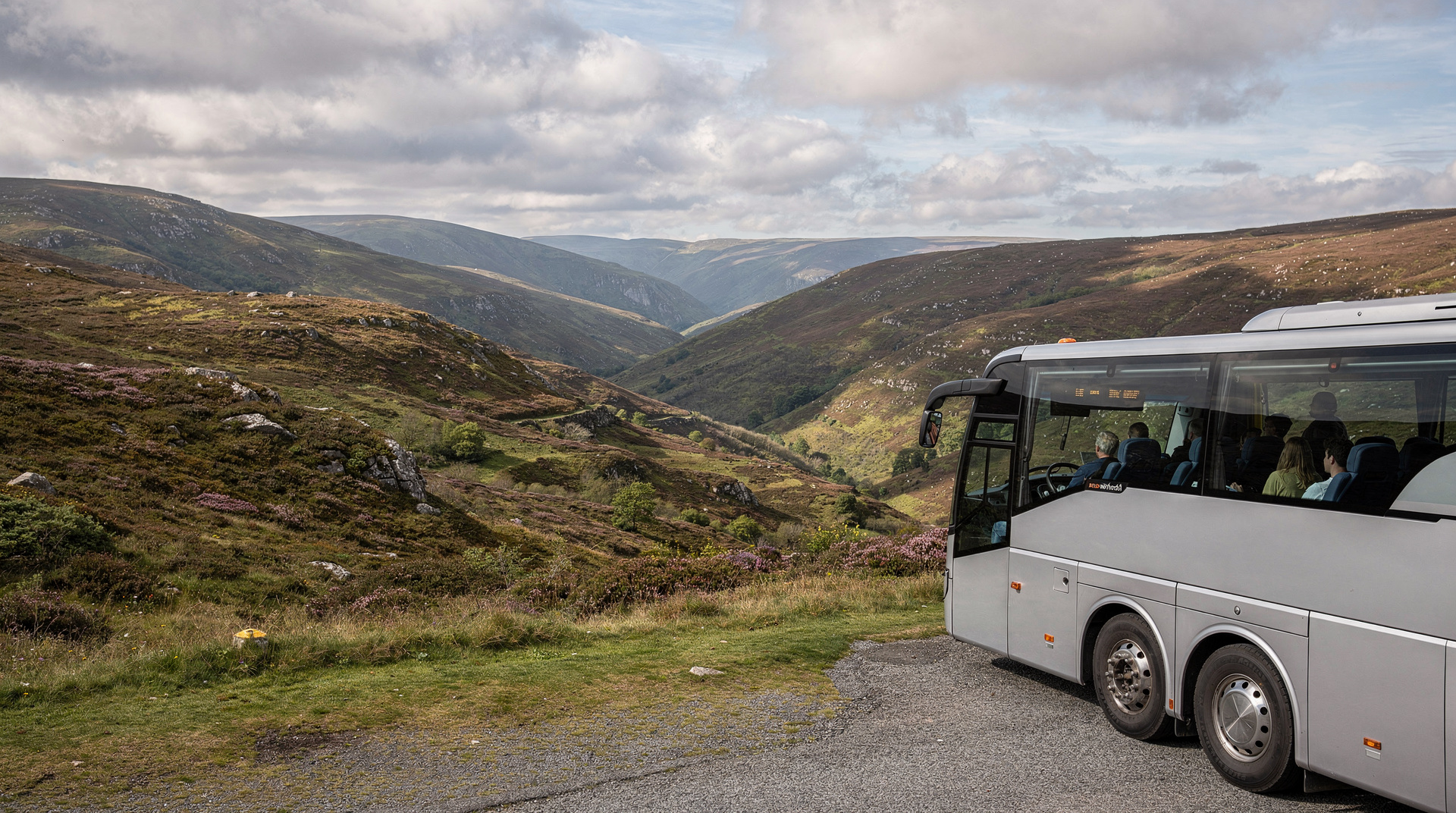
The Boyne Valley is about 50 kilometres north of Dublin, and most people arrive on a day tour — you’re not allowed to drive to Newgrange directly, which turns out to be the right call. You park at the Brú na Bóinne visitor centre, take a short shuttle bus across the river, and approach the mound on foot. I did it in May, when the morning light was raking across the grass and the site was quiet enough that I could hear the wind.
| Where | Brú na Bóinne visitor centre, ~50km north of Dublin |
| Cost | Newgrange entry around €18 (visitor centre + shuttle + mound); guided day tours from Dublin around €55–75 |
| Time needed | Half a day if driving yourself; a full day on a guided tour from Dublin |
| Getting there | No direct car access to the mound — shuttle only from the visitor centre; guided coach tours run daily from Dublin |
| Best time | Spring and autumn weekdays; book well ahead for June–August and for the winter solstice lottery |
What you see first
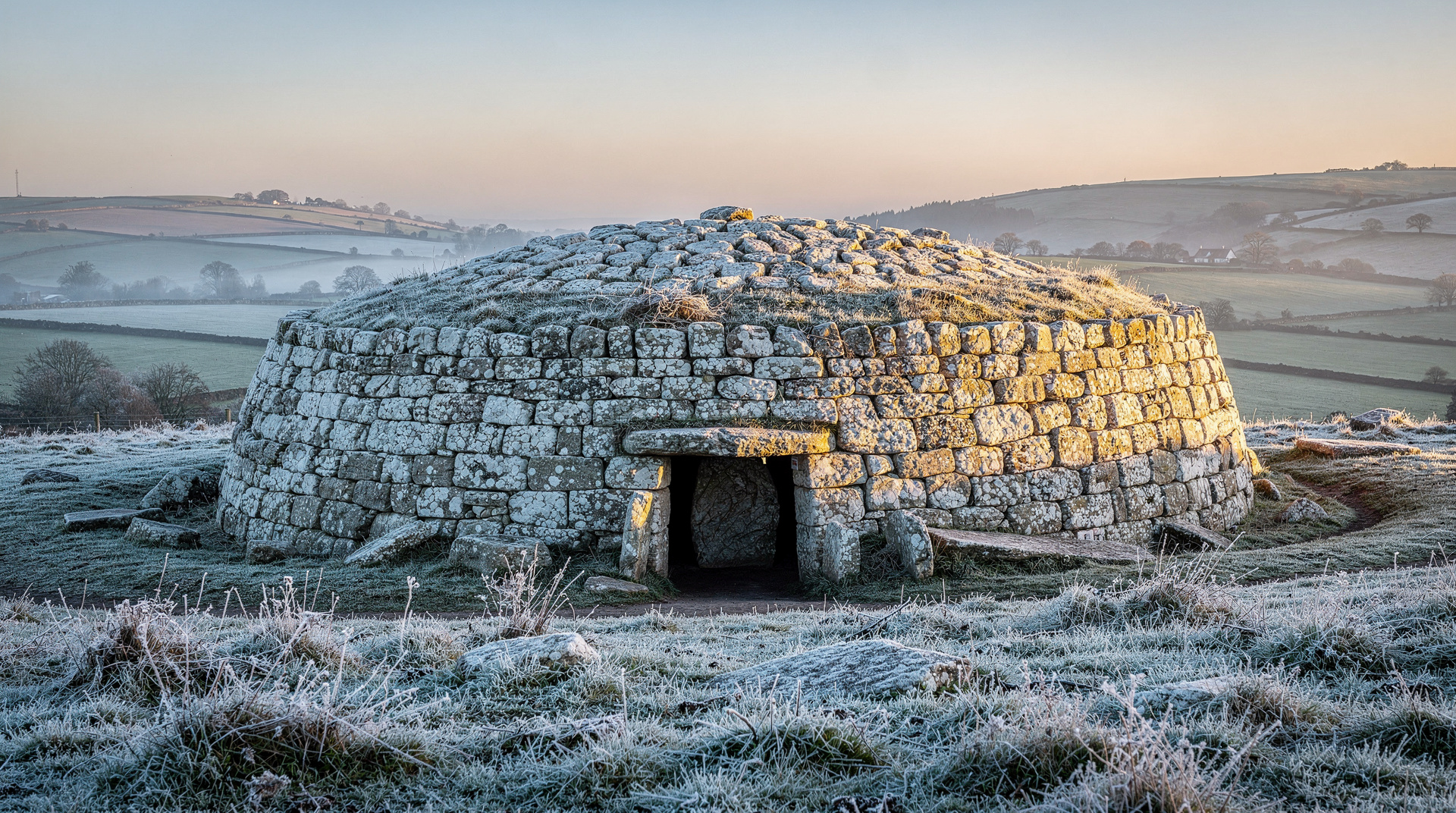
The exterior is what people photograph: a curved retaining wall of brilliant white quartzite, dotted with dark granite cobbles, with a single doorway framed by a large decorated stone at the base. That kerbstone — known as K1 — is covered in spirals and lozenges that archaeologists still cannot fully explain. I spent about ten minutes on it before I even looked up at the mound itself.
The mound is 85 metres in diameter and rises about 12 metres high. It is grass-covered now and looks almost like a natural hill until you notice that every angle is too deliberate, every surface too considered. Above the doorway is a small rectangular opening called the roof-box — a gap that the builders left intentionally so that on the winter solstice, and only then, a thin shaft of light enters the passage and illuminates the chamber floor. For seventeen minutes, the deepest interior of the mound fills with golden light. There is a lottery each year for the chance to stand inside during the solstice. The waiting list runs to thousands of people.
Inside the chamber
The guided tour takes you in. The passage is about nineteen metres long, lined with upright orthostats — standing stones — and you walk slowly, slightly hunched. The stones are incised with spirals, chevrons and concentric arcs. The guide pointed out a triple spiral on one of the chamber stones that has become the unofficial symbol of the site, reproduced on everything from museum labels to Irish passport covers.
The chamber itself opens into a cross-shaped room with a corbelled roof, stone basins on three sides, and a ceiling that has been waterproof for over fifty centuries without a single drop of cement. The builders understood how to tilt and overlap stones so that rainwater runs outward, away from the interior. It still works. Inside the chamber, everything felt very quiet. The guide turned the lights off briefly and activated a small orange beam to simulate the solstice shaft. Knowing it was artificial didn’t make it less affecting.
What we don’t know — what nobody knows — is who exactly built this, or why they invested the labour of an entire community across decades to construct it. The remains of cremated individuals were found in the stone basins. A passage tomb, certainly. A solar calendar. A ritual focus. But the specifics of belief, governance and social organisation are a permanent mystery, which I find oddly more compelling than any tidy explanation would be.
The Boyne Valley beyond Newgrange
The Brú na Bóinne complex includes not just Newgrange but also Knowth and Dowth, two other large mounds within sight of each other. Knowth has more kerbstones and more carved art than any other Neolithic monument in Europe; the interior passage hasn’t been restored for public entry in the same way, but you can walk the exterior and the sheer density of spiral carving is remarkable. Dowth is currently closed for ongoing excavation and research. They are all within walking distance of each other across the field.
| Site | What you see | Interior access |
|---|---|---|
| Newgrange | Restored quartzite facade, decorated kerbstone, chamber tour | Yes — guided passage tour included |
| Knowth | Largest collection of Neolithic carved art in Europe, two passages | Exterior only for public visits |
| Dowth | Third great mound of the complex | Closed — ongoing excavation |
| Hill of Tara | Earthworks, ancient seat of the High Kings, wide views over the valley | Open landscape, no interior structure |
Most day trips from Dublin include Newgrange and one other stop rather than all four — Newgrange is the priority if you only have time for one, since it is the only mound with full interior access.
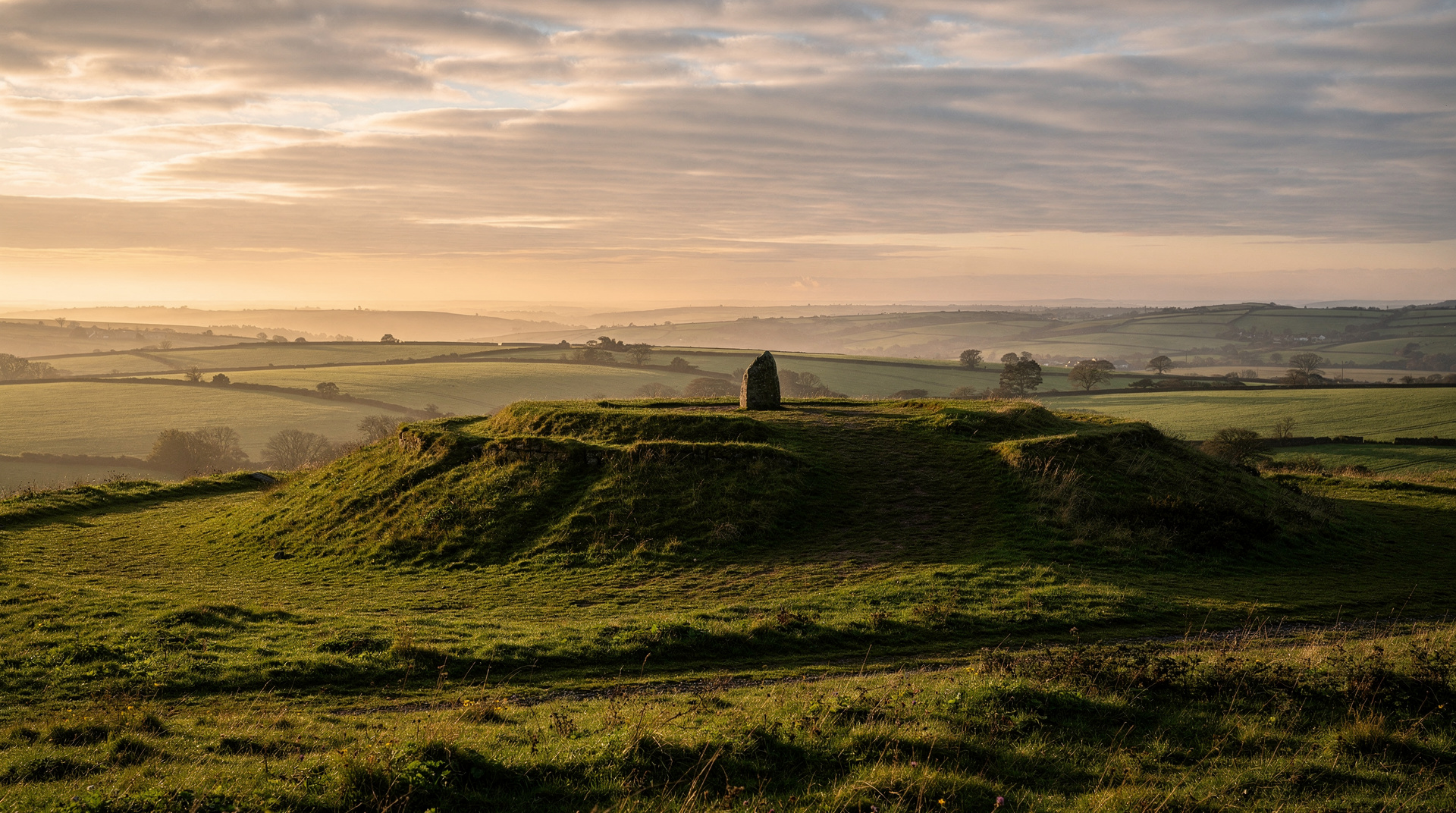
Further along the valley are the Hill of Tara, the ancient seat of the High Kings of Ireland, and Trim Castle, a Norman fortification so well-preserved it was used as a film set. A day that starts at Newgrange and moves through Tara by mid-afternoon is a particular kind of deep-time experience — you are walking through several thousand years of Irish history within about 30 kilometres.
Newgrange, Trim Castle and Hill of Tara day tourIf you’re planning the Boyne Valley as a day trip from Dublin, a guided tour makes logistical sense. The Boyne Valley with Newgrange and Brú na Bóinne entry takes you from Dublin, includes the shuttle and guide, and returns you to the city in the evening. Without a car and with the visitor centre logistics, a self-guided trip is technically possible but requires careful timing. The visitor centre shuttle can fill up — booking in advance is essential in summer.
The thing about booking
One practical detail that catches people out: you do not buy tickets at Newgrange itself. All entry is via the Brú na Bóinne visitor centre, and during peak months (June through August) the site reaches capacity early in the day. Book a specific entry slot in advance. People who turn up hoping to get in on the day in July regularly get turned away.
Spring and autumn are genuinely good times to visit. I was there in late May and shared the chamber with maybe twelve other people. The light was good, the fields were green, and I had enough time at the decorated kerbstone to really look. A similar visit in July often means crowded shuttle buses, queues at the mound, and a rushed twenty minutes inside.
Whether it’s worth the journey
I was quietly resistant to Newgrange before I went. It felt like the kind of obligatory heritage box people tick — see the ancient stone, tick, move on. I came away from it still thinking about the builders: who they were, what they understood about the sun’s movement, what it cost them in labour and planning to align a nineteen-metre passage to within one degree of the winter solstice sunrise. The precision is absurd given the tools available. It is one of those places that makes you revise your priors about human capability in deep time.
Slot it into a 4-day Dublin itinerary or a history-focused long weekend. It pairs well with a half-afternoon at Glendalough on another day if you want more ancient stonework in green landscape. But Newgrange works best on its own, given enough time to stand at the entrance and simply look at that kerbstone for as long as it takes.
Five thousand two hundred years. The number finally makes sense.
Fitting Newgrange into the rest of your trip
Newgrange rewards a little planning on either side of the visit. If you are still deciding how it compares with the other excursions out of the capital, the best day trips from Dublin roundup lays the options side by side, and which day trip is best from Dublin helps if you can only spare one day. Travelling without a car is perfectly workable, and day trips without a car explains how people usually manage it.
If you do decide to hire a car, read driving in Ireland from Dublin first: the roads, the junctions and the parking habits take some adjusting to, and it is better to know that before you leave the city.
Newgrange also sits comfortably alongside the city’s own history. A morning with the Vikings and medieval Dublin or at the National Museum of Ireland gives you the later chapters of the story, and seeing the museum’s prehistoric material before or after the mound helps the carvings make more sense. For the rest of the planning, how many days to spend in Dublin and the best time to visit Dublin will tell you where a half-day or full-day excursion fits.
If the Boyne Valley leaves you hungry for more of this kind of landscape, the Wicklow Mountains offer a very different day out, and the Monasterboice and Mellifont sites sit in the same general part of the country, adding early Christian stonework to the layers of history you will already have seen.
Frequently asked questions about Newgrange is older than the pyramids — and I didn’t believe it until I stood inside
Can I just drive to Newgrange and walk in? No. All access is via the Brú na Bóinne visitor centre, which sells timed entry and runs the shuttle bus across the river to the mound. There’s no direct car access or walk-up entry at the site itself.
How do I enter the winter solstice lottery? The Office of Public Works runs a free annual draw for spots inside the chamber during the solstice sunrise (around December 18–23). Entries typically open in autumn via the OPW website; the waiting list runs into the thousands, so it’s a genuine long shot rather than something to plan a trip around.
Top experiences
Bookable activities with verified prices and instant confirmation on GetYourGuide.