Giant's Causeway day trip from Dublin: the honest review
The Giant’s Causeway is one of the best natural sights within reach of Dublin — and also one of the longest days out you can book. Here’s what the day trip actually involves, honestly.
| Distance from Dublin | ~260km, 4-5hrs driving each way |
| Day trip length | 10-12 hours door to door |
| Currency | GBP (£) — Northern Ireland |
| Entry | Managed by National Trust, paid at visitor centre |
| US visitors | UK ETA required (£10, apply online ahead) |
The honest starting point
The Giant’s Causeway is about 260 kilometres north of Dublin. Getting there and back takes roughly four to five hours of driving each way, depending on traffic and route. If you are doing this as a day trip from Dublin, you are looking at a ten to twelve hour day minimum, with the Causeway itself receiving two to three hours of your attention in the middle.
That is not a complaint. The Causeway is worth it. But I want to establish the reality before you book, because the day trip operates on the boundary of comfortable and I’ve seen people surprised by how long and tiring it is, particularly in summer with the inevitable traffic on the narrow coastal roads.
What the Causeway actually is
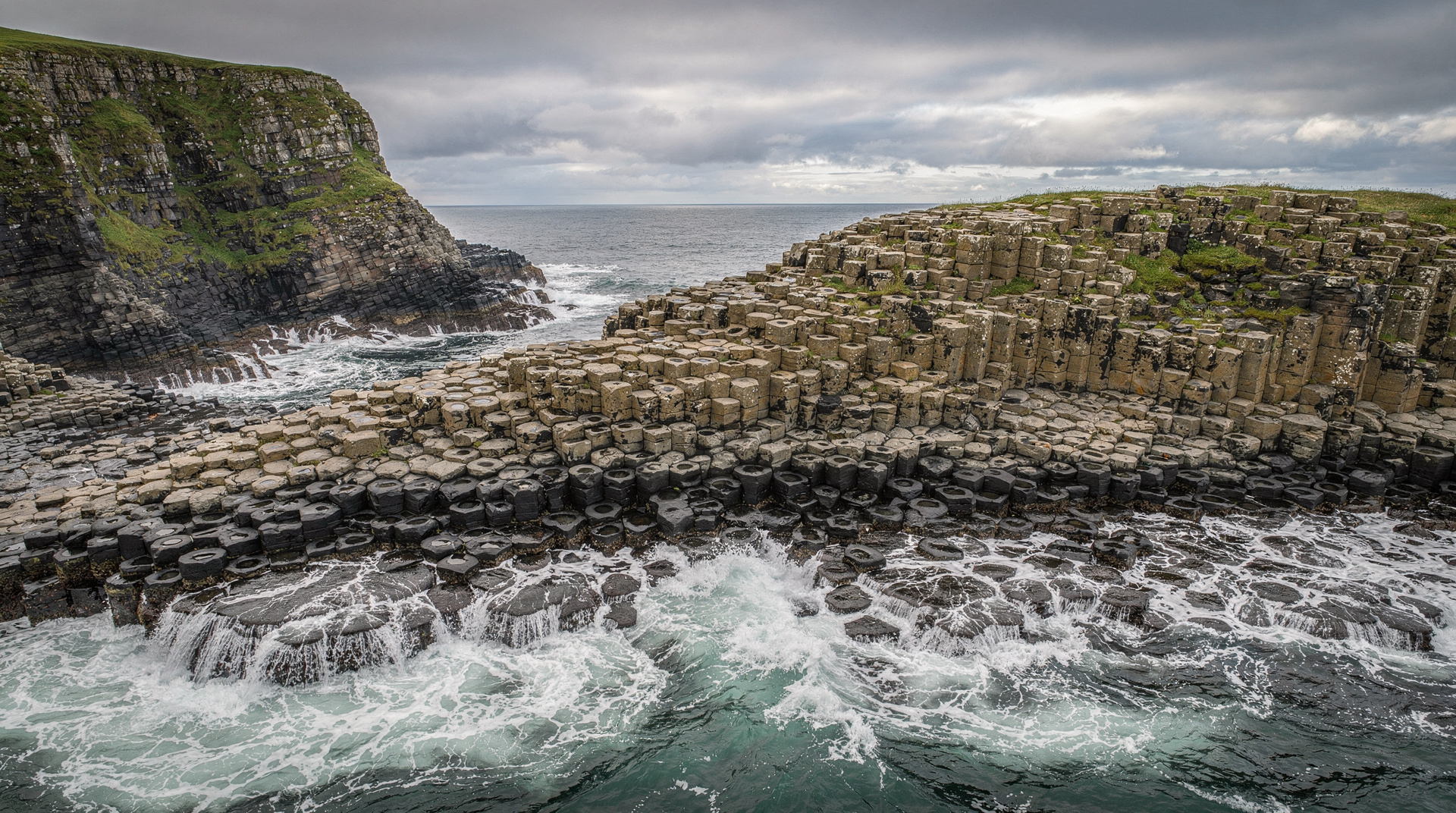
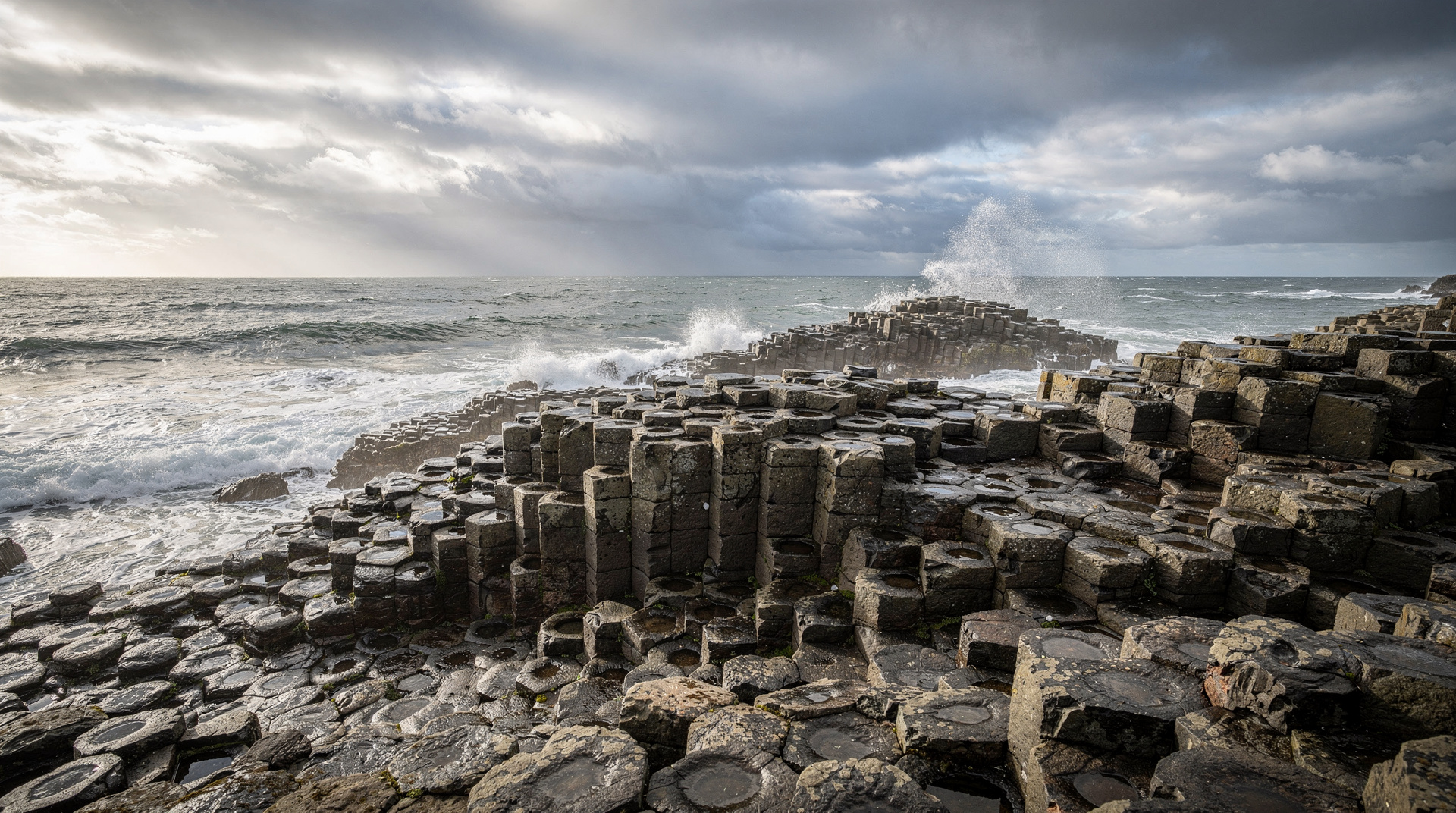
The Giant’s Causeway is a formation of some 40,000 interlocking basalt columns that emerge from the sea on the north Antrim coast, packed so tightly that they appear fitted by craft rather than geology. The tallest columns reach around twelve metres. The hexagonal shapes are so regular that the formation looks more like a mosaic than a volcanic event — which is, of course, why the legend exists. The giant Finn McCool, according to tradition, built the causeway as a road to Scotland to fight a rival. The geology says otherwise: a volcanic eruption 50 to 60 million years ago, lava cooling at different rates, contraction fractures producing the columns. Both stories are true in the ways that matter.
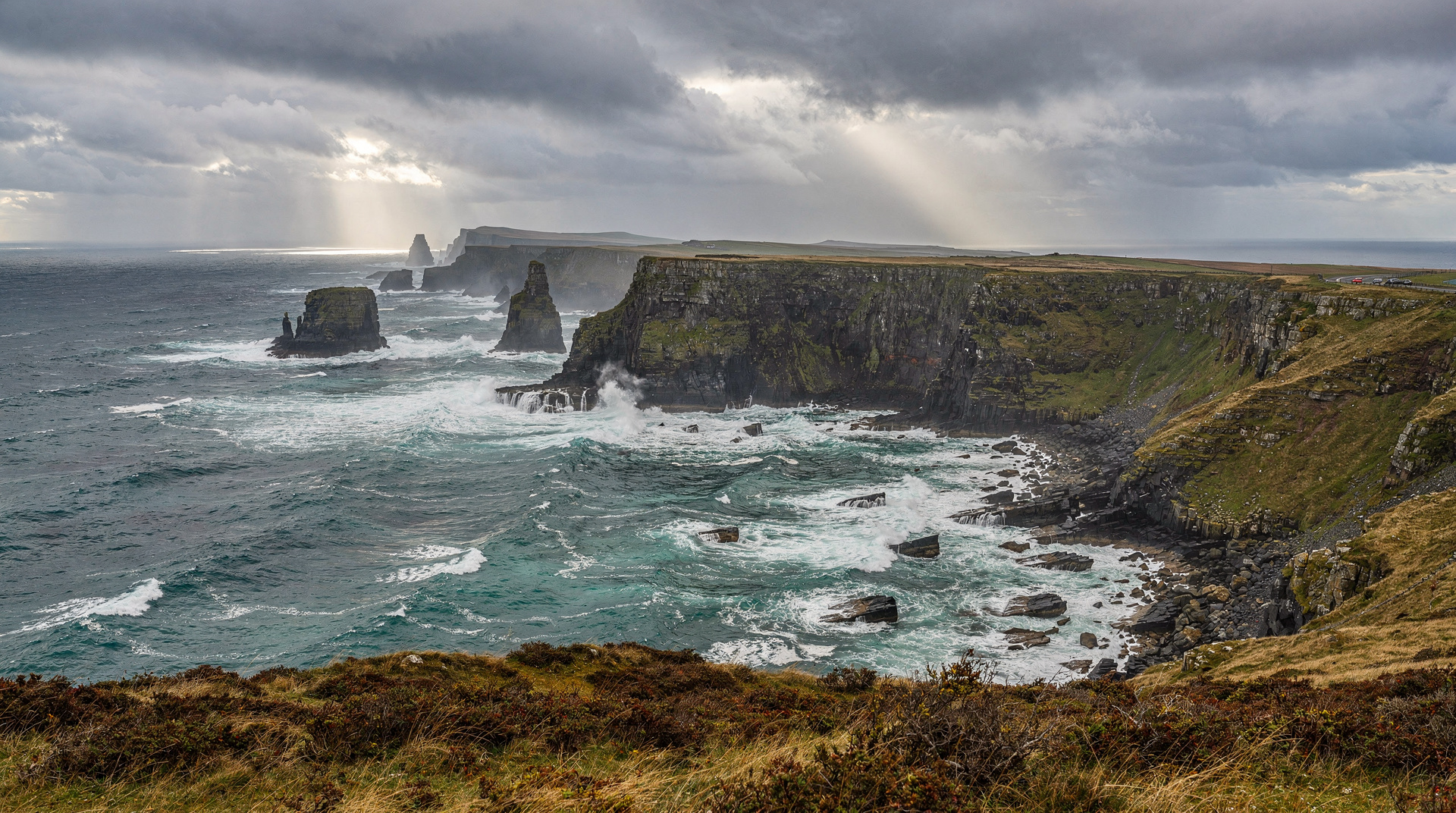
It is a UNESCO World Heritage Site and the most visited attraction in Northern Ireland. In July and August, particularly on weekends, it is crowded. The columns themselves are not large in the way that many natural wonders are large — the area you can walk is contained, roughly a kilometre of accessible shoreline path. The experience is more intimate than dramatic. The sea does its part: on a stormy day, the waves crash into the columns and the spray reaches you. On a calm day, the geometry is more visible.
The Causeway Coast beyond the columns
What the Causeway brochures undersell is the surrounding coastline, which is extraordinary in its own right. The Causeway Coast stretches from Ballycastle in the east to Portrush in the west, and the thirty kilometres between them contain:
The Dark Hedges, a tunnel of ancient beech trees on a narrow road near Armoy that became famous as a filming location for Game of Thrones. Atmospheric in morning mist, busy with tour coaches from 9am onward. Worth seeing but worth seeing early.
Carrick-a-Rede rope bridge, a seventy-metre suspension bridge originally erected by salmon fishermen, now traversed by visitors with vertigo to manage. The drop is thirty metres. The views of the Causeway Coast from the bridge and the island it connects are excellent. Book in advance in summer as entry is timed and limited.
Dunluce Castle, a medieval ruins on a sea stack that looks like something from a fantasy film. It is the kind of castle that has been falling into the sea for four centuries and looks appropriately dramatic about this.
Bushmills, the village where the Bushmills distillery has been producing Irish whiskey since 1608 (reportedly). The distillery tour is about an hour and ends with tastings; it is a good addition for whiskey-interested visitors and breaks up the coastal drive naturally.
Currency and entry notes
Northern Ireland uses GBP (£). The Giant’s Causeway entry itself is managed by the National Trust — membership gives you free entry, otherwise you pay at the visitor centre (check current prices at nationaltrust.org.uk). The car park charges separately. Carrick-a-Rede bridge tickets are also in sterling.
US visitors need a UK Electronic Travel Authorisation (ETA) — £10, applied for online before travel. EU citizens and Republic of Ireland passport holders do not need it. This applies to any visit to Northern Ireland, including day trips. Sort this before you travel.
Day trip options from Dublin
The drive is self-guided if you have a car: up via Belfast on the M1, then north along the A2 coastal road. Logistics are straightforward but the road narrows significantly on the coastal sections and can be slow in summer.
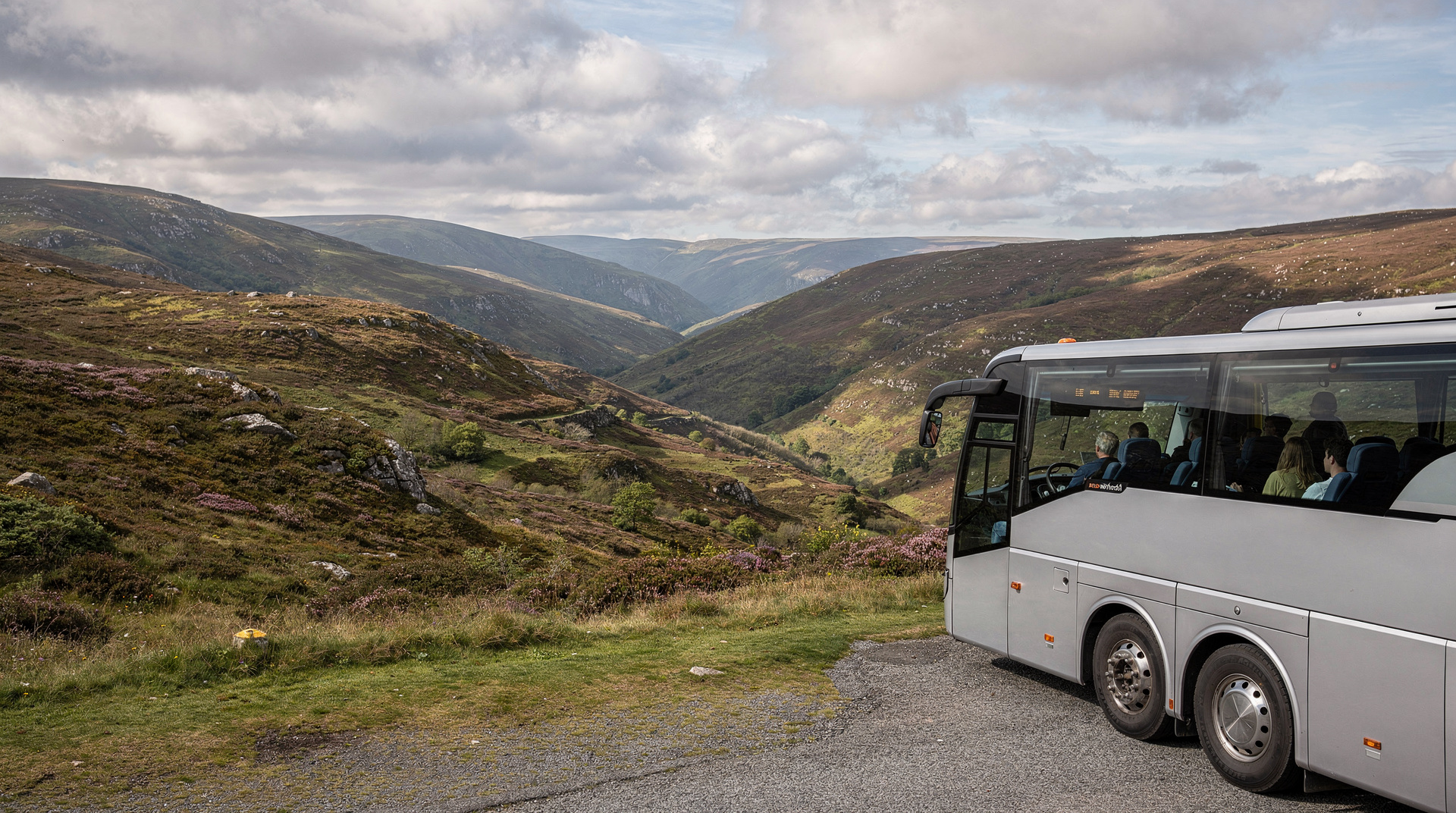
Most visitors without a car take an organised tour, which makes sense given the distance and the fact that parking at the Causeway is limited and occasionally chaotic in peak season. The Giant’s Causeway, Dark Hedges, Dunluce and Belfast day tour from Dublin is the standard option — about twelve hours door to door, covers the main Causeway Coast highlights and passes through Belfast. Smaller group versions give you more time at each stop.
If the rope bridge is the part you most want to see, there is a tour built around it: a Giant’s Causeway and rope bridge day out that leaves from Dublin trades some of the Belfast time for the coast. And if the Bushmills stop appeals more than the bridge, a Causeway tour with a whiskey tasting built in saves you from arranging it yourself. Either way, check what the itinerary includes before you pay, since stops and timings differ from one operator to the next.
If you can extend to two days, spending a night in Ballycastle, Bushmills or Portrush gives you the Causeway at dawn before the crowds arrive — genuinely one of the better travel decisions you can make on this coastline. The Northern Ireland 3-day itinerary covers this in detail.
The visitor centre and what it’s for
The National Trust visitor centre opened in 2012 and is architecturally interesting — embedded into the hillside, with a grass roof. It contains an exhibition on the geology and mythology of the Causeway (good, concise), a café (functional), and the obligatory shop. The exhibition is worth twenty minutes. The audio guide available from it provides commentary along the cliff path and is better than the in-centre exhibition for context while you’re actually on the stones.
The centre sits at the top of a shuttle bus route to the Causeway shore. The walk down is about fifteen minutes; the walk back up is about twenty. The shuttle runs regularly and is worth taking on the return.
Day trip vs two-day trip
| Day trip from Dublin | Two-day trip (overnight in Portrush/Bushmills) | |
|---|---|---|
| Time at the Causeway | 2-3 hours, midday crowds | Dawn or dusk, near-empty |
| Total travel time | 8-10 hours driving | Same driving, spread across two days |
| Cost | Lower — one tour or one tank of fuel | Higher — adds a hotel night |
| Fatigue | High — a genuinely long single day | Low — the trip breathes |
| Best for | Limited time in Ireland | Anyone who can spare the extra day |
If your schedule allows it, the two-day version is the better trip by a meaningful margin — not because the day trip is bad, but because seeing the Causeway at dawn without coach crowds is a genuinely different experience from seeing it at 1pm in August.
Combining with Belfast
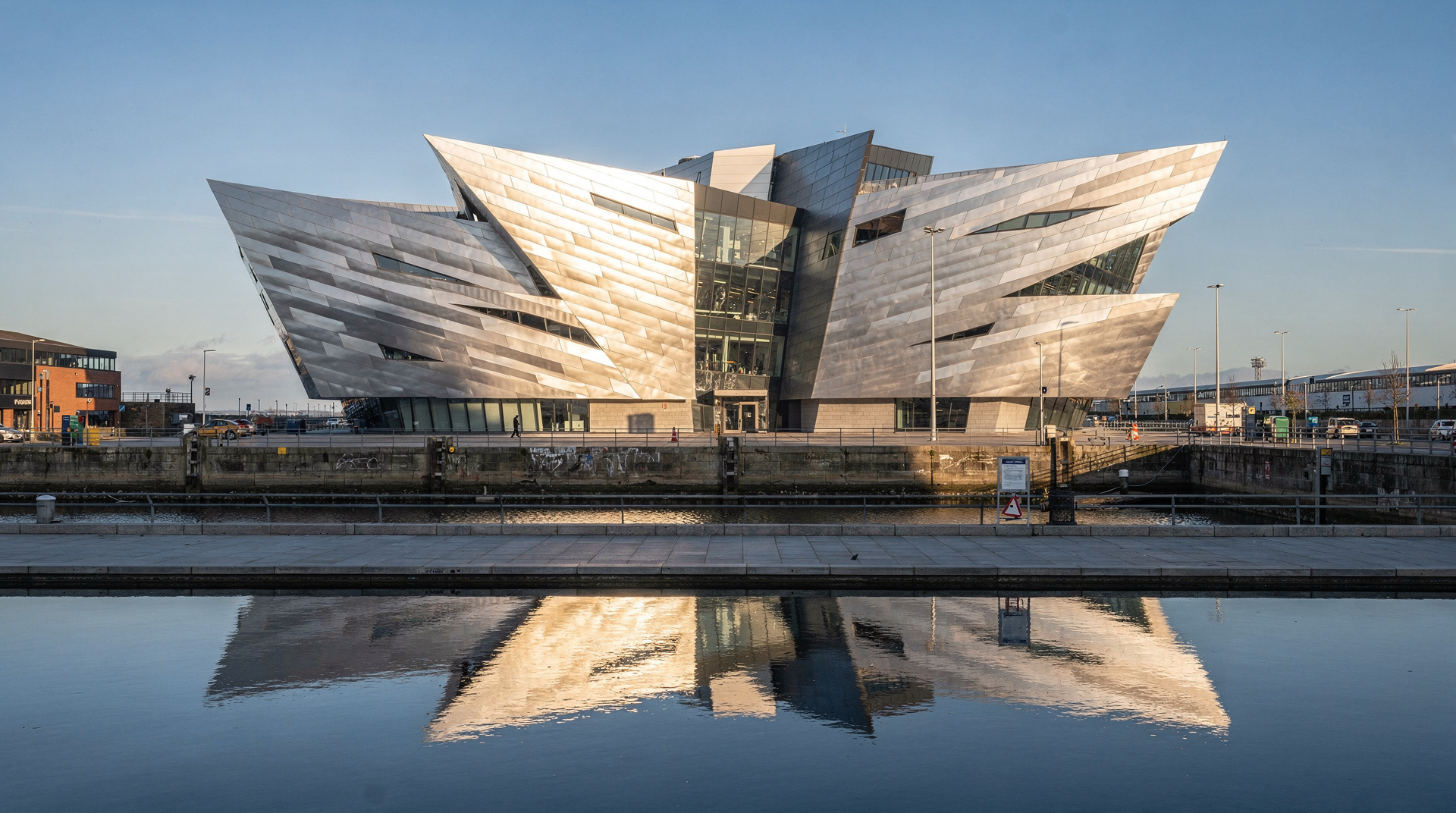
Most day tours route through or near Belfast on the way north, and it’s worth a stop if your itinerary allows even an hour — the Titanic Quarter and the murals in West Belfast tell a very different story from the Causeway Coast’s geology and legend. Our Belfast day trip guide covers what’s realistic to fit in alongside a Causeway run, and the Northern Ireland 3-day itinerary is the fuller version of this trip if a single day feels too rushed once you’ve read this far.
Other ways to frame the trip
If the long drive puts you off, it helps to compare before you commit. Our Giant’s Causeway day trip guide lays out the practical side of the same journey, and the Giant’s Causeway destination page focuses on the site itself. For a head-to-head with the other famous coastal drama, read Giant’s Causeway vs Cliffs of Moher.
If you are still choosing between excursions, best day trips from Dublin and which Dublin day trip is best put the options side by side. Travelling without a car? Day trips without a car from Dublin explains what is realistic, and driving in Ireland from Dublin is worth reading if you would rather take the wheel on the M1 and the coastal roads.
Fans of the Dark Hedges may also enjoy the Game of Thrones tours guide, and the Causeway Coast scenic guide goes deeper on the stops between Ballycastle and Portrush. For another first-hand account of a long Northern Ireland day, see what I learned on a Belfast day trip.
What “genuinely extraordinary” means
I have visited the Giant’s Causeway twice and I want to be specific about what makes it worth the long day. The geometry of the columns from a close angle is unlike anything else I’ve seen — the sense of standing on a mathematically perfect natural surface, packed tight as a honeycomb, with the North Atlantic on one side and the basalt cliffs on the other. Photographs don’t quite capture it because photographs flatten the depth and the scale. You need to be there, on the stones, looking down into the gaps between columns, to understand why this place acquired a legend.
It is worth the twelve hours. It is worth the ETA admin. It is worth getting there early. Give yourself the afternoon rather than a rushed hour.
Frequently asked questions about Giant’s Causeway day trip from Dublin
Do I need a passport to visit the Giant’s Causeway from Dublin? Republic of Ireland and EU passport holders don’t need a passport check at the land border, though carrying photo ID is sensible. Non-EU visitors, including US citizens, need a UK Electronic Travel Authorisation (ETA) even for a day trip, since you’re crossing into the UK.
Is the Giant’s Causeway day trip worth it if I’m short on time in Ireland? Yes, if you can spare the day — the Causeway and the wider Causeway Coast (Dark Hedges, Carrick-a-Rede, Dunluce Castle) are genuinely unlike anything within easier reach of Dublin. If you only have two or three days total in Ireland, though, it’s worth weighing against closer options like the Cliffs of Moher or Wicklow.
Top experiences
Bookable activities with verified prices and instant confirmation on GetYourGuide.