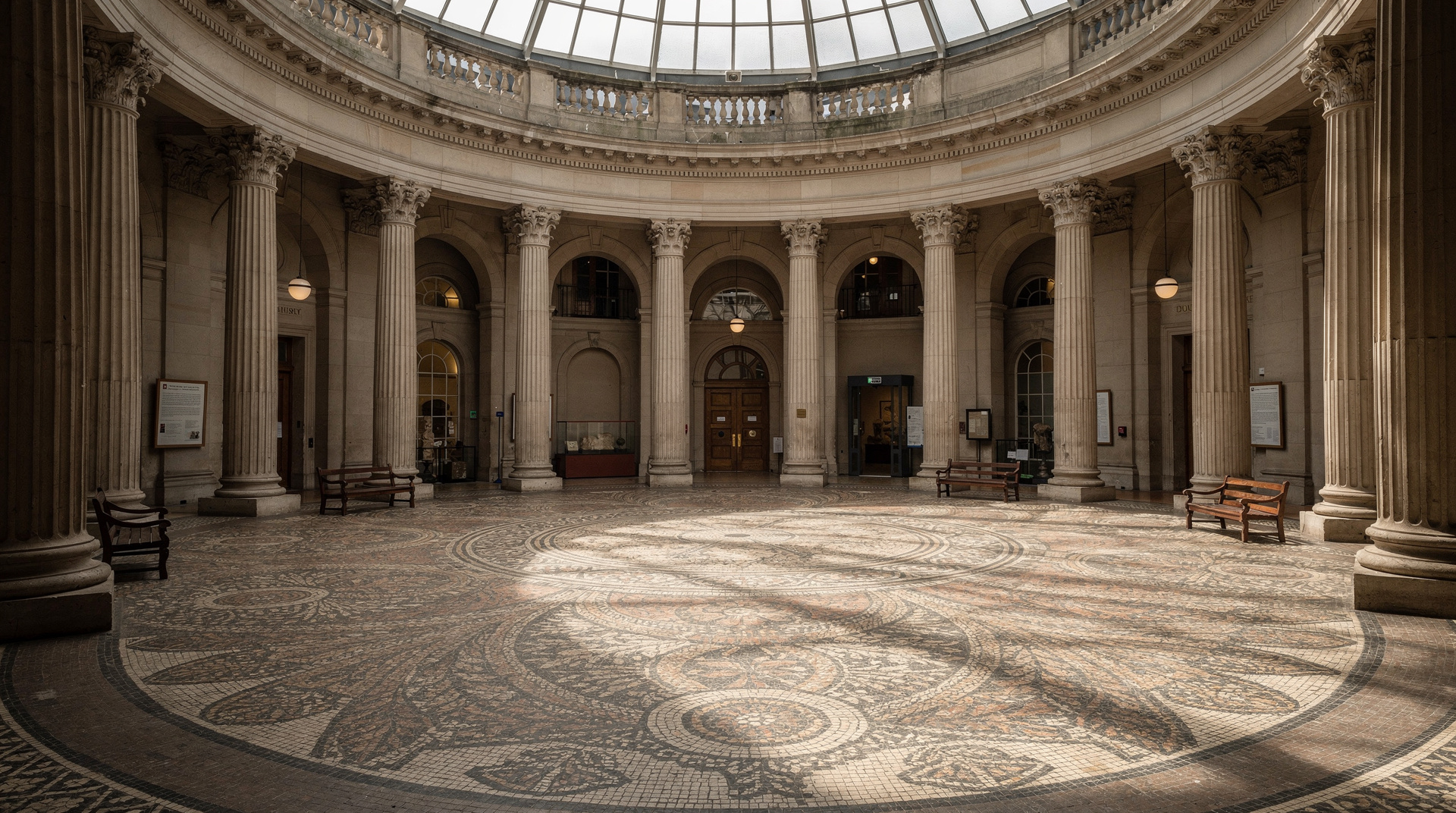
Book of Kells: is it worth it?
Dublin: fast-track Book of Kells ticket & Dublin Castle tour
Duration: 2h45
- Free cancellation
- Instant confirmation
Is the Book of Kells worth visiting in Dublin?
Yes, primarily because of the Long Room — one of the most beautiful rooms in Europe. The manuscript itself is brief to view (one open spread in a dim case) and the actual experience lasts under two minutes. But the Long Room library above it is genuinely extraordinary and worth the €25 ticket alone. Book a timed slot in advance or you will queue for 45 minutes to find out.
The gap between what you expect and what you get
Almost every guide to Dublin puts the Book of Kells at or near the top of the must-see list. Many visitors who go come away slightly deflated — the manuscript viewing was brief, the case was crowded, the light was low. Almost every one of those same visitors then describes the Long Room as one of the best things they saw in Ireland.
This gap between expectation and experience is the reason the question “is it worth it?” gets asked so often. The answer is yes, but only if you understand what you are actually buying.
| Where | Old Library, Trinity College, Grafton Street area |
| Cost | €25, timed entry |
| Time needed | 45–60 minutes for exhibition, manuscript and Long Room |
| Getting there | Central; Trinity’s front gate faces College Green, a short walk from most city-centre hotels |
| Best time | Weekday mornings at opening (08:30–09:00) for the lightest crowds |
What the ticket actually includes
The ticket for the Book of Kells covers two things:
The Turning Darkness Into Light exhibition — a ground-floor exhibition covering the manuscript’s history, the monks who created it, the pigments used, the Latin script, and the iconography of the illustrations. This takes 15–20 minutes if you read the panels rather than rushing through. It makes the manuscript itself substantially more meaningful.
The manuscript room — two of the four volumes displayed in glass cases in a low-lit room. You will see one illuminated page and one text page at most. The experience of actually viewing the manuscript takes 90 seconds to 3 minutes depending on crowd levels.
The Long Room — the main first-floor library, 65 metres long, lined floor to ceiling with 200,000 books, illuminated by overhead skylights. The barrel vault was added in the 1850s to accommodate the growing collection. Brian Boru’s harp (actually 14th/15th century, despite the name) is displayed here. A copy of the 1916 Proclamation of the Irish Republic is in a case at the far end.
If you are buying the ticket only for the manuscript, it may not feel worth it. If you understand that the Long Room is the primary attraction, it almost always does.
The honest case against visiting
The manuscript viewing is disappointingly brief. You cannot spend twenty minutes examining a spread while a dozen other visitors wait behind you. The light levels required to preserve the vellum make photography difficult. For those who build up expectations from seeing high-resolution reproduction prints online, the physical reality is a letdown. The book is behind glass, the case is reflective, and the crowds in peak season move quickly.
It is expensive for what you see. At €25, the Book of Kells costs about three times Kilmainham Gaol and more than the combined price of visiting two medieval cathedrals in the same day. The Chester Beatty Library at Dublin Castle is free, holds comparable quality medieval manuscripts, and is almost always less crowded.
It sells out. Timed slots fill weeks in advance in summer. If you forget to book and find yourself wanting to go spontaneously, you may not get in.
The honest case for visiting
The Long Room justifies the ticket independently. Almost everyone who visits without expectations about the Long Room is stopped in their tracks. The library is included in the same ticket and takes 20–30 minutes at a comfortable pace. Sit on one of the central benches and look up at the arched ceiling and the double gallery of old books receding toward the far end. There is no comparable interior in any museum or university library in Ireland.
The exhibition is better than expected. Spending 15–20 minutes with the ground-floor panels before reaching the manuscript means you see the two open pages as the products of specific human skill — individual monks working by candlelight with techniques borrowed from Rome and the Middle East — rather than as two pages in a glass box.
Trinity College campus is free anyway. If you are walking through the cobbled squares of Trinity and have an hour, the ticket is a reasonable use of time and money even if the manuscript experience is brief.
Comparison: what to do instead if you skip it
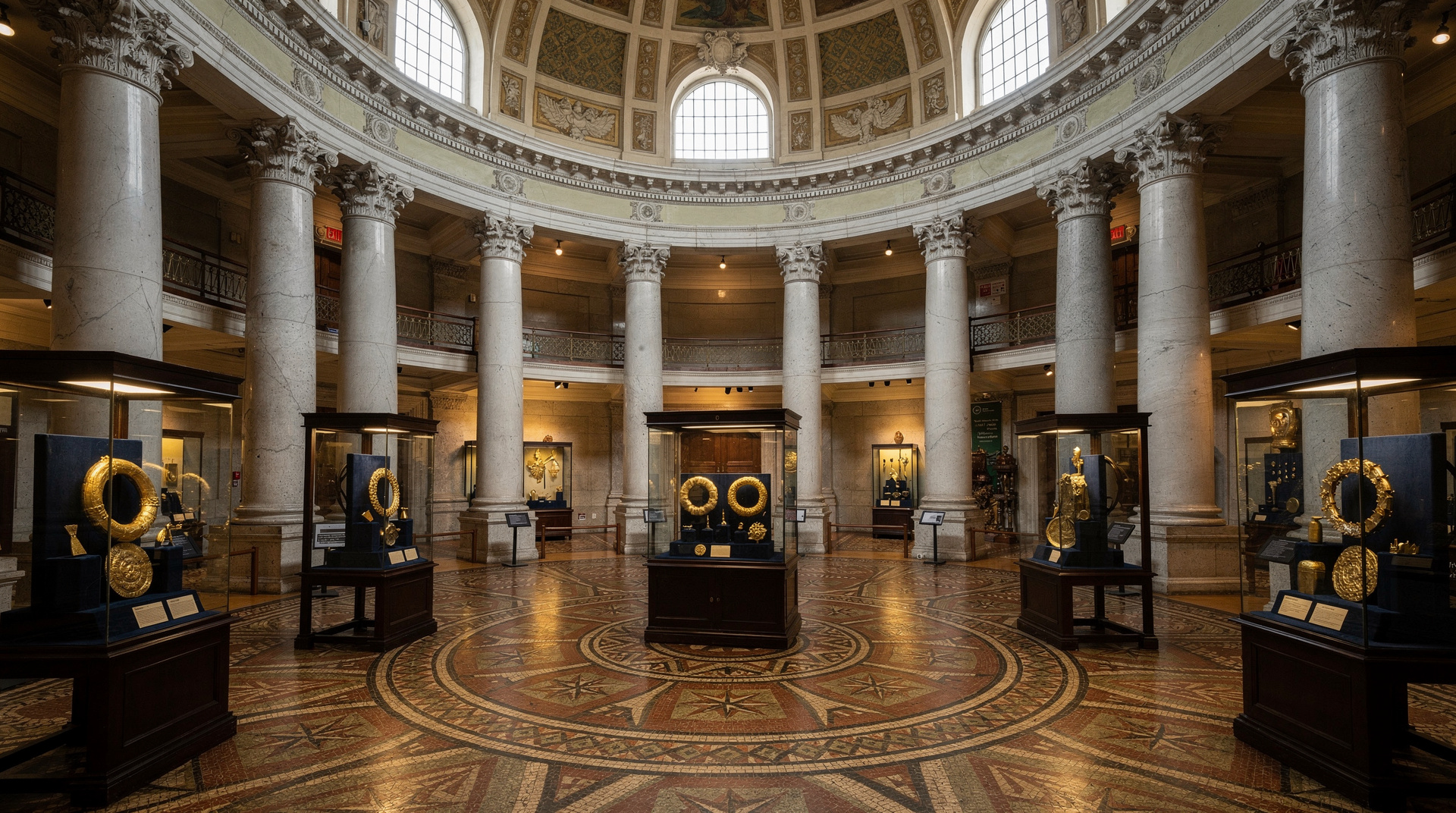
If the Book of Kells does not appeal on these terms, the Chester Beatty Library at Dublin Castle is the strongest alternative: free, world-class, uncrowded, and better for actually examining manuscripts. The National Museum of Ireland is free and holds Irish treasures (Ardagh Chalice, Tara Brooch) of comparable age and significance to the Book of Kells in an atmospheric 19th-century building.
For visitors who want the Book of Kells experience in the most context-rich form possible, the fast-track Book of Kells and Dublin Castle tour combines Trinity with a guided castle tour. The private skip-the-line Book of Kells and Old Town tour keeps the group very small and includes a guide who can actually explain the symbolism in the manuscript — which the exhibition panels partly cover but a good guide covers much better.
If you plan to visit three or more paid attractions, check the Dublin Pass vs individual tickets comparison — the Book of Kells is included and the pass often pays for itself on a fuller sightseeing day.
How it compares on value
| Attraction | Approx. price | What you get |
|---|---|---|
| Book of Kells + Long Room | €25 | 90 seconds with the manuscript, 20–30 minutes in the Long Room |
| Chester Beatty Library | Free | Comparable-age manuscripts, less crowded, closer viewing |
| National Museum of Ireland | Free | Ardagh Chalice, Tara Brooch, Bronze Age gold |
| Kilmainham Gaol | Around €8 | Guided tour, 90 minutes, no exhibition included |
| Dublin Castle state apartments | Around €10–€15 | Self-guided, 45 minutes |
The Book of Kells sits at the more expensive end of Dublin’s paid attractions, which is exactly why the Long Room needs to be part of the calculation — pay for the manuscript alone and it looks poor value; pay for the manuscript and the library together and it looks reasonable.
Combining it with the rest of Trinity and Grafton Street
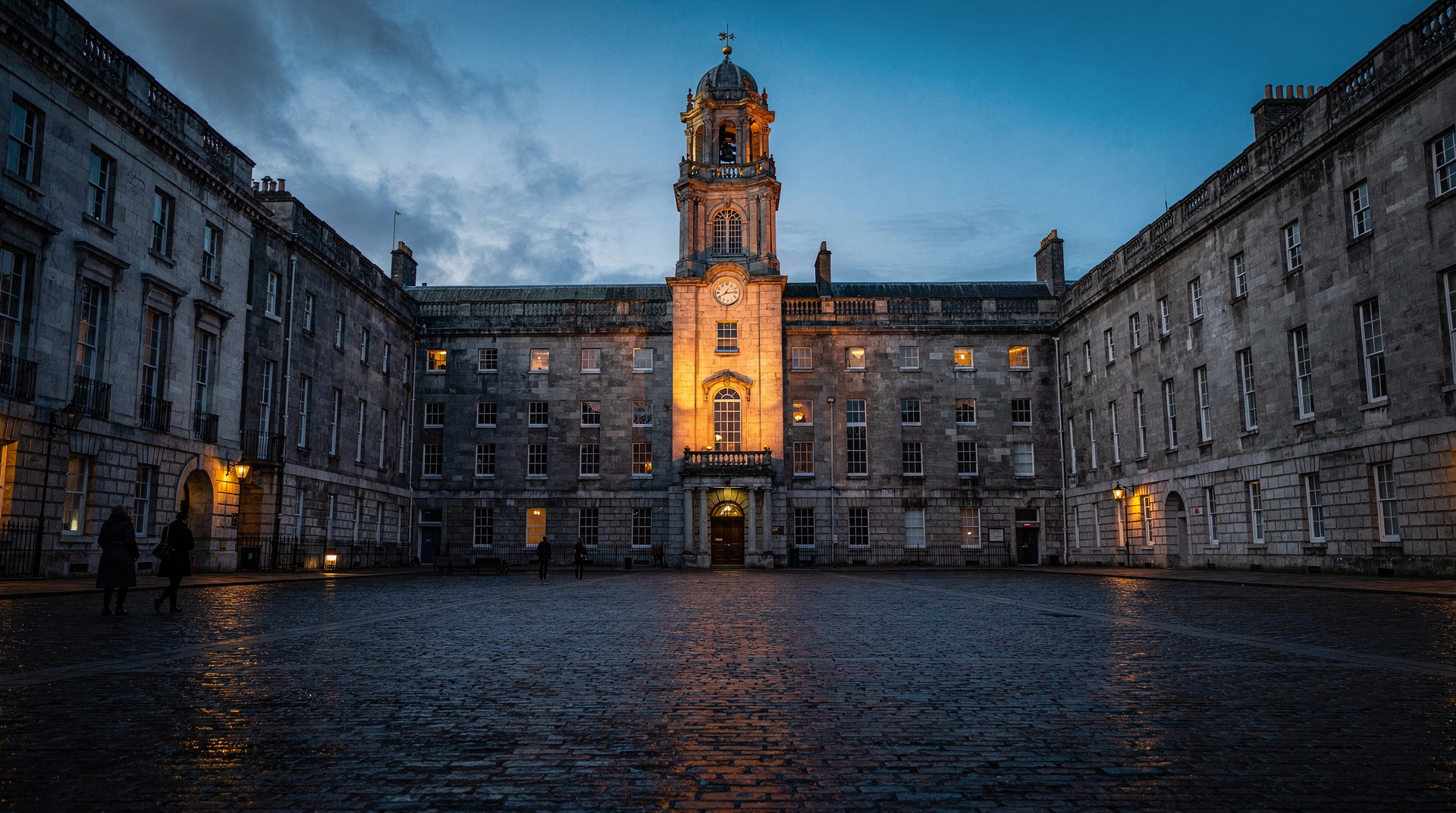
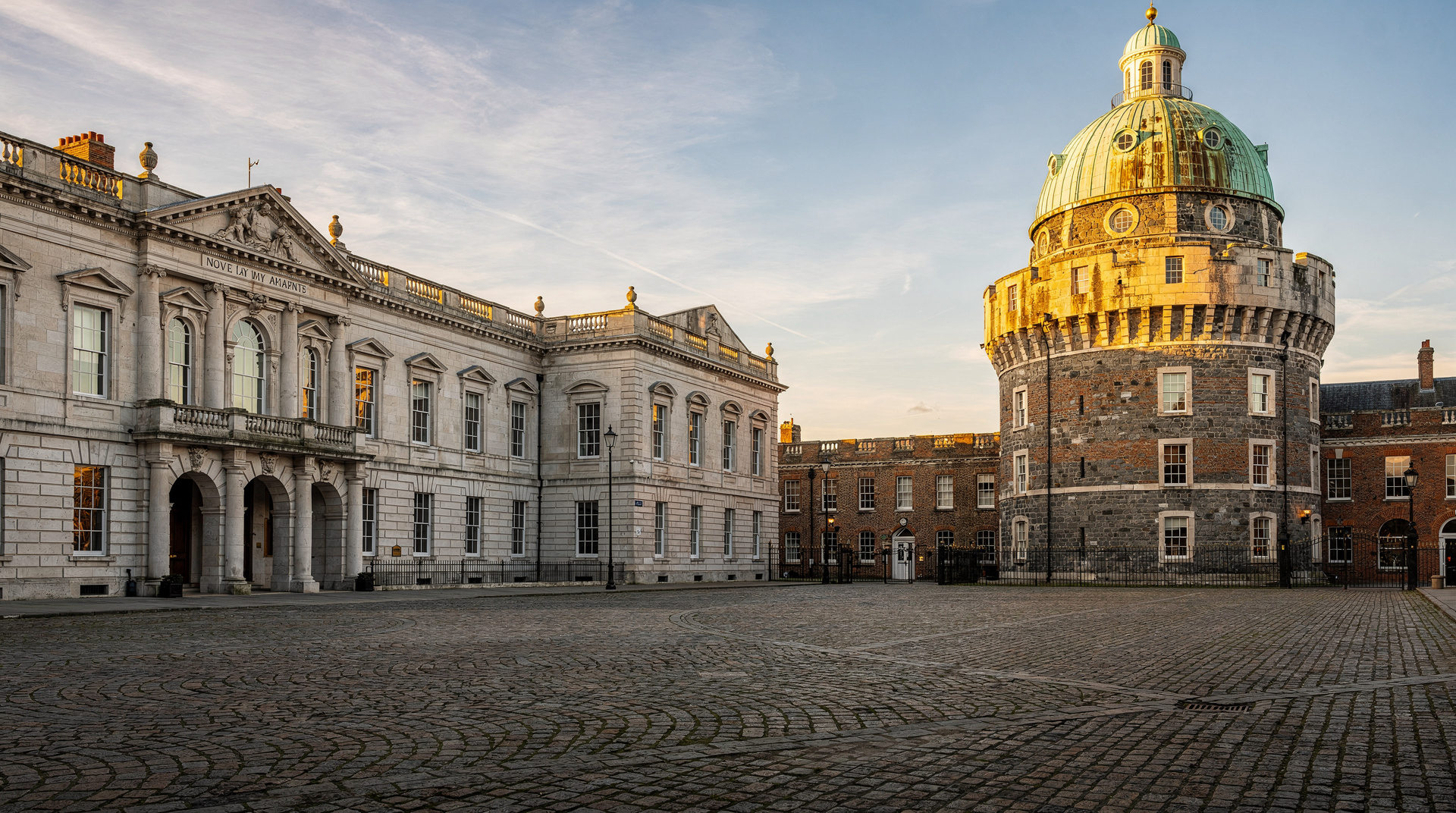
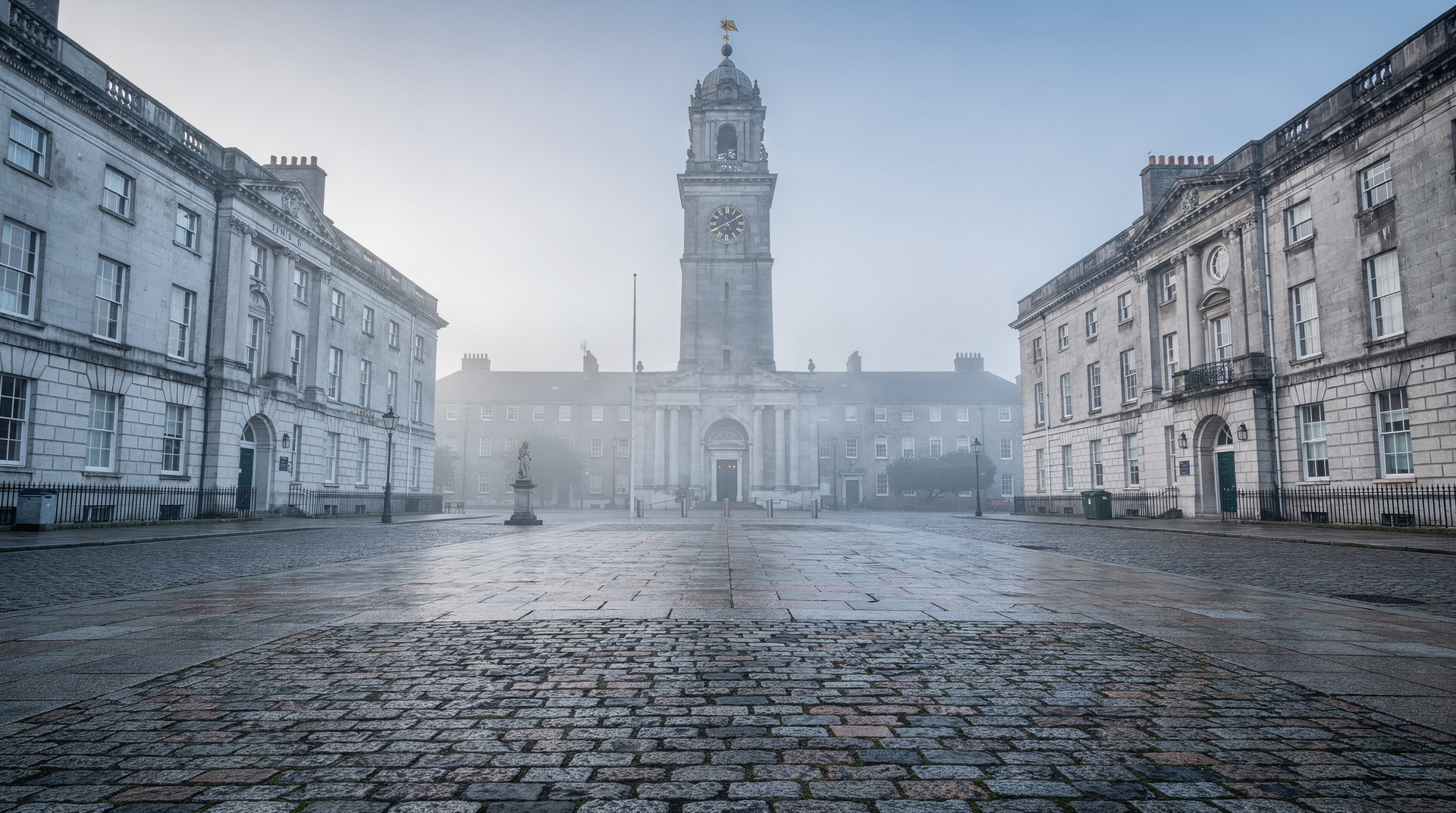
Trinity’s campus itself — the cobbled Parliament Square, the Campanile, the Berkeley Library exterior, the Museum Building — is free to walk through before or after your timed slot, so there is no reason to rush straight out once you have seen the Long Room. Grafton Street, Dublin’s main shopping street, is a two-minute walk from the front gate and a natural next stop for lunch or a look at the buskers who work the street through the day.
If you are building a wider day around Trinity, the best Dublin walking tours guide has options that start or finish near the front gate, and Christ Church Cathedral is a 10-minute walk south-west if you want to combine two of the city’s best interiors in one outing.
How to get more out of the visit
The simplest way to change how the visit feels is to change the order in which you take it in. Read the exhibition panels properly before you reach the manuscript room, rather than treating them as a corridor to cross. By the time you arrive at the case you know what the monks were doing, what the decoration is trying to say and why the book survived, so the short moment in front of the glass carries more weight. Then let the Long Room be the slow part of the visit: find a bench, put the phone away and give the room as long as you have.
A little reading beforehand helps just as much. The Book of Kells and Trinity College guide walks through the exhibition floor by floor, so you know which panels are worth stopping at. If you enjoy the literary side of the city, literary Dublin puts Trinity alongside the writers who studied and walked around it, and the Long Room suddenly feels like part of a longer story rather than a standalone sight.
Planning the rest of your day around Trinity
Because the visit is compact, it fits easily into a wider day in the centre. Trinity sits on the edge of a very walkable part of the city, and several other sights are a short stroll away on foot.
- Medieval and Viking Dublin. If the manuscript has whetted your appetite for the early history of the city, Viking and medieval Dublin explains how the old town grew, and Dublinia turns that story into a hands-on museum, which suits families.
- Cathedrals. St Patrick’s Cathedral pairs well with Christ Church for anyone who enjoys old interiors after the Long Room.
- Free and cheap alternatives. The free museums guide is the place to look if you want to balance a paid ticket against a few zero-cost stops.
- Wet weather. Dublin rains often, and a timed indoor slot is a good fit for a grey day. The rainy day guide lists other indoor options to line up around it.
- Light-touch sightseeing. A relaxed loop on foot is easy from the front gate; the self-guided Dublin walk is built for exactly that kind of day.
Booking, timing and planning ahead
The honest advice on timing is the same whatever the season: book ahead and choose the quietest hour you can manage. The guide to booking attractions in advance explains why timed slots are now the norm across the city and how to avoid being turned away on the day. If your plans are still taking shape, how many days in Dublin helps you decide how much room Trinity deserves in the schedule, and the best time to visit Dublin shows how the seasons change the crowds you will meet in the manuscript room.
If you prefer a ready-made plan, the one day in Dublin itinerary places Trinity early in the day, while the three days in Dublin itinerary gives it more breathing space alongside the castle, the cathedrals and a pub or two in the evening. For the whole city at a glance, the Dublin first-time guide is the best starting point, and Trinity College and Grafton Street covers the neighbourhood itself.
Who gets the most from the Book of Kells
The people who enjoy it most are rarely the ones who arrive hoping for a long audience with a famous object. They are the visitors who treat the whole Old Library as one experience: a story told in the exhibition, a brief and quiet encounter with the manuscript, and then the surprise of the Long Room. If that sounds appealing, the ticket will feel fair. If you would rather spend the same time and money on something more hands-on, the Dublin Castle guide and the National Museum of Ireland guide are strong substitutes that let you move at your own pace.
Families with children should think about attention spans. A manuscript in a glass case is hard to make exciting for young visitors, but the scale of the Long Room often lands better than adults expect, and the Dublin with kids guide has other stops that balance out a more reflective morning. Solo travellers, on the other hand, often find the Long Room an easy, unhurried place to spend time, and the solo travel guide suggests how to fill the rest of the day.
Finally, if you are weighing this ticket against the other headline sights, the overrated and underrated Dublin guide puts it in context with the rest of the city’s big names, and Dublin tourist traps explains why this one, for all its crowds, is not on that list.
The verdict by type
First-time visitor with 1–2 hours: Book a timed slot, arrive at opening, read the exhibition panels, spend 20 minutes in the Long Room. Worth every cent.
Second visit who did it last time: Skip. Spend the morning at the Chester Beatty or in Trinity’s campus without paying. The Long Room rarely changes and you have seen it.
History or art enthusiast: The private Trinity College and Old Library tour gives you far more depth than the self-guided option and is the best way to understand what you are looking at.
Visitor with limited time and budget: The Chester Beatty Library at Dublin Castle is free, less crowded, holds better-preserved manuscripts, and has a café in a medieval vaulted crypt. If you only have one morning, the castle complex gives you more for zero cost.
The full floor-by-floor description of the exhibition is in the Book of Kells and Trinity College guide.
Frequently asked questions about Book of Kells
How long do you spend actually looking at the Book of Kells?
Realistically, about 90 seconds to 3 minutes. Two of the four volumes are on display at any time, opened to a single spread, in a low-lit glass case. The crowds in the manuscript room keep most visitors moving fairly quickly. The exhibition explaining the book's history takes 15–20 minutes. The Long Room library above takes 20–30 minutes and is where most visitors find the real value.Is the Long Room included in the Book of Kells ticket?
Yes. The Long Room — the 65-metre barrel-vaulted 18th-century library holding 200,000 books — is included in the same ticket as the manuscript exhibition. It is the same price whether you are there primarily for the manuscript or primarily for the library. Most visitors who arrive for the manuscript leave talking about the Long Room.Who should skip the Book of Kells?
Visitors who care only about the manuscript and not about the surrounding exhibition or library. At €25, if all you want is 90 seconds with a medieval book in a glass case, this is expensive. Medieval manuscripts are best appreciated by those who have read something about them beforehand — otherwise the significance is hard to feel. If you skip the Book of Kells, spend time instead in the Chester Beatty Library at Dublin Castle, which is free and shows manuscripts you can actually examine at closer range in less crowded conditions.Is there a better time to visit to see the book more clearly?
Weekday mornings at opening (08:30–09:00) have the lightest crowds and the best chance of a longer look at the case. Midday and any weekend afternoon involves significant crowding in the manuscript room. Even at the quietest times, the low lighting and protective glass means photography is challenging and the viewing experience is brief.Does the Trinity College campus cost money to enter?
The campus is free to walk through at any time. The cobbled squares, the Berkeley Library, the cricket pitch, and the Science Gallery (free exhibitions) are all accessible without a ticket. Only the Old Library — which holds the Book of Kells and Long Room — requires a paid ticket.Is there a way to skip the queue at the Book of Kells?
Yes — buy a timed entry ticket online in advance. This skips the ticket-desk queue but all visitors pass through the same entrance. Arrive 5 minutes before your slot. For busier days, the guided combo tour with Dublin Castle and Christ Church handles entry logistics for you.How does the Book of Kells compare to other Dublin attractions for value?
It is mid-range at €25. More expensive than Kilmainham Gaol (€8) or the entirely free National Museum or Chester Beatty Library. Cheaper than a guided Guinness Storehouse visit. The Long Room is the most beautiful room in any public attraction in Dublin, which makes the ticket feel justified for most visitors who take time with it.
Top experiences
Bookable activities with verified prices and instant confirmation on GetYourGuide.

Dublin: fast-track Book of Kells ticket & Dublin Castle tour
- Free cancellation
- Instant confirmation

Dublin: skip-the-line Book of Kells & Old Town private tour
- Free cancellation
- Instant confirmation

Dublin: private tour with Trinity College & Old Library
- Free cancellation
- Instant confirmation

Dublin: Book of Kells, Dublin Castle and Christ Church tour
- Free cancellation
- Instant confirmation