Mourne Mountains
Guide to the Mourne Mountains from Dublin — Slieve Donard, Silent Valley, Newcastle and the GBP and UK ETA requirements for non-EU visitors.
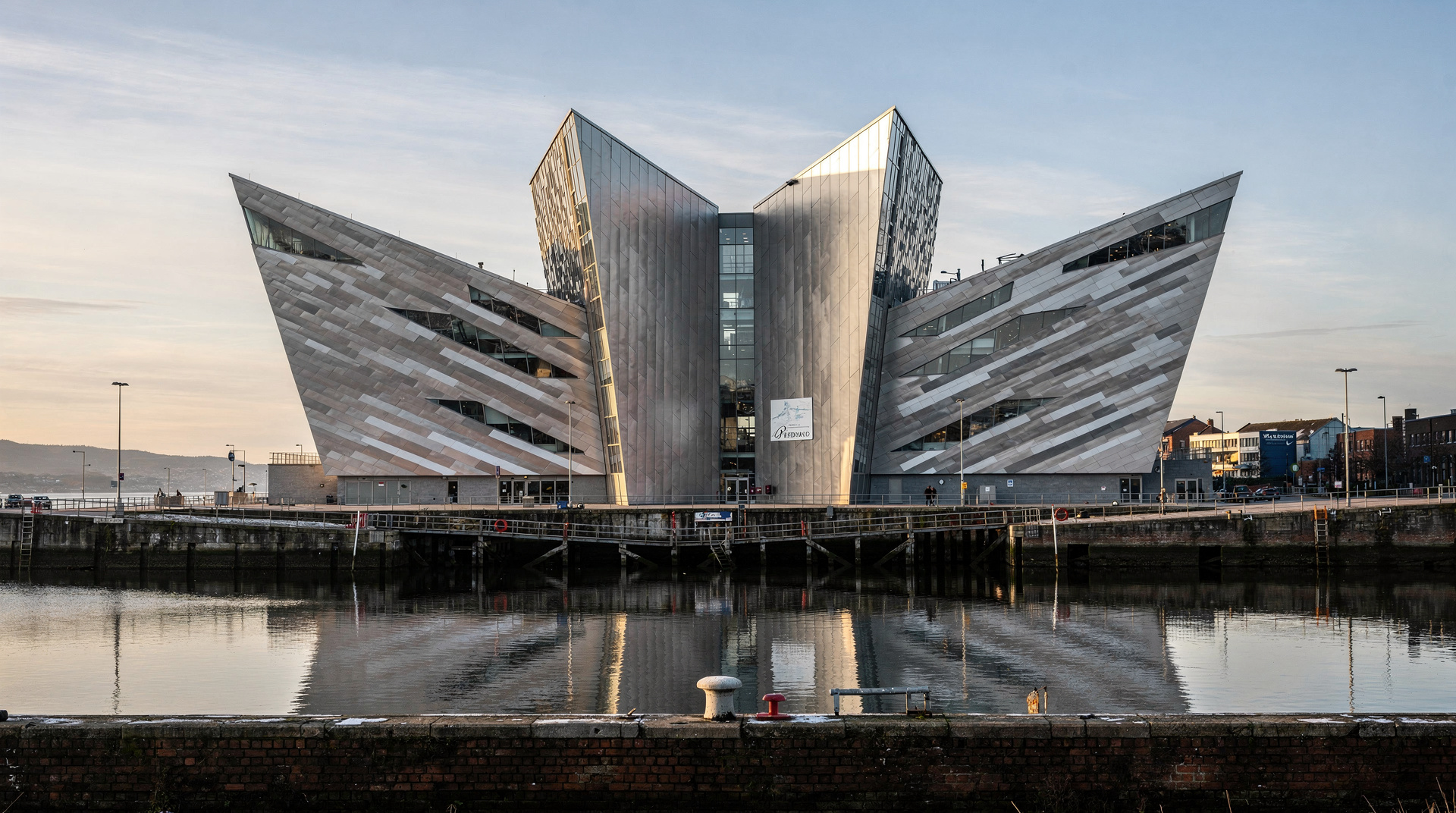
From Dublin: day tour to Belfast and Titanic Museum
Duration: 10h
- Free cancellation
- Instant confirmation
Quick facts
- Distance from Dublin
- ~130 km, about 1.5 hrs by car
- Currency
- Pound sterling (GBP)
- UK ETA
- Required for US, Canada, Australia visitors (£10)
- Highest peak
- Slieve Donard, 850 m
- Main town
- Newcastle, Co. Down
The mountains that inspired C.S. Lewis
The Mourne Mountains in County Down are Northern Ireland’s most celebrated mountain range — compact, dramatic and unusually close to both Dublin and Belfast. The twelve highest peaks in Northern Ireland are here, including Slieve Donard at 850 metres. The landscape inspired C.S. Lewis’s Narnia, and something of Narnia is visible in the rounded granite summits, the dark reservoirs, the ancient dry-stone wall (the Mourne Wall) that runs 35 km over the mountain tops, and the constant presence of the Irish Sea below.
From Dublin, the Mournes are actually closer than Belfast — just 130 km north on the A1 and then into County Down. This makes them accessible as a standalone day trip without needing to travel through Belfast, though they are more often visited in combination with a Belfast or Causeway Coast itinerary.
| Where | Newcastle, Co. Down — 130 km north of Dublin |
| Cost | Free to walk; no entry fee to the range itself |
| Time needed | Half day for Silent Valley; full day for Slieve Donard |
| Getting there | Car via M1/A2 (~1.5 hrs); no direct Dublin tour |
| Best time | May–October for visibility; check forecasts year-round |
Entry requirements for non-EU visitors
The Mourne Mountains are in Northern Ireland, part of the United Kingdom. US, Canadian and Australian visitors need a UK ETA (Electronic Travel Authorisation) to enter — £10, applied for at gov.uk before travel. EU citizens and Irish passport holders cross without formalities. Currency is pound sterling (GBP).
Getting there from Dublin
By car, the Mournes are reached via the M1 north to Newry and then the A2 coastal road to Newcastle (Co. Down) — about 1.5 hours from Dublin. Newcastle is the main gateway town, sitting at the base of Slieve Donard on Dundrum Bay.
There is no direct organised day tour from Dublin that covers only the Mournes — they are typically visited by those with their own car who are combining them with Belfast or building a broader Northern Ireland loop. If you are travelling by public transport, Translink buses run between Dublin and Newry, and from Newry toward Newcastle, though connections are infrequent.
The Belfast and Titanic Museum day tour from Dublin covers Belfast rather than the Mournes specifically, but Belfast is a practical base from which to reach the mountains by car or local bus the following day.
If you have never driven in Ireland, read driving in Ireland from Dublin before you collect a hire car: the roads are straightforward, but the side of the road, the junction habits and the parking rules take a little getting used to. For the border crossing and the practicalities of heading north in general, Dublin to Belfast transport covers the options, and the same corridor takes you most of the way towards Newcastle. Travellers without a car should also look at day trips without a car from Dublin to see what is realistic, and be honest with yourself that the Mournes are one of the harder places on that list.
Slieve Donard
The highest peak in Northern Ireland is a genuine mountain walk rather than a tourist attraction. The most popular route ascends from Newcastle through Donard Park and the Glen River valley — about 8 km return with 850 metres of ascent, taking 3–5 hours depending on pace. The summit views on clear days stretch to the Scottish coast, the Isle of Man, and south to the Wicklow Mountains in the Republic.
The path is well-marked from Newcastle and does not require specialist equipment in summer, but the weather changes quickly and the summit is genuinely exposed. Waterproofs and sturdy footwear are non-negotiable.
A sensible way to approach the climb is to treat it as the main event of the day and plan everything else around it. Start early, so that the weather window is on your side and the path is quieter on the way up. Pace yourself on the lower slopes, where the walking is easy to rush, and save energy for the upper section, where the terrain steepens and the wind is usually stronger.
Carry more water and food than you think you need, keep a warm layer in the bag even on a bright morning, and agree a turn-back point with your companions before you set off. Reaching the summit is optional; getting down safely is not. If you walk regularly in the hills near Dublin, the Wicklow Mountains and the Wicklow Mountains guide give a good idea of the kind of terrain and weather to expect, and Donard is a step up in scale from most of what you will have done there.
Silent Valley
The Silent Valley reservoir in the heart of the Mournes supplies water to much of Belfast and County Down. The valley is managed by NI Water with a visitor centre, car parking and a network of maintained paths around the reservoir. It is one of the most accessible Mourne walks for families and those who do not want the full Slieve Donard ascent — the circuit around the Upper and Lower reservoirs is 9 km and involves modest elevation.
The drive into Silent Valley from Kilkeel on the southern Mourne coast is one of the most atmospheric approaches in the range.
Silent Valley suits a slower kind of day. Take a flask, walk the reservoir paths at an unhurried pace, and stop wherever the view opens up toward the surrounding summits. It is also a useful fallback when the cloud sits low on the higher tops: you still get the sense of the range around you without committing to an exposed ridge. Families with children who like to walk will find it far easier to manage than a summit attempt, and it pairs well with a pub lunch back on the coast.
The Mourne Wall
The 35-km dry-stone wall that runs over 15 of the Mourne peaks was built between 1904 and 1922 to enclose the Silent Valley watershed. Following the wall on foot is one of the classic Mourne experiences — a full traverse of the wall takes two days, but shorter sections are done as day walks. The wall appears and disappears over ridges, connecting summit cairns and crossing boggy saddles, and following it gives a sense of the whole range rather than just a single peak.
Newcastle and the coast
The Victorian seaside town of Newcastle is the practical base for the Mournes. It has hotels, B&Bs, cafes and Slieve Donard Resort, the large spa hotel at the foot of the mountain that has been a Mourne landmark since 1898. The beachfront along Dundrum Bay, with the mountains rising directly behind the town, is one of the more striking streetscapes in Northern Ireland.
Nearby Dundrum Castle — a 13th-century Norman castle overlooking Dundrum Bay — is a free site worth a brief stop on the way in or out.
Other Mourne walks worth knowing
Beyond Slieve Donard and Silent Valley, the range rewards a little research. Hare’s Gap, reached from the Trassey car park, is a dramatic notch in the granite ridge and the classic approach to Slievenaglogh and the Brandy Pad — a smugglers’ route once used to move contraband over the mountains from the coast. Slieve Binnian, further south, has some of the best granite tor scenery in the range and a shorter, steeper ascent than Donard. Tollymore Forest Park, on the northern edge of Newcastle, is a gentler option — mature woodland, stone bridges and grottoes that have doubled as filming locations for Game of Thrones, with none of the exposure of the higher summits.
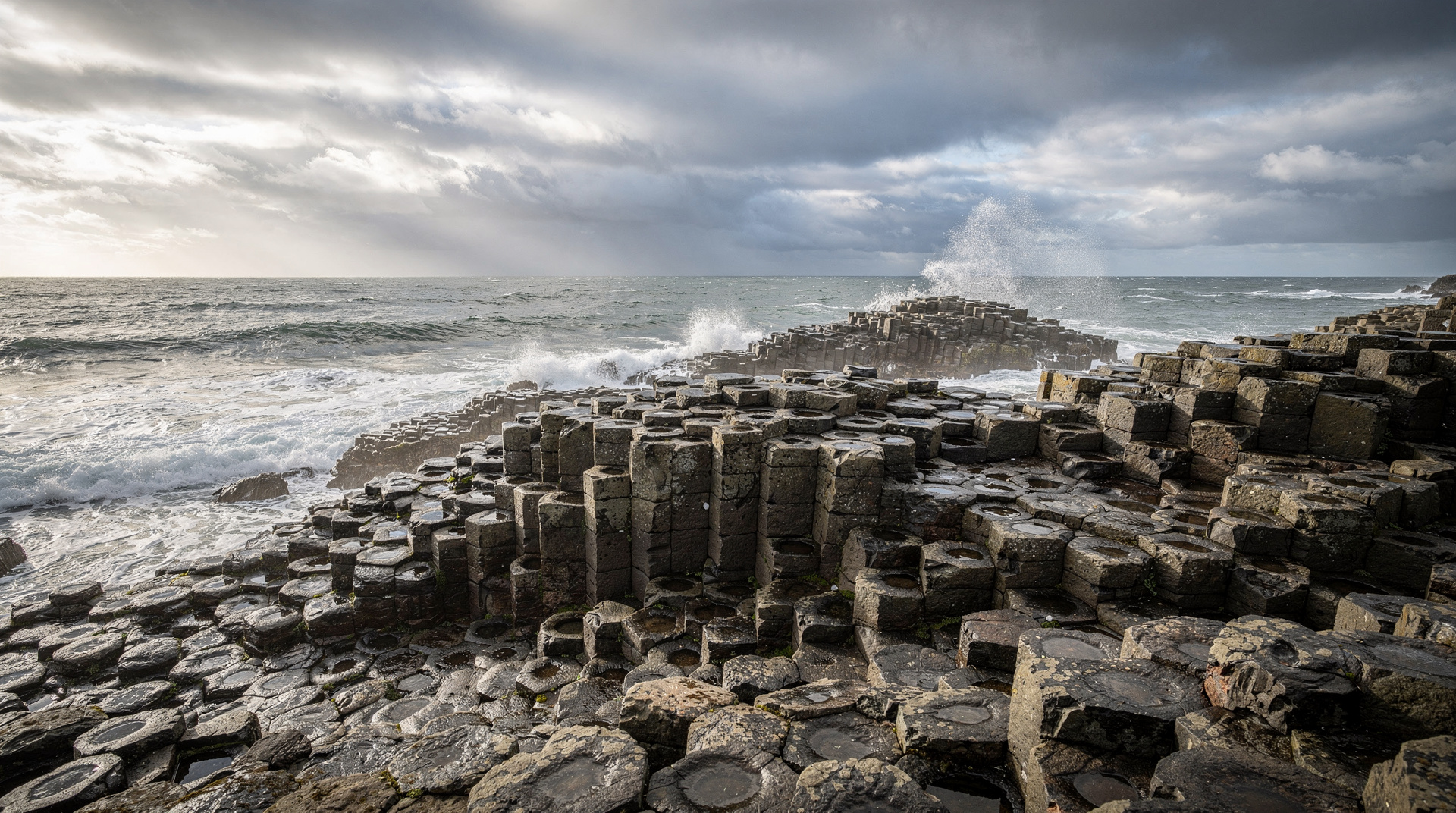
For those pairing the Mournes with a wider Northern Ireland loop, the Causeway Coast and the Giant’s Causeway lie roughly two hours further north, and Titanic Quarter in Belfast is the easiest heritage stop to slot in on the way back south. Derry is a further hour beyond the Causeway and usually needs its own day rather than a tack-on.
Making a day of it from Dublin
The simplest plan is an early start from Dublin, a main walk in the morning or early afternoon, and a relaxed meal in Newcastle before the drive home. Be realistic about daylight outside the summer months: the drive each way is a real chunk of the day, and a late finish on a mountain path is how small problems become big ones. Our best day trips from Dublin guide puts the Mournes in context against the more conventional options, and best Dublin day trip: which one is useful if you are still deciding between the mountains, the coast and the heritage sites.
If you would rather stay overnight, Newcastle is the natural base and lets you walk without the pressure of the return drive. An overnight also opens up the option of a second shorter outing, such as Tollymore Forest Park, on the following morning. Our three days in Northern Ireland itinerary shows how a night or two up north can be organised around Belfast, the Causeway Coast and the mountains, and the Belfast day trip guide is the one to read if you lean towards the city instead.
If you prefer something closer to Dublin
Not everyone wants a long drive and a border crossing for a hill walk. The Wicklow Mountains are much nearer to the capital, with Glendalough as the best-known base and Lough Tay and Sally Gap for big-sky scenery with little walking required. Our Glendalough guide and the Wicklow and Glendalough day trip lay out those options, and the blog piece on Glendalough in spring gives a first-hand feel for the season. The Mournes are the better choice when you want a more rugged, more remote mountain day and are happy to spend more time getting there.
If you have no car and still want a hill day, a guided option is the simplest answer: a guided full-day trip to Glendalough and the Wicklow Mountains leaves from the city and removes the driving, the parking and the navigation. It will not replace the scale of Donard, but it gives you lakes, woodland and open moorland without a border crossing or a UK ETA.
What to pack
Layers matter more than anything else in the Mournes. A waterproof jacket, a warm mid-layer, a hat and gloves for the summit, sturdy boots, a map, a charged phone and a power bank are the baseline. Sun cream is worth having on a clear day and midge repellent is worth having in early summer. For a broader checklist of what Irish weather demands, see what to pack for Dublin weather, and for timing across the year, the best time to visit Dublin is a good companion. Because services are limited outside Newcastle, bring snacks and drinks with you rather than counting on finding a shop at the trailhead.
Combining the mountains with film and coast stops
Tollymore Forest Park is the easiest crossover with screen tourism, and the Game of Thrones tours guide explains how fans usually structure a Northern Ireland trip. For a coast-focused extension, the Causeway Coast scenic guide and the Giant’s Causeway day trip guide show what a separate day further north looks like, and the blog post what I learned on a Belfast day trip is a candid account of how long a Northern Ireland day really feels. Treat each of those as its own outing rather than trying to squeeze everything into a single sweep.
When conditions matter most
| Month | Conditions | Notes |
|---|---|---|
| Mar–Apr | Cold, changeable, clearer air | Fewer walkers; snow possible on Donard |
| May–Jun | Best combination of light and stability | Long days; midges appear by June |
| Jul–Aug | Warmest, busiest on Donard and Silent Valley | Book Newcastle accommodation ahead |
| Sep–Oct | Good visibility, quieter trails | Bracken turns, cooler evenings |
| Nov–Feb | Short days, frequent low cloud | Only for experienced hill walkers |
Honest notes
The Mournes are not a tourist site in the conventional sense — there are no entry fees, no visitor centres at most access points and relatively few organised facilities outside Newcastle. They are a genuinely wild mountain landscape where you navigate independently. This is their appeal and also their limitation for visitors expecting signposted heritage experiences.
If you are a walker, the Mournes are outstanding. If you are primarily interested in heritage, history or organised experiences, you will get more value from Belfast or the Causeway Coast on the same day trip north.
Frequently asked questions about Mourne Mountains
Do I need a guide to walk in the Mournes? No guide is required for the popular routes like Slieve Donard or Silent Valley, both of which are well-marked from their car parks. Independent hillwalkers should still carry a map, check the forecast and turn back if cloud closes in, since the terrain above the treeline is exposed and mist arrives quickly even in summer.
Can I visit the Mournes without a car? It is difficult. Translink buses connect Dublin to Newry and on toward Newcastle, but services are infrequent and do not reach most trailheads directly. Most visitors either drive or combine the Mournes with an overnight stay in Belfast and hire a car locally for the day.
Top experiences
Bookable activities with verified prices and instant confirmation on GetYourGuide.