Kilmainham and 1916 Rising tours: GPO walking tour, IRA history and private options
Dublin: 1916 Rising walking tour and GPO Museum entry
Duration: 2h30
- Free cancellation
- Instant confirmation
The story that made modern Ireland
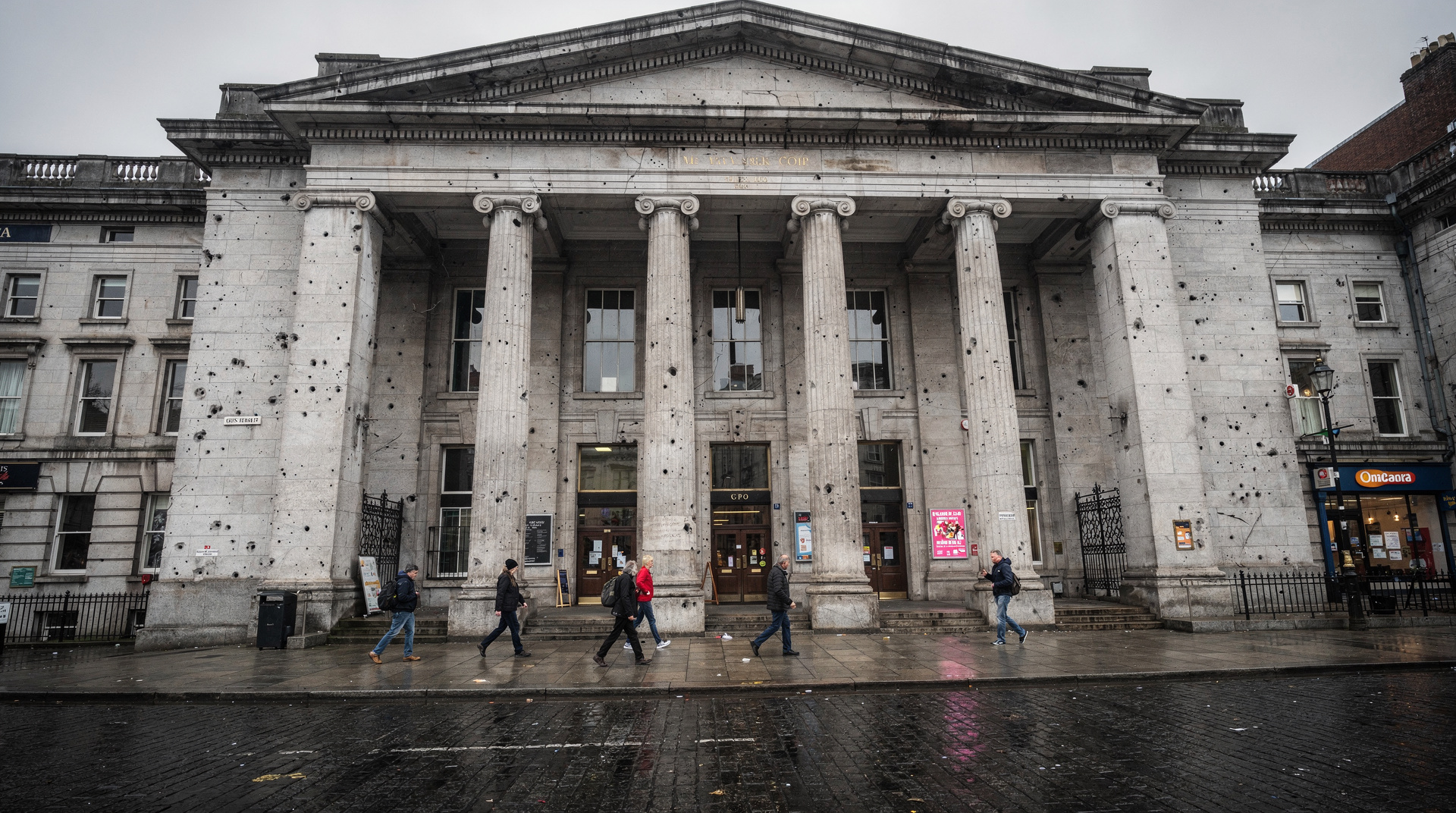
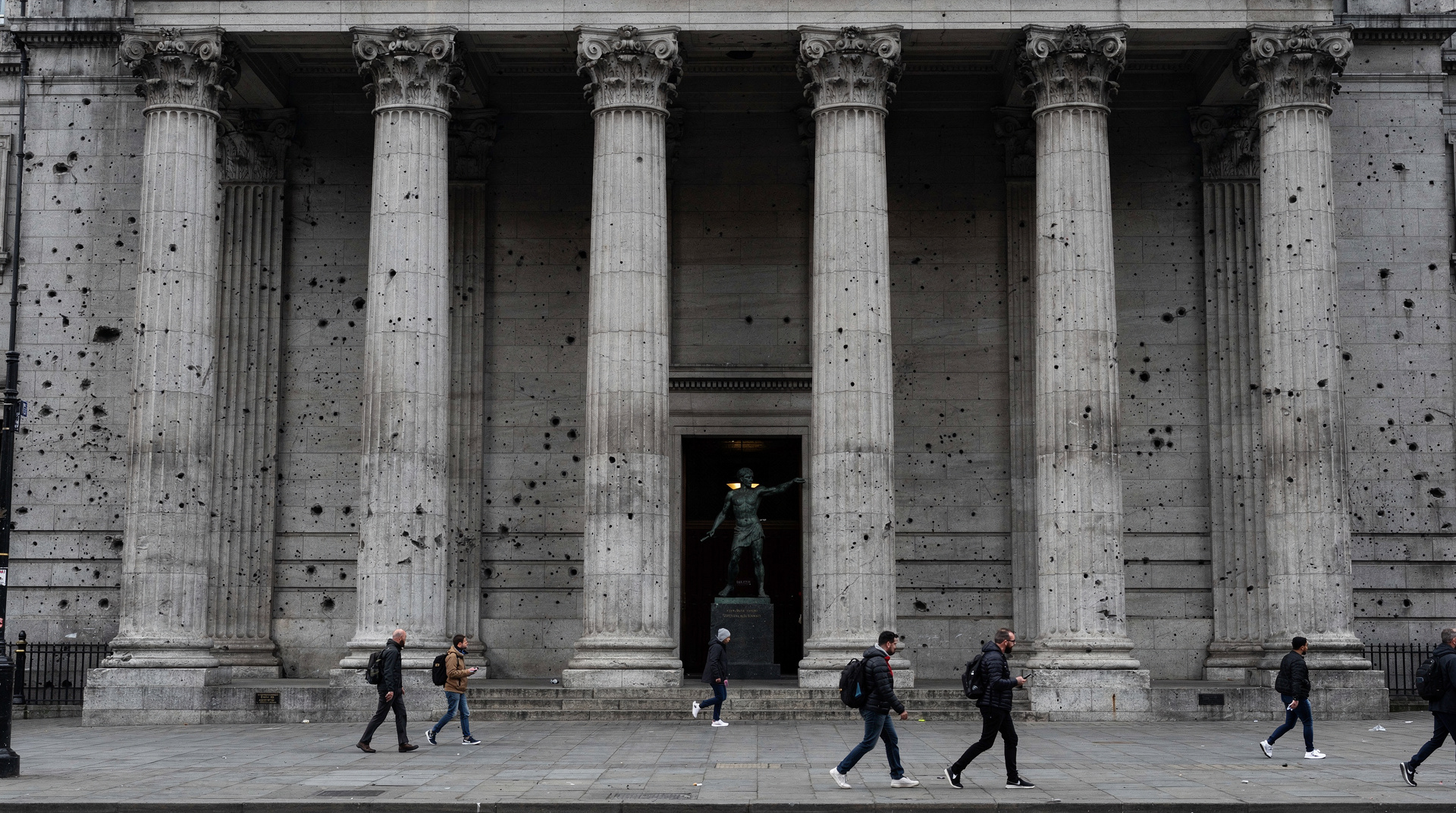
The 1916 Easter Rising lasted six days. Its physical traces — the bullet-marked GPO facade on O’Connell Street, the cells at Kilmainham Gaol where the leaders spent their final nights, the church at Arbour Hill where most of them are buried — remain visible across Dublin, and understanding them transforms a walk through the city centre into something considerably more than sightseeing.
| Where | O’Connell Street, GPO and city centre; Kilmainham Gaol separately, 3km west |
| Cost | Walking tours around €20-30; Kilmainham Gaol entry booked separately, around €8-10 |
| Time needed | 2-3 hours for a walking tour; add 1.5-2 hours for Kilmainham Gaol |
| Getting there | City centre walking tours start on foot; Kilmainham is reachable by Luas red line or a 20-minute walk |
| Booking | Book Kilmainham Gaol weeks ahead in summer — it sells out |
No event shaped modern Ireland more directly. The executions that followed the Rising — particularly the killing of James Connolly, so badly wounded he had to be carried to his execution in a chair — swung public opinion behind the republican cause within weeks. The War of Independence, the Treaty, the partition of Ireland, and the establishment of the Irish Free State in 1922 followed in a sequence that runs directly from the week of April 24, 1916.
The choice between tour options is primarily a question of how deeply you want to engage with the material, and whether you want a group or private experience.
The 1916 Rising walking tour with GPO Museum entry
The Dublin 1916 Rising walking tour with GPO Museum entry combines a guided walk through the sites of the Rising with included admission to Witness History at the GPO — the museum inside the General Post Office on O’Connell Street.
The tour typically runs 2 to 2.5 hours and covers O’Connell Street, the GPO exterior and interior, Liberty Hall (headquarters of the Irish Transport and General Workers’ Union and James Connolly), the Pillar area, and the streets around where key events occurred. The GPO Museum entry is integrated into the walk, so you see the outdoor context before examining the artefacts and displays inside.
The GPO Museum itself opened in 2016 for the centenary of the Rising and is one of the better history museums in Dublin. The audio-visual presentation of the week’s events — using maps, personal testimonies, and the remarkable survival accounts of participants — gives the story texture and immediacy that a guidebook cannot replicate. The restored GPO interior, with its colonnaded hall and the marks of 1916 still visible in places, is atmospheric even without the exhibits.
This tour is the best entry point for visitors who are new to Irish history or who want a structured introduction to the Rising before exploring Kilmainham Gaol independently.
The IRA history tour with skip-the-line GPO Museum
The IRA history tour with skip-the-line GPO Museum entry takes a broader perspective, covering the full arc of Irish republican history from the 19th century through the Rising, the War of Independence, the Civil War, and into the 20th century. The tour runs about 2.5 to 3 hours and includes priority access to the GPO Museum without queuing.
The “IRA history” framing tells you something about the tone: this tour engages with the contested and sometimes uncomfortable aspects of Irish revolutionary history, including the Civil War divisions that split the republican movement and shaped Irish politics for a generation. It is not a simple nationalist narrative.
The skip-the-line GPO Museum access is the practical advantage over the standard walking tour — in summer, the museum can have significant queuing for walk-up visitors. For anyone visiting on a busy day, this is worth the marginally higher price.
The private Easter Rising walking tour
The Dublin 1916 Easter Rising private walking tour is the deepest option. Running about 2.5 hours with a dedicated guide and no group, it covers the standard Rising geography but allows you to ask questions, slow down at sites that interest you, and explore aspects of the story that group tours cover briefly.
Private tours are particularly valuable for visitors who have already read about 1916 — Timothy Bowman’s biography of the Rising’s military commander, Fearghal McGarry’s account, or any of the major centenary histories — and want a guide who can engage at that level. A good private guide will take you to corners of O’Connell Street and the surrounding area that group tours skip, including the locations of specific barricades and the building-by-building story of the street fighting.
The cost is higher per person than a group tour but often comparable if you are travelling as a pair or small group. For families or groups with a strong interest in Irish history, a private tour is worth the investment.
Comparing the three tours
| Tour | Length | Focus | Best for |
|---|---|---|---|
| GPO walking tour + museum | 2-2.5 hrs | Standard Rising narrative | First-time visitors, structured overview |
| IRA history + skip-the-line GPO | 2.5-3 hrs | Broader republican history through the Civil War | Visitors wanting fuller context, busy days |
| Private Easter Rising walking tour | ~2.5 hrs | Deep, question-led, flexible | Readers of Irish history, families, small groups |
Beyond 1916: the wider revolutionary story
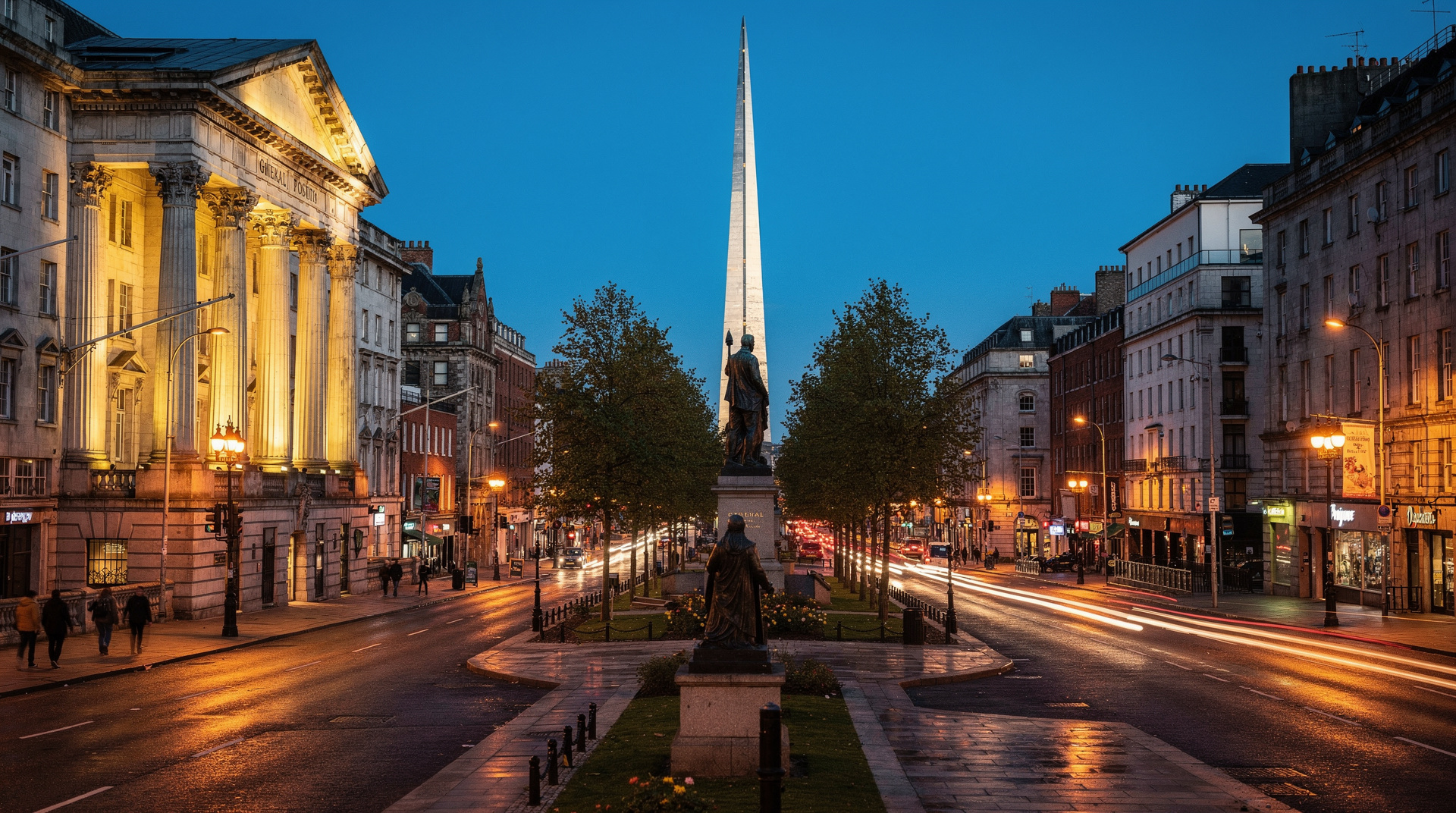
The Rising did not happen in isolation, and Dublin’s streets carry the marks of the years before and after it too. O’Connell Street and the northside — the physical stage for much of the Rising — is worth a slower look beyond the GPO itself, including the statues and monuments along the street that mark the wider independence story. For a broader walk through the revolutionary period, the Irish revolution history walk covers the War of Independence and Civil War sites that most 1916-focused tours only touch on briefly.
History-focused visitors on a budget should also know that several of Dublin’s best history museums are free to enter — the Dublin free museums guide lists them — and that the Rising connects directly to Ireland’s earlier trauma of the Great Famine, which shaped the political conditions that made 1916 possible.
Combining with Kilmainham Gaol
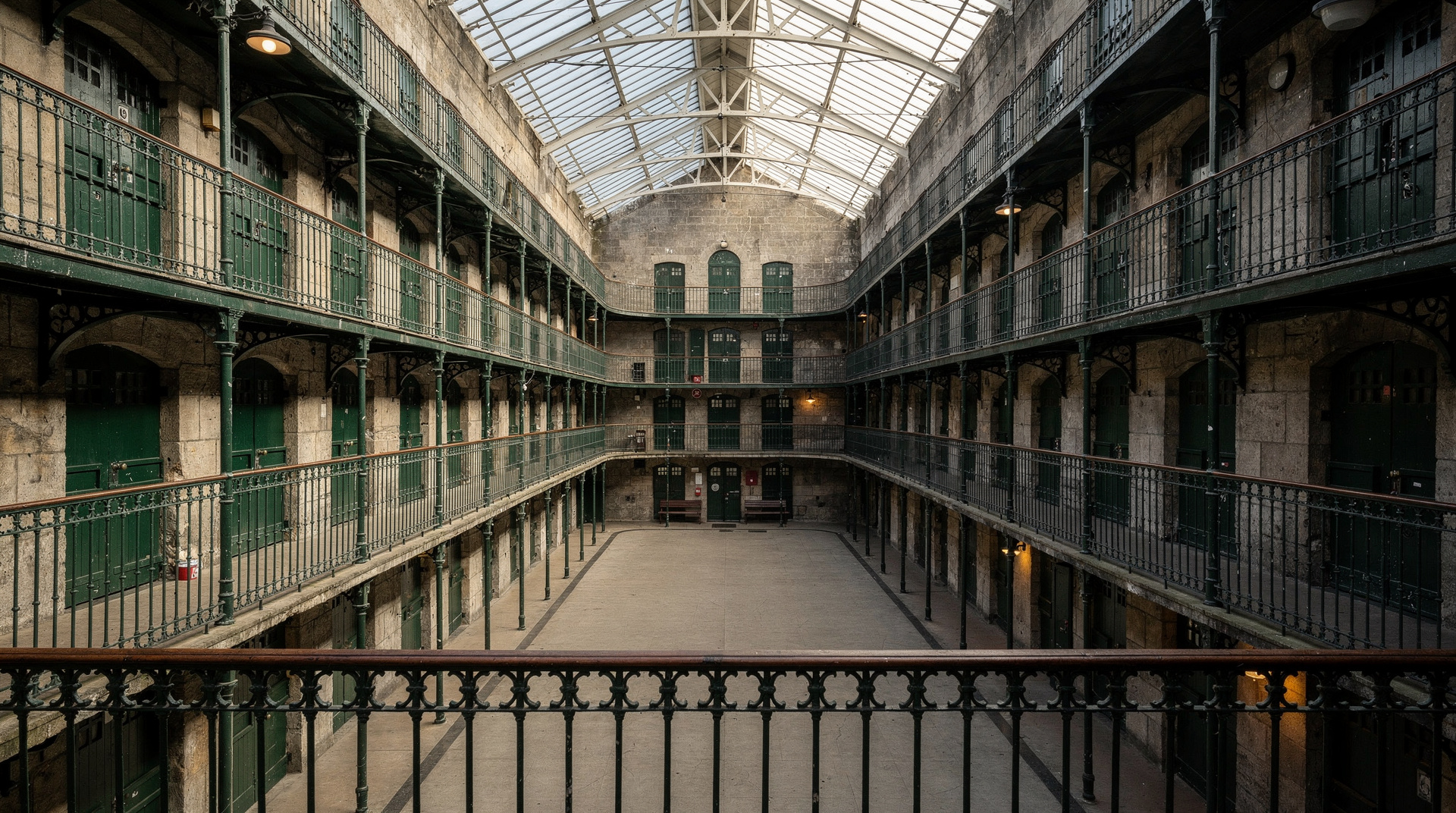
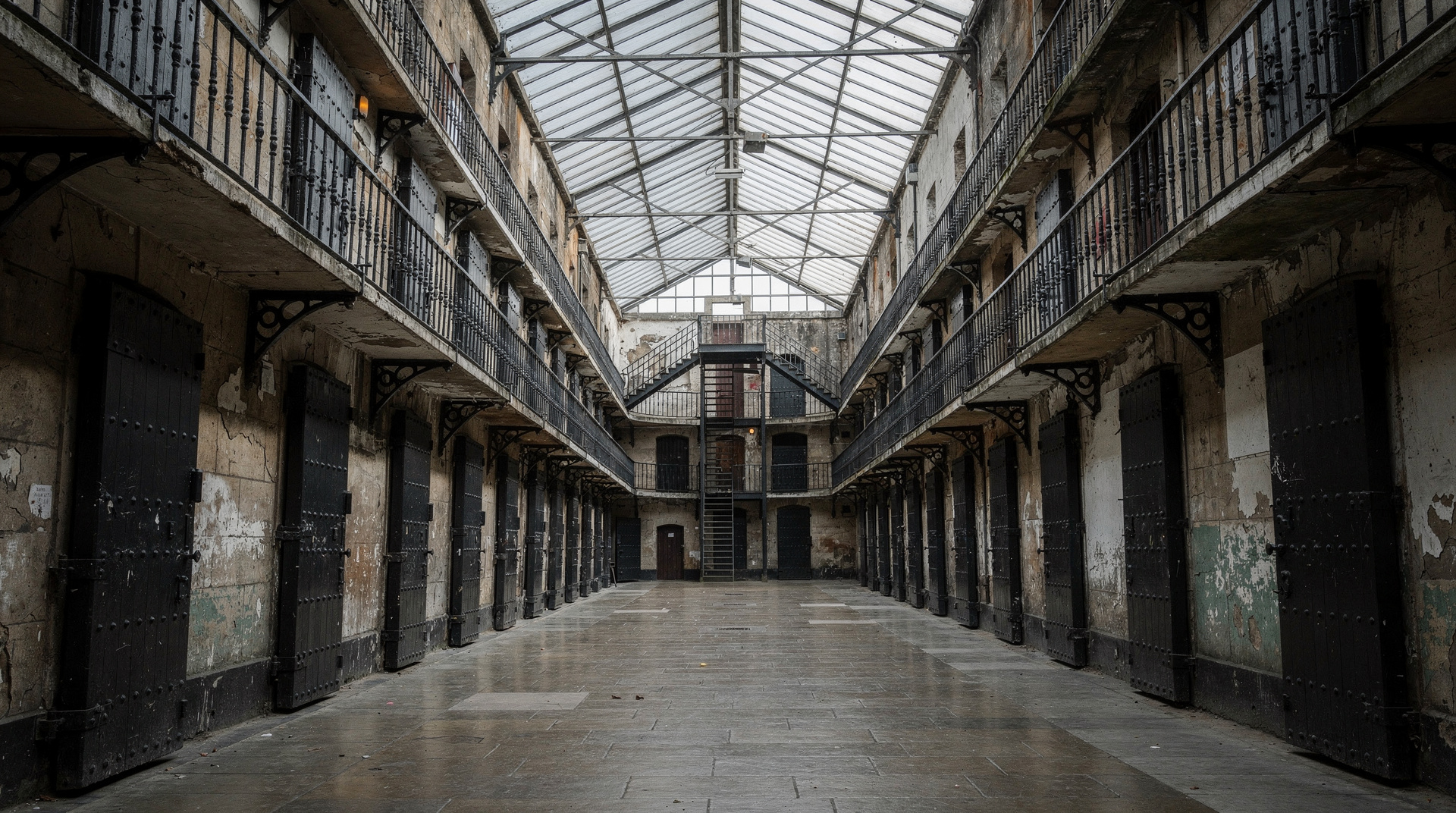
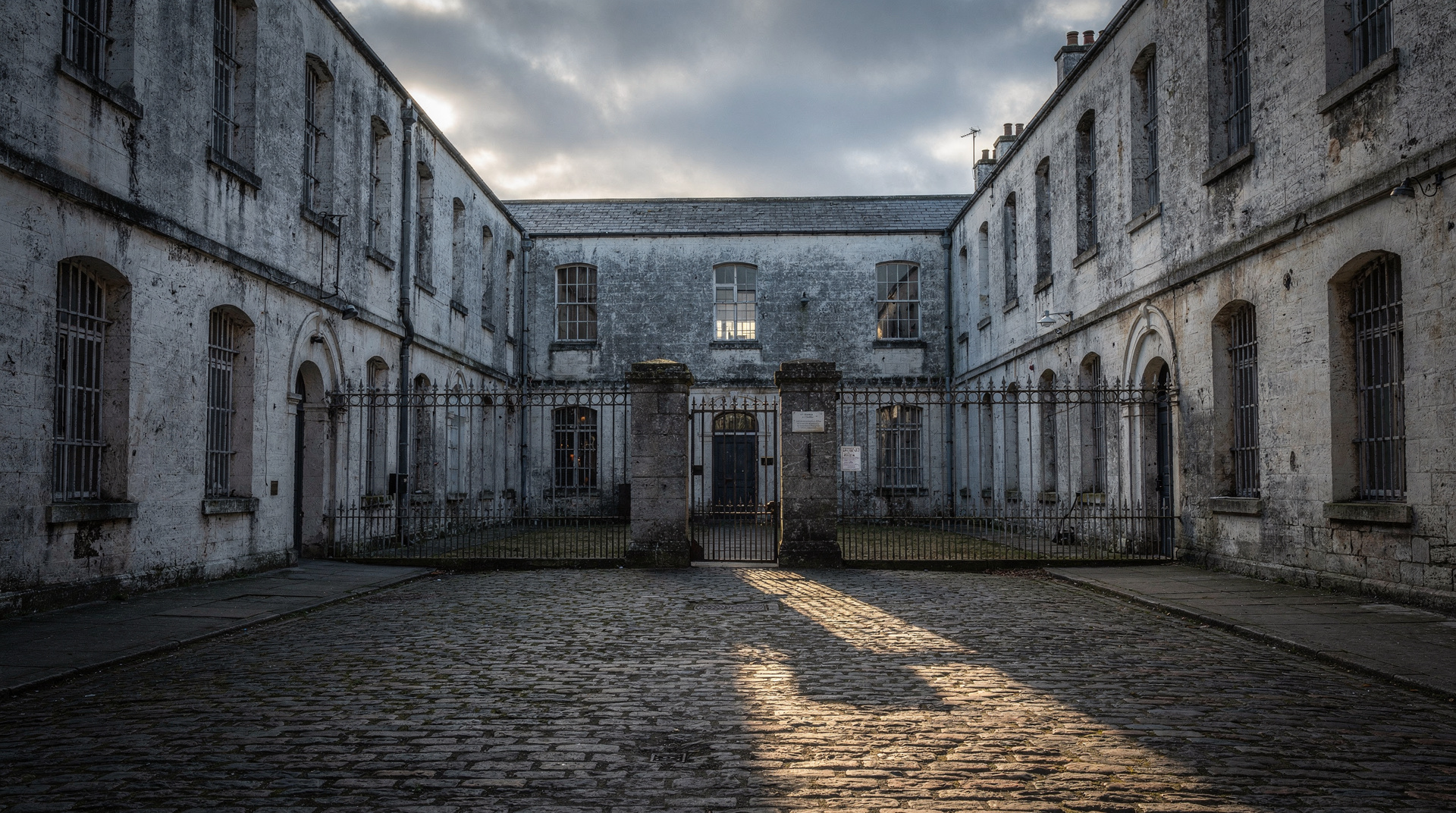
Note that none of these 1916 walking tours automatically includes Kilmainham Gaol, which requires a separate pre-booked timed ticket. Kilmainham is essential for the full 1916 story — the cells where Pearse, Connolly, and the other leaders spent their last hours, the Stone Breakers’ Yard where the executions took place, and the compelling exhibition that covers Irish nationalism from 1798 to the Civil War.
Book Kilmainham well in advance (weeks ahead in summer) before building the rest of your Irish history day around it. The Kilmainham Gaol guide explains what to expect, and the Kilmainham and museums area guide covers the other nearby sites, including the Irish Museum of Modern Art and the Royal Hospital Kilmainham.
For visitors with a deep interest in Irish history, the Dublin history enthusiast 3-day itinerary builds a structured programme around the Rising, the Gaol, the National Museum, and related sites. The 1916 Easter Rising guide provides the historical background that makes all of these experiences more meaningful.
Compare alternative tours
Frequently asked questions about Kilmainham and 1916 Rising tours
What happened in Dublin in 1916?
The Easter Rising of April 24-29, 1916 was a republican insurrection in which around 1,200 members of the Irish Volunteers and Irish Citizen Army seized key buildings across Dublin and proclaimed an independent Irish Republic. The General Post Office on O'Connell Street served as headquarters. British forces suppressed the Rising after six days; 16 leaders were subsequently executed at Kilmainham Gaol, transforming public opinion and ultimately leading to the War of Independence, the Treaty, and the establishment of the Irish Free State in 1922.Do you need to book Kilmainham Gaol in advance?
Yes. Kilmainham Gaol is one of Dublin's most popular attractions and is almost always sold out in summer weeks in advance. Even with a Dublin Pass (which covers entry), you must pre-book a specific timed slot directly with the Gaol. Book as far ahead as possible — especially for summer visits. Many 1916 tours include access to the GPO Museum but not always Kilmainham itself.What is the GPO Museum?
Witness History at the GPO is the museum inside Dublin's General Post Office on O'Connell Street. Opened in 2016 for the Rising centenary, it tells the story of the 1916 Easter Rising through audio-visual displays, artefacts, and personal accounts. It is one of the most engaging history museums in Dublin. The building itself — pockmarked exterior walls still visible, restored 1916-era interior — is part of the experience.Which 1916 Rising tour is best for someone new to Irish history?
The GPO walking tour with museum entry is the best starting point — the museum provides essential context and the guide fills in the story on the street. If you already know the basics of Irish history and want deeper engagement, the private Easter Rising walking tour allows you to ask questions and shape the itinerary around your specific interests.Is the 1916 Rising walking tour only on O'Connell Street?
No. The Rising's geography covers much of Dublin's city centre and inner suburbs. Tours typically visit O'Connell Street and the GPO, Liberty Hall, the Four Courts, St Stephen's Green (where the Irish Citizen Army under Constance Markievicz held out), the College of Surgeons, and sometimes Four Courts and the area around Kilmainham. The full story stretches across multiple neighbourhoods.What is the connection between Kilmainham Gaol and the 1916 Rising?
Kilmainham Gaol was the site of the executions of 14 leaders of the 1916 Easter Rising, including Patrick Pearse and James Connolly, between May 3 and 12, 1916. The gaol had been scheduled for closure before the Rising; its reactivation for these executions, and the way the executions were carried out (Connolly, too injured to stand, was strapped to a chair), caused public outrage that fundamentally shifted Irish opinion toward the republican cause.How long should I set aside for both a 1916 walking tour and Kilmainham Gaol?
Allow a full day if you want to do both properly. A 1916 walking tour with GPO Museum entry runs 2 to 3 hours, and Kilmainham Gaol's guided tour plus exhibition takes about 1.5 to 2 hours, not counting travel time between the city centre and Kilmainham (about 20 minutes by Luas or taxi). Doing the walking tour in the morning and Kilmainham in the afternoon, with lunch in between, works well for most visitors.Is the 1916 Rising tour suitable for children?
It depends on the child's age and interest in history. The GPO Museum's audio-visual displays and personal stories tend to engage older children and teenagers who have some grounding in the history, but the material — including accounts of executions and street fighting — is not aimed at young children. Kilmainham Gaol's Stone Breakers' Yard, where the executions took place, is a sobering stop that works better for children old enough to process it.