St Patrick's Day as a local — what it's actually like
The morning of the 17th
At about nine in the morning on St Patrick’s Day, the city smells like anticipation and stale beer in equal measure. The pubs on the main streets have been cleaning since six. The green merchandise — hats, wigs, inflatable harps, T-shirts of questionable quality — fills the forecourts of newsagents and temporary market stalls. The Liffey is running at its February best, which is to say brownish and purposeful.
People who have lived in Dublin for years tend to have one of two relationships with the 17th of March. Either they leave — a long weekend somewhere with less green face paint — or they lean all the way in, pick their spot, and enjoy the spectacle with the specific pleasure of watching their city be itself at full volume. I’ve done both. The version where you lean in, if you do it right, is the better option.
| Where locals watch | O’Connell Street near the Spire, or not at all — from the side streets near home |
| Where locals drink | Ranelagh, Portobello, Stoneybatter, Phibsborough |
| What locals avoid | Temple Bar and Dame Street after midday |
| What locals actually do | Parade, family lunch, rugby if it’s on, pub near home by five |
What the parade is actually like
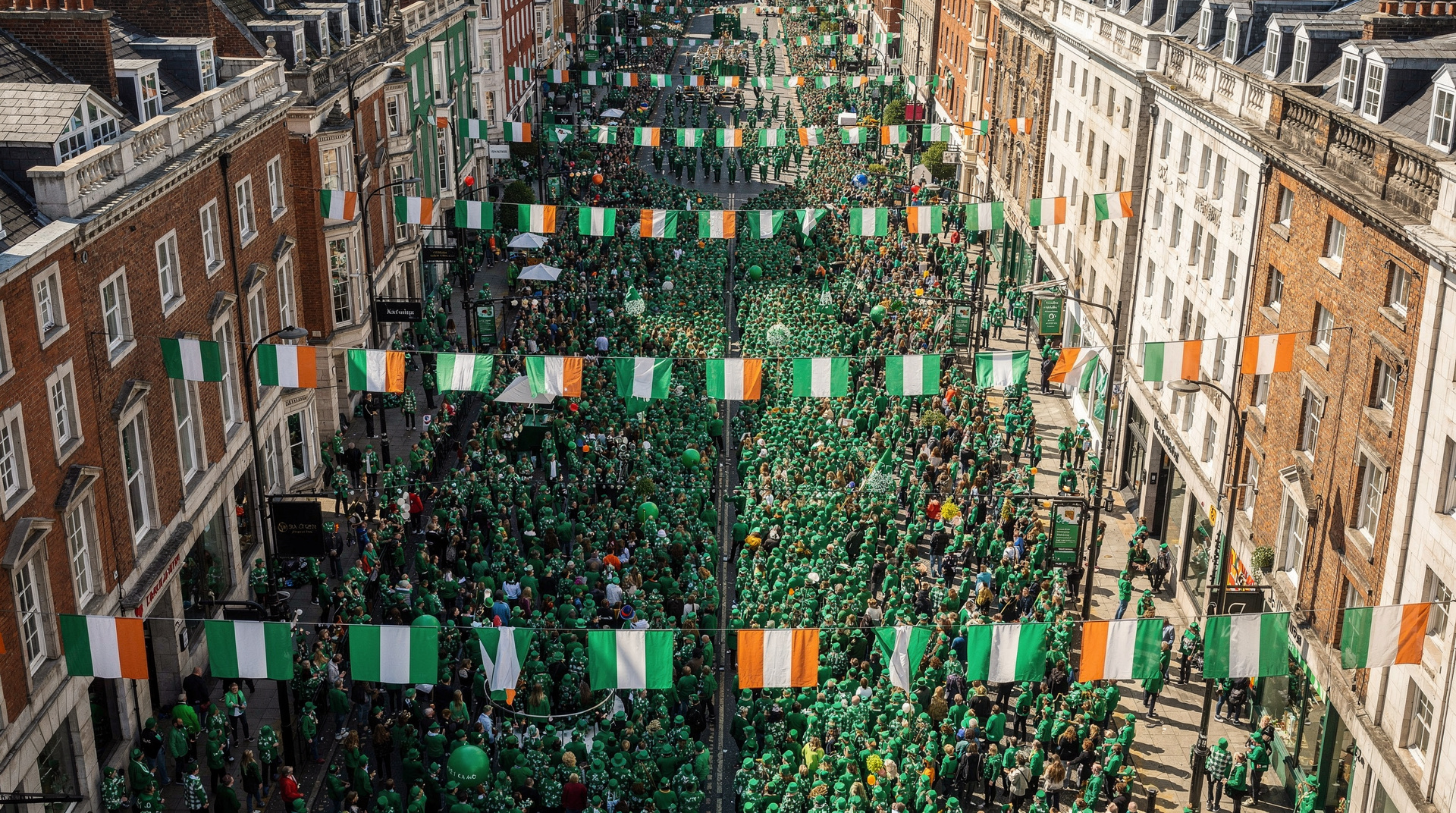
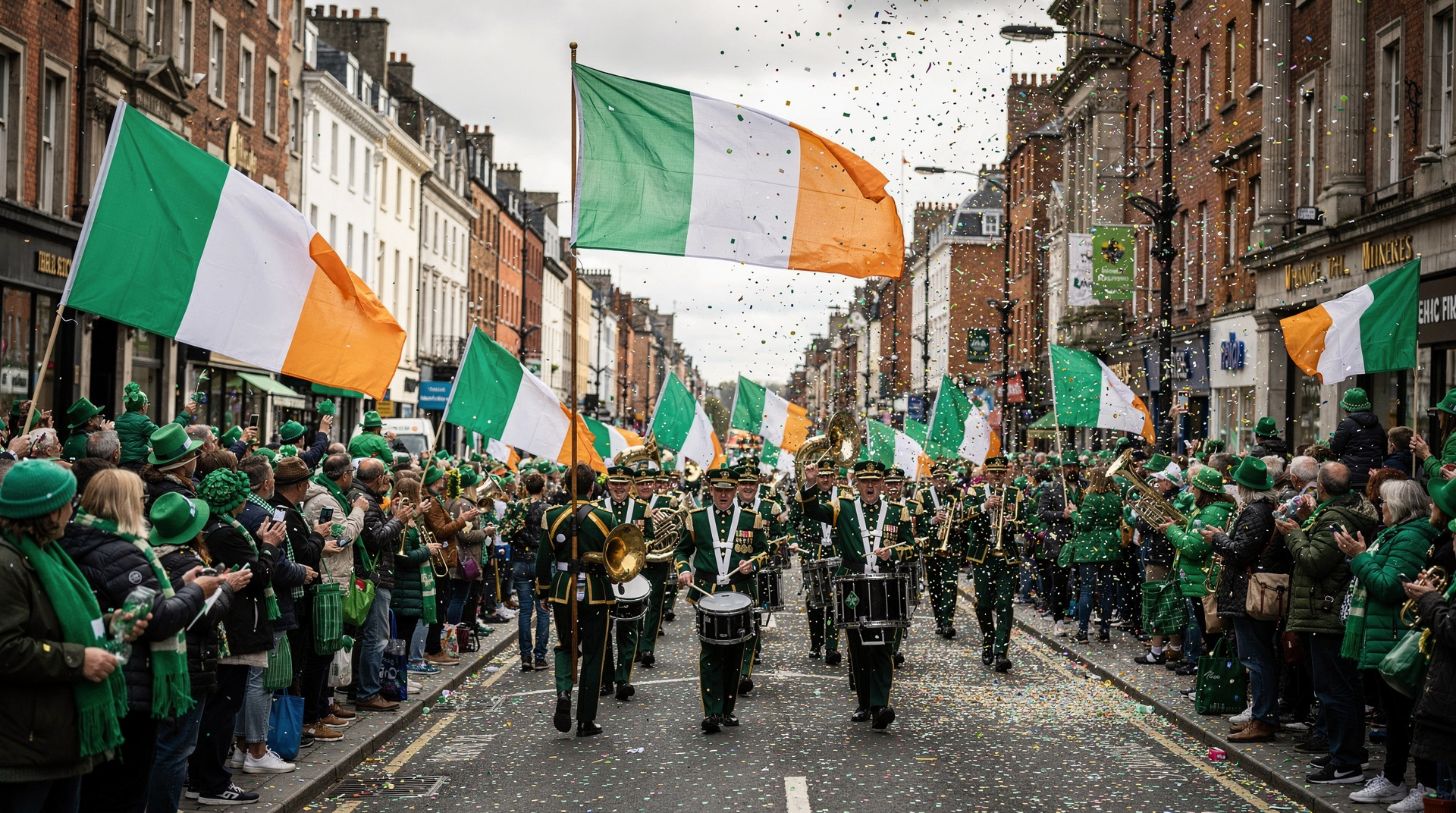
The St Patrick’s Day Festival parade along O’Connell Street and down Grafton Street is genuinely spectacular, and I say that as someone who has watched a lot of parades and found most of them dull. This one works because it mixes the solemn (the army band, the President’s car, the official Ireland-presenting-itself-to-the-world element) with the frankly absurd (parade floats of ambiguous theme, street performers in elaborate costumes, marching bands from American high schools who have clearly been practising for months).
The crowd is enormous — well over 500,000 people along the route on a normal year — and finding a good vantage point requires either commitment the evening before or a willingness to peer between other people’s shoulders. The best spots are along O’Connell Street near the Spire, where the parade is still fresh and moving at speed, or at the corners where the route turns, where the procession slows and bunches up. Avoid the far end of Grafton Street where the crowd thins into a milling, slightly lost mass.
If you want the context for what you’re watching — why the parade takes this route, what the symbolism of the day actually is, what it felt like in the years when it was a much smaller, more religious occasion — read our detailed guide to St Patrick’s Day in Dublin.
Tourist traps to watch for
The 17th brings out the worst version of a few things that are already borderline the rest of the year — see our general Dublin tourist traps guide for the year-round list. On the day itself, the specific ones are inflated “festival menu” pricing at restaurants along the parade route, souvenir stalls charging several times the normal rate for green merchandise, and pop-up “traditional” pub experiences aimed squarely at one-day visitors rather than anyone who’ll be back.
The pub reality
Here is the honest account of the Dublin pub on 17 March.
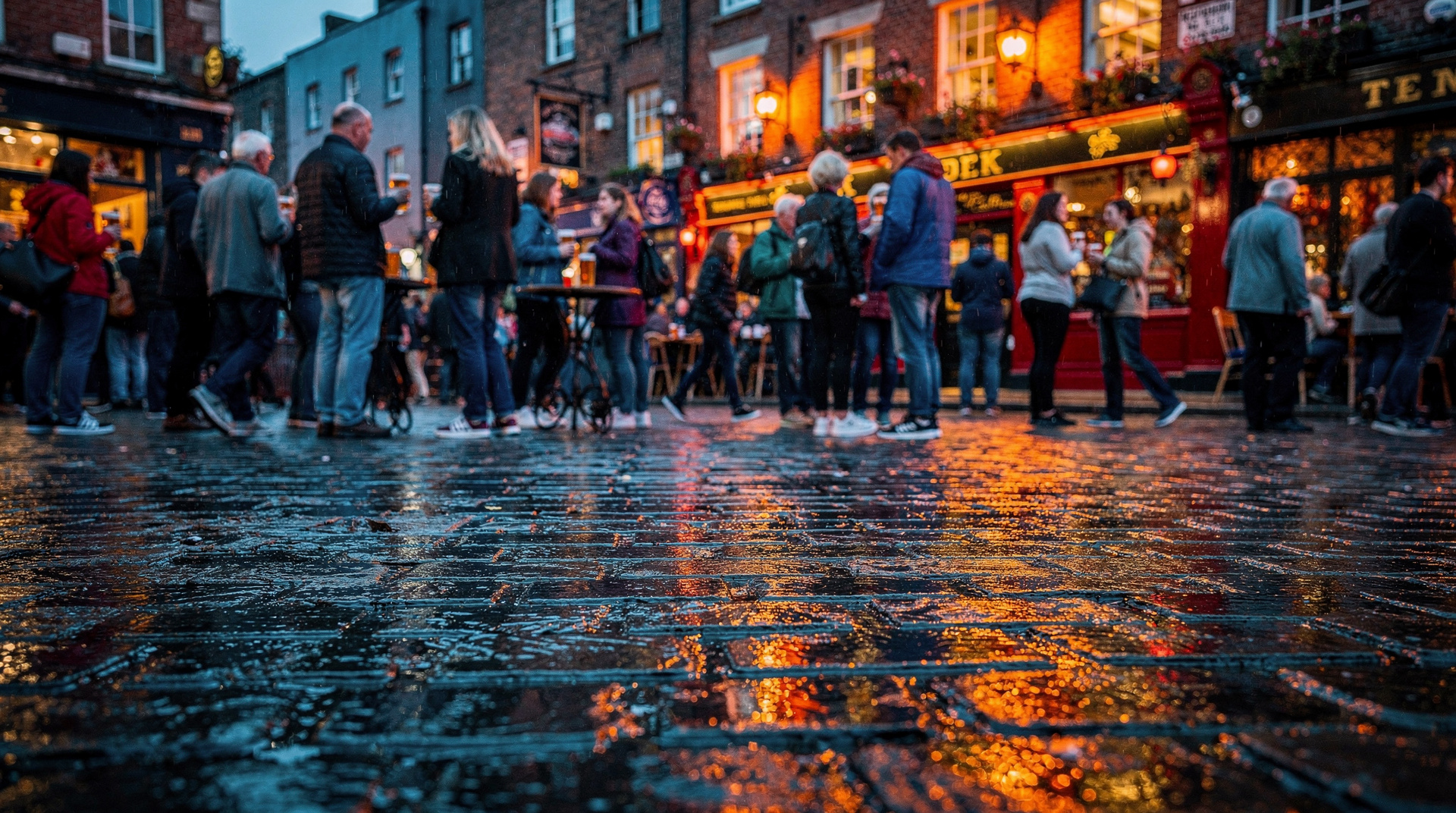
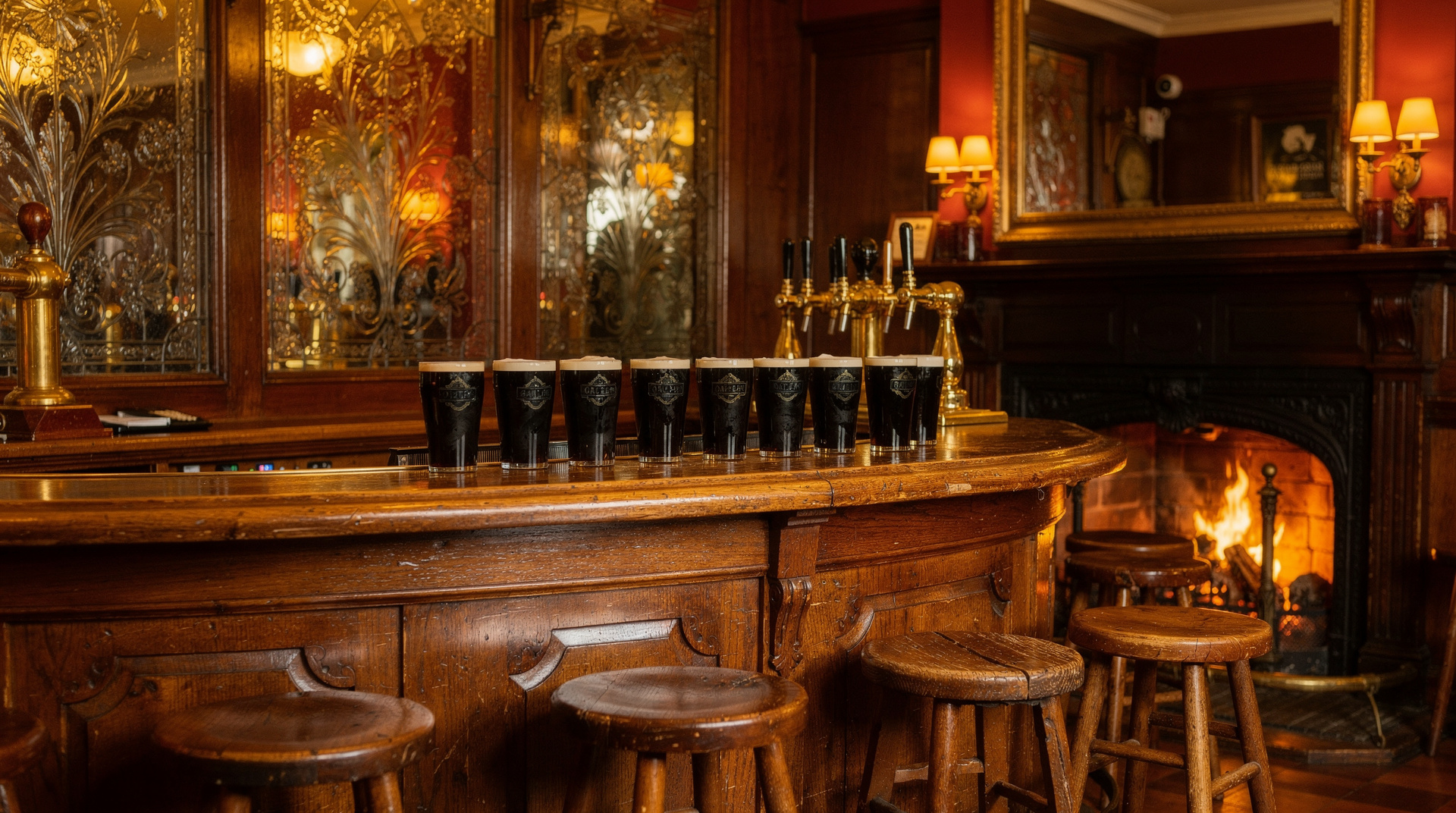
The pubs around Temple Bar, Dame Street, and the O’Connell Street corridor are absolutely rammed from midday onwards. Rammed meaning: you will queue to get in, pay elevated prices, stand rather than sit, and find it difficult to have any conversation at more than a shout. If that’s your ideal day out, these are your pubs, and there’s a genuine energy to being in a crowd of people who are all committed to having the best possible Tuesday. Our honest Temple Bar guide covers what the area is like on an ordinary day, which gives you a baseline for how much more intense the 17th makes it.
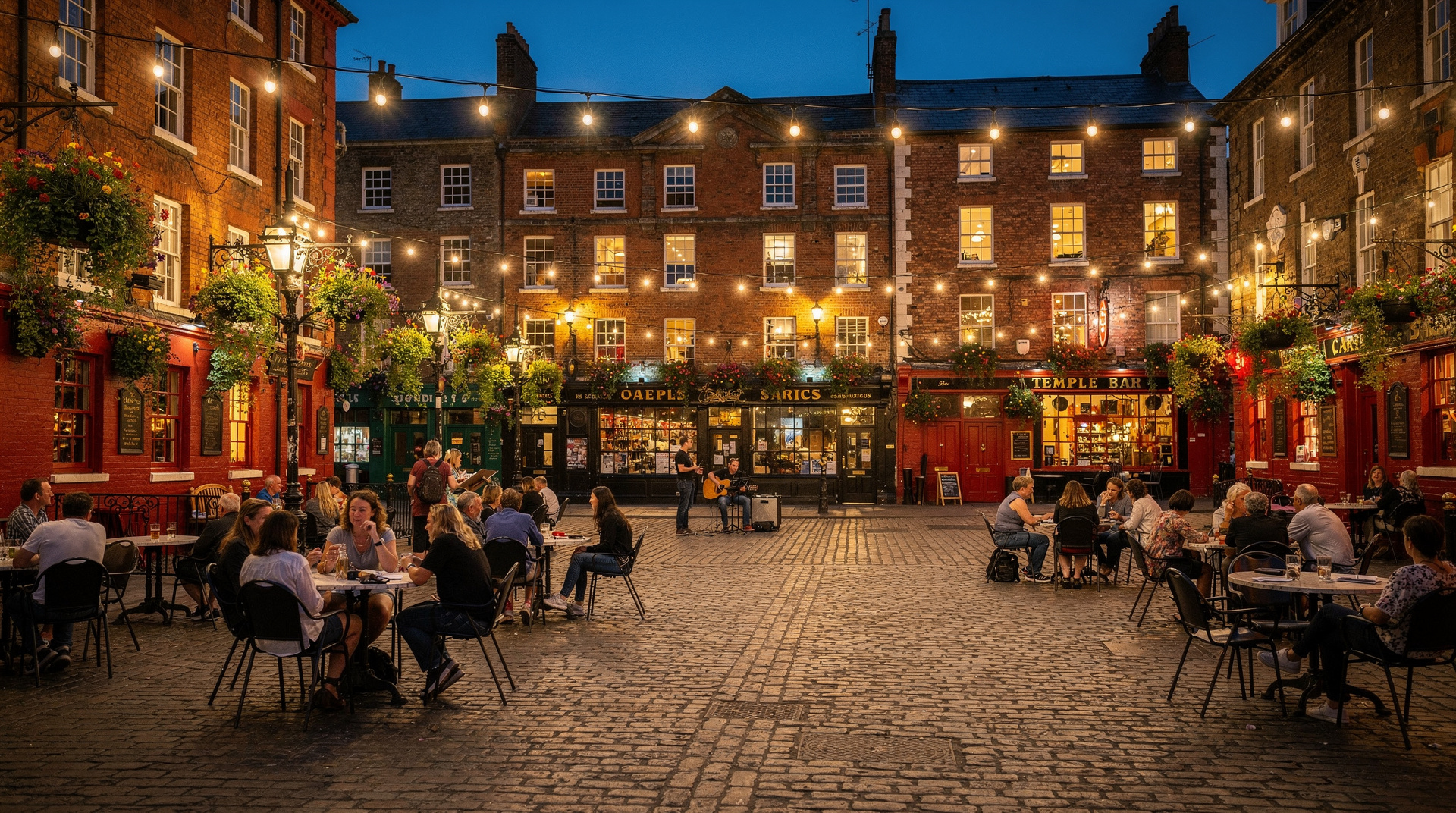
If you want a pint in something approaching comfort, you need to be further out. Ranelagh, Portobello along the canal, Stoneybatter, Phibsborough — these are the neighbourhoods where the pubs function more normally on the day, where the regulars are in, where the television showing the parade doesn’t require the bar staff to turn it up past the point where conversation is possible. A local recommendation: the pubs along the Portobello stretch of the canal, where the parade is a distant roar and the atmosphere is a pub afternoon rather than a festival.
Our guide to the best pubs where locals actually drink covers these neighbourhoods in more detail. On the 17th, neighbourhood pubs are categorically better than central ones unless the spectacle is what you came for.
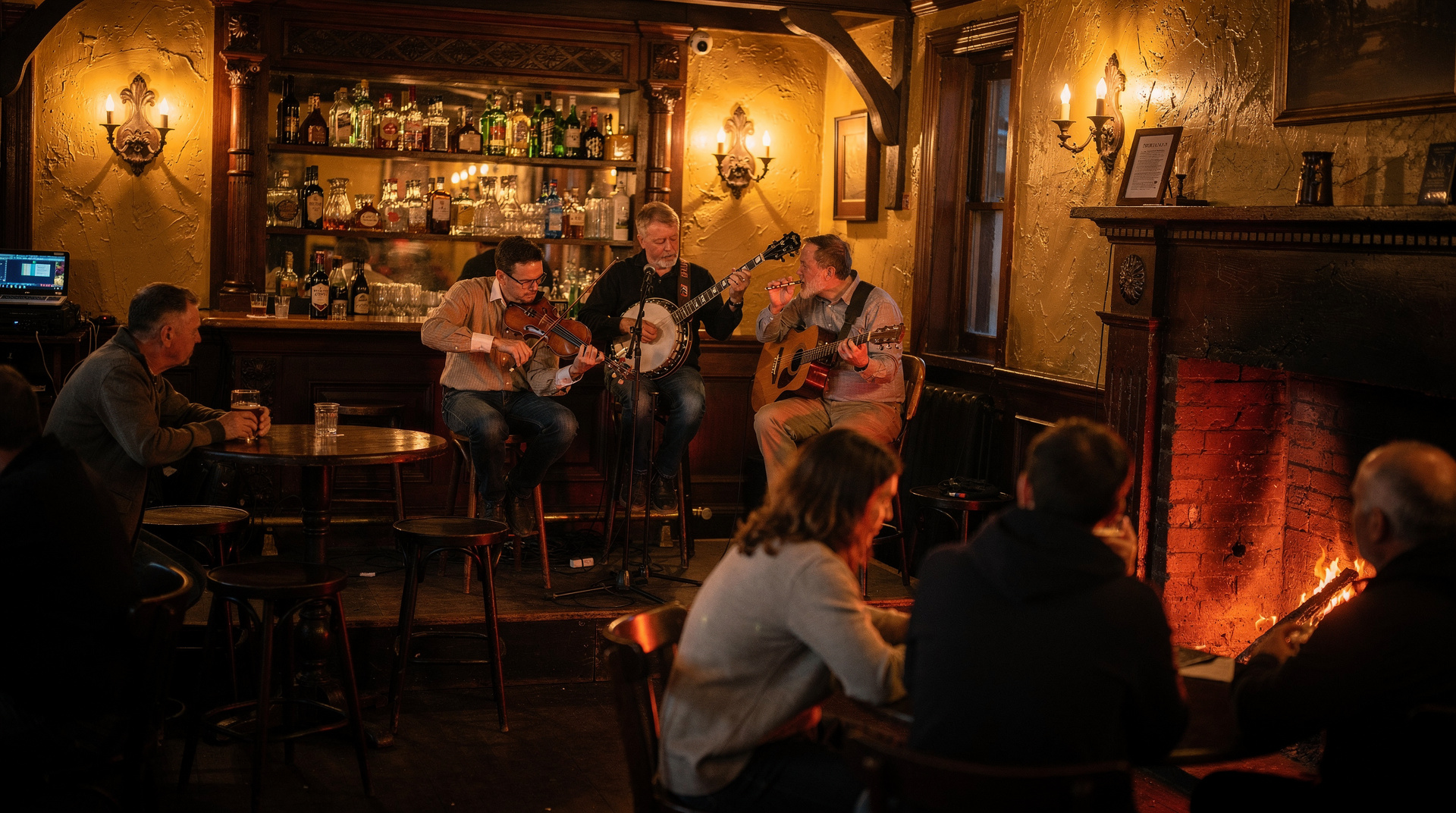
If live music is what you’re after, the neighbourhood pubs are also where a session is most likely to feel like a session rather than a performance. Our list of traditional music pubs is a good place to start, and the trad session etiquette guide will stop you making the small mistakes that mark a visitor out — talking over the tune, for a start.
The festival beyond the parade
The St Patrick’s Festival has grown over the past two decades into a multi-day programme — light shows projected onto landmark buildings, outdoor concerts in public spaces, céilí dancing in parks. The evening of the 17th tends to be the peak of this, with projections on the GPO and often a concert in Merrion Square or along the river.
These events are free and often genuinely impressive. The light installations on Trinity College and the Custom House quay walls have become technically more ambitious each year, and the outdoor dancing that appears in a dozen locations — not just the organised events, but the spontaneous sessions that break out wherever musicians gather — is one of those things you either walk past or stop for, and stopping is almost always the right call.
For a practical breakdown of how to navigate the weekend, including where to stand for the parade and how to book the restaurants that will be full three weeks in advance, our St Patrick’s Day planning guide covers the logistics. For those visiting specifically to plan ahead for the 2026 celebrations, there’s more detail in planning St Patrick’s 2026.
What locals actually do
The honest version: a lot of Dubliners watch the parade from the side of the road near their own neighbourhood, then go to a family lunch, then watch the international Six Nations rugby match if there is one (St Patrick’s Day frequently falls during the rugby tournament), then end up in a pub somewhere near home by five in the afternoon.
The mythology says it’s the biggest party of the year. The reality is that it’s a public holiday with a parade, and Irish people treat public holidays with a certain practical competence — they know how to enjoy them without overdoing it, mostly. The genuine wildness is concentrated in the city centre, fuelled by tourists and by the subset of the domestic population that has been waiting for this particular excuse.
If you’re a visitor, this means you can choose your version of the day: either join the full spectacle in the centre, which is loud and memorable and Irish in the way that a festival is Irish, or follow the quieter version that unfolds in the neighbourhoods, which is Irish in the way that daily life is Irish.
Both are valid. Both, in their different ways, show you something real about the place.
Quieter ways to fill the day
If the crowds in the centre aren’t for you, the 17th is a good day to spend on things that have nothing to do with green hats. The neighbourhoods are the obvious start: the Liberties has plenty of character away from the parade route, and Glasnevin and Drumcondra feel like a different city altogether. Phoenix Park is a sensible refuge when you need space, and the Dublin Docklands give you wide, open streets rather than packed pavements.
Music is the thing that makes the day feel Irish rather than merely busy. If you’d like to understand what you’re hearing, an Irish music walking tour with a live performance is a gentler introduction than being swept into a rammed bar, and it pairs well with our traditional Irish music guide. For the history behind the saint himself, St Patrick’s Cathedral is the obvious place, and a guided visit with fast-track entry keeps things simple if you’d rather not queue.
Food is the other good escape. Restaurants fill quickly on the day, so a daytime walking food tour with a local chef is a calm way to eat well while the city is busy; our Dublin food tours guide compares the options. If the weather turns, the rainy day guide has indoor plans, and the Dublin Castle guide and Georgian Dublin are easy, central ways to see the city without joining the crush.
If this is your first visit and you want the day to sit inside a wider plan, start with the first-time visitor guide, check the best time to visit, and look at the 3 days in Dublin itinerary or the history buff itinerary to see where a festival day might fit.
After the 17th
The city goes quiet remarkably fast. By the morning of the 18th, the green merchandise has been boxed up, the extra bar staff have gone home, and Dublin resumes its normal tempo. It’s one of the things I’ve always found moving about the day — the way the city throws itself into it completely and then just carries on.
There’s a metaphor in there somewhere about Irish character. I’ll leave it for you to develop over a pint.
Getting around on the day
Plan your movements before you leave, because the centre behaves differently on the 17th. Streets along the route are closed to ordinary traffic, and the crowds make a short walk take far longer than usual. Our getting around Dublin guide explains the options, and the DART and Luas guide is worth reading if you’re basing yourself in one of the neighbourhoods rather than the middle of town. If you expect to use public transport several times, the Leap card guide saves you fumbling for change in a crowd.
Dress for the weather rather than the occasion. A March day in Dublin can turn quickly, and standing still at the roadside for the parade is colder than walking. The what to pack guide covers the layers worth bringing, and if you’d rather spend the day somewhere central but calmer, the Dublin walking tours round-up shows what else the city offers once the parade has passed.
Frequently asked questions about St Patrick’s Day as a local — what it’s actually like
Is it worth being in central Dublin for the parade if I dislike big crowds? Not really — the crowd along the main route is genuinely enormous, over 500,000 people on a normal year. If big crowds aren’t your thing, watch from a quieter point along the route, or follow the festival’s free events in parks and public spaces instead, which draw smaller numbers.
Do locals actually celebrate St Patrick’s Day, or is it just for tourists? Both, in different registers. The parade and the central pub scene are heavily weighted toward visitors, but the céilí dancing, the family lunches and the neighbourhood pub afternoons are how most Dubliners genuinely mark the day.
Top experiences
Bookable activities with verified prices and instant confirmation on GetYourGuide.